Robertson House hotel’s Entrepot restaurant marries Chinese food with European influences
Hokkien prawn noodles and claypot rice get new meaning in this new restaurant helmed by Singapore chef Nixon Low
NEW RESTAURANT
Entrepot The Robertson House 1 Unity Street Singapore 237983 Tel: 8380 1689 Open daily for lunch and dinner: 12 pm to 3 pm; 5.30 pm to 10.30 pm.
WE LIKE a heritage tale just like any other Singaporean – especially if there’s kaya toast attached to it. Give us any old grandfather story about Joo Chiat and we’re all ears, but spin one about colonial masters and their love for wicker furniture and palm fronds and well, hmmm…
Robertson House ain’t the Raffles, but it’s got the river, a ready-made Robertson Quay named after an actual person, and a 300-room refurbished hotel badly in need of a storyline. So: an elaborate yarn about the eponymous Mr Robertson and “the charm of riverside living in the 1800s” (their words).
Since we can’t independently verify if early orang laut enjoyed bicycle paths and evening walks along the promenade, we’ll take Robertson House’s manufactured colonial appeal at face value. At any rate, it brings a refreshing newness to the cul-de-sac off Unity Street, where it’s flanked by badly ageing buildings housing another Robertson-named hotel and an arts centre. Avoid Robertson House’s car park if you can. Not only does it have very few spaces, it’s littered with discarded furniture that has crept there to die.
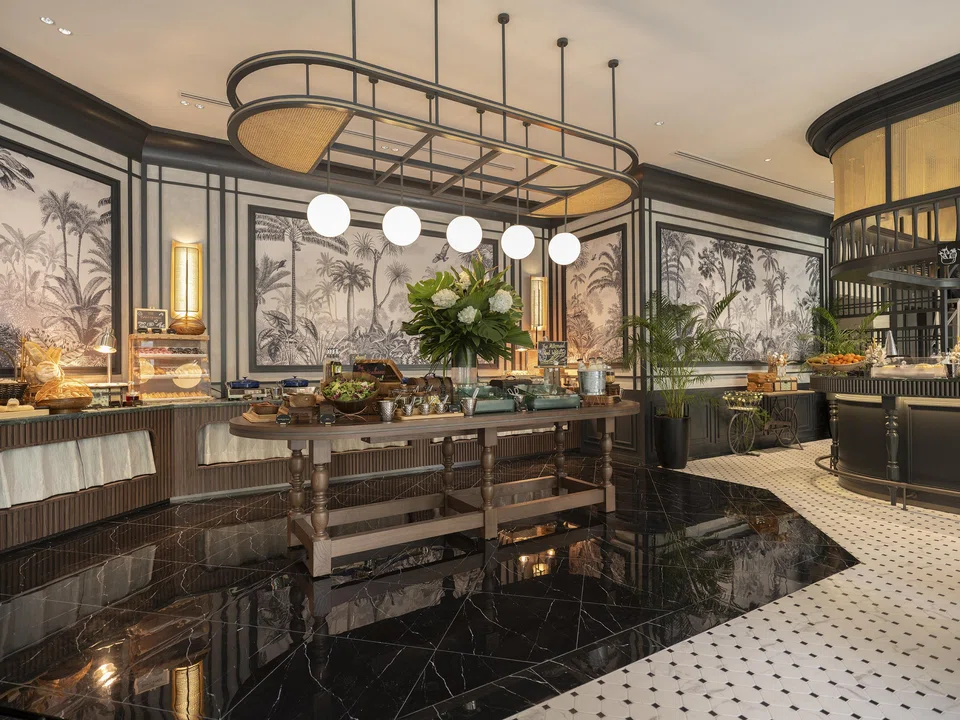
The lobby itself is bright and breezy. Cane furniture, potted plants and a giant black-and-white forest mural behind the reception. That same look extends to Entrepot – its flagship restaurant, which does all-day dining duty, but shines at night. That’s when chef Nixon Low flexes some solid mod-Asian muscle, nicely tethering Chinese and European influences without overstepping boundaries.
We remember Low. Seven or eight years ago, he was part of a band of idealistic young men trying to find their identity as Singaporean chefs. As they peddled their mod-Sin manifesto, he made cold bak kut teh jelly and elevated prawn paste chicken in a zany coffee shop setting called Jiakpalang.
But it went bust, and he and his peers ditched their dreams and went into the corporate world instead. He joined the Tung Lok group as head of its western banquet operations and now, he’s with the Ascott group as culinary director, with Entrepot as his first project.
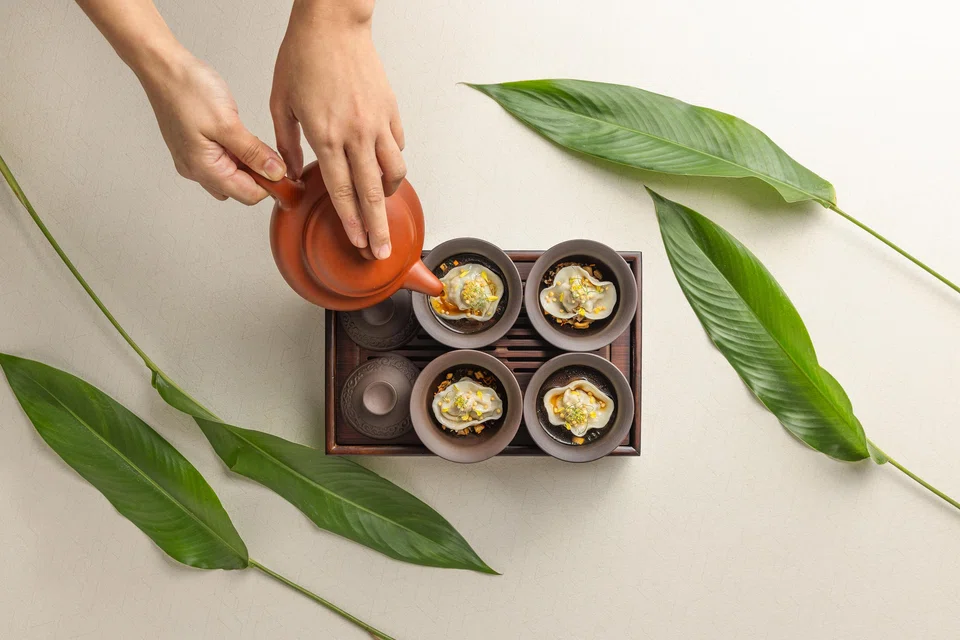
While Entrepot calls itself Anglo-Asian, it’s really Chinese first, and everything else second. Low’s Tung Lok experience comes through in one of the dinner signatures, a Chinese “terracotta tea” (S$10 a portion) – a teapot filled with steeped mushroom broth with a faint hint of lapsang souchong, poured over a bouncy shrimp dumpling. It’s comfortingly hot soup, alternating with slippery textures of sauteed mushrooms, puffed rice and the fresh dumpling that seems happy to be there.
Spanish croquetas (S$24) get Chinese citizenship here, as bechamel is replaced by glutinous rice and a filling of shredded pork, lap cheong and mushrooms. Shaped into squares and deep-fried, they’re like deep-fried rice dumpling nuggets that don’t really need the sweet and earthy black garlic-chestnut mole (modelled after the Mexican savoury chocolate-infused sauce) on the side.
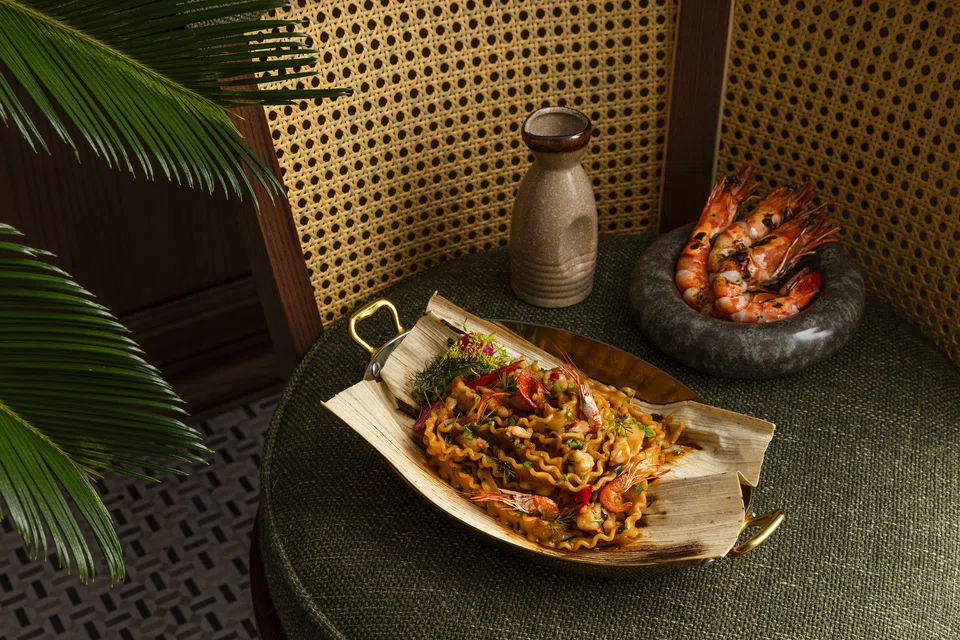
We’ve had many iterations of modernised fried Hokkien prawn noodles, but Low’s version (S$34) works surprisingly well, even if it doesn’t come close to the real thing. You get long strips of frilly pasta wok-fried and chewy, drizzled with thickened prawn bisque and garnished with very fresh char-grilled tiger prawns satisfyingly blackened in parts. A sheet of opeh leaf adds the final touch. It’s like Hokkien mee that went overseas to study and came back with an accent, but is still the same mee at heart.
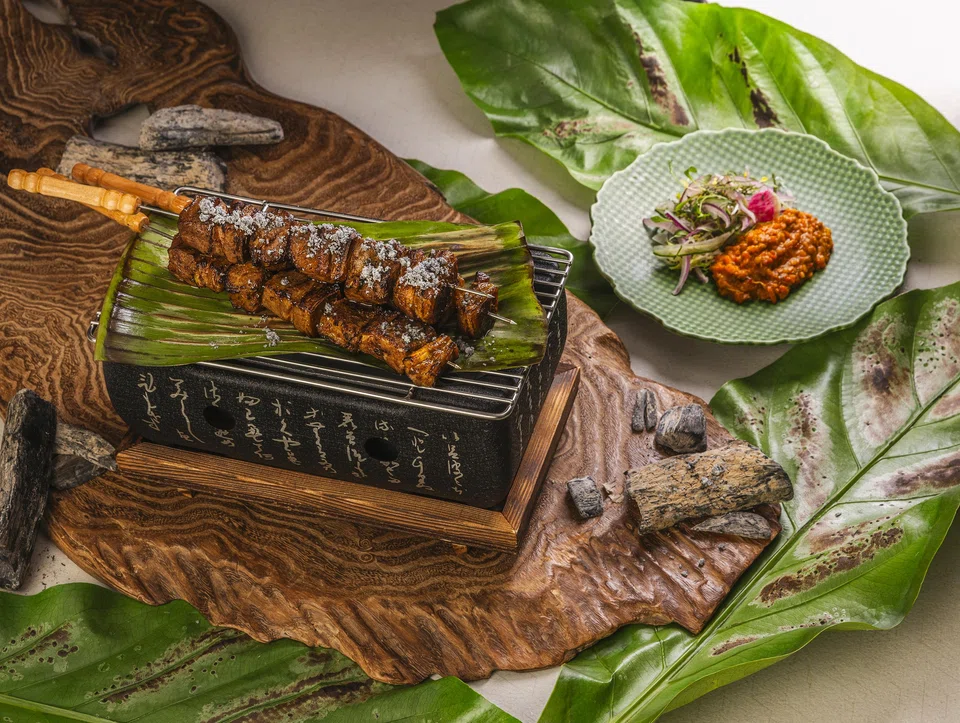
On the other hand, the “Hoi How Road” lamb satay (S$42) went abroad, renounced its citizenship, got plastic surgery, came home and wants expat status. Hoi How Road may be a nod to the old Satay Club, but this is just skewers of New Zealand lamb – very tender we have to say – paired with lentil-ratatouille mash and some kind of fried charcoal powder. Dip judiciously and enjoy it for the lamb.
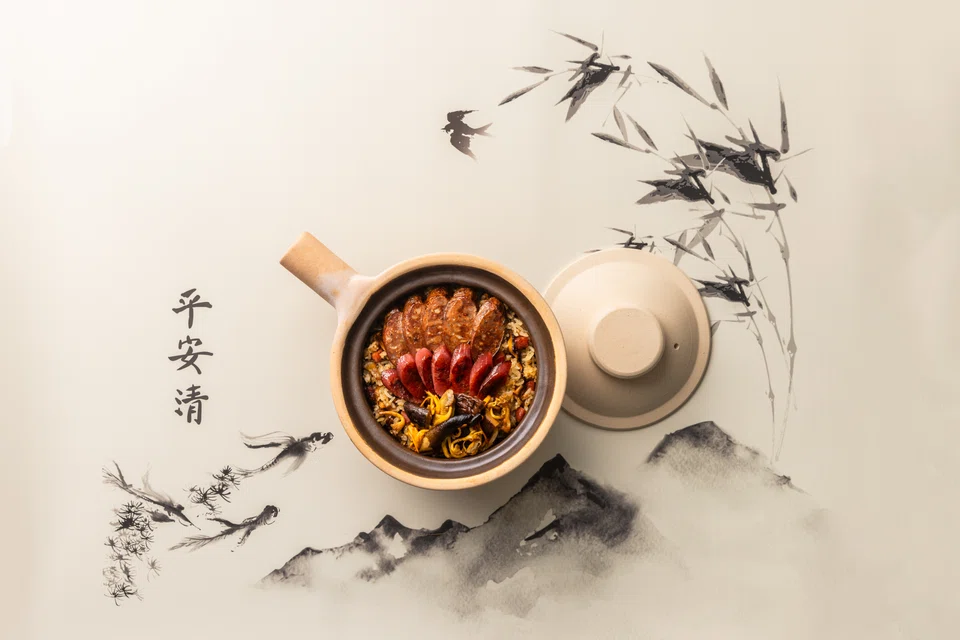
Paella cooked Chinese claypot style (S$28) is a happy interracial union of smoky tomato-paprika rice sizzling in an earthenware pot with salty chorizo, dried chanterelle and morel mushrooms, and too few pieces of pork belly, though with the requisite bits of crispy socarrat. We wish Low would just do a real Chinese version instead.
Dessert is a tough choice, but we hit the jackpot with Nonya chocolate (S$16). If you know your Peranakan kueh ambon, Low’s chocolate version is seriously authentic, right down to the lightly fermented tang of the spongy-chewy honeycomb cake. The passionfruit curd gets in the way, but coconut sorbet and chocolate mousse are made for each other.
It’s not easy trying to translate a colonial-Asian concept into food, and Entrepot made the right decision not to take it literally. It focuses on getting the flavours right and letting the rest follow. It also showcases Low’s own evolution, even if he’s not personally cooking. Unlike Robertson House’s made-up history, the food here is unpretentious and tells its own story.
Rating: 7
Decoding Asia newsletter: your guide to navigating Asia in a new global order. Sign up here to get Decoding Asia newsletter. Delivered to your inbox. Free.
Copyright SPH Media. All rights reserved.
TRENDING NOW
He built the Vingroup empire. Now South-east Asia’s richest man is handing some key roles to his sons
Quarter of Singtel special discounted shares sold ahead of CPF Board transfer
Why Tan Aik Keong of digital solutions specialist Agmo wants to make himself less indispensable
Asia needs new energy security architecture