

Rose wine – the forgotten sister that deserves more
This long overlooked wine is worthy of a closer look
UNLIKE its white and red counterparts, Rose is rarely taken seriously, seen more as a lightweight, frivolous wine that has no place at a table for serious aficionados.
Despite being given good airtime in the Wine and Spirit Education Trust (WSET) curriculum, it is viewed as a novelty.
Yet, it is a proper wine, made in three established ways. The most common method involves brief skin contact. Black grapes are crushed and left with their skins long enough to tint the juice pink but not red; fermentation then continues without the skins.
In turn, direct pressing – or short-term maceration – sees red grapes pressed gently, and the lightly coloured juice fermented like a white wine. The last method features the saignee method (short period on skins), where some pink juice is “bled” off early from a red-wine vat.
Rose can be savoury, mineral, textured and entirely suited to our cuisine, giving a lot of acidity.
If any French region has done the most to define Rose’s modern identity, it is Provence. The south of France has become its most famous standard-bearer, with pale, dry styles that have proven immensely exportable and instantly recognisable.
Yet Provence’s success has also narrowed the conversation, encouraging the impression that Rose is one thing, one shade and one season. Today, Rose is made all over the world in many wine-producing countries.
But why is it not in the spotlight? Britt Ng, wine director of Marina Bay Sands who manages over 5,000 labels, notes that Singapore’s wine market is historically premium-centric, with consumers gravitating towards established fine-wine regions.
He says that though he sees younger consumers being increasingly open to Rose, its consumption among them remains modest, given strong competition from fast-growing, non-alcoholic alternatives.
SEE ALSO
Wine educator Francois Barel agrees. “The market is still hot for Bordeaux, Burgundy and Champagne; there isn’t much space for anyone else.”
Ironically, Asian cuisine is a perfect match for Rose, thanks to its refreshing acidity and fruit-forward profile, says Ng. For example, he recommends a Provence-style dry Rose for stingray grilled with sambal belacan, or the Peranakan favourite ayam buah keluak.
Rose is also a good match with Chinese cuisine, especially sweet and sour pork or Sichuan-style dishes.
It can age for more than 10 years, developing spice and complexity. For those who prefer something fresh, moderate in weight and Asian food-friendly, this is a good bet. It bridges the gap between the white, which can feel too lean, and the reds that can feel too heavy. When you want an alternative that stands strongly on its own, this is it.
Tasting notes
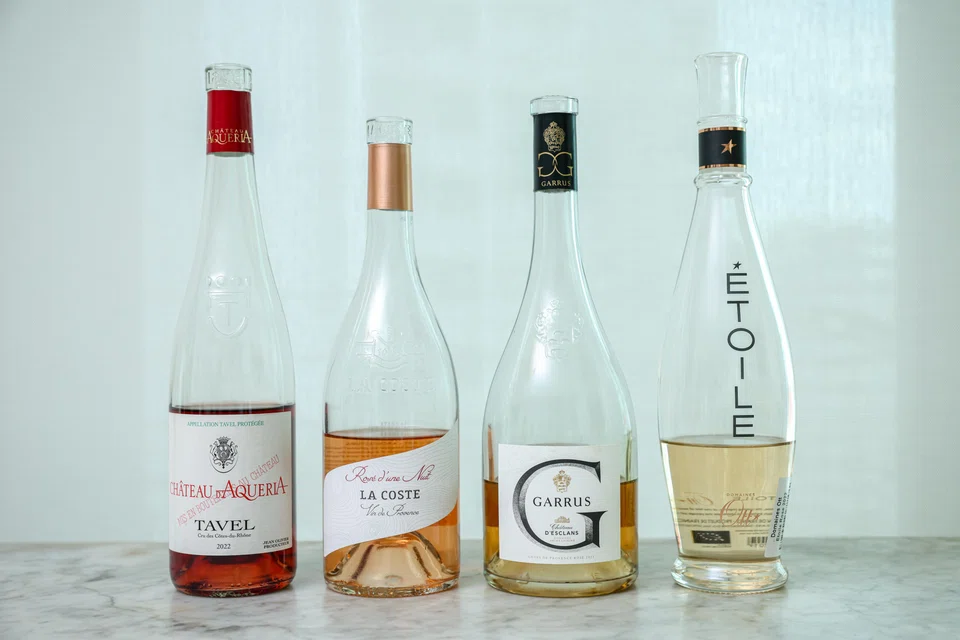
Chateau d’Aqueria, Tavel, Cru des Cotes du Rhone 2022, 14%
Bright cranberry in colour, this is perhaps darker than most Roses (a signature of Tavel Roses). This Rhone offering is savoury, with notes of red fruit and mingling spice. Elegant in structure, it is good for wine pairings. Perfect with tuna tartare, veal schnitzel and salad nicoise. A blend of Grenache, Syrah, Clairette, Mourvèdre, Bourboulenc and Cinsault. Excellent value to enjoy now.
Chateau La Coste, Rose d’une Nuit 2024, Vin de Provence Coteaux D’Aix en Provence 13%
Pale salmon in colour, this Rose of the night (Rose d’une Nuit) from Chateau la Coste in Provence is refreshing, displaying clean elegant notes of strawberries, grapefruit and citrus. A blend of Grenache, Syrah, Cabernet Sauvignon and Cinsault, this is the perfect poolside sip with anchovies, or anything Mediterranean. For perfect enjoyment now.
Chateau D’Eslans, Garrus 2021, Cotes de Provence, 14.5%
Primarily made from old vine Grenache, this Rose was fermented and aged in French oak barrels, giving it remarkable structure. It is the most wine-like with incredible textures and layers, aromas of orange peel and good elegant structure. A serious wine that will go well with food.
Domaines Ott, Etoile 2022, 13.5%
Hailing from Provence, the illustrious Domaines Ott presents Etoile “cuvee d’exception”. Crafted from the cuvees of Chateau de Selle, Clos Mireille and Chateau Romassan – hence the three stars on the bottle – this is a lovely and serious wine. Pale purple hues with notes of elderflower, peaches and a hint of citrus. A lovely saline and slightly spicy finish. This wine will develop nicely over the next three years or so.
Long Ting Vineyard “Spring Rose” 2023, Penglai, Shandong, 13.5%
Crafted from 100 per cent Cabernet Franc, this wine is vibrant with a pale salmon hue. Aromas of flowers and fruit; notes of raspberry, red apple, white peach and cherry blossom. On the palate, light-bodied, dry, refreshing acidity, savoury minerality, with a chalky and crisp finish.
Decoding Asia newsletter: your guide to navigating Asia in a new global order. Sign up here to get Decoding Asia newsletter. Delivered to your inbox. Free.
Share with us your feedback on BT's products and services
TRENDING NOW

Once staunchly pro-China, Malaysian Chinese businesses are now distancing themselves from Beijing

Britain’s mansion tax shows the difficulty of targeting wealth

Three hats, one goal: How Ng Kian Swan runs sustainability at NUHS

COE review: The gap between luxury and mass-market cars isn’t the only one worth bridging

