

As golf sees resurgence in Singapore, more should be done to make the sport accessible and affordable
There are many young and talented players here who need the opportunity and space to hone their skills
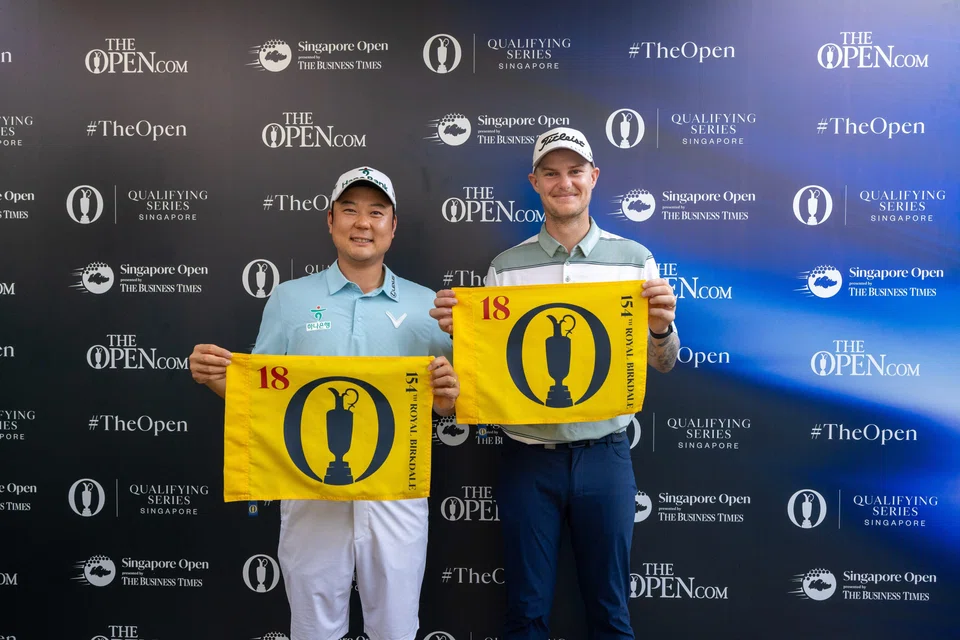
THE successful conclusion of this year’s Singapore Open golf tournament on Sunday (Apr 26) should be cause for cheer within the local golfing community.
Over the last 15 years or so, the marquee event – which used to be held annually and was backed by the likes of Barclays and SMBC, and most recently, Kweichow Moutai in 2025 – saw some editions scrapped due to the lack of a title sponsor. The 2021 competition did not take place because of the Covid-19 pandemic.
Decades ago, Singapore’s Laguna National Golf Resort Club hosted a series of Singapore Masters events. These attracted top players from around the world like Phil Mickelson, Padraig Harrington, Rory McIlroy, Sergio Garcia, Adam Scott and Angel Cabrera to Singapore.
The top rated players at this year’s Singapore Open, with The Business Times as the presenting partner for the first time, were lesser known names like the eventual champion South Korea’s Ham Jeong-woo, Thailand’s Ekpharit Wu, India’s Gaganjeet Bhullar and Australian Travis Smyth.
It is encouraging that the national Open was revived last year after a three-year absence. But the big question is whether the event will be sustainable and can continue to take place uninterrupted from now on.
This issue is particularly pertinent given the state of golf in Singapore today.
Over the past decade or more, land-scarce Singapore has seen numerous golf courses being forced to shutter.
The removal of Jurong Country Club, Raffles Country Club, and the popular Marina Bay public course from the map has reduced the number of courses significantly.
Keppel’s beautiful Bukit Chermin course is already gone and the club is now temporarily at the Sime Course, which it shares with the public. This course was once owned by the Singapore Island Country Club (SICC), which will soon also lose its 18-hole Bukit course.
SEE ALSO

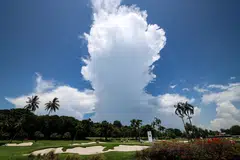



Orchid Country Club (with three nine-hole courses in Yishun), Warren Country Club, and the short chip-and-putt public course at Mandai will all disappear by the end of this decade. Tanah Merah Country Club could also lose its 50-hectare Garden Course to Changi Airport by 2035.
By 2040, there might only be about half a dozen clubs left in Singapore: Sentosa Golf Club, Tanah Merah’s Tampines, Seletar, SICC’s five nine-holes at the Island location, Laguna National, Changi and Sembawang.
The fate of the two 18-hole courses at Sime Road, formerly owned by SICC, remains in the air. Indications are that they could be taken over by the Singapore Labour Foundation – one to be a public course and the other to be the new Orchid Country Club.
Still, all these developments must be somewhat disspiriting for golfers in Singapore, and a setback for the advancement of the game here.
To be fair, Singapore’s limited land resource is a brutal reality.
Golf courses occupy vast swathes of land which could potentially be used for housing, critical infrastructure and recreational space for the masses. The needs of present-day Singapore, with a population of over six million and growing, must be prioritised over the needs of some 70,000 golfers.
That said, golf is a sport where Singapore can, and has excelled, on the global stage.
Shannon Tan is already a champion on the Ladies European Tour. James Leow is a top-ranked professional on the Asian Tour.
Troy Storm and Brayden Lee are rising stars. And these young players come after the legendary Mardan Mamat – Singapore’s most decorated male golfer internationally.
Figuratively speaking, many young and talented Singapore golfers are just a few swings away from hitting the headlines. One only has to visit any golf course or range on a weekend to see scores of youngsters training and taking to the game.
Golf used to be considered largely an elite sport with a niche demand.
Then came the pandemic in 2020. Almost overnight, hordes of people, seeking to avoid being cloistered in their homes, took to the fairways and ranges for relief and release. Today, many of them have become regular golfers.
But getting access to the remaining Singapore courses is proving increasingly difficult.
It’s common for golfers to wake up in the wee hours of the morning to sit in front of their laptop’s booking systems to seize a tee-time, while others make a beeline to their clubs at 4 am or earlier to try to personally secure a slot, especially for weekends.
Those who don’t have access to courses here are driving over to Johor or sailing down to the Riau islands. Regional golf tours are becoming increasingly popular among Singaporeans.
Indeed, golf remains a popular sport here. But with fewer courses across the island, being able to play here is a challenge, especially if one does not have a club membership.
Given the rising costs and inaccessibility, golf risks becoming an elite sport again, with the rich and privileged enjoying the game at the remaining few private clubs dominating the scene. There needs to be greater grassroots development of the sport, which is an objective of the Singapore Golf Association (SGA).
Given these circumstances, golf will struggle to attract younger players from our schools and casual players from the community.
But It need not be so. So, what can be done?
While the closures of courses reflect Singapore’s broader challenge, balancing recreational space with pressing housing and infrastructure needs need not be a zero-sum game.
Golf is the only sport where players can naturally mingle, chat, laugh and get a good walk as they swing through the fairways and greens. It is also one of the very few sports where one can play through the octogenarian phase of life.
In a fast-ageing society like Singapore, this is not something to be dismissed lightly.
There is no doubt, given the country’s constraints, land use policy has to be realistic. But it can also be holistic. This approach could ensure that even as land has to be taken away from golfers, some public courses remain open and affordable around the island.
Private clubs could be mandated to offer affordable access to members of the public who want to tee off on their courses, perhaps on some low traffic days. The SGA could devise a more proactive nationwide programme to encourage the sports in schools.
Whatever measures are taken, the guiding principle has to be that golf must not become a prestigious sport only accessible to the privileged in Singapore, with private clubs dominating the scene. The sport should not become unaffordable and inaccessible to the masses, and struggle to attract younger and casual players.
Given the Republic’s real and broader challenge of balancing recreational space with pressing housing and infrastructure needs, this is no doubt a tough task.
This year’s Singapore Open, which attracted good crowds on all four days at Sentosa Golf Club’s Serapong course, underlines the popularity of – and enthusiasm for – this sport. This is a point worth noting for urban planners in Singapore.
The writer is a former news editor at The Business Times
Decoding Asia newsletter: your guide to navigating Asia in a new global order. Sign up here to get Decoding Asia newsletter. Delivered to your inbox. Free.
Share with us your feedback on BT's products and services
TRENDING NOW
Prima to move out of historic Keppel Road flour mill building in 2028

Grab CEO’s wife Chloe Tong on life with Anthony Tan and finding her purpose

OCBC sheds S$8 billion in value as shares close nearly 6% down; analysts cautious on banks
As Asia’s food delivery giants rejig the pie, who will win the market?

