

The ‘Great Stuff Transfer’ has a US$750 billion golden lining
While inheriting physical items can be intimidating, jewellery is a rare exception
WHEN Andrew Stinger’s mother Nancy died of cancer in 2024, her grief-stricken husband and sons began the journey of managing her estate in probate court – a process that would stretch almost two years.
Then, in January 2025, Stinger’s father Bill died unexpectedly.
Bowled over by the double loss, Stinger, who lives in New York, worked with his brother to figure out what to do with their parents’ home in South Carolina and the things they’d collected over the years.
“Neither my brother nor I were ever going to open the Bill and Nancy Stinger Museum,” says the product marketing manager at Headway, a mental health technology platform.
That meant distributing or throwing out rooms full of family memorabilia, decor and collectibles that the couple had accumulated.
“I may be haunted by my mom for not retaining her Dickens Christmas house collection,” Stinger says. The hand-painted miniatures of buildings in Victorian London had to find a new home.
Yet, there was one happy spot amid the heartbreak: the jewellery.
“There were pieces that my mom inherited from her mother that it made sense for my mom’s sisters to have, and to be able to pass down to their daughters,” Stinger says. “My mom’s engagement ring will go to her only granddaughter when she grows up. These things are part of our family lineage.”
Stinger inherited some items of value himself, including his father’s Omega watch. But most important to him was his mother’s tiny yellow gold wedding band, which barely fit onto his little finger.
SEE ALSO



He was determined to wear it, however, and checked with four jewellers before one would agree to stretch it to size.
“My mom wore her wedding band every single day, as long as she could, through the end of her cancer battle,” Stinger recalls. Now, when he wears the ring, “it’s a reminder of everything she was: intelligent, artistic, tenacious, motivating and fun”, he says.
In the next 20 years, some US$93 trillion in assets in the US will be passed down from baby boomers and the silent generation to their heirs.
Along with that will come a whole lot of physical items: the china, silver, coin and stamp collections, and millions and millions of baseball cards that make up what’s known as the “Great Stuff Transfer”.
For many on the receiving end of this avalanche of arcana, it’s overwhelming.
Does anyone want the art that grandma and grandpa spent their life collecting? (There’s US$1 trillion of that going around.) What about their antique wooden furniture, which no one cares to buy anymore?
Even valuable cars, of which US$570 billion worth is estimated to be handed down, are leaving younger generations scratching their head.
Jewellery is the rare exception. The reasons are both obvious and intimate. To begin with, silver, gold, platinum and gemstones have material value.
With gold prices climbing back towards their January high (when the spot price was US$5,589.38 per ounce, five times what it was 10 years earlier) and silver on a similar trajectory, it’s a good time to come into some precious metal.
A 2026 report from the jewellery tracking startup Unvault shows that the average US household is sitting on US$5,700 in unappraised gold jewellery, with roughly US$750 billion in gold weight in drawers across the country. Add to that silver, platinum and pieces with artistic merit that can command high premiums.
Unlike art, old furniture or Dickens houses, the infrastructure for offloading jewellery at almost any price point is expansive and well established.
From estate-sale specialists, pawnshops and local jewellers to high-end auction houses to eBay and the RealReal, there are options for pretty much everything you could inherit. Digital tools such as Unvault’s personal portfolio manager and eBay’s product research or even Claude and ChatGPT can make the process more transparent and expedient than ever.
And that’s just for selling. Jewellery, with its personal nature and small size, can be an easily kept inheritance. Owning something that a loved one cherished over many years holds with it a certain power.
“Because it’s worn close to the body, because in most cases it’s given for a special occasion, jewellery is intimately linked to the person who wore it,” said Benoit Repellin, the worldwide head of jewellery at Phillips auction house.
He has frequent conversations with heirs to help them sort out whether a collection’s most important value is financial or heartfelt. “There’s a huge sentimental value in jewels,” he says. “This is why it’s different from any other category that people inherit.”
Nidhi Singhvi, a former hedge funder who later worked in crypto, said that if one has come into some jewellery or even expects to, it’s crucial to know its value – for insurance, for deciding who in a family will get what and for potential division of cash outcomes.
Singhvi started Unvault in October 2025 to bring transparency to the second-hand jewellery market.
“I’m Indian. We do gold very differently in India,” she says. Gold jewellery, such as 22-karat bracelets and necklaces, can be “transferred from generation to generation with the idea that it can be used for anything”.
“My mom used gold to send me for a school exchange programme. The market is very transparent, and there is very good financial infrastructure for selling it.”
To Singhvi, the American system of aggressive storefronts with big “WE BUY GOLD” posters in the window was a turn-off. She knew a lot of women who wouldn’t set foot in a pawnshop. Instead, her platform uses artificial intelligence to assess the jewellery in clients’ collections and assign it a clear value based on the weight of the metal and the carats and quality of the gemstones.
With Unvault, users can build a digital portfolio of what they own by sending in photographs, then watch its value rise and fall with the price of gold.
Once users are ready to offload their jewellery, they can sell directly to Unvault, which will deduct a 10 to 20 per cent fee, then pass the interesting pieces and stones to a network of estate jewellers, and melt down the rest.
“The biggest driver for us is people liquidating their inheritances,” said Singhvi. “Especially men, who make up 35 per cent of our customers. They’re very quick to make that decision.”
She believes these assets should be liquid. “We’ve helped someone make up a US$2,000 gap for the down payment of their home,” she said. “We helped pay for surgeries for a dog.”
Unvault and other digital-savvy jewellery buyers such as Circa Jewels and Worthy are a good option for 10-karat and 14-karat gold pieces, entry-level jewellery that doesn’t have historical value or isn’t “signed” – that is, bearing the stamp of a prominent jewellery maison such as Tiffany & Co, Bulgari, David Webb or Harry Winston.
For pieces that might be 18-karat or higher, a local jeweller can appraise them for a small fee and determine the quality of diamonds or other gems; they might buy them too.
For popular and iconic items, the RealReal will consign them close to their original price; that’s also a good place to find a new home for fashion jewellery (not usually made from real gold or stones) from Chanel, Dior, Gucci and other brands.
For a faster cash return, myGemma.com will buy gold and signed jewellery, plus natural stones above 1.5 carats.
For a collection that includes pieces of even greater design value or historical significance, an auction house can help sort through everything.
There are the big mainstays such as Phillips, Sotheby’s, Christie’s and Bonhams, as well as smaller regional houses, and those that specialise in estate jewellery.
“They will give you an honest opinion and advice on how to make the most out of the pieces,” said Repellin, adding that he has discovered many hidden treasures in his own consultations. “Though it can go both ways. Some people think they have the crown jewels, and you have to tell them that actually they have no value whatsoever.”
At elite heirloom dealer Yafa Signed Jewels in Palm Beach, Florida, business has been booming so much that the family-owned company has expanded to the Bal Harbour Shops in Miami Beach.
There, some of the world’s top vintage jewellery hounds sort through necklaces, bracelets, rings, brooches and tiaras ranging in value from five to seven figures. Yafa’s speciality is buying up treasures from the 1960s, 70s and 80s – what principal Tyler Moradof considers a golden era.
That was a time, like Art Deco before it, when creativity and ambition were at a peak, he said.
He points to the Cartier Panthere bangle as an example of how things have changed: The panther motif, now core to the house, was introduced by its first female head of design, Jeanne Toussaint, who started a tradition of more sculptural, three-dimensional jewellery.
The first official Panthere piece was a brooch created for Wallis Simpson in 1948, and the feline form crafted with rippling diamond, gold and onyx dominated the ensuing decades.
“If you look at one from the 60s, it’s so insane. You see the muscles, you see the paws, the head even moves,” Moradof said. “If you look at the modern bangle, you have the face at the front, but the rest is extremely flat.”
Denise Williams, an advertising recruiter, inherited some exquisite pieces in 1998. Her late mother was the daughter of an Antwerp diamond dealer who fled from the Nazis in 1940 to London with gems sewn into the shoulders of her coat.
“She had the most beautiful jewellery. Some of it she’d inherited from her mother and her grandmother,” Williams said. “She also knew all the right people to go to, to get things made in Hatton Garden, London’s equivalent of 47th Street (the Diamond District) in New York.”
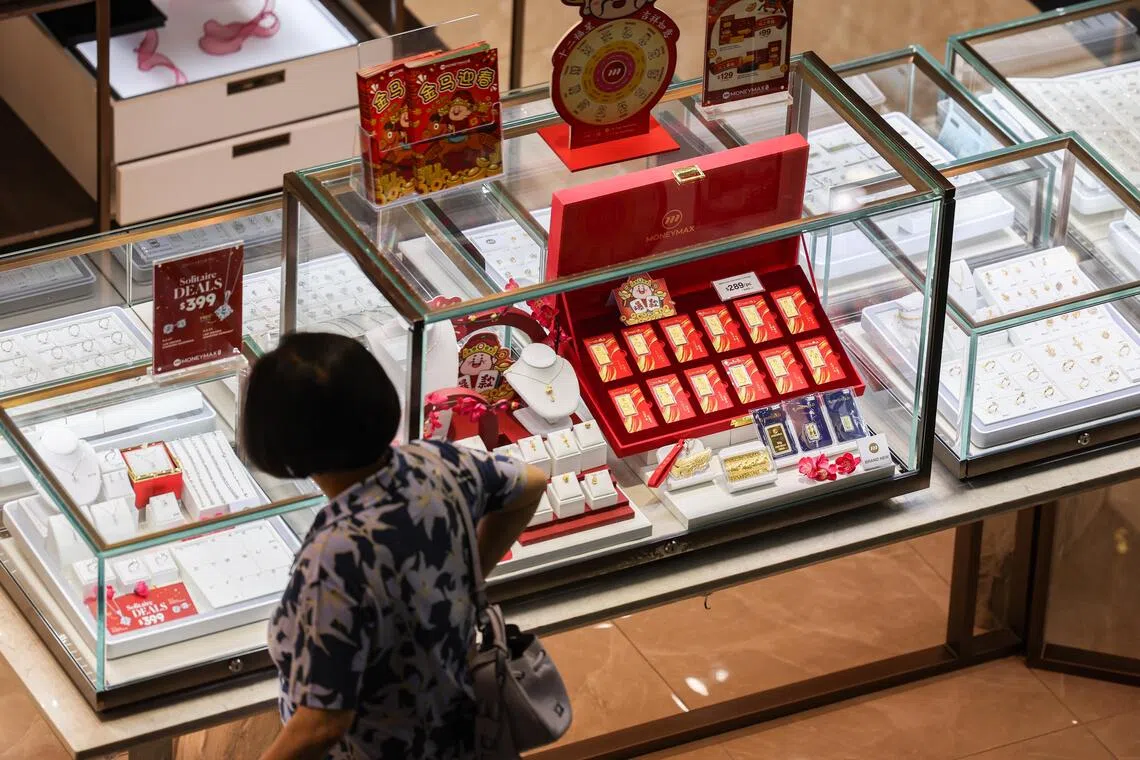
Like many jewellery heirs, Williams ended up dividing the collection into three groups.
The first she took to auction houses to get appraised and sold. “I didn’t really have an idea of what they were, or what the value was, and I expected them to decline, actually,” she said. “They told me what they thought the auction price might be, and we did better than we expected.” Two exceptional pieces were sold by Sotheby’s, the rest by the smaller Chiswick Auctions.
In a second group were certain items, including a ring and a pair of earrings, that did not merit being auctioned. She kept these for sentimental reasons.
The third group was jewellery with old-fashioned designs, from which Williams took the stones and reset them into modern pieces for herself and her children.
“My grandfather gave me a diamond, which was more than two carats, just sitting on a gold band. It was very ostentatious, and the setting wasn’t what I wanted,” she said. “I had it reset, and I wear it all the time.”
Other diamonds she had reset into earrings that she wore to each of her sons’ weddings. In total, she has three sets of inherited diamond earrings that she plans to pass on to her granddaughters.
“For me, a key part of such intergenerational transitions is not being afraid to repurpose, reset or recast things,” said Andrew James Hamilton, a curator at the Art Institute of Chicago.
“My grandmother had a pair of opal earrings that my mother inherited and turned into two tie tacks for her gay grandsons, my brother and me,” he added. “Earrings can become cuff links, rings, pendants. And with the price of precious metals as high as it is, things can be melted down and recast as something else equally precious.”
Almost any local jeweller can remake something, but there are places that specialise in working with clients to redesign inherited pieces that are not to their taste.
In New York, Spur Jewelry works with items in the range of US$2,000 to US$7,000, and even recuts and repolishes chipped gemstones. (Moradof and Repellin caution against altering important jewellery from a historic house, where the design is what makes it a treasure.)
Even if a piece is deemed inexpensive, having the marks and memories imprinted by a loved one can end up making it feel, well, priceless.
“After the Holocaust, my grandparents immigrated to Israel, and my grandmother always wore a gold Magen David Jewish star and an infinity necklace that looked like an S to honor her roots and love of my grandfather,” said Ronnit Hershowitz, a marketing director in New York.
“It was passed down to me. My grandfather always got choked up seeing it because it was more than just a necklace. For them, it represented eternal strength and love.” BLOOMBERG
Decoding Asia newsletter: your guide to navigating Asia in a new global order. Sign up here to get Decoding Asia newsletter. Delivered to your inbox. Free.
Share with us your feedback on BT's products and services
TRENDING NOW
Malaysian king buys stake in Singapore-listed mining firm expanding into rare earths

Grab CEO’s wife Chloe Tong on life with Anthony Tan and finding her purpose

Once staunchly pro-China, Malaysian Chinese businesses are now distancing themselves from Beijing
Longer wait times expected as S’pore healthcare institutions report system disruptions

