

Why Singapore men are joining the new ‘MenToo’ movement
Many men here are struggling in silence. A new coalition is tackling loneliness, mental health and the pressures they face

[SINGAPORE] Benedict Sim’s girlfriend had slapped, punched and scratched him. For a while, he did not retaliate. Then, when he could no longer take the blows, he pushed her away.
She called the police immediately.
“I was bleeding and she was fine. Her make-up was fine. Yet, when the police arrived, they immediately assumed I was the aggressor,” says Sim, who is not using his real name.
The relationship ended. But for Sim, the incident left behind something harder to shake: the feeling that when a man says he is in trouble, people do not hear him.
That is the uncomfortable question more men in Singapore are starting to confront. What happens when the person expected to be strong is not coping? What happens when the provider, protector and breadwinner starts to crack?
Men are told to be useful, stay calm, and not to complain. They absorb this message at home and in school, and it is reinforced during National Service.
But in Singapore, work can be relentless. Housing is expensive. Parents are ageing. Relationships are under pressure. The bar for success keeps rising. For some men, masculinity is starting to feel less like an armour and more like a weight.
A call for men to stop pretending
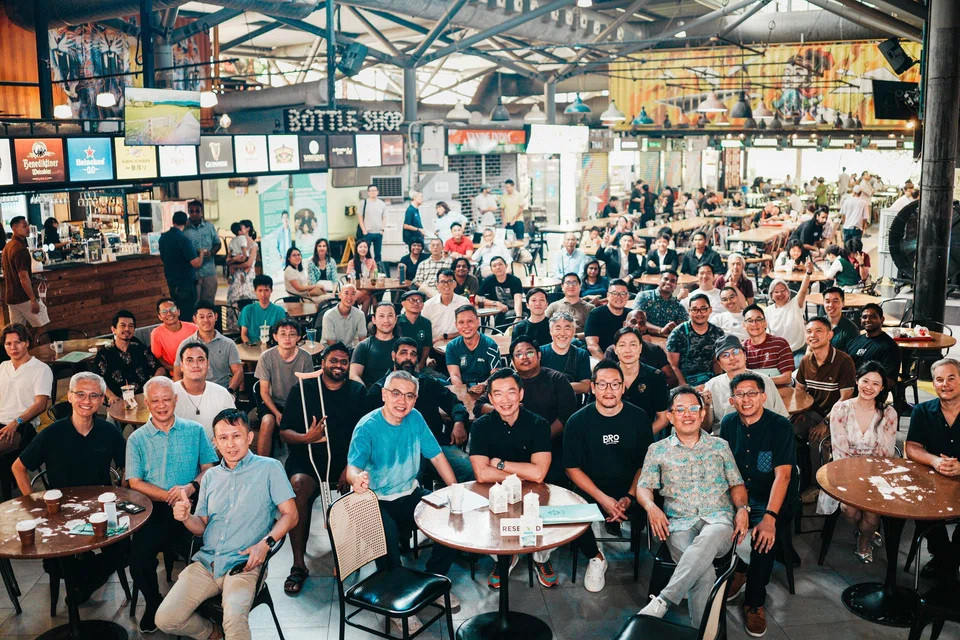
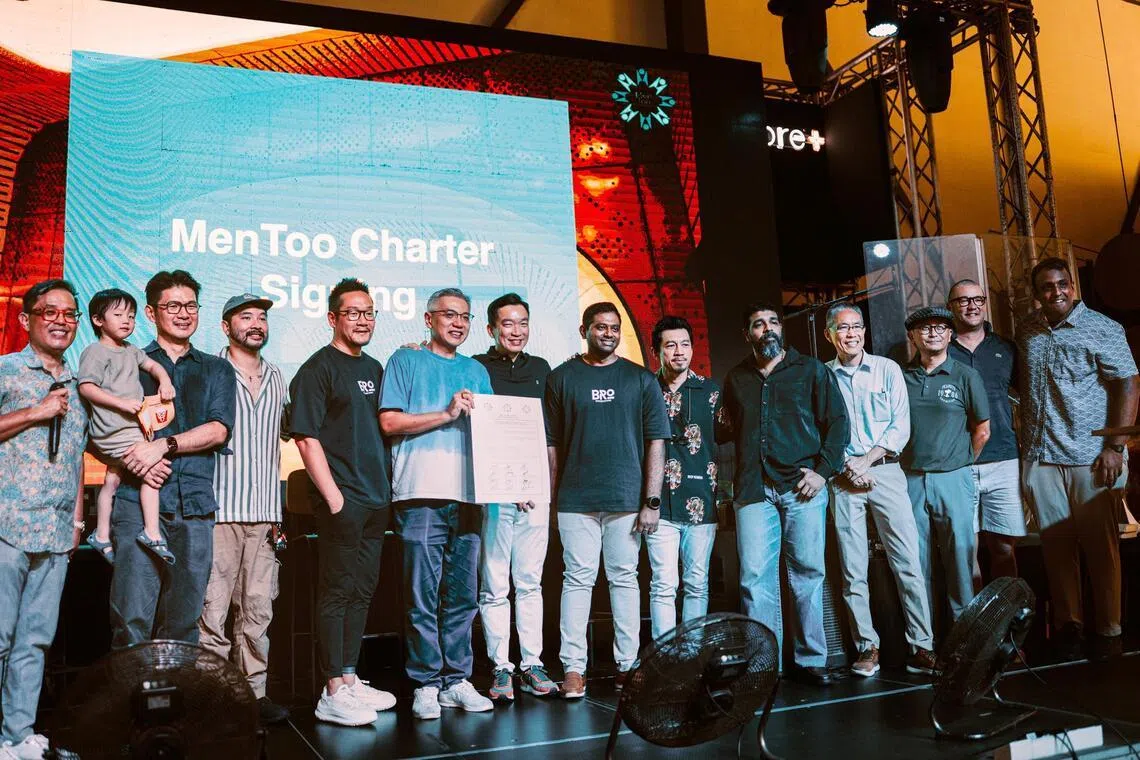
Sim was one of about 80 men who gathered at Timbre+ One North on Saturday (Jun 6) for the launch of MenToo, a new movement that wants Singapore men to speak more honestly about mental health, relationships and the pressures they carry.
Founded by psychological-legal company Amicus in partnership with men’s group Bros Before Woes, MenToo aims to build a research-informed support network and a collective voice for men in Singapore.
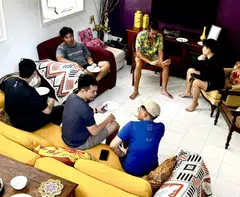
The name “MenToo” is deliberate, a riff on #MeToo – but it is not, organisers insist, a backlash against women or a bid to recast men as victims.
Instead, it is about making room for men to talk about loneliness, divorce, fatherhood, money stress, relationships and the fear of not measuring up.
At the launch, 12 men’s groups signed its charter, witnessed by guest of honour Eric Chua, senior parliamentary secretary in the Ministry of Social and Family Development and Ministry of Law.
Among the 12 groups is Men-Kind, founded by Paul Latch, a former Singapore Armed Forces battalion commander whose concern for men’s well-being began in the army.
There, he saw young men from vastly different backgrounds arrive under the same uniform, many already carrying doubts they did not know how to express.
“Some say things like: I don’t think I can make S$10,000 or S$20,000 a month. I don’t think I can afford a car or a condominium. Does that make me less of a man?” says Latch.
His response is to give men permission to stop performing. “I tell them they can cry if they want to. I tell them it’s not a weakness to cry. It’s just one of many normal human behaviours.”
“Some men just won’t share”
But even when support exists, many men still struggle to walk through the door. The idea of sitting in a circle and talking about feelings seems silly and awkward.
That is why groups such as Alpha X and Fireside Circle don’t begin with a confession. They begin with something more familiar to men: activity and movement.
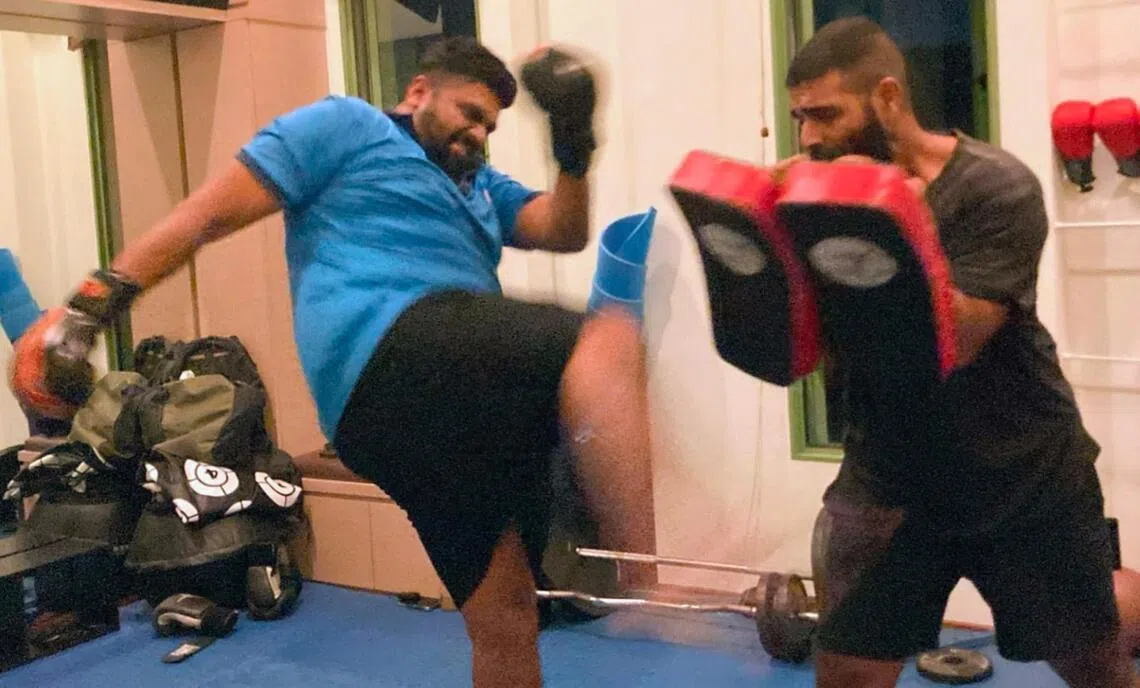
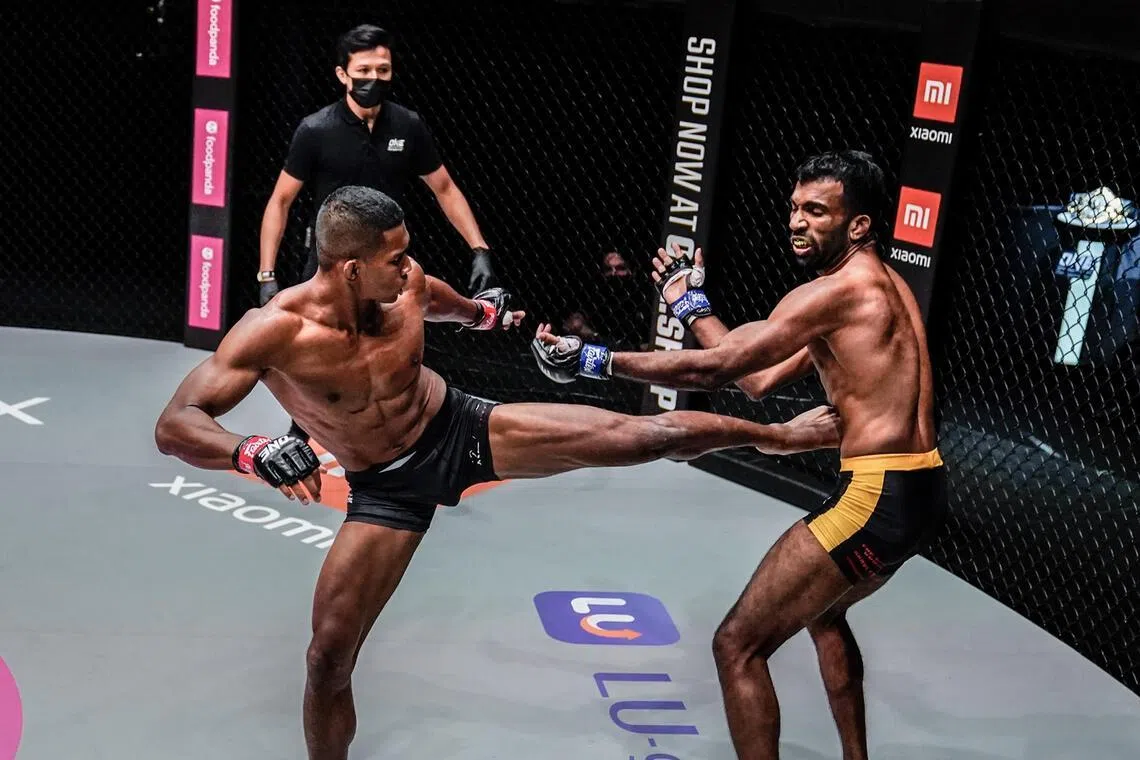
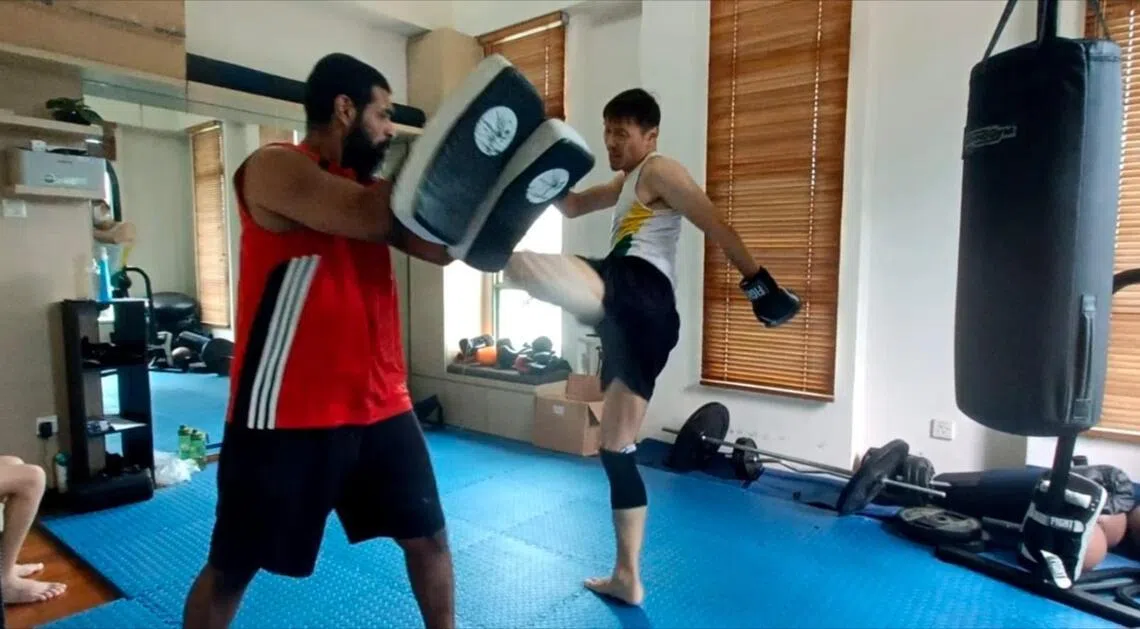
At Alpha X, the men do not gather for a formal therapy session. They meet to “punch and kick in our sparring space – and then sit down and have a chat”, says founder Ghaneswaran Sukumaran. “We talk about everything from A to Z, how we can help each other, create a brotherhood and move forward,” he says.
Ghaneswaran knows the burden men carry. He remembers what his father once told him: “Being a man, you are the donkey of the family – you have to carry all its burdens.”
At Alpha X, the aim is not simply to make men stronger. It is to help them understand what they are carrying, and how to keep going without breaking under it. “Ultimately, we learn it is not how hard you punch,” says Ghaneswaran. “It is how often you fall down, and are able to pick yourself up and move forward.”
But getting men to show up and share their emotions remains difficult. Several founders say it is often women who first persuade the men in their lives to attend.
Wives, girlfriends, mothers and sisters become the unofficial first responders to male distress. They are often the ones who notice when a man goes quiet, becomes irritable, and pulls away from the ones they love.
Amicus partner Danny Loong saw this when he posted on LinkedIn about the MenToo movement: “The biggest response actually came from women, who were relieved we were starting something to take care of the men.”
Women, as experts often note, are more practised at building emotional safety nets: the regular check-ins, the heart-to-heart conversations, the instinct to ask: “Are you OK?” Men have social circles too, but they are often built around activity, work or banter – not vulnerability.
What kind of men do we produce?
But do Singapore men really have it that hard?
Brian Liu is not so sure. As co-founder of the men’s community group Bros Before Woes, he spends a lot of time thinking about what men are going through.
Singapore is stressful. But it is also safe, orderly, affluent and unusually well-resourced. Having travelled widely for work, Liu thinks many young men elsewhere in Asia have it much harder.
“It is so much tougher to be a fresh graduate or working professional in Hong Kong, Vietnam and anywhere else in Asia,” he says. “Here in Singapore, the government, the system – everything works. It is easy to get an education or start a business. Everything is here for you to leverage.”
So perhaps the better question is not whether Singapore men are oppressed, but rather, what kind of men Singapore produces. “I feel they carry certain attitudes that are the products of the systems they’ve been through – and I feel they have a lot of things to unlearn,” says Liu.
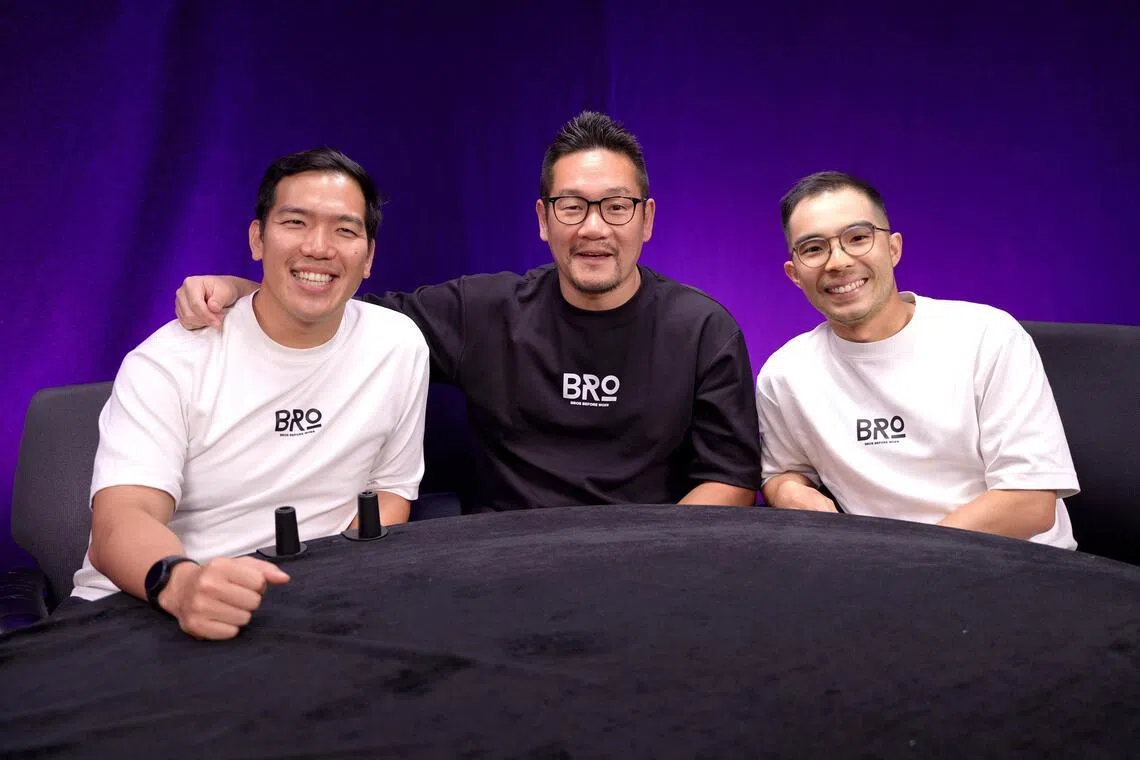
Liu points to single-sex schools, including the elite ones, where boys may spend four to 10 formative years with limited everyday contact with girls. How does that shape their attitudes towards girls?
For boys in co-ed schools, girls are simply part of daily life: classmates, friends, rivals, collaborators. For boys from all-boys schools, that ease of socialising with girls comes much later, if at all.
Then comes National Service, which gives Singapore masculinity “a different kind of identity that most men in Asia don’t have”, he says. It introduces young men to a world organised around rank, command and hierarchy.
It can build discipline and solidarity – but it can also sharpen the instinct to compare yourself against other men: Who commands, who follows? Who’s stronger, who’s weaker?
After NS, do men leave that ranking system behind, or do they carry it into work, friendships and relationships – measuring their worth by whether they are leading, earning and winning?
Then there is Singapore itself. Liu believes the efficiency of the state can shape how some men imagine life should work. Study hard, get a job, climb the ladder, provide for the family. Follow the plan, and the plan should deliver.
But relationships are not as neat as policy papers. Marriage is messy. Fatherhood is unpredictable. Life does not always reward those who follow the plan.
And that, says Liu, is where some Singapore men begin to struggle – not because the system has failed them, but because it has prepared them for a life far neater than the one they actually have to live.
Finding the ifs and whys
Of course, not everyone agrees on what is going on with Singapore men. Are they struggling more than before? Or are they simply less willing to adapt to changing circumstances? Are they lonely, misunderstood, or under pressure?
That is why MenToo has commissioned Murdoch University to conduct a five-year research collaboration with Amicus. The aim is to move the conversation beyond personal stories and find out what is actually happening.
Psychologist Nicholas Gabriel Lim, a managing partner at Amicus, says: “Through the course of my work with men and families, the recurring issue I find is that men feel they’re not understood.
“In some extreme cases, they suffer a deep loneliness that, even when they’re with people – be it their spouses or children – they feel totally on their own. Nobody understands what they’re going through.”
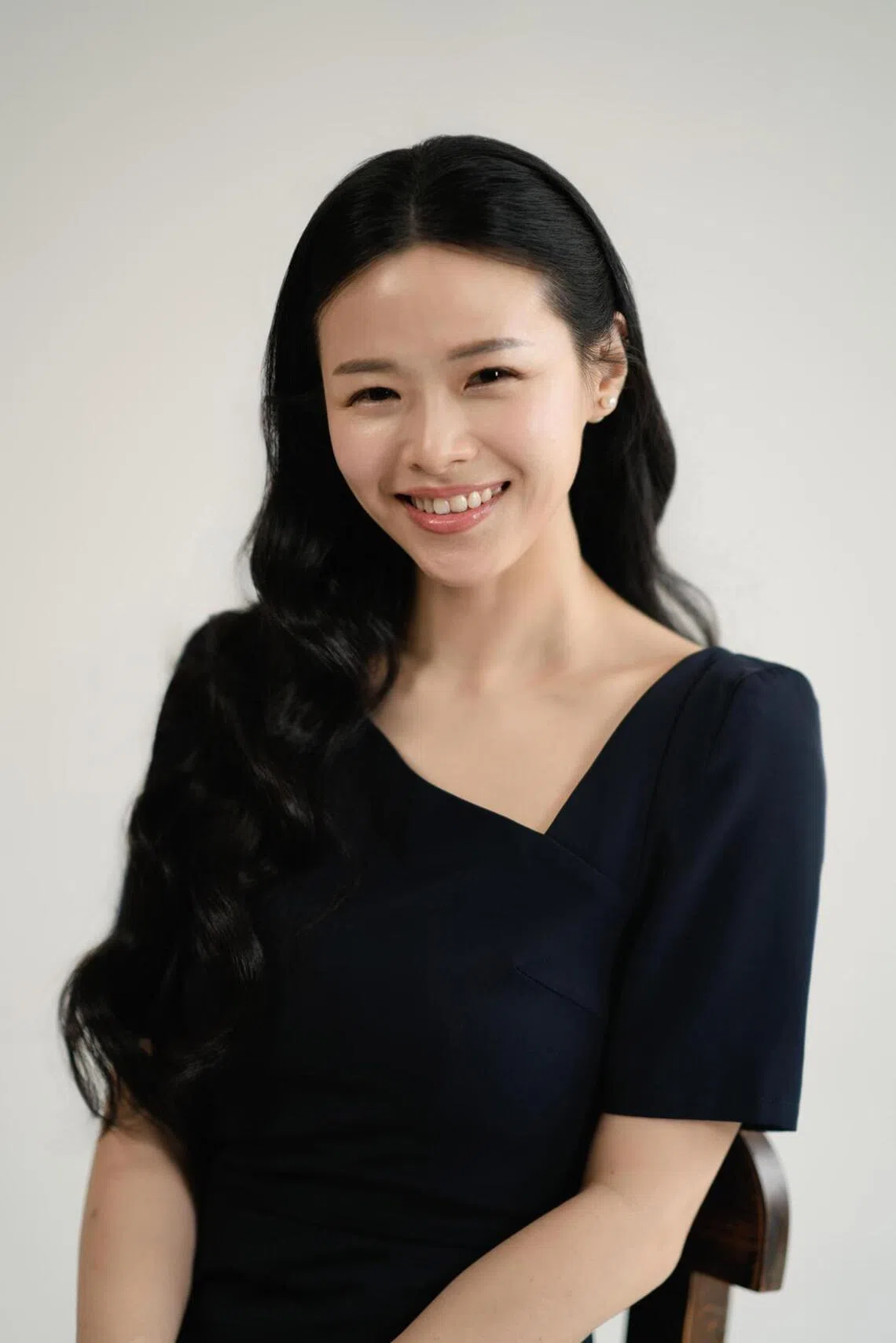
That is where Dr Amy Lim, discipline lead and senior lecturer in psychology at Murdoch University, enters the picture. Together with MenToo and Amicus, she is working on a five-year research collaboration to put evidence behind what has so far been largely anecdotal.
The first phase is a survey on men’s well-being, mental health, social connection and gender roles in Singapore. But she is careful about the aim of this study: “The idea is not necessarily just to simply ask whether men are doing well or not doing well... Rather, it is to better understand the conditions under which men flourish, and under which conditions they would seek support or remain silent.”
That framing matters. Public conversations about men often collapse into binaries: Are Singapore men privileged or pressured? Are they oppressed or simply refusing to adapt?
Dr Lim’s study takes a measured approach, looking instead at how pressures differ across life stages – from young men entering the workforce, to fathers managing family and financial responsibilities, to older men facing retirement and the loss of roles.
The working hypothesis is that men’s well-being in Singapore is shaped not only by stress, anxiety, loneliness and financial strain, but also by expectations around masculinity – to be stable, resilient, and able to cope without help.
The research will also examine how men are perceived when they finally show distress. This matters because support cannot be useful if it does not first understand the form male distress takes.
“Ultimately, healthier models of manhood,” says Dr Lim, “can benefit not just men, but also their partners, families, workplaces and wider society.”
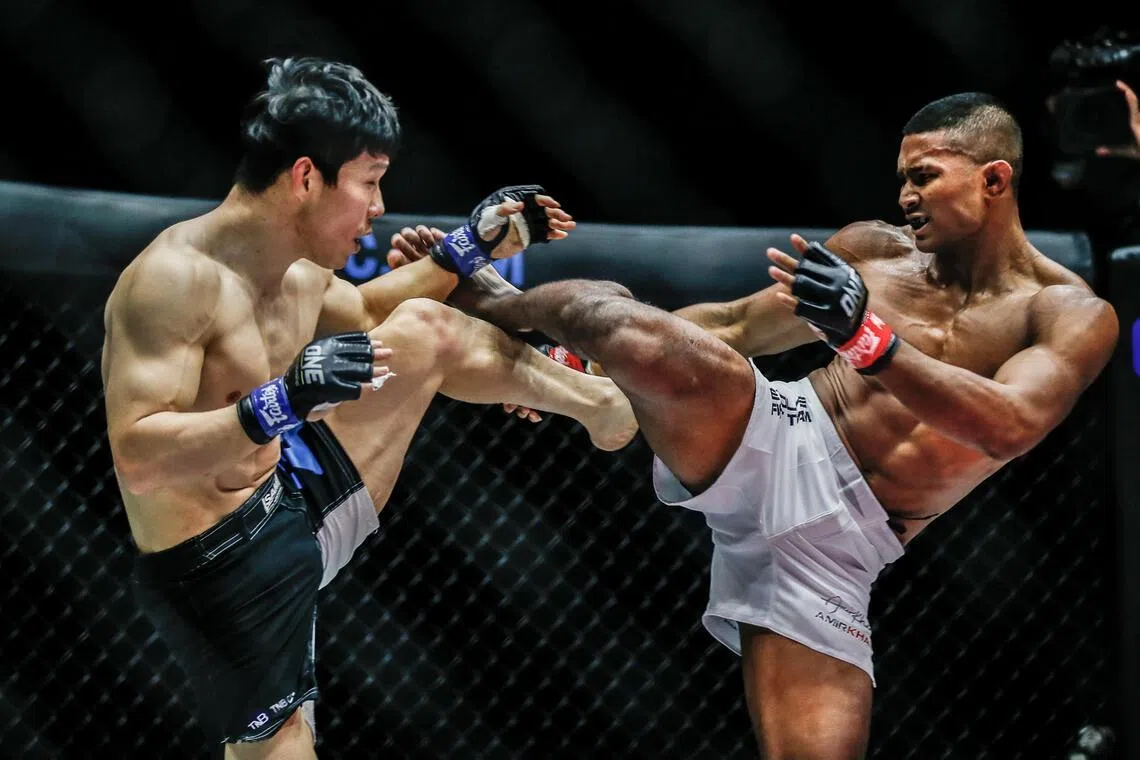
At Saturday’s launch of MenToo, a featured speaker was Amir Khan, the popular mixed martial arts fighter. As a teenager, he was diagnosed with Tourette syndrome, bullied in school and made to feel like “the odd one”. Martial arts became the place where he learnt discipline, confidence and control.
Yet, being a professional fighter, he says, has not automatically equipped him for the emotional demands of adult life. Becoming a young father, losing his own father, and going through a marital separation have forced him to confront another kind of struggle – not the physical kind, but the difficulty of being honest about fear, grief and vulnerability.
Today, he works with men through health and fitness, helping them build the physical and mental foundations to seek support before their lives unravel.
He says: “Men in Singapore are told to be strong, but we don’t have the proper lessons to be strong effectively. Part of the reason why my marriage didn’t work out was because I didn’t know how to be emotionally vulnerable with my partner... I’m rebuilding myself now with an understanding that masculine strength needs to be defined in a different way.”
To join the MenToo movement, visit amicuscuriaepcs.com/mentoo. Or contact the various groups in the coalition, including Bros Before Woes, Centre For Fathering, Real Men Co, The Ordinary Dad, Forum On The Richness Of Manhood, Men-Kind, The Fireside Circle, Alpha X, Anchored Men, SG Dads and The Man Club.
Decoding Asia newsletter: your guide to navigating Asia in a new global order. Sign up here to get Decoding Asia newsletter. Delivered to your inbox. Free.
Copyright SPH Media. All rights reserved.
TRENDING NOW
UOB found ‘grossly negligent’ over Stamford Land rights issue advice, to pay S$1.9 million
MAS allocates S$1.45 billion to five asset managers in third EQDP batch: Chee Hong Tat

He built the Vingroup empire. Now South-east Asia’s richest man is handing some key roles to his sons

NoMad Singapore marks brand’s arrival in Asia

