Home-grown creators
Meet a group of creatives who give their personal take on the made-in-Singapore label

Tay Suan Chiang
SINGAPORE may be small, but there’s no lack of creative talent, some of whom have successfully created a name for themselves overseas.
Take for example, industrial designer Nathan Yong, who has been designing for well-known furniture brands such as Ligne Roset and Herman Miller. Yong’s works have also been exhibited in design centres around the world.
There is also fashion designer Andrew Gn, who is a regular fixture at Paris Fashion Week. Fans of his eponymous label include royalty and Hollywood celebrities.
While not quite in the same realm yet, a wide pool of up-and-coming talents exists, among whom are these 4 promising artisans whose passions have led them down the creative path, with unique products that stand out from the rest.
Chia Ching Kai, creator of the Paper Empress
It is not uncommon to hear of Barbie and Blythe doll fans who create bespoke outfits for their dolls. Art director Chia Ching Kai, does the same too, but with a twist.
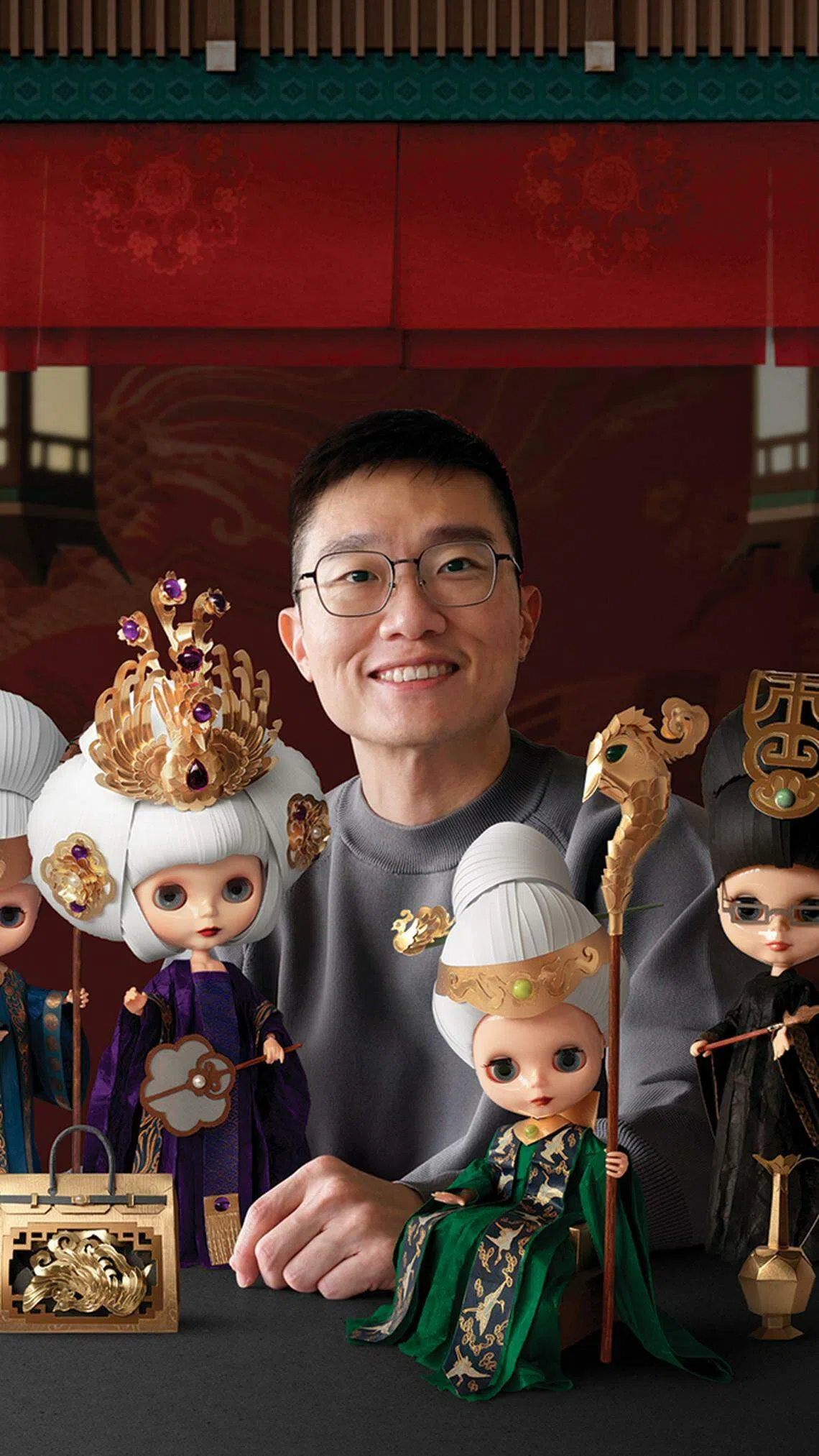
Over the past few years, he has created a fictional royal character - the Paper Empress, ruler of the Paper Kingdom, which can be found on Instagram.
“The Paper Empress is first and foremost a digital character made for social media. The basis of all her costumes, dioramas, small props, et cetera, is a developing story of the Paper Kingdom that runs parallel with the contemporary world, almost like a long form drama serial,” says Chia.
Hours of watching period TV dramas, especially those set in the Tang Dynasty, captivated him so much, that he began sketching costumes, headdresses and sets.
SEE ALSO
But Chia soon realised that what was depicted on TV shows was neither comprehensive nor accurate, which spurred him to do his own research on Chinese culture.
In 2018, he felt the need to do more beyond his day job as art director. “Looking at all my drawings and sketches of ancient Chinese beauties, I thought, why don’t I try creating them even though I had no idea how to go about it. It is this prospect of challenge and unknown that has kept me going,” he says.
He considered using a Barbie doll as his mannequin, but her head was too tiny to work fancy hairstyles or to pile on head gear. A friend later introduced him to the Blythe doll.
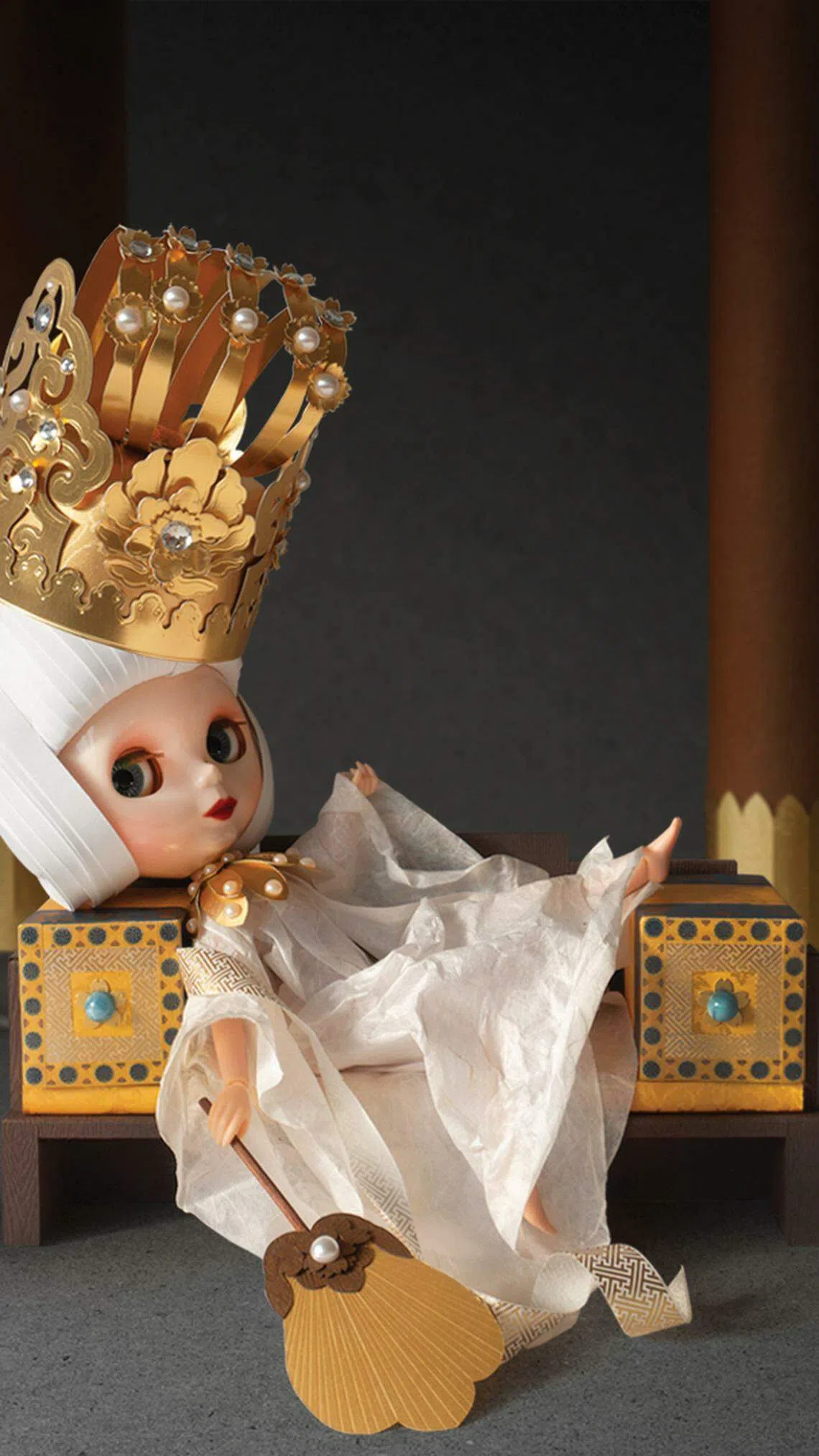
But don’t call the Empress a Bythe doll dressed in paper, lest you want to be sent to the guillotine.
“The Paper Empress has since developed so much that it is already not a Blythe in its purist way, but a paper-based personality in her own right,” says Chia. “Today when we look at the Paper Kingdom, it has moved beyond just a Blythe doll collection, into a world of its own that showcases the rich and textured culture of the Tang era.”
Chia plans new costumes and sets based on significant events and festivals. “Sometimes ad hoc happenings around the world can also be the source of inspiration for new creations,” says Chia. One example is that of the Paper Empress carried on a palanquin, heading out to get her Covid-19 vaccine jab.
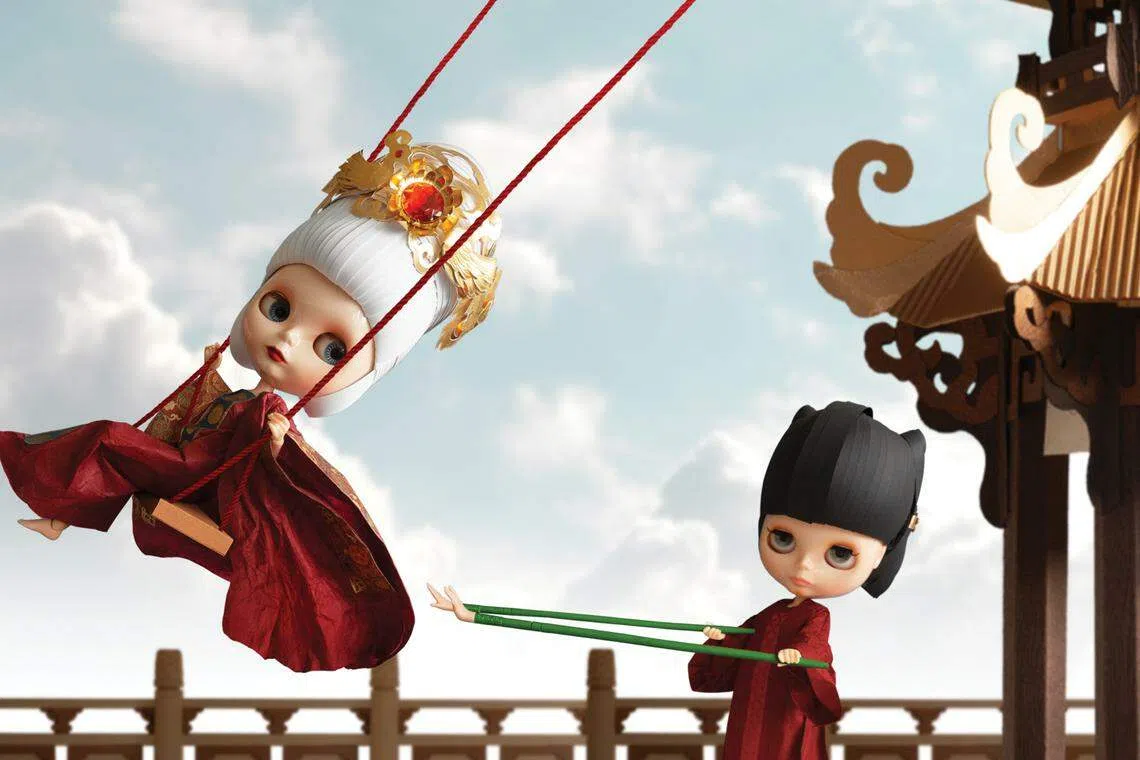
Ideation and conceptualising each scene is time-consuming. Chia used to find cutting and sculpting of hair ornaments challenging, but with consistent practice and innovative use of techniques and instruments, it has become almost second nature. Still, it can take 3 to 5 days to complete a look. He has built up a cabinet full of paper dresses, crowns and ornaments.
He has received requests to sell the dolls, but for now, he isn’t doing so.
“The Paper Empress began as an expression of my passion for Chinese culture, and I hope to never trade that for profit or popularity. But I do wish that more, especially those beyond the arts and culture group, would be inspired by what paper can do through the light-hearted and informal content I create,” says Chia.
Ng Sze Kiat, putting the fun in fungi
Some people like mushroom soup, but not Ng Sze Kiat. But he loves the fungi so much that he has built his career around them.
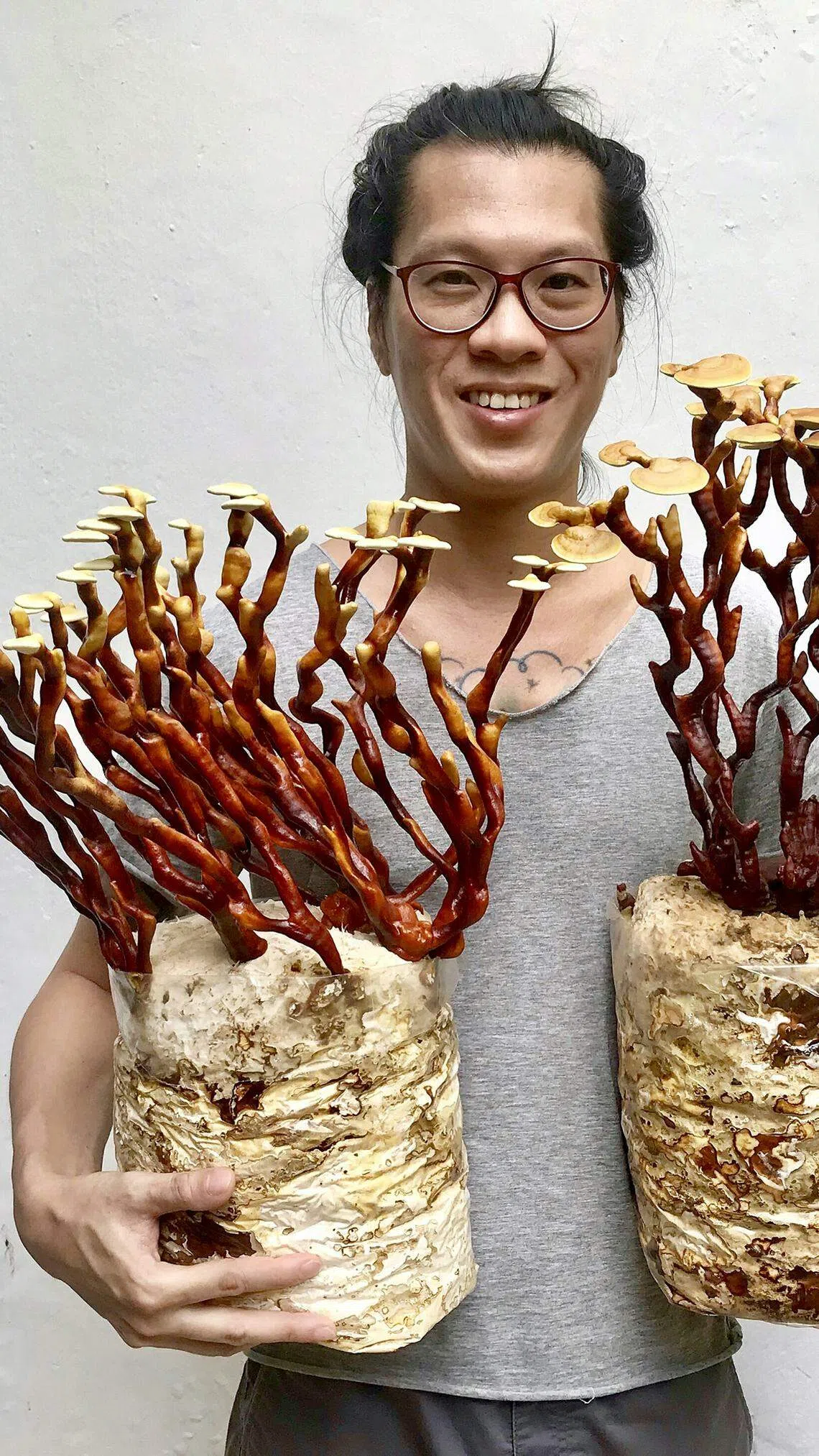
“Mushrooms fascinate me, and I’m constantly learning from them,” he says.
He has been growing mushrooms for over a decade, and a few years ago, started Bewilder, a mycological design studio that explores different applications for the fungi world.
The company grows over 40 different medicinal and gourmet mushrooms species. Bewilder is the only one in Singapore that grows mushrooms from cultures and strains in petri dishes. Mushroom farms conventionally grow their produce in imported grow bags.
Bewilder conducts mushroom growing workshops and also retails mushroom growing kits. But there’s more, starting with the Mycola range of lamps.
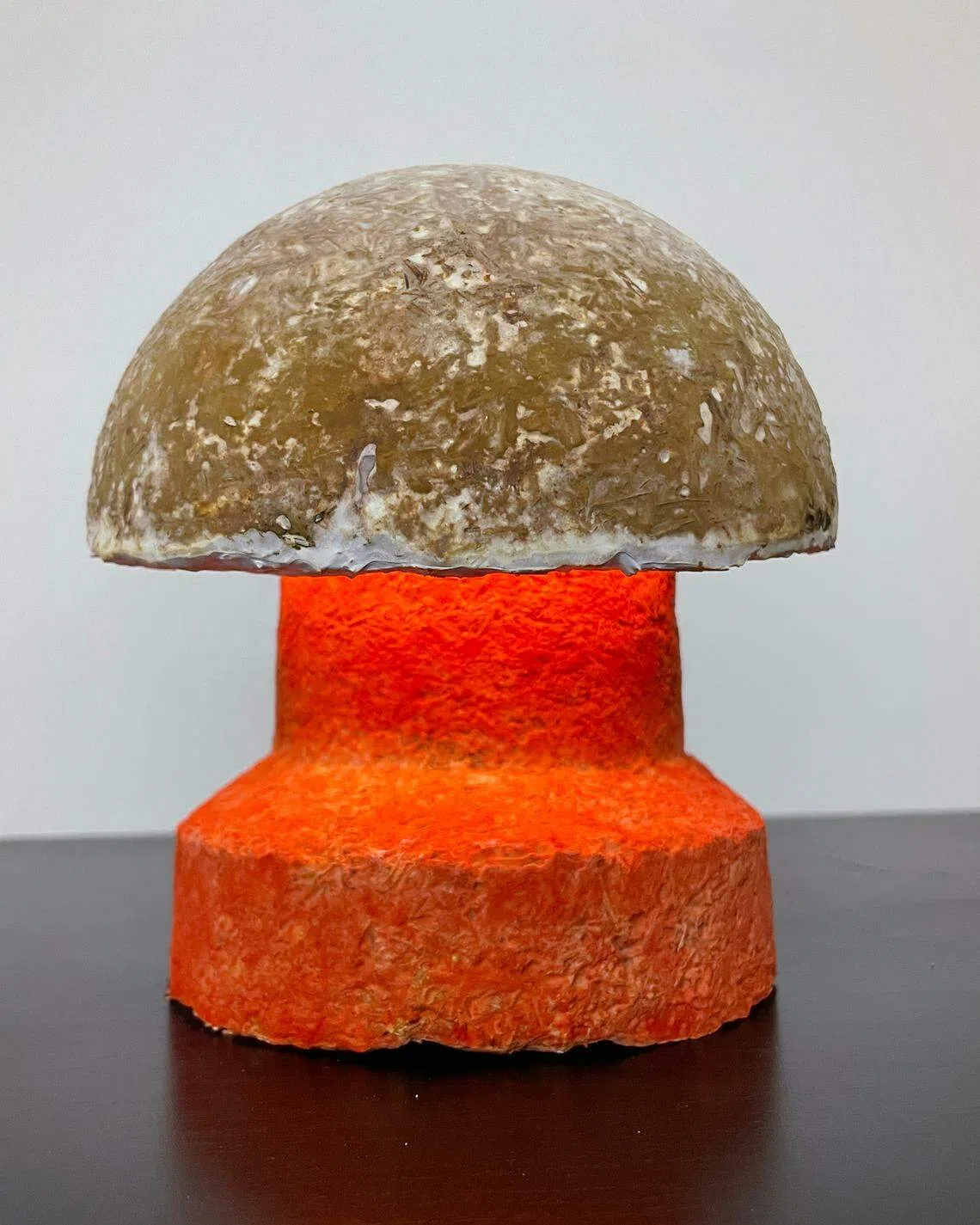
These are mycelium-based lamps that were grown using various fungal species on waste substrates. The lamps are grown from scratch in Bewilder’s lab and studio. “This collection is the first of its kind and is a blend of art and science, traditional and modern, ancient and futuristic, earthly and unearthly,” says Ng. The lamps are best kept indoors in low humidity conditions.
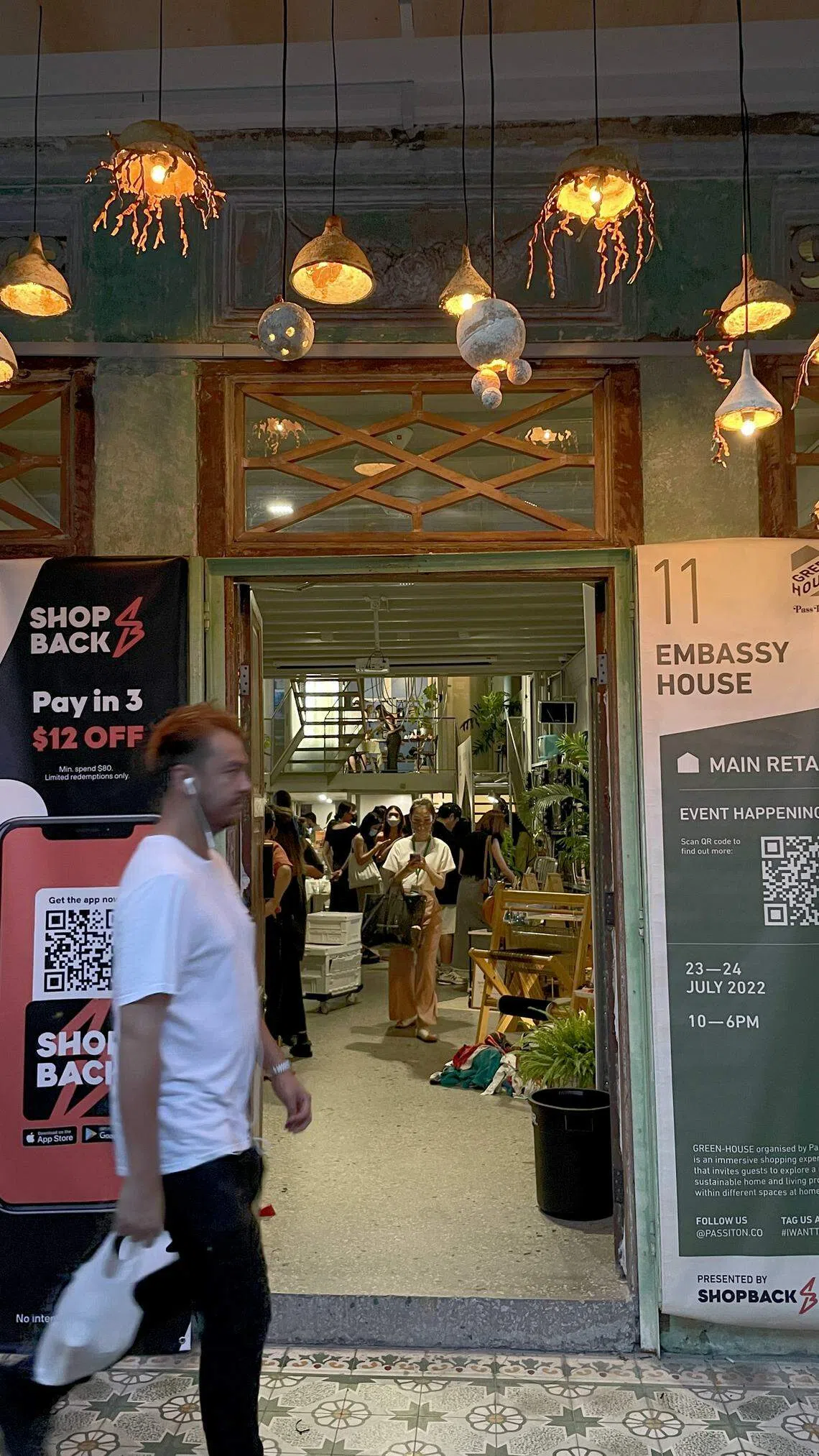
Mycelium has properties that lend well to lamp design. “Mycelium as a tactile, living biomaterial is truly exciting to work with, and we have learnt over the years to elucidate different properties by tweaking various growth parameters. We use our knowledge to produce objet d’art as a means to showcase the immense potential of fungi,” says Ng.
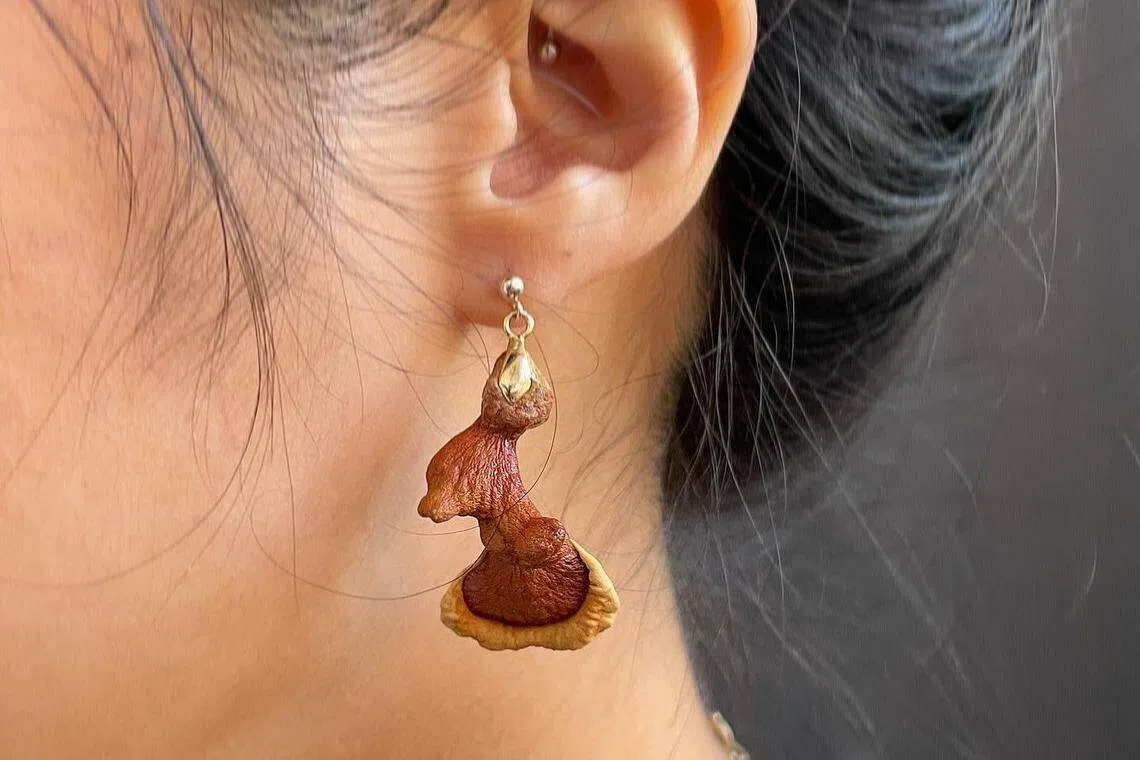
Ng has also found other creative ways to showoff his fungi. For example, there is the Fungarium, which allows customers to fruit lingzhi sculptures easily. Ng has also created jewellery using small lingzhi, which he says have been “too popular for us to keep up.”
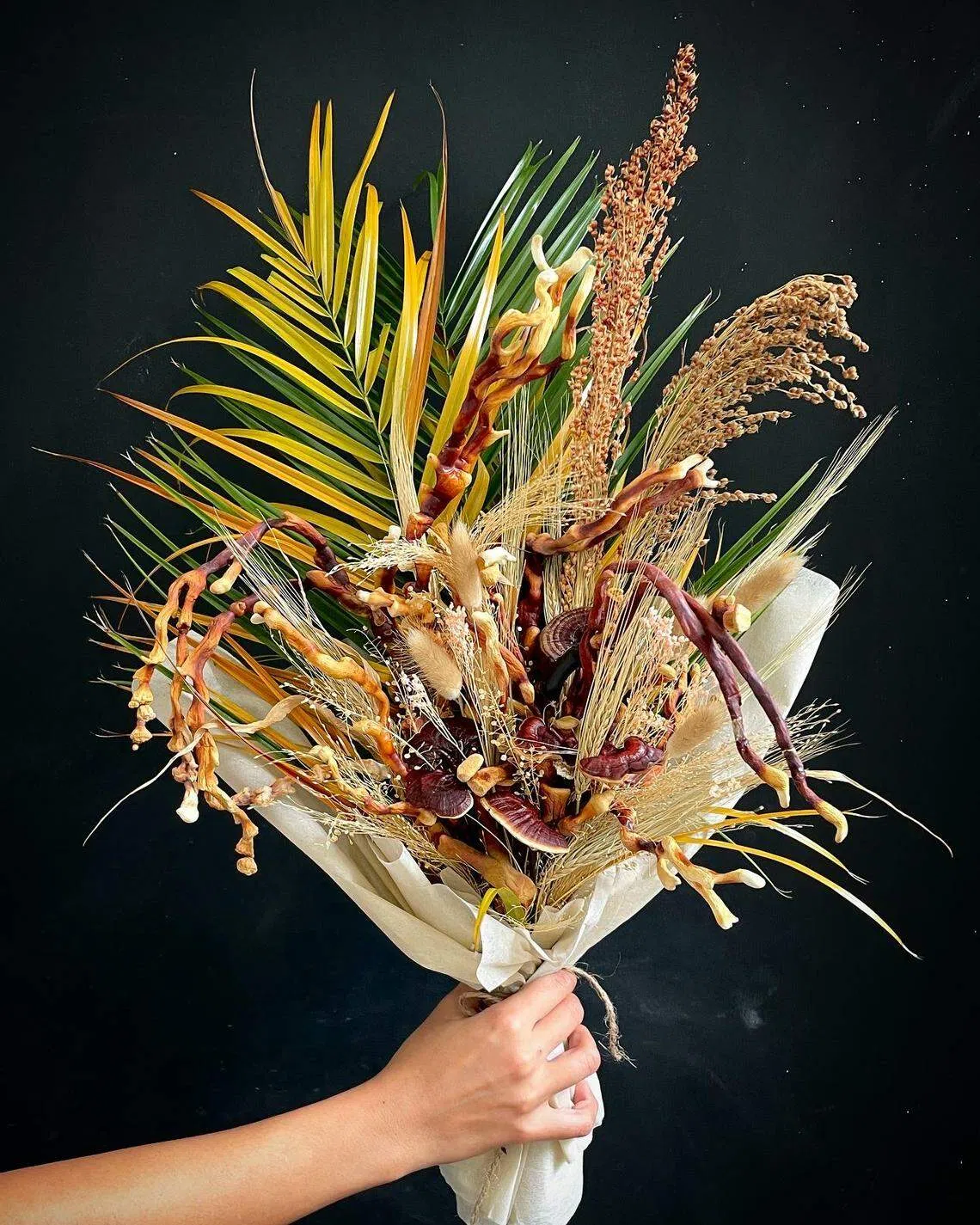
He even offers fungal bouquets. Instead of flowers, dried mushrooms, both edible and medical, are arranged as a bouquet.
Most people are bewildered when they hear of the company, not understanding the potential of what it can achieve.
“Bewilder is modelled after the way mushrooms grow. We work hard, unseen, like mycelium. But once in a while, at the right time and space, we mushroom. That’s when people take notice. These are opportunities for us to spread spores in Singapore,” he says.
Ng says, as a startup, he faces his fair share of challenges. ”Our biggest task, however, is in creating the awareness to show what mushrooms are capable of.”
He feels that Singapore is essentially a mycophobic country where mushrooms are associated with death, decay and poison. “What people tend to miss out on is that mushrooms also represent rebirth, revitalisation and renewal. Life and death can be symbolised by a singular mushroom,” he says.
Ng tackles this challenge through programs with schools and institutions to teach participants how to grow edible mushrooms using waste materials found at home.
The Mycola collection also helps spark conversations about mushrooms. “We are in a way, crafting a community of mycophiles, and we feel that this is the way towards understanding and embracing these very much misunderstood organisms,” says Ng.
Hadassah Lau, finding beauty in the mundane
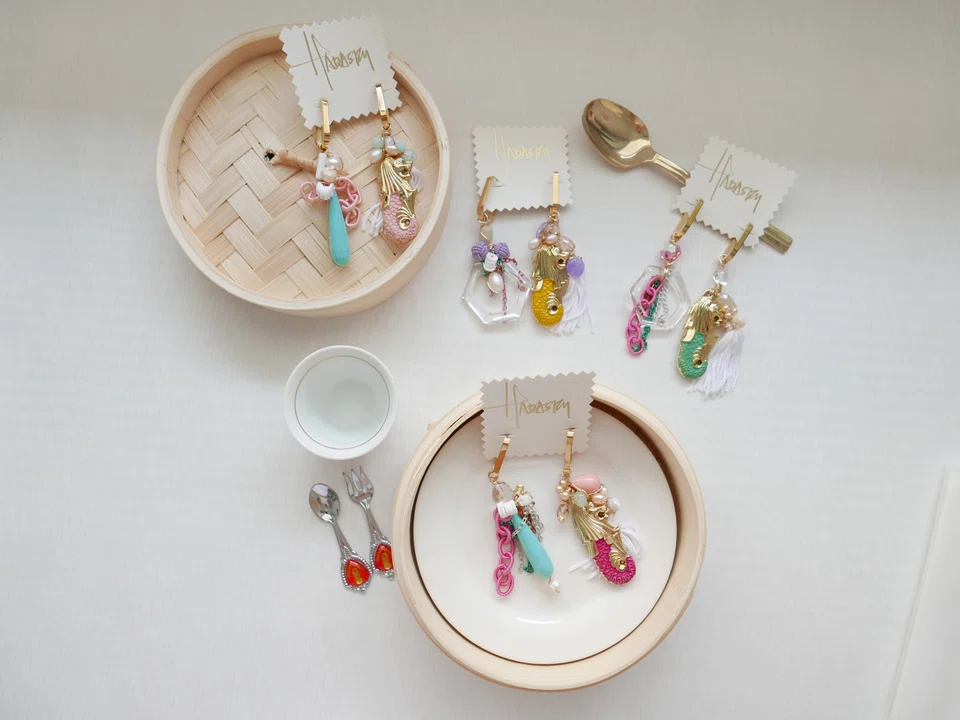
A Merlion keychain or one with the Singapore flag on it may not win any design awards, but in the hands of Hadassah Lau, they have become conversation-starting, statement pieces of jewellery.
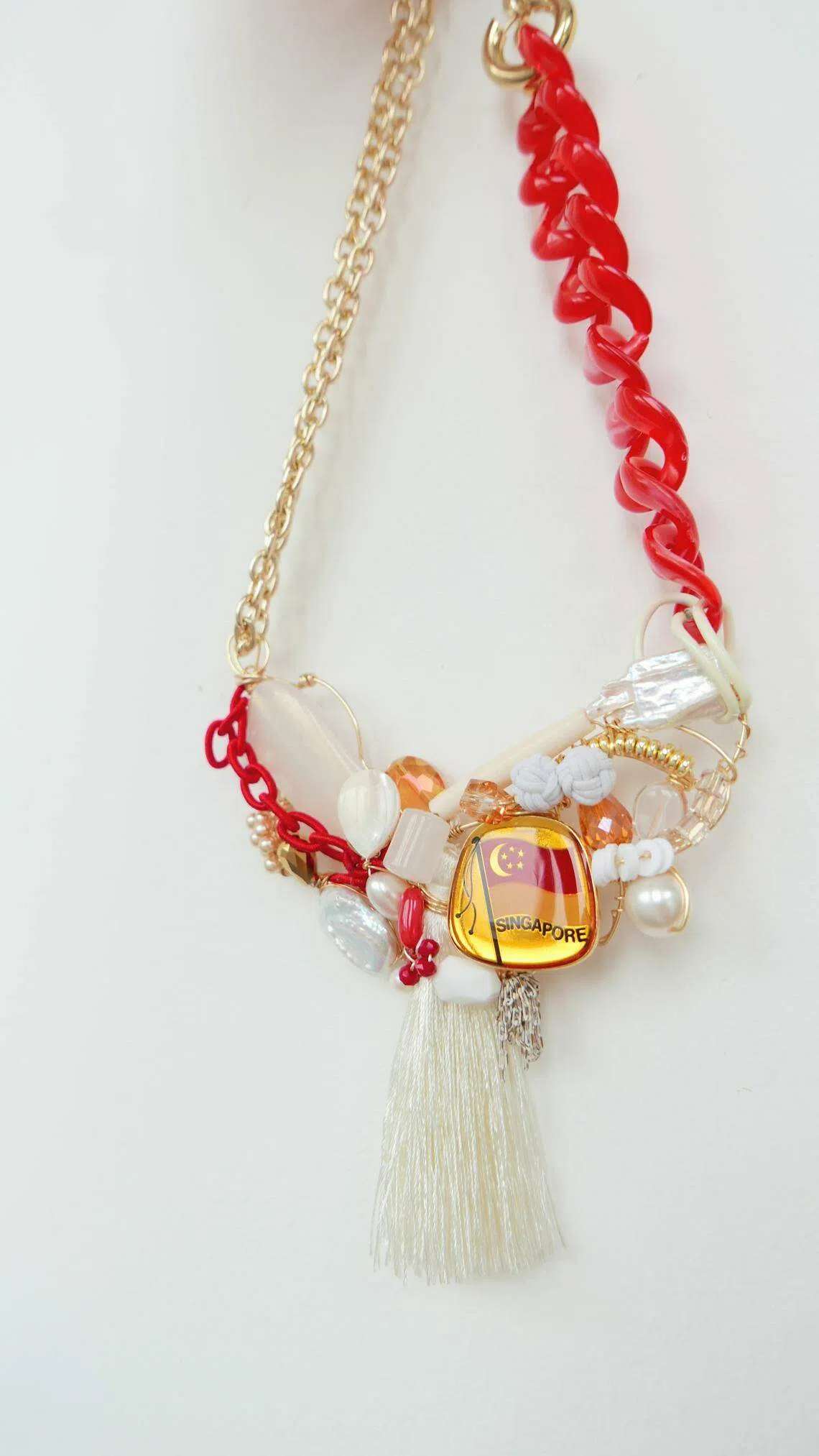
Instead of finding them tacky, Lau sees them as potential elements for her wired art jewellery, which she sells under her brand Hadasity.
“I came across a shop at Peninsular Plaza selling Singapore souvenirs such as pastel-coloured Merlions and Singapore flag keychains,” says Lau. “I was so inspired when I saw them and probably bought half the uncle’s rack of souvenirs off him - one in every colour and design that he had.”
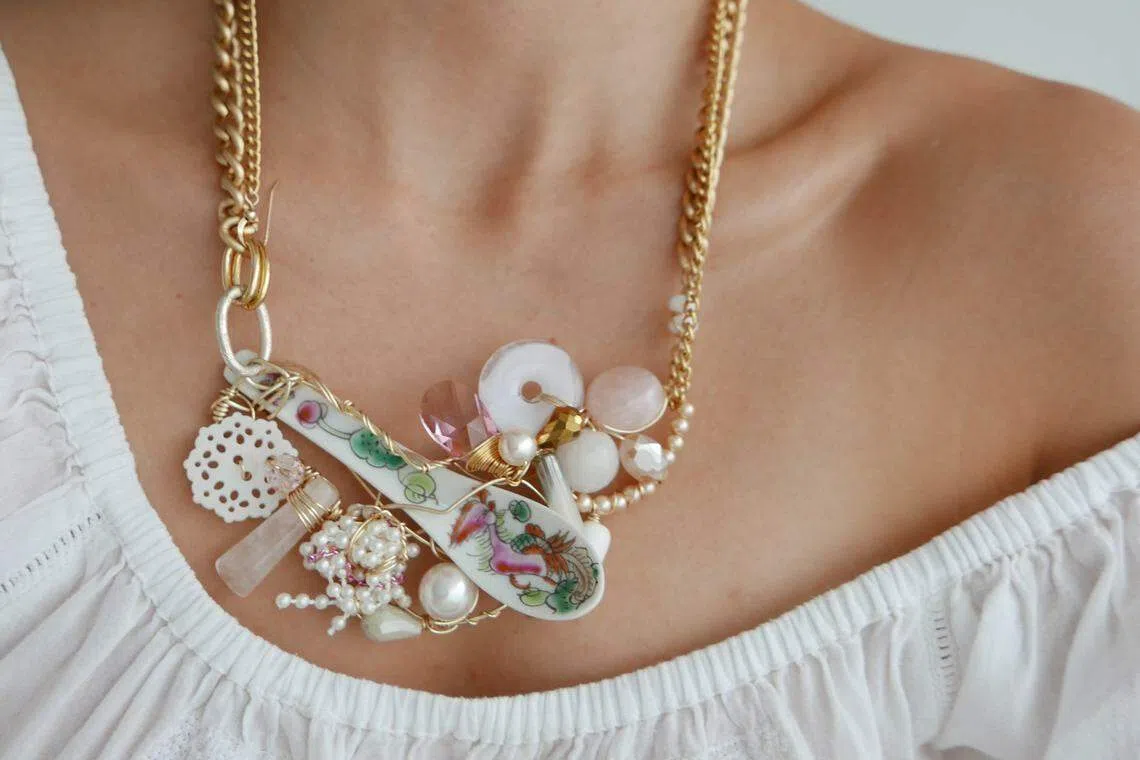
Using non-tarnish gold wire, Lau wires the Singapore souvenirs together with semi-precious stones, freshwater pearls, Swarovski crystals and white quartz, to create earrings and necklaces. The pieces are pretty enough to make any Singaporean feel proud wearing them.
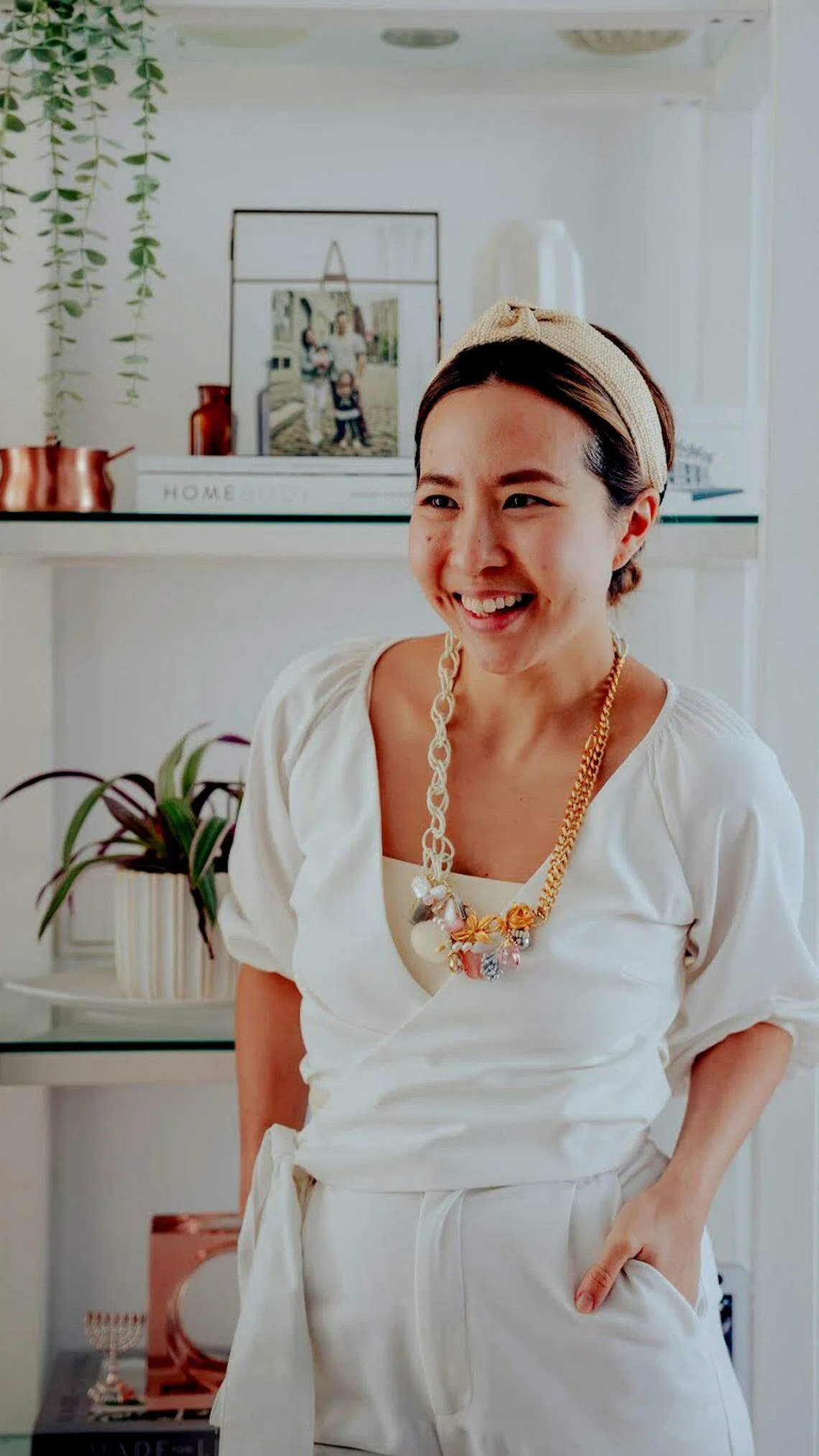
Unlike other jewellery designers who might have a design concept in mind, Lau admits that at times, even she herself doesn’t know how a piece would turn out. “I enjoy figuring out what works together along the way and would probably say my jewellery is more like abstract wired art that can be worn versus fine jewellery,” she says.
What she has found a knack for is her ability to repurpose things intuitively. “I love repurposing vintage brooches and trinkets and would usually find a unique focal piece for my statement necklaces,” she says.
Once, she saw a mini Peranakan spoon with a hole on its handle and immediately envisioned it as a necklace as she could put her wires through and wrap it. She says that anything that has a hole to allow it to be wrapped with wire can be made into jewellery.
Like many who work with their hands, Lau enjoys the creative process but dislikes the administrative and logistical aspects of selling her creations. “It is part and parcel of running a business from figuring out logistics to keeping up with the ever-changing landscape of social media,” she says. She has since learnt to pace herself and to spread out her creations, so as not to burn out.
Her jewellery is popular with customers not only because each piece is handmade and unique, but easy to match with casual looks while also complementing more formal outfits.
Lau also makes it a point to give meaningful names to each piece. “ Many customers turned friends share how the pieces of jewellery brought them through a difficult season in their lives, as it was a reminder of hope and purpose in their lives,” she says.
Winnie Wong, practising kintsugi to help with mental wellness
When you purchase a kintsugi bracelet or glass from Gold & Behold, you aren’t just purchasing a piece of jewellery or a drinking vessel.
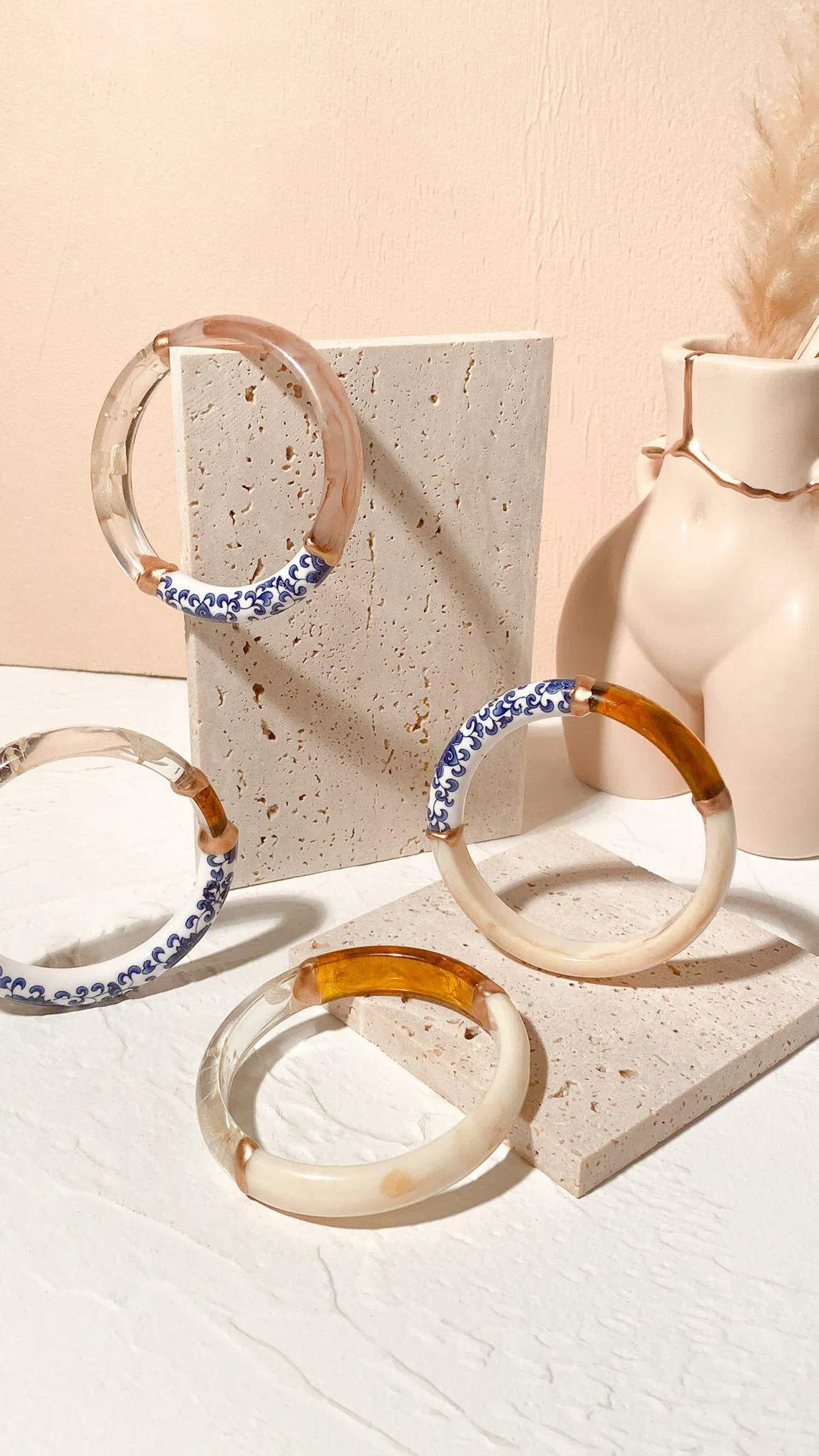
Kintsugi is the Japanese art of repairing broken pottery with gold, and is also a metaphor for embracing flaws and imperfection.
Owning a piece from Gold & Behold means that the user is able to accept that not everything has to be perfect.
For its founder Winnie Wong, kintsugi has allowed her to feel calm and in control when she picks up broken fragments and binds them piece by piece to make them whole again. “Breathing a new lease of life into flawed or broken objects is liberating,” says Wong. “The philosophy of kintsugi allows me to understand my struggles tangibly, providing self-discovery and healing.”
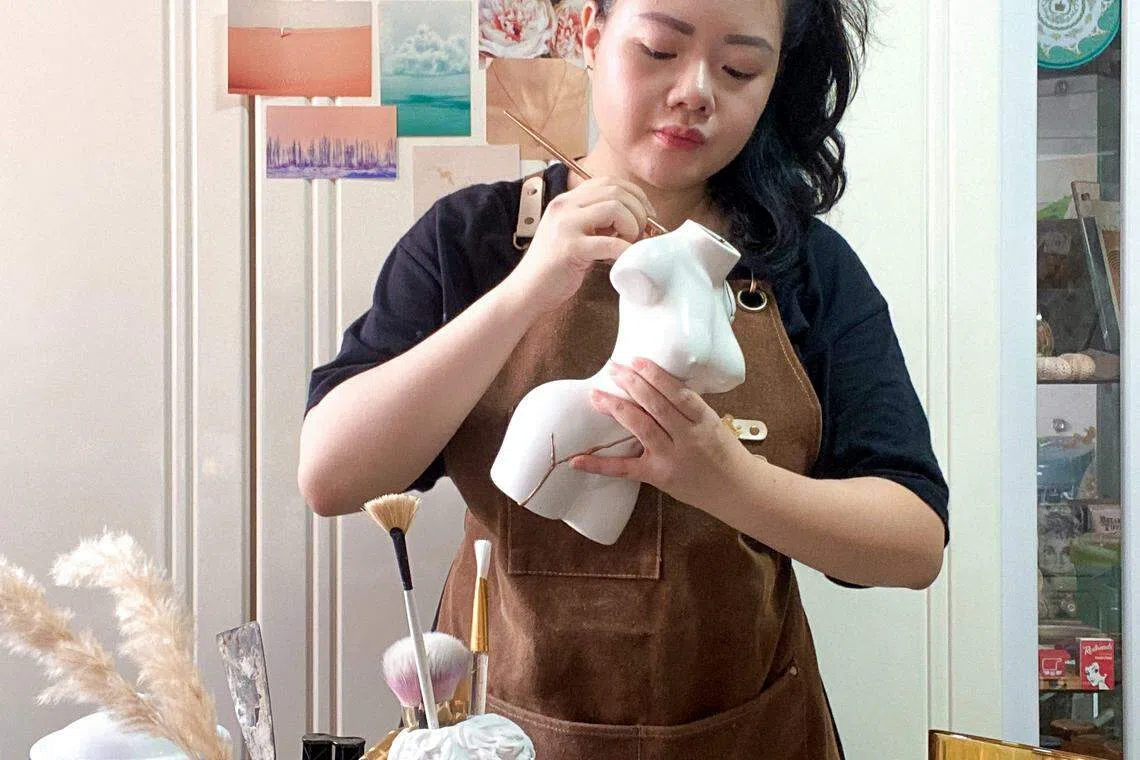
Wong is also believed to be the first and only artist in Singapore to transform the philosophy of kintsugi into wearable accessories like earrings and bangles and homeware items.
She also runs workshops where participants get to break things and then put them back together using gold powder that Wong personally mixes. Over 400 people have attended the workshops in the past year.
“Most participants attend a workshop to have a mindful, meditative, self-reflective session either with themselves or with family, partner or friends,” says Wong. “I wouldn’t say that they came for mental health reasons specifically, but rather, they came for the mental wellness and meditative aspect of putting broken fragments back together with gold.”
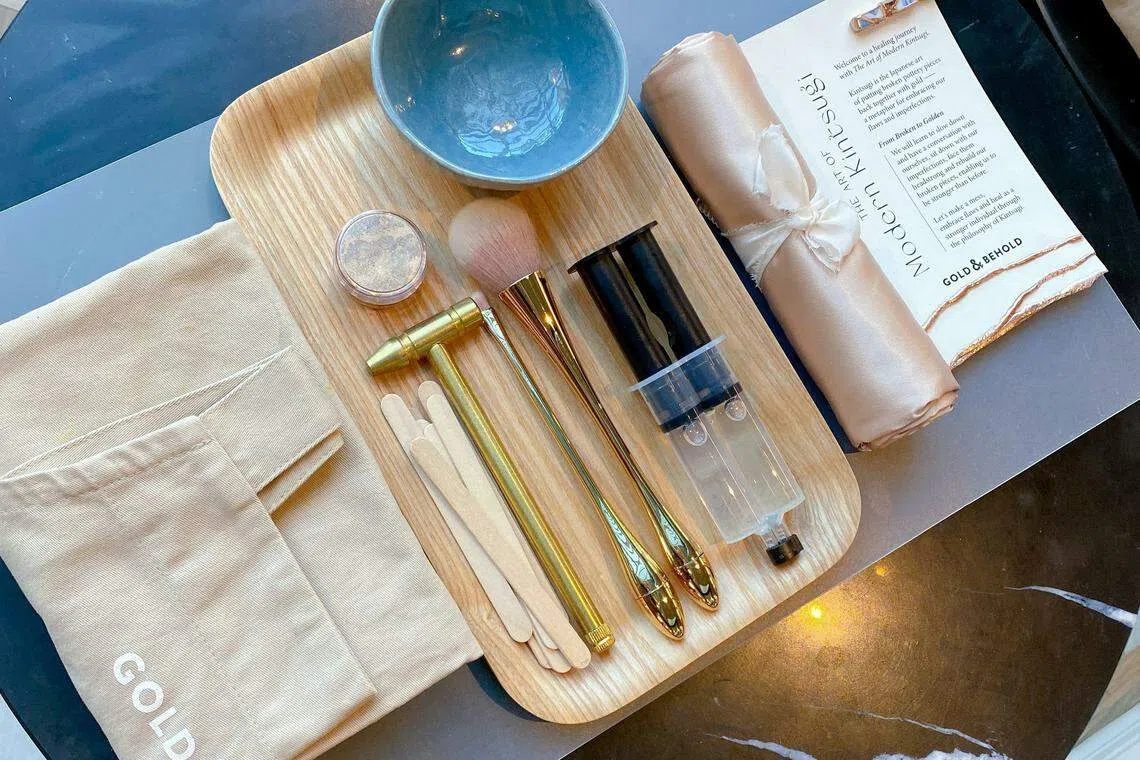
Traditional kintsugi repairs pottery that has broken unintentionally, but at Gold & Behold, the pieces are often intentionally broken. But before anyone cries foul, Wong explains that the pieces she uses are imperfect, defective or flawed pieces collected from manufacturers, hardware shops and restaurants.
“We don’t break perfectly fine pieces for the sake of kintsugi,” says Wong. By doing so, Wong also helps upcycle by breathing new life into these defective pieces.
Wong turned to crafting as a way to heal from depression in 2017. Back then, she was also one of the first few crafters to work with eco-resin.
The medium became popular and soon local and international brands started copying her designs. “It was a very stressful and heartbreaking period for me as I put in a lot of effort to research and develop unique products, only for it to be replicated blatantly,” says Wong.
She was so stressed out that she couldn’t craft for 3 months, but during that time, rediscovered kintsugi. She had previously written about the technique for her dissertation.
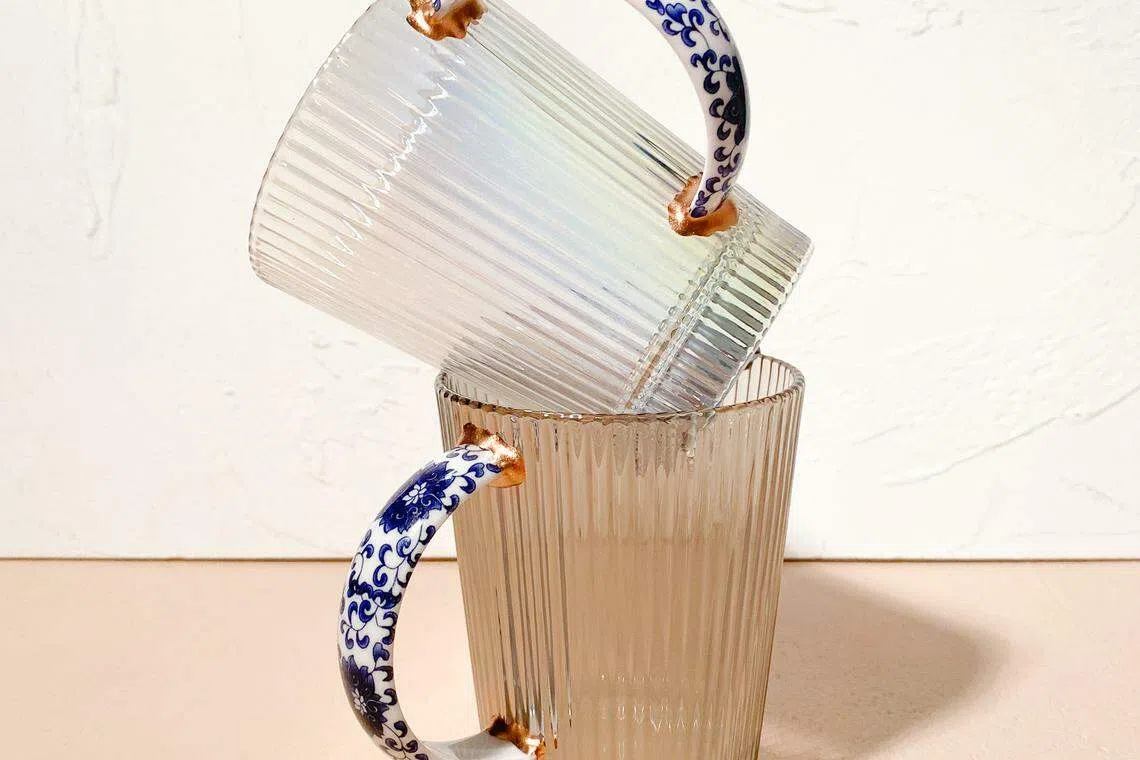
Wong taught herself kintsugi and experimented with various adhesives and pigment powders before nailing down her own method.
“Kintsugi appeals to me as it was born out of an adversity that Gold & Behold faced, having our eco-resin products replicated by new brands locally and internationally,” says Wong. “Creating modern kintsugi works, workshops and providing restoration services allows me to advocate mental wellness, healing and upcycling - all the things I hold close to my heart.”
Decoding Asia newsletter: your guide to navigating Asia in a new global order. Sign up here to get Decoding Asia newsletter. Delivered to your inbox. Free.
Copyright SPH Media. All rights reserved.