Hyundai Ioniq 9 review: Sizing up to deal with prices blowing up
Car prices have been eye-watering. Hyundai’s Ioniq 9 is good enough to lessen the sting.
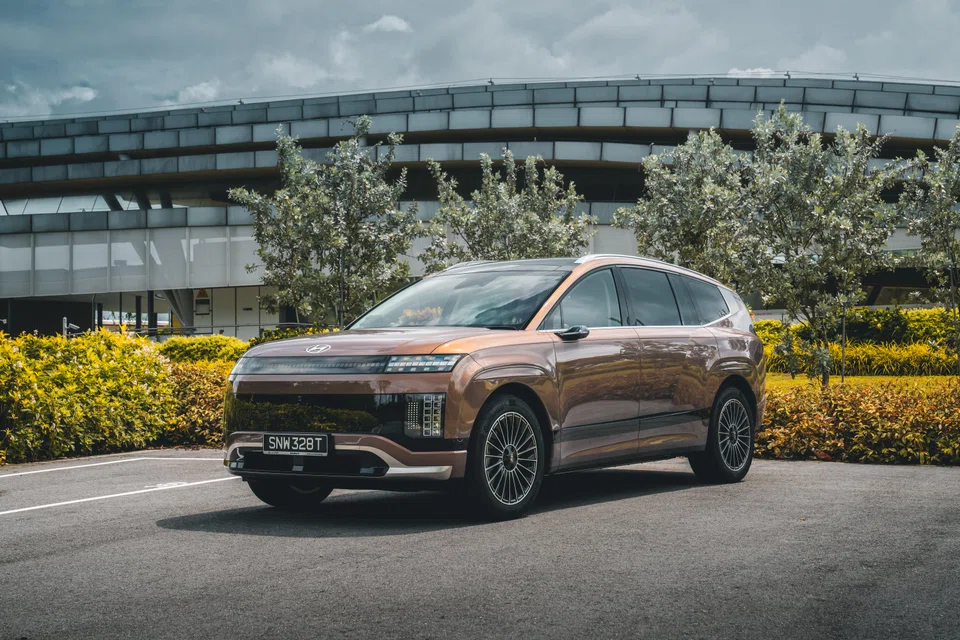
[SINGAPORE] Don’t get me started on how everything has gotten more spendy lately, but in the Hyundai Ioniq 9 we at least have an example of a product that lives up to what you have to pay for it.
The Ioniq 9 is a lot of car. It’s a large, plush, three-row electric sport utility vehicle (SUV) with a hulking presence, and it seats either six or seven.
Singapore gets three variants: the Standard rear-wheel drive at S$294,999 (with Certificate Of Entitlement), the Calligraphy 7-seater at S$324,999 and the Calligraphy 6-seater at S$330,999, which I drove.
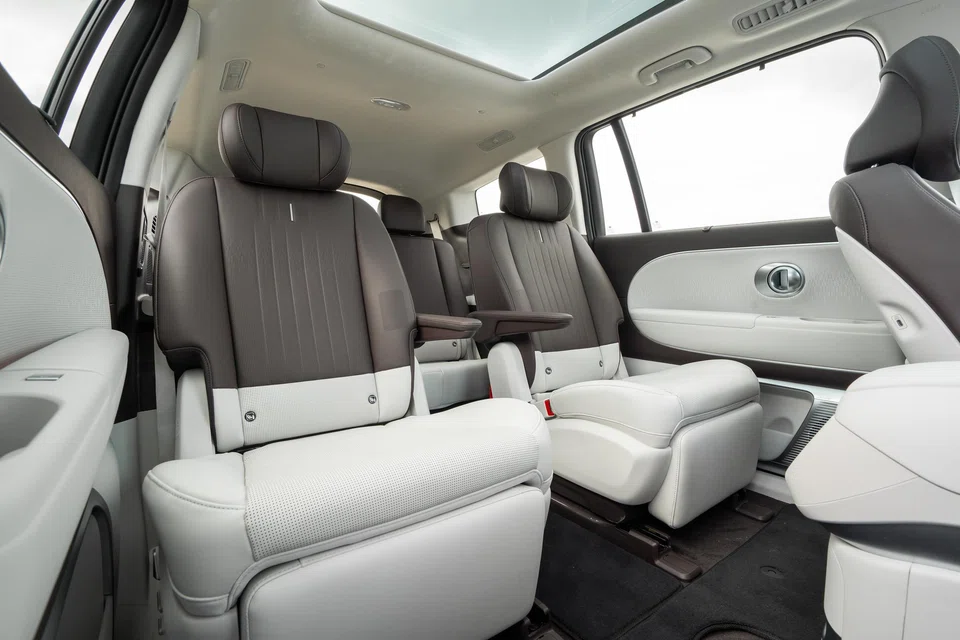
The extra S$36,000 over the Standard buys you the premium second-row captain’s chairs, considerably more power (308 horsepower versus 218), 21-inch wheels, and a raft of features that tip the car into luxury territory.
Big, plush Korean cars have historically struggled here, no matter how big and plush they are, probably because Singaporeans equate prestige with European badges. But the Ioniq 9 may put a dent in that ceiling of brand-consciousness.
Impressive quality
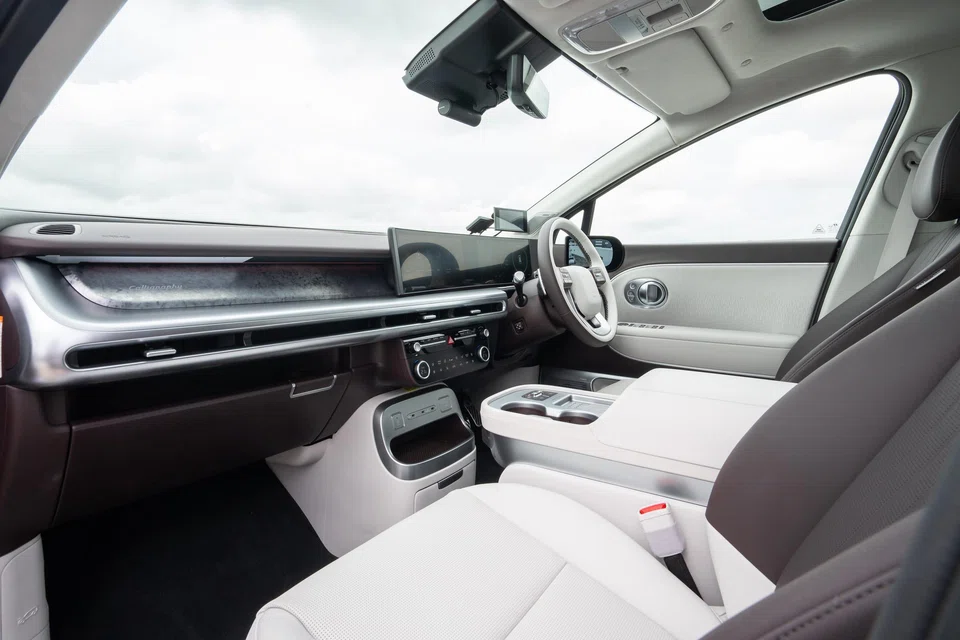
The cabin quality is genuinely impressive, with solid materials and thoughtful finishing that holds its own against current Mercedes and BMW interiors, especially if you’ve seen the cars from those two lately.
It also comes loaded. It has a sliding console that can shift rearward to bridge the gap between the front and middle rows, so your passengers can actually reach it without contorting themselves.
The Calligraphy also gets digital wing mirrors, which take some getting used to but work well once you do, especially in bad weather. There’s even a UV-C steriliser tray in the centre console for zapping your phone, wallet or keys to clean them. It’s reassuringly hygienic, though thankfully too small to give money launderers ideas.
The more traditional luxuries are well represented, too. The ventilated front seats also offer a massage function that tempted me to drive slower just to extend the journey. The second-row captain’s chairs are about as comfortable as seating gets in a moving vehicle, while the third row is genuinely usable for grown adults, helped enormously by the fact that it has its own air-con vents.

You could argue that full-size multi-purpose vehicles(MPVs) like the Denza D9 or Maxus Mifa 9 offer even more space and comfort, but unlike those, the Ioniq 9 at least has the good grace to look like a proper car. And when the third row isn’t needed, its seats fold flush under the boot floor, leaving you with 908 litres of cargo space.
Composed handling
Besides, despite its size and heft, the Ioniq 9 drives better than any MPV, with more composure than you might expect. It feels more tautly damped than the Ioniq 5, which means less of that floaty, wave-like motion over undulations. It isn’t sporty, but it handles with enough agility to avoid feeling like an elephant with its bum shot full of tranquiliser darts.
When you lean on the accelerator, it moves with a swiftness that almost feels inappropriate for a car this stately, with 100kmh flashing up in 6.7 seconds. Switch off the artificial engine sounds and the cabin becomes almost eerily silent, which only reinforces the sense that you’re travelling in something posh.
If you’re curious how far you can go, after I did 128km of real-world driving, the Hyundai reported 448km of range remaining and a consumption figure of 21.1kWh/100km, barely a rounding error from the official 20.6kWh/100km claim, and suggesting a real-world total range comfortably around 570 km. For an SUV this large and heavy, that’s genuinely impressive.
One of the things I liked most about the Ioniq 9 is how its controls strike a sensible balance between touchscreens and physical buttons. The Koreans seem to understand, more than the Chinese do, that a car should still feel like a car rather than a large smartphone with seats.
That familiarity may partly explain why local distributor Komoco has been seeing more trade-ins from Audi, BMW and Mercedes drivers than ever before. Those European brands have climbed in price steeply, without always climbing in quality to match.
The Ioniq 9, meanwhile, has the comfort, refinement, performance and features to justify its price tag. It seems expensive for a Hyundai, but actually feels worth it.
Hyundai Ioniq 9 Calligraphy 6-Seater Motor power/Torque 308 hp/605 Nm Battery type/Net capacity Lithium Nickel Manganese Cobalt/110.3 kWh Charging time/Type 10 hours (11 kW AC), 24 minutes 10 to 80 per cent (350 kW DC) Range 600 km 0-100 kmh 6.7 seconds Top speed 200 kmh Efficiency 20.6 kWh/100 km Agent Komoco Motors Price S$330,999 with COE Available Now
Decoding Asia newsletter: your guide to navigating Asia in a new global order. Sign up here to get Decoding Asia newsletter. Delivered to your inbox. Free.
Share with us your feedback on BT's products and services