

Leapmotor C10 review: The Chinese EV that’s part Maserati
Leapmotor has raced ahead of rival EV startups in China. Can the C10 help it do the same here?
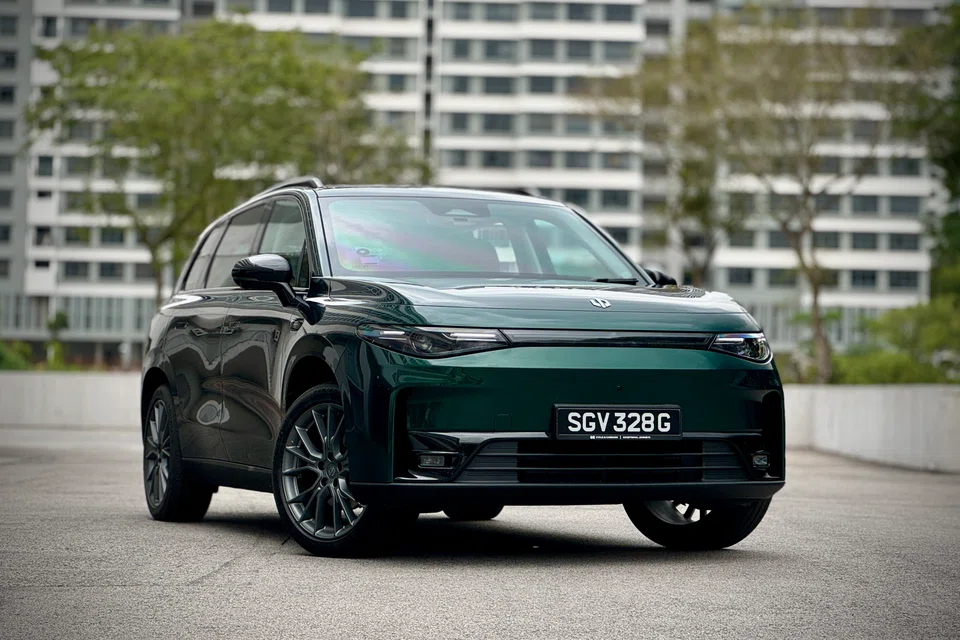
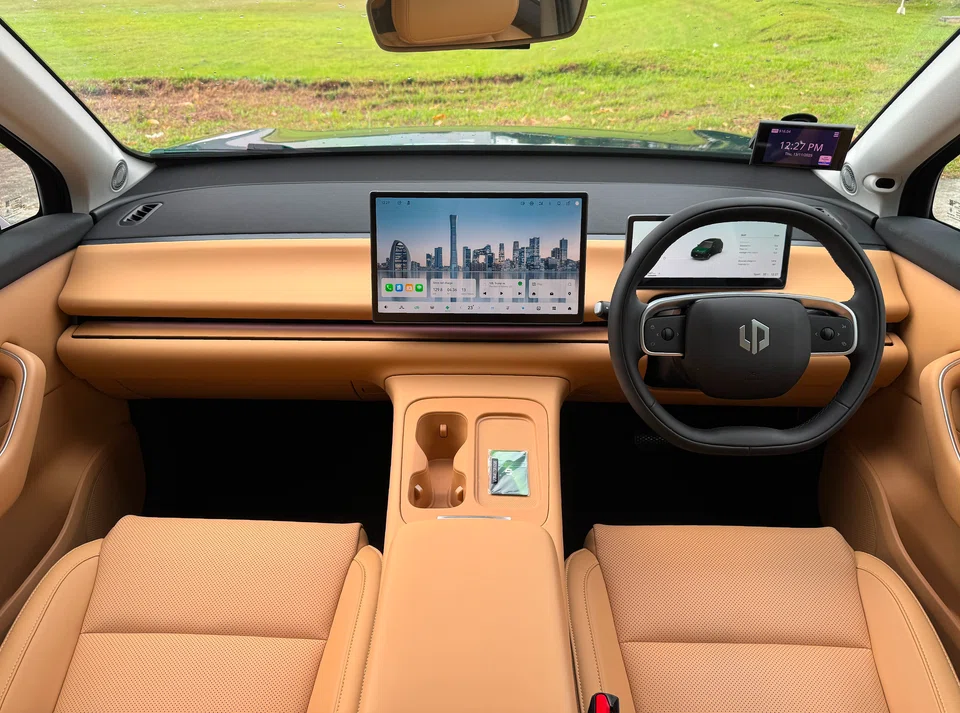
[SINGAPORE] It can be hard to stand out in the increasingly crowded electric crossover market, but with the Leapmotor C10, newly-appointed distributor Cycle & Carriage might be onto something.
Leapmotor landed in Singapore in late October, the latest Chinese electric vehicle (EV) maker trying to make a dent in our market.
Back home, the New Energy Vehicle (NEV) startup has been on a tear. It took nearly five years to sell its first 500,000 cars, but only another year (or 343 days, if you’re counting) to double that figure.
People here will probably just call it “Leap” because we’re such fans of brevity, but the brand is aptly named given how it has leapfrogged NEV rivals in China; it now outsells Xpeng, Li Auto, Xiaomi, Denza, Zeekr and gang.
The company was founded in 2015 by Zhu Jiangming and Fu Liquan, entrepreneurs who made their fortune in cybersecurity. In October 2023, Stellantis (parent company of Alfa Romeo, Citroën, Jeep, Maserati, Peugeot and more) invested 1.5 billion euros (S$2.26 billion) for a 21 per cent stake, and the two formed Leapmotor International, a joint venture with exclusive rights to sell the brand’s cars outside China.
And so the C10 finds itself here in the land of Certificates of Entitlement. As Leap’s first model for Singapore, it’s a sensible choice: a five-door family crossover with a rear motor, a responsive 14.6-inch central touchscreen with Qualcomm brains, and a minimalist, modern-looking cabin finished in a fetching “Camel Brown” in the test car. Crucially, it’s tuned (or detuned, more precisely) for the cheaper Category A COE, with 136 horsepower to its name.
That tweak doesn’t guarantee success, but it’s a smart one because it’s difficult to hit the big time without it. The C10 may not be a bundle of thrills as a result, but not a single Cat A EV out there is.
Apparently, development drivers from Maserati had a hand in its fettling, and while the brake pedal is soggy, the C10 does steer quite crisply. More importantly, it’s admirably refined, with firm but not crashy suspension and good sound insulation.
Some of that is down to things you can’t see, like its rigid shell. Leapmotor claims the C10’s body is nearly twice as stiff as the Tesla Model Y’s, thanks in part to its cell-to-chassis design. Instead of bolting a battery pack into a separate frame, Leapmotor integrated the battery cells directly into the C10’s structure, creating a stiff backbone. The benefits are space savings, weight reduction and fewer parts overall, all of which matter when you’re trying to build a roomy car and keep cost and complexity down.
And roomy it is. The back seat has oodles of space, and while the air-con hides its vents, it delivers icy air with impressive enthusiasm. There’s a big panoramic glass roof, backed up by an electric shade for when the sun decides to bake us.
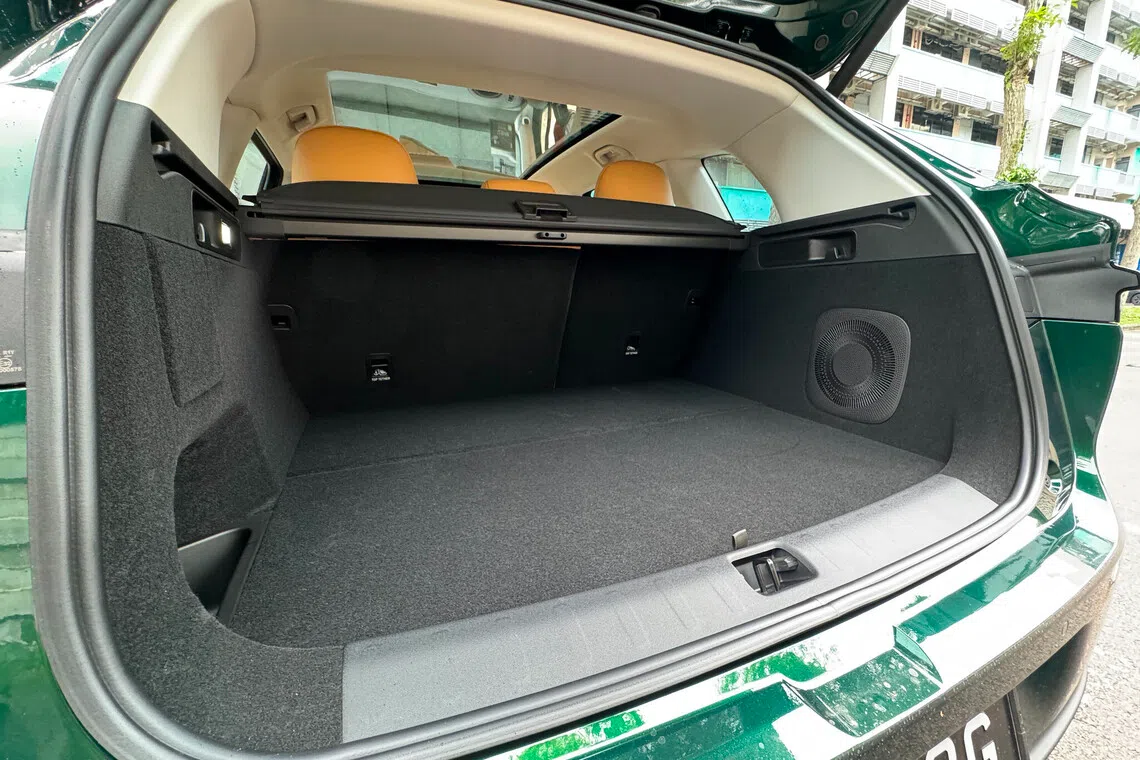
The boot looks bigger than its 435-litre rating, and expands to 1,410 litres with the rear seats folded. There’s also a small 32-litre frunk in front if you want to, say, transport a durian haul home without gassing everyone on board.
Parents will appreciate the upholstery made of baby-friendly organic silicon fabric by Oeko-Tex, which is apparently so safe a child could chew on it. At 11 kW, its AC charging ability is also the fastest among the Category A EVs from China available here, while the 419 km range is just about enough for once-a-week charging.
Leapmotor definitely made some head-scratching choices for the C10, though. To unlock the car, you must tap an NFC card to the driver-side wing mirror or use the companion app. That made it a hassle for me to open the door for the wife (by which I mean my wife, specifically).
Then you can only start the car by placing the card in a designated tray, which seems a bit overcautious. I guess this is what happens when cybersecurity people do a car.
Other strange choices: the button to unlock the doors is on the steering wheel (because why not?), and the ceiling has a programmable button right beside the one that closes the sunshade, which seems more like a random decision than a deliberate one.
Quirks aside, Leapmotor has got the basics right overall with the C10. The result is a competitive car in a competitive market. Inevitably, those shopping in this class have plenty of options, but the C10 is worth putting high up on the list. Buyers would do well to Leap before they look.
Leapmotor C10 Motor power/Torque 136 hp/320 Nm Battery type/Net capacity Lithium-ion/69.9 kWh Charging time/Type 7 hours (11 kW AC, estimated), 30 minutes 30 to 80 per cent (84 kW DC) Range 419 km 0-100 kmh 10.7 seconds Top speed 170 kmh Efficiency 18.8 kWh/100 km Agent Cycle & Carriage Price S$174,999 with COE Available Now
Decoding Asia newsletter: your guide to navigating Asia in a new global order. Sign up here to get Decoding Asia newsletter. Delivered to your inbox. Free.
Share with us your feedback on BT's products and services
TRENDING NOW

Once staunchly pro-China, Malaysian Chinese businesses are now distancing themselves from Beijing

Looking beyond looming CEO succession, should UOB potentially pursue a transformative merger?

Could stablecoins be the future of money?

Grab CEO’s wife Chloe Tong on life with Anthony Tan and finding her purpose

