Lexus ES 350e review: They bulked it up for one sad reason
The ES gets a promotion to the role of Lexus’ flagship sedan the old-fashioned way – by default. Can it do the job?
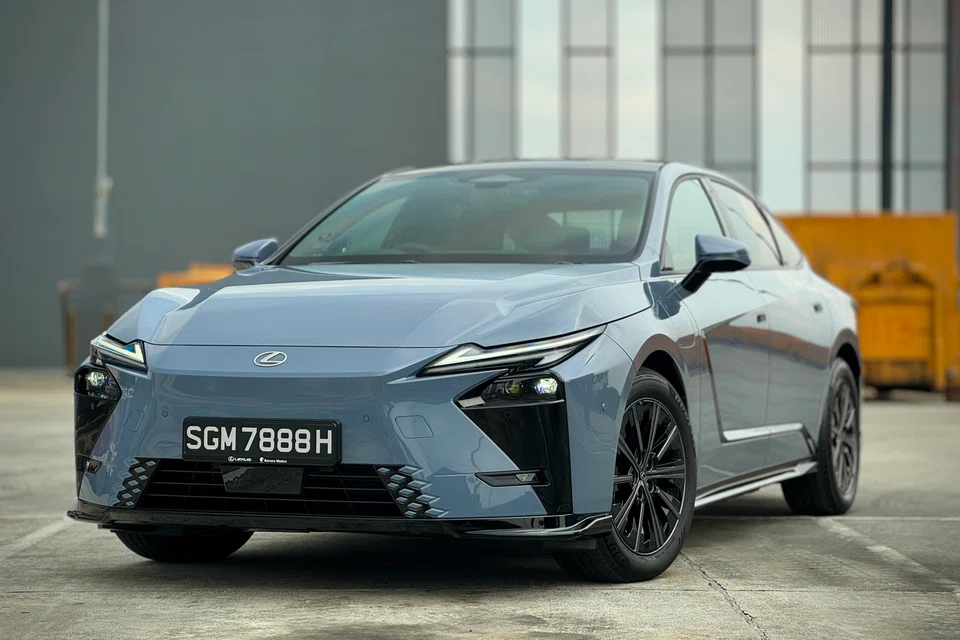
[SINGAPORE] Wherever you are in life right now, there are far worse places to be than inside the new Lexus ES 350e, the pure electric version of the brand’s big, newly resculpted sedan.
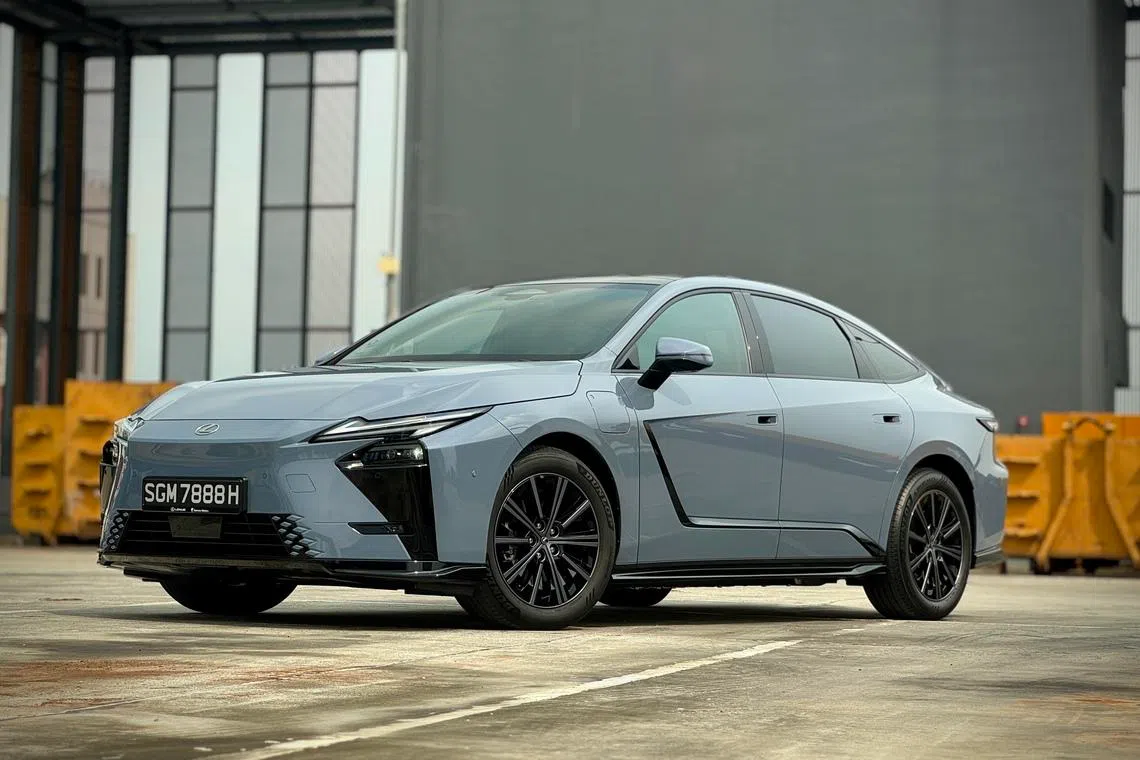
When I say “big” I mean “huge”. At more than 5.1 metres nose-to-tail, it’s longer than the BMW i5 or Mercedes E-Class. It’s taller, too, looming over the previous ES, which was hardly a midget.
I have my suspicions about the ES’ massive growth spurt. The stately LS, which swung a samurai sword at the Mercedes S-Class when the Lexus brand launched in 1989, has been quietly retired because it wasn’t selling, which promoted the ES to the role of flagship Lexus sedan by default (like so many promotions), so they bulked it up to suit.
It costs big money (S$402,800 with Certificate of Entitlement), so the size is appropriate. It undercuts the smaller i5 by roughly S$28,000, and if you don’t like this electric car stuff, you can still have the size with 2.5-litre hybrid power by buying the upcoming ES 300h.
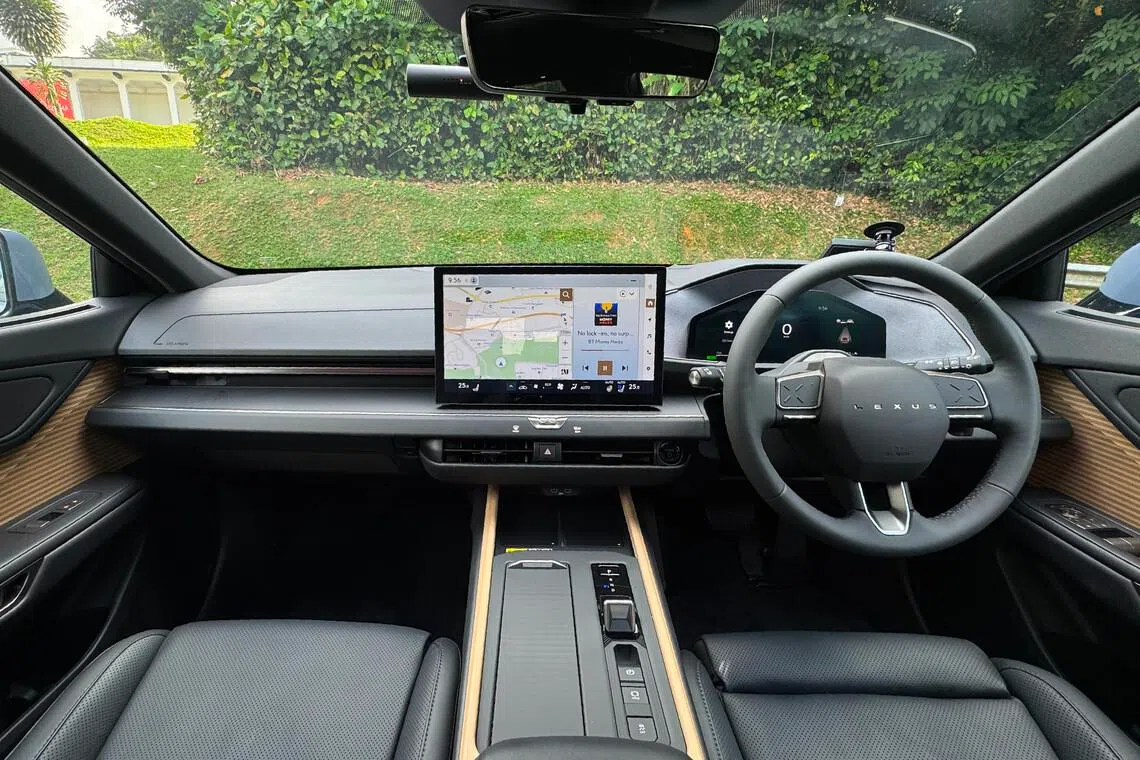
What the money gets you, above all, is the serenity of riding in a Lexus. The ES wafts over broken tarmac as though the lumps were someone else’s problem, it’s hushed even by electric car standards, and the air-conditioning could cool a mansion. Sitting in it offers the kind of deep peace my wife enjoys when I’m out of the house.
It’s also pleasant to drive. You twirl a properly round steering wheel that feels nice and connected to the front wheels, and the big body turns into corners with something close to agility. It will thread a tighter U-turn than the i5, and a prod of the Sport button firms up the suspension nicely, reducing floatiness without increasing discomfort.
None of this makes it a sports car, however. Reaching 100 kmh takes eight seconds, and it’s delivered with a silent swell rather than a shove. But that suits the car’s character, and the motor’s 224-hp output keeps the road tax at a palatable S$1,896 a year.
The range is 510 km (a claim made without air-conditioning), and on my drive it was on course for 436 km at a frugal 14.4 kilowatt-hours (kWh) per 100 km, easily more than a week’s motoring for most people.
Beyond that, two details charmed me outright. The dashboard looks button-free until a hand drifts near it, whereupon the controls glow to reveal themselves beneath a strip of leather, complete with satisfying tactility when you press them.
Most carmakers delete buttons to save money and leave you searching through menus, but Lexus’ way of hiding them until they’re wanted has kept things neat yet retained the ease of use.
The other is the ambient lighting, which glows through 3D-printed bamboo-like trim in a way that looks spectacular at night.
The back is where the ES really distinguishes itself. The room there is vast, with enough legroom to make you wonder if Lexus designed it around the idea that the chauffeur and towkay should never meet.
But for a new flagship the specification is oddly miserly. I can live without the panoramic roof that other markets enjoy, but here we get only two-zone climate control, no reclining rear seats and no rear control panel of the sort found in a Toyota Camry. The ES had those features here, once, so why not now?
You also don’t get a companion phone app, and the “fast” charging only accepts juice at half the rate that Chinese and German rivals do.
Mind you, none of this could matter. Some people would sooner walk than be seen in anything Japanese, so devoted are they to the German luxury establishment, while others, having owned a Lexus, will never own anything else.
The ES 350e is the perfect car to carry the latter group into the electric age, because it feels like a proper Lexus. It is very much the sort of car I would drive if I were more successful. And if I were even more successful than that, I would have one and sit in the back.
Lexus ES 350e
| Motor Power/Torque | 224 hp/269 Nm |
| Battery Type/Net Capacity | Lithium-ion/74.69 kWh |
| Charging Time/Type | Approx 4.5 hours (22 kW AC), 28 minutes 10 to 80 per cent (150 kW DC) |
| Range | 510 km |
| 0-100 kmh | 8 seconds |
| Top speed | 160 kmh |
| Efficiency | 16.4 kWh/100 km |
| Agent | Borneo Motors |
| Price | S$402,800 with COE |
| Available | Now |
Decoding Asia newsletter: your guide to navigating Asia in a new global order. Sign up here to get Decoding Asia newsletter. Delivered to your inbox. Free.
Share with us your feedback on BT's products and services