

Local and loving it
Discover alternate sights of Singapore and support local heritage craft.

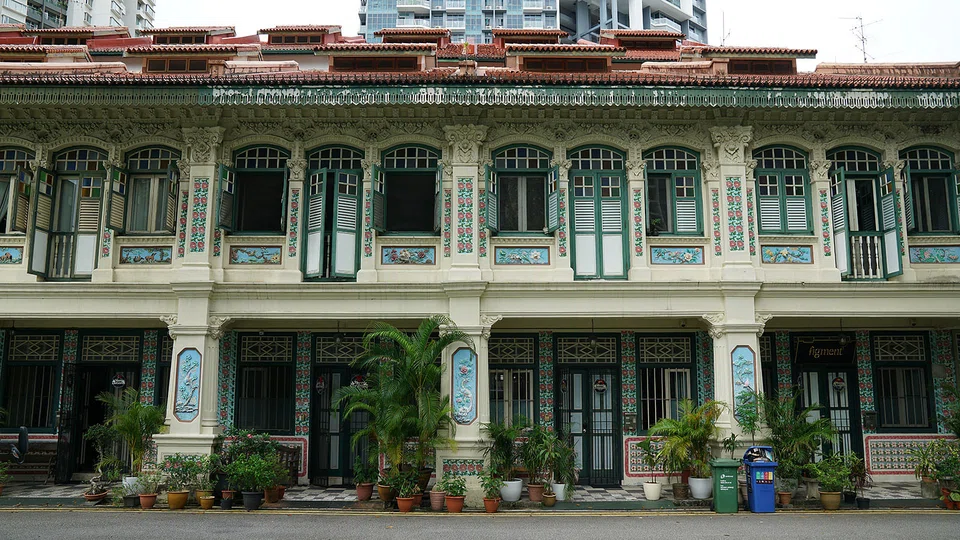

VACCINATIONS against Covid-19 mark some good news to start the year with but it'll still be sometime before we can start waving our passports again. In the meantime, staying in is still the defacto travel solution we have. We've since spent the time reacquainting ourselves with our backyard but if you've been doing the staycation, Coney Island or Jewel Airport route, you may just be skimming the surface of what the city really has to offer.
If you're looking for more to discover and local businesses you can support in the process, here's a quick list of ideas.
Discovering Singapore on foot
JalanJalan.me jalanjalan.me
Feeling lucky this year? You might want to place your bets at the 7-11 outlet at Blk 102 Yishun Ave 5 where, since 2014, the Singapore Pools counter there has produced over 35 Toto winners. A constant snaking queue outside the outlet is testament to how auspicious this outlet is.
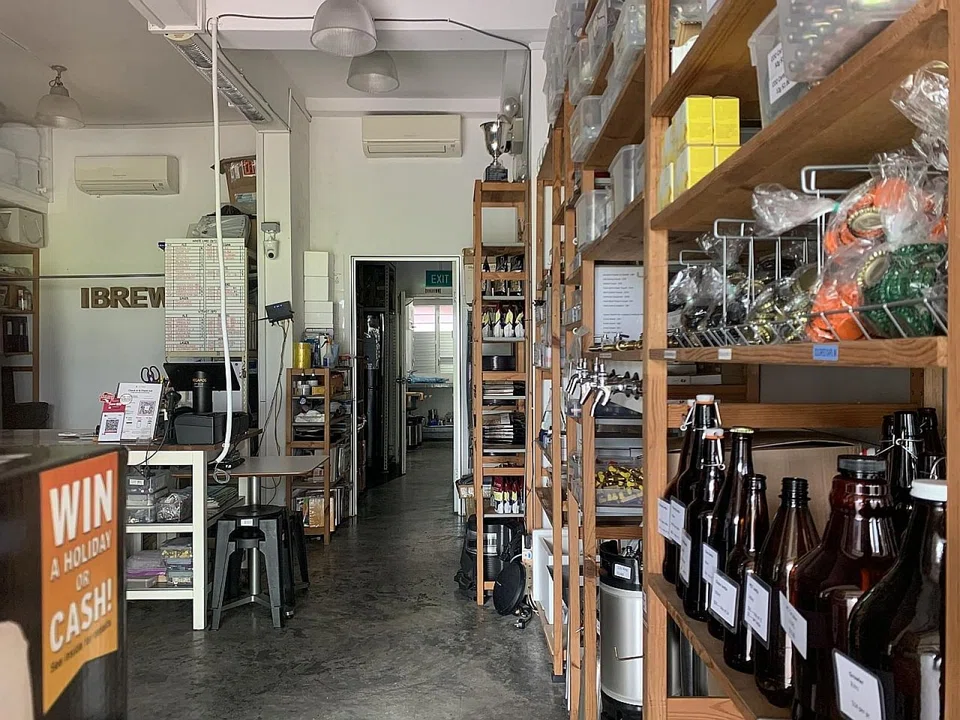
If baking is too mainstream, and you want to try brewing your own beer, head to Raymond Lee's iBrew at Clementi where he stocks all the equipment and ingredients for brewing beer.

The lucky 7-11 outlet and iBrew are just two of the many businesses that are listed on JalanJalan.me, a group-up community project.
Co-founder Lyla Lin says: "JalanJalan.me set out to support Covid-19-impacted local SMEs by shining a spotlight on hidden shops, passionate artisans and under-the-radar local eateries - run by local heroes who work tirelessly to preserve the traditions of our beloved heritage - in neighbourhoods and areas of Singapore that are off the beaten track."
JalanJalan.me features businesses in Ang Mo Kio, Bedok, Chong Pang, Clementi, and Jalan Besar, with plans to include more neighbourhoods. Ms Lin says: " Each is chosen because it represents a different personality aspect of Singapore's beloved vibrant neighbourhoods."
Besides a list of eateries and shops to patronise, there are also trails and distinctive spots to check out in each neighbourhood.
But what makes JalanJalan.me stand out is that the list of recommended places are not randomly chosen. "We relied on the personal networks of the team working on this project, with support from the People's Association and Enterprise Singapore, to introduce us to local residents on the ground who provided us with their personal recommendations," says Ms Lin. "Our editorial team then vetted the lists while researching each neighbourhood and interviewing business owners so as to craft insightful articles and recommendations."
To encourage people to discover these neighbourhoods, there are promotions redeemable at partner merchants, to give them a much-needed boost even as Singapore continues on the long road to recovery.
The team also works with long term residents of each neighbourhood who share their insider recommendations. Ms Lin says: "At the heart of it all, JalanJalan.me is a project made for the community, by the community."
Sprout Hub 102 Henderson Road
After venturing out to Choa Chu Kang's farms, head next to Sprout Hub at Henderson Road.
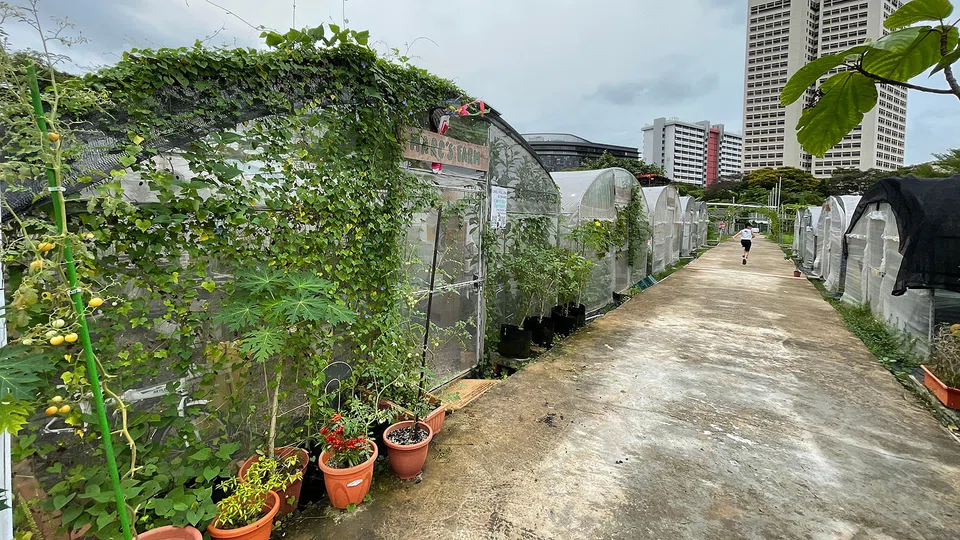
Located on the site of the former Henderson Secondary School, Sprout Hub is an urban farm run by social enterprise City Sprouts whose mission is to "rejuvenate urban communities, and sprout meaningful multi-generational relationships", says Clara Lim, its marketing and communications lead.
The space is divided into various plots of land, which are leased out to urban farmers. Ms Lim says all its 36 lots have been leased out, and there is a waiting list of 90 people.
For S$300 to S$550 a month depending on size with a lease term of one year, each farmer gets a greenhouse structure. There is no restriction on what the urban farmers can grow. "We encourage edibles. And everything should be legal," quips Ms Lim.
Some farmers grow herbs and leafy greens, while there are others who rear chickens and grow strawberries.
While Sprout Hub is open to the public everyday, the best time to go is during its Farm Day Out on Feb 6 and 7. "It is our take on a farmers' market where visitors get to meet and interact with farmers in their plots, very much like an open house," says Ms Lim. "If the farmers have their farming licence, and are allowed to sell commercially, visitors will get to purchase the produce too."
Experiences to enjoy at home
Cocomo Events instagram.com/whereiscocomo
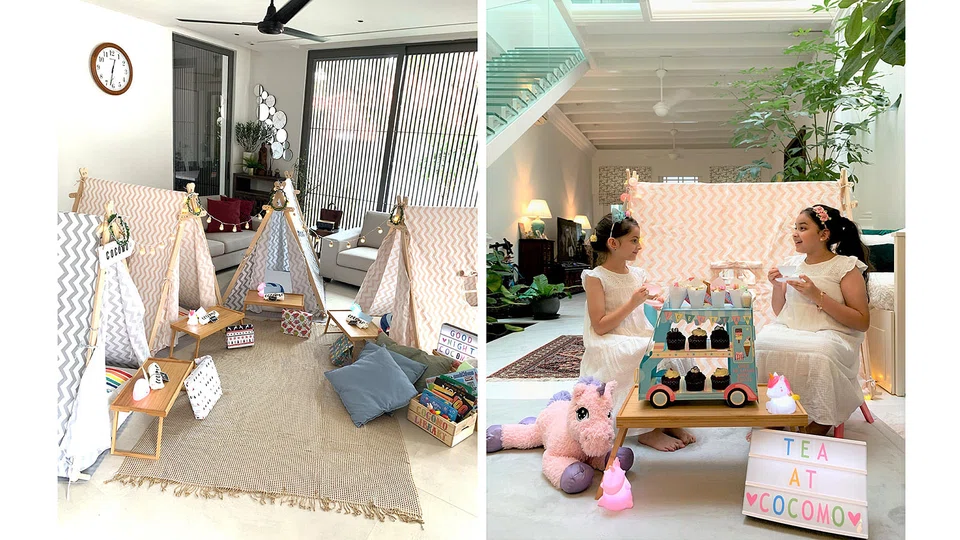
The school holidays may be over, but if you missed out on the chance to go glamping at Jewel Changi Airport, or enjoy a staycation, Cocomo Events, a homegrown events company will help you and your kids to go camping in the comfort of home.
Cocomo Events is founded by full-time mums Dahlia Mohd and Sulyana Aziz who have five boys between them, aged from two to eight.
"As mothers of young boys, we have our hands full trying to find fun and engaging activities for them at home," says Ms Dahlia. "We looked at staycations but family friendly hotels were either booked out or too expensive. One day, we figured, "Hey, let's do it ourselves." We did our research and staged our very first set up at Sulyana's house. Our boys loved it and could not get enough of the tents; it gave them the best of both worlds, camping with indoor comfort."
Since its launch in December, Ms Dahlia says there has been keen interest in camping at home. For S$450 onwards, customers get the use of three tents including mattress, bedsheet, activity table, soft furnishings and themed decorations along with one free activity.
Some of the activities include tie dye T-shirt making, grilling marshmallows on an indoor grill and excavating "dinosaur eggs" in a sand pit. For an added fee, parents can also engage an "experience guide", who is a member of the firm to conduct activities with the kids so the adults can enjoy time off.
For now, the tents are big enough only for kids, but Ms Dahlia says that they have received requests for adult versions so that will be available soon. They are also expanding their repertoire to include a grazing table which comes with a canopy.
"We are huge believers in bringing people closer through food, and we will soon offer clients gorgeous table settings to complement your gastronomic spreads which will absolutely delight your house guests," says Ms Dahlia.
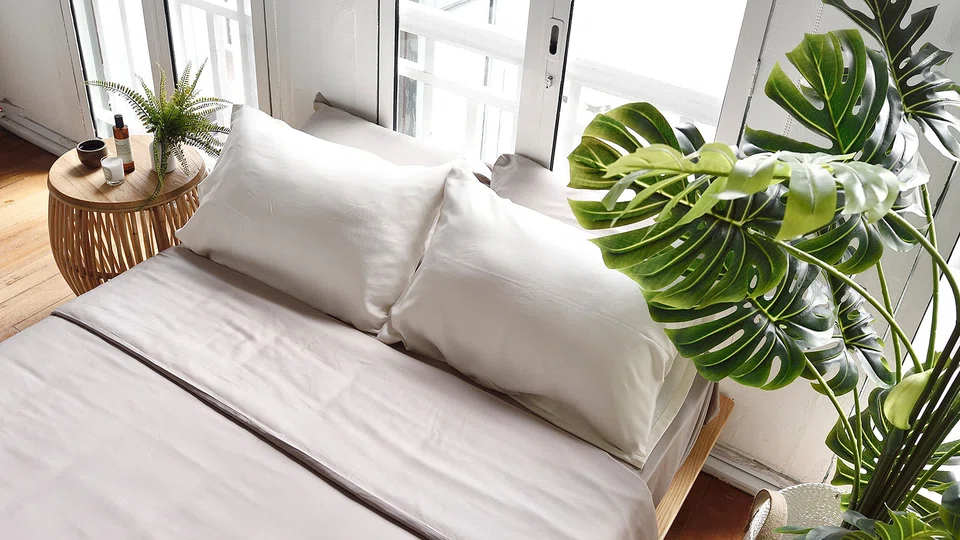
Sunday Bedding sundaybedding.com
With more time spent at home these days, it is no wonder that consumers are splurging out on quality bedlinen and lounge wear.
Sunday Bedding, started by Alex Fan and Clara Teo, has seen revenue nearly triple in 2020 compared to the previous year. "It is a testament to the growing interest in quality products that focus on wellbeing and rest," says Ms Teo.
The married couple started the brand when they were shopping for their new home together and realised how easy it is to get lost in textile jargon such as thread count and weave, and not understand how such factors can affect sleep.
Instead, it keeps things simple by categorising its bedlinen according to materials - organic cotton, bamboo sateen, cotton sateen and French linen.
Ms Teo says that, as a local brand, they are able to understand the local market. "We understand that everyone sleeps differently, and we have the manufacturing capability and experience to address that," she says. Mr Fan's family is also in the textile business. Sunday Bedding's sheets are produced in its factories in Guangzhou.
Ms Teo adds that Sunday Bedding's product range was designed for Singapore's climate. Its duvet inserts are filled with TENCEL fibres instead of polyester or down so that it is thinner and lighter than most duvet inserts. The brand's bestseller is its bamboo sateen bedlinen because it is cooling and moisture-wicking, suited for warm nights.
Last year it introduced a towel range and a new loungewear capsule with local fashion brand, Esse The Label.
The couple plan to expand into the home and decor space with throw blankets, pillow shams and bath rugs. And they will continue to collaborate with local artists.
"By supporting a local brand, customers are not only getting quality bedding and towels but items that are designed by the local creative community," says Ms Teo.
Up your home dining game
Atlas Handcrafted atlashandcrafted.com
When friends Nicholas Lin and Mak Sin Wee heard about an elderly couple whose main source of income dried up during last year's Circuit Breaker period, when the five-star hotels which they supplied Nonya kueh to stopped doing so,their hearts melted.
"We figured that if their cottage-industry business was so badly affected, then there must be hundreds of other marginalised businesses that will be overlooked too," says Mr Lin. "Both Wee and I have experience in tech, eCommerce, the F&B industry and we are good photographers, so it was natural for us to want to help such struggling local artisans go online and secure big orders that they wouldn't be able to get alone."
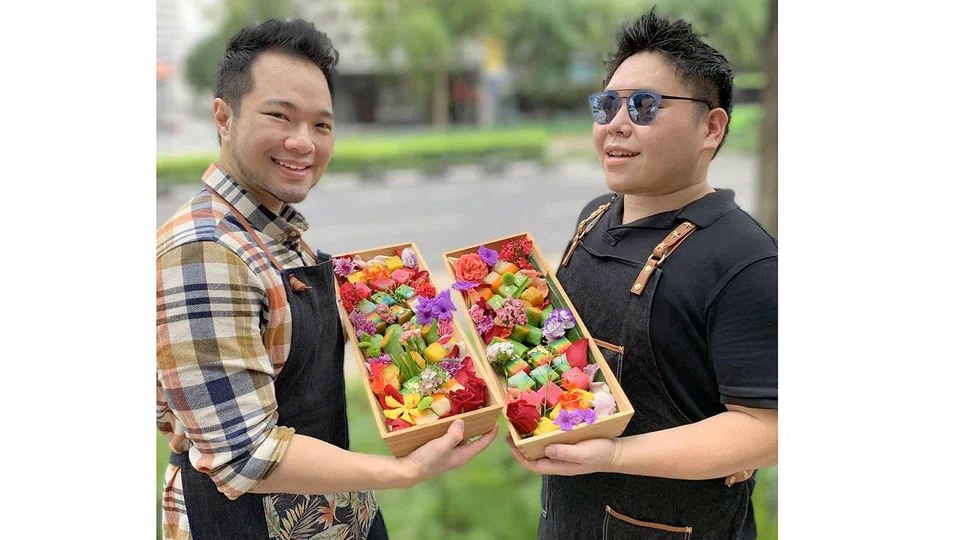
They started Atlas Handcrafted, a food and drink gifting business, with a focus on heritage foods, such as Nonya kueh, Cantonese pastries and nasi padang.
"We feel that our heritage foods are typically undervalued in Singapore. So much expertise, craftsmanship, and hard work go into the making of these local delicacies, yet they are seen as low value and often low-class compared to more exotic foreign goodies," says Mr Lin.
"Elevating the value of our heritage food culture helps to directly benefit the artisans of this craft."
Its 24K Floral Nyonya Kuehs are its best sellers. These are platters of Nonya Kuehs luxed up with 24-karat gold flakes from Kanazawa and fresh organic tropical flora.
"We needed a way to elevate these humble kueh, to create platters that will impress even the most discerning clientele," says Mr Mak, who jokes that he has been obsessed with eating gold since his visit to Kanazawa. They have garnered strong support from both private and corporate clients.
While bulk orders mean they're able to negotiate a lower price, the partners refuse to do so. "We pay the heritage artisans retail prices. We do this because we want to help them stay afloat," says Mr Lin.
Mr Mak adds, "most of the local artisans are very focused on their craft and are always happy about having an additional sales channel, especially ours where we purchase their products at retail prices."
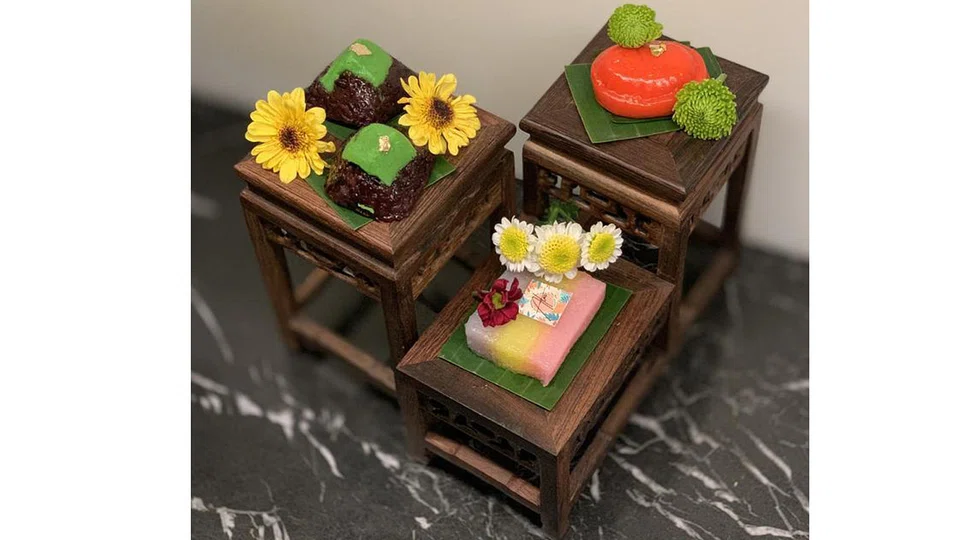
For Chinese New Year, Atlas Handcrafted is offering gold embellished pineapple tarts, and a platter of Nonya kuehs displayed on miniature rosewood furniture.
Ye Traditions instagram.com/yetraditions
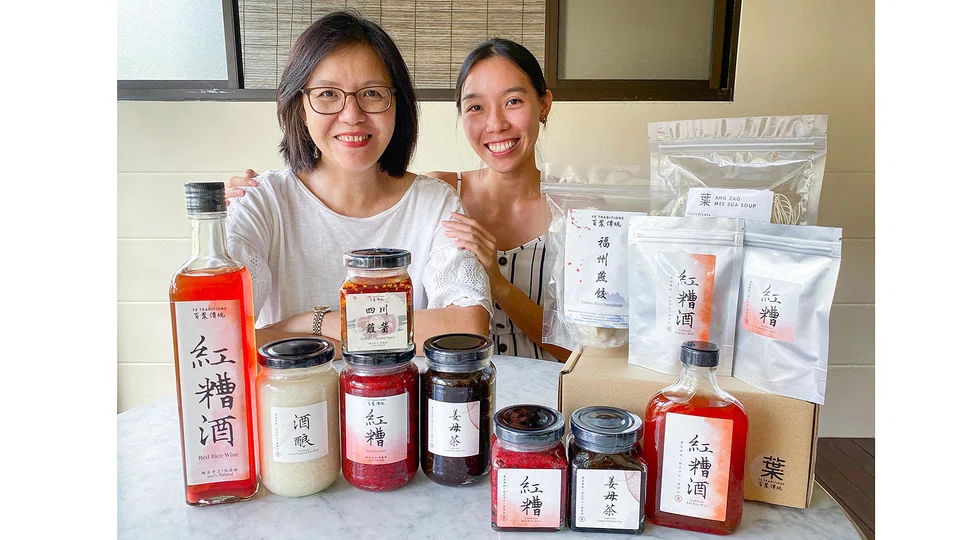
Every year, retiree Yap Joo Eng and her daughter Jinyen get down to work to prepare their family's prized traditional Fuzhou red rice wine. It's a gruelling two-day process - washing, steaming and cooling glutinous rice, mixing it with red yeast rice and wine cake, before leaving it to ferment for a month before bottling.They usually made it only for personal consumption, but decided to sell it last year under the label Ye Traditions. "Although traditional foods are well-loved, the tedious process to make them makes it an unattractive business to enter," says Ms Yap, who keeps her day job in a healthtech company. "However, we decided to take the leap to create a legacy."
Sales was encouraging and customers began asking for other traditional foods.
Mother and daughter now partner with five seniors to recreate and preserve traditional recipes from three dialect groups, Hockchew, Hokkien, and Teochew, and are growing the number of seniors and recipes that they partner with.
Apart from the red rice wine and its lees, other products include a red wine Chinese sausage, oyster cake and fermented glutinous rice wine.
Besides getting free marketing materials, packaging and distribution, the seniors get a percentage of the profits, and the chance for them to continue cooking their traditional dishes.
Mrs Yap says: "By reaching out to seniors, we are able to continue their legacy of creating heritage food for future generations. The time spent experimenting and recreating the perfect dish is worth it when customers are reminded of their childhood."
Decoding Asia newsletter: your guide to navigating Asia in a new global order. Sign up here to get Decoding Asia newsletter. Delivered to your inbox. Free.
Copyright SPH Media. All rights reserved.
TRENDING NOW
Motoring tycoon Peter Kwee is back in court: Here are his previous legal battles

Peter Kwee’s Ridley Park bungalow on the market with S$100 million asking price

Demand, tech capabilities position Apac and AI as Skyscanner’s next growth frontiers: CEO Bryan Batista

South-east Asia has lost Nvidia’s best salesman

