Luxury has moved East, and Gen Alpha is on the horizon: BTLuxe Edit
Asia’s most lucrative phase is just beginning, say luxury veteran Ravi Thakran and trend forecaster WGSN’s Jien Goh at BT’s recent luxury summit

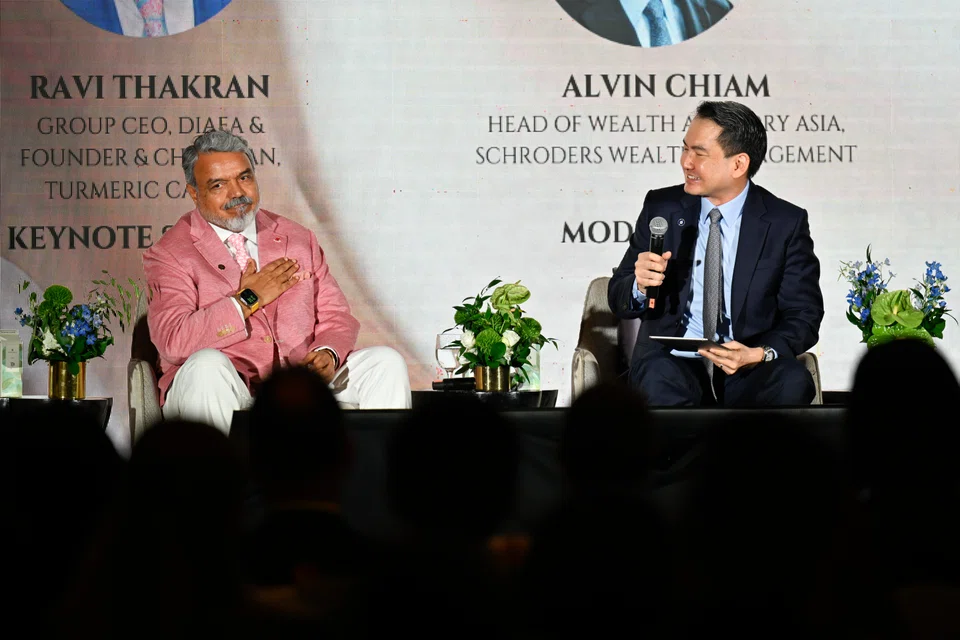
[SINGAPORE] The pendulum of global luxury has swung. Asia, long the “factory of the world”, is now one of luxury’s largest consumer markets.
“A lot of people think of luxury as still in the West. It’s not. A lot of luxury has already moved East,” said Ravi Thakran, group CEO of global luxury hospitality investment platform Diafa.
The region is entering its most exciting phase yet, said Thakran, as it pivots to become a leading creator of global luxury brands.
This market shift anchored the opening panel of The BTLuxe Edit – Future:Legacy symposium on Oct 28, where industry titans gathered to celebrate legacy and rising names, and to map the commercial future of high-end retail and hospitality.
Thakran, having spent two decades at luxury conglomerate LVMH, noted that in the 1980s and 1990s, Asia accounted for less than 10 per cent of business for most Western houses.
“Brands belonged to the West, but we produced them,” he said, observing that today, China alone drives at least a quarter of revenues for many luxury businesses.

Looking ahead, Thakran argued that the region’s most lucrative phase is just beginning.
“In the last 30 years, the best hotels have all come from Asia, whether it’s Peninsula or Rosewood or Mandarin Oriental or Six Senses or Aman. They all were born here and have gone around the world and conquered,” Thakran told moderator Alvin Chiam, head of wealth advisory, Asia, at Schroders Wealth Management, the symposium’s presenting sponsor.
“Our own airline is the best airline in the world… Emirates, Qatar, Cathay, (and) others are (also) the best airlines in the world,” said Thakran, putting them way ahead of Western airline brands.

“I genuinely believe the pendulum will swing fully by the end of the 2030s… We are becoming the creator of brands,” he said.
Addressing a question from Chiam on competing without the centuries-old heritage of European houses, Thakran said that Asian culture has “enough heritage – much deeper, much longer heritage than anything in the West”.
Even if contemporary Asian brands do not have the same legacy as Western houses, this legacy can be built over time, he suggested.
“Some (Asian) brands don’t have heritage, but so did Hermes 189 years ago. He was a guy with an idea, with good craftsmanship, and had good conviction – that was it.”
South Korean eyewear brand Gentle Monster, for example – which Thakran backed when he was chairman and managing partner of L Catterton Asia – is anchored by the same strong sense of discovery and exploration.
“You almost do not feel that (Gentle Monster) sells eyewear at all. And I think this is the Hermes of 189 years ago. Somebody with a real conviction to do something different, (who) should go (out into) the world,” he said.
Experiential luxury
As the market matures, capital is increasingly flowing from tangible objects to experiences.
“Products themselves have become more experiential in nature, particularly brands like Gentle Monster. Going to the store is an experience in itself, and taking a product is just part of that whole experience,” Thakran said.
He identified this transition a decade ago, driven by social media, and expects this experiential shift to accelerate as artificial intelligence drives efficiencies, potentially giving people 30 to 40 per cent more free time.
“What are you going to fill that life with? It will be the experience economy,” he said.
This pivot towards experiential luxury aligns directly with the commercial expectations of the industry’s next crucial demographic.
Following the panel, Jien Goh, associate director at trend forecasting consultancy WGSN, outlined why the future of luxury hinges on Generation Alpha, a cohort born between 2010 and 2025.
Goh explained that Gen Alpha is defined by “ambient affluence”, growing up exposed to luxury from a young age. This creates an “accelerated sophistication”, where they develop refined tastes before possessing actual purchasing power.
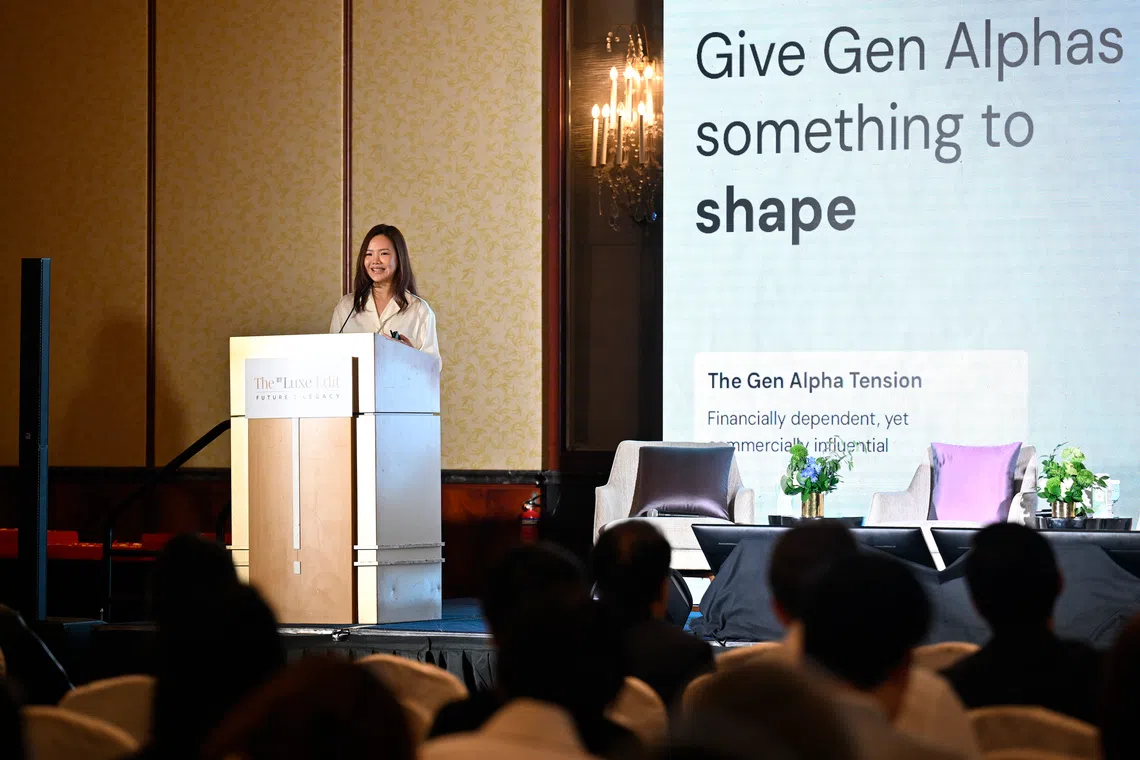
Concurrently, they are coming of age during an era of overlapping global crises, leaving this hyperconnected generation anxious, uncertain and lonely.
For these future consumers, luxury is moving away from physical possession.
“Its all about experience now, and how that brings emotional connection, meaning, and even escapism for the next generation,” Goh said.
“If luxury is everywhere, if it is universal and accessible to everyone, how do you make it meaningful again?” she asked the audience.
To capture this demographic, brands must offer Gen Alpha imaginative potential and give them something to dream about, she suggested.
Goh cited Matthieu Blazy’s Chanel Spring/Summer 2026 debut, which utilised a celestial universe set to inspire curiosity.
“Instead of just thinking about the show as a visual spectacle, his aim was really to restore wonder, curiosity and imagination in the world of Chanel,” she said.
Brands must also treat these younger consumers as active participants by giving them something to shape.
“Ultimately, luxury must give the next generation something to care about,” Goh said.
The consensus from the symposium was clear: luxury’s next half-century will be defined by Asian creation and immersive, value-driven experiences.
When asked to look 50 years into the future, Thakran maintained that while technology will continue to advance, the human element will remain paramount.
“Fifty years from now, love will win over technology,” he concluded.
The BTLuxe Edit - Future:Legacy symposium was presented by Schroders Wealth Management, and partners including OpenTable, Sotheby’s and RISIS.
Decoding Asia newsletter: your guide to navigating Asia in a new global order. Sign up here to get Decoding Asia newsletter. Delivered to your inbox. Free.
Copyright SPH Media. All rights reserved.