

5 cars that beat high fuel prices
If pump prices are making you wince, consider these cars that cost between S$2,135 and S$3,203 a year to feed
 Add BT as a preferred source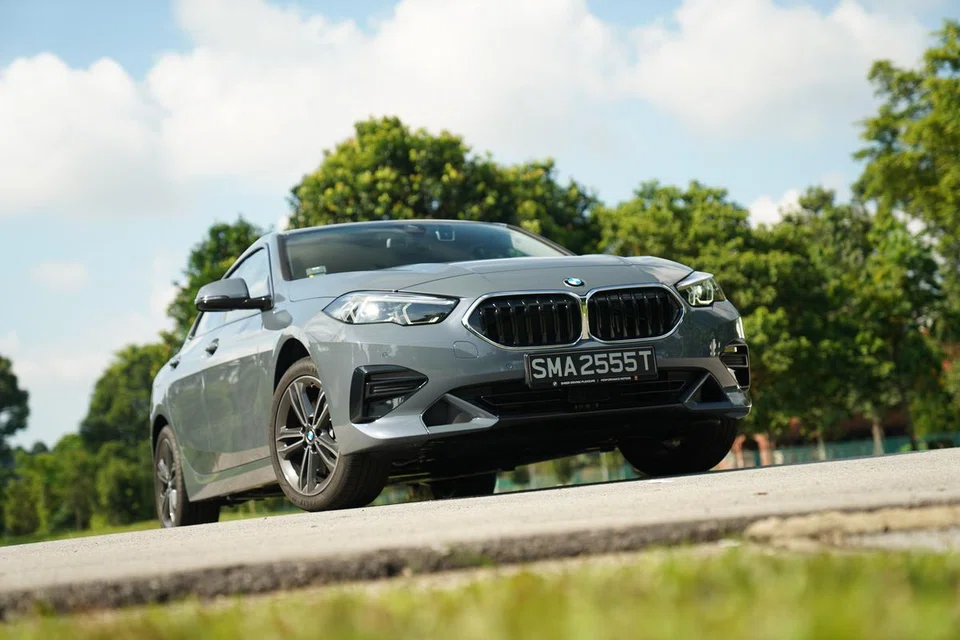
PUMP prices have never been higher, so who can blame you if you’ve never felt lower about having to feed your car week in, week out? While there’s seemingly no end in sight to the crisis in Ukraine that has caused energy prices to skyrocket, there is a way to cut how much you spend at the filling station: drive a more efficient car.
These 5 cars show that fuel-efficient cars now come in all shapes and (up to a point) sizes, and balance a small appetite for petrol with competence in other areas. There’s no use choosing a car for its frugality, only to regret buying it after fuel prices come down again — if they ever do, that is.
The cars here all cost around S$3,200 or less a year to keep fed, based on the assumption that their drivers cover an average of 17,500 km a year, and that fuel costs S$3.211 per litre, which is the current net price for 95 Octane petrol.
You’ll notice that most are petrol-electric hybrids, which are a mature technology that has proven to work. Going full electric is one way to bid high petrol prices goodbye for good, of course, but this is a list for buyers who don’t yet have convenient access to electric vehicle (EV) charging; none of the hybrids here needs to be plugged in.
Finally, buying a brand new car might not be the best way to save money, especially at today’s high Certificate Of Entitlement (COE) premia. It may not make financial sense to trade your current car for a relatively expensive one today, if your aim is to save money at the pumps. Rather, if you happen to be in the market for a new car, but feel like you and your pump attendant have been seeing too much of one another lately, these 5 choices are a good place to start looking.
BMW 216i Gran Coupe
Price: S$199,999 with COE
Fuel consumption: 5.5 L/100 km
Annual fuel bill: S$3,091
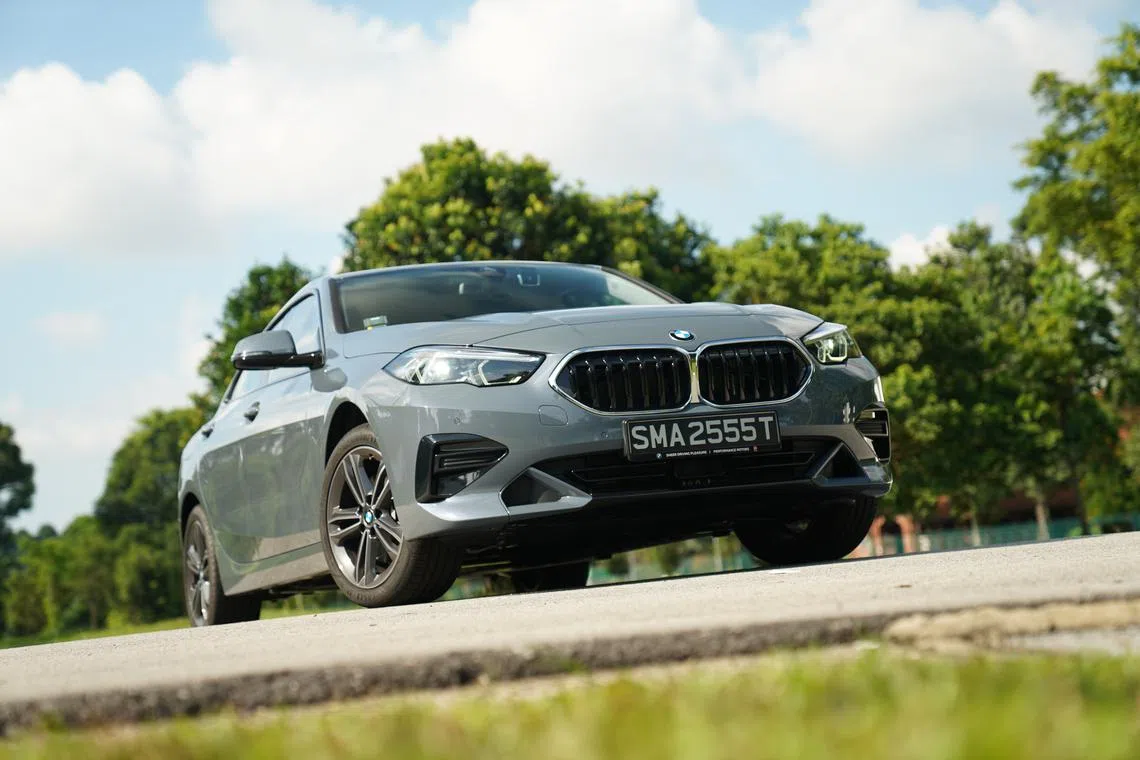
The freshly-launched 216i Gran Coupe has the distinction of being BMW’s cheapest 4-door car, but it’s also a frugal one. That’s thanks to a tiny 1.5-litre with a burbling voice that’s typical of a 3-cylinder engine.
The engine runs out of puff fairly quickly (accelerating to 100 km/h takes a slovenly 10.8 seconds) but the little BMW has lovely, sharp handling, so it’s still a fun car to drive. Buyers will more likely appreciate the fact that it looks and feels like a BMW, with a torpedo-like silhouette and lots of standard equipment, including twin digital screens and voice control.
There’s precious little headroom in the back but the boot is useable, and BMW itself says this isn’t a car for people with kids, but the 216i Gran Coupe is a stylish way to get around without having to slake a powerful thirst for fuel at the pumps. Based on The Business Times’ stint with the car, most owners would probably stop for fuel twice a month in the BMW.
Honda Jazz e:HEV
Price: S$134,999 with COE
Fuel consumption: 3.8 L/100 km
Annual fuel bill: S$2,135
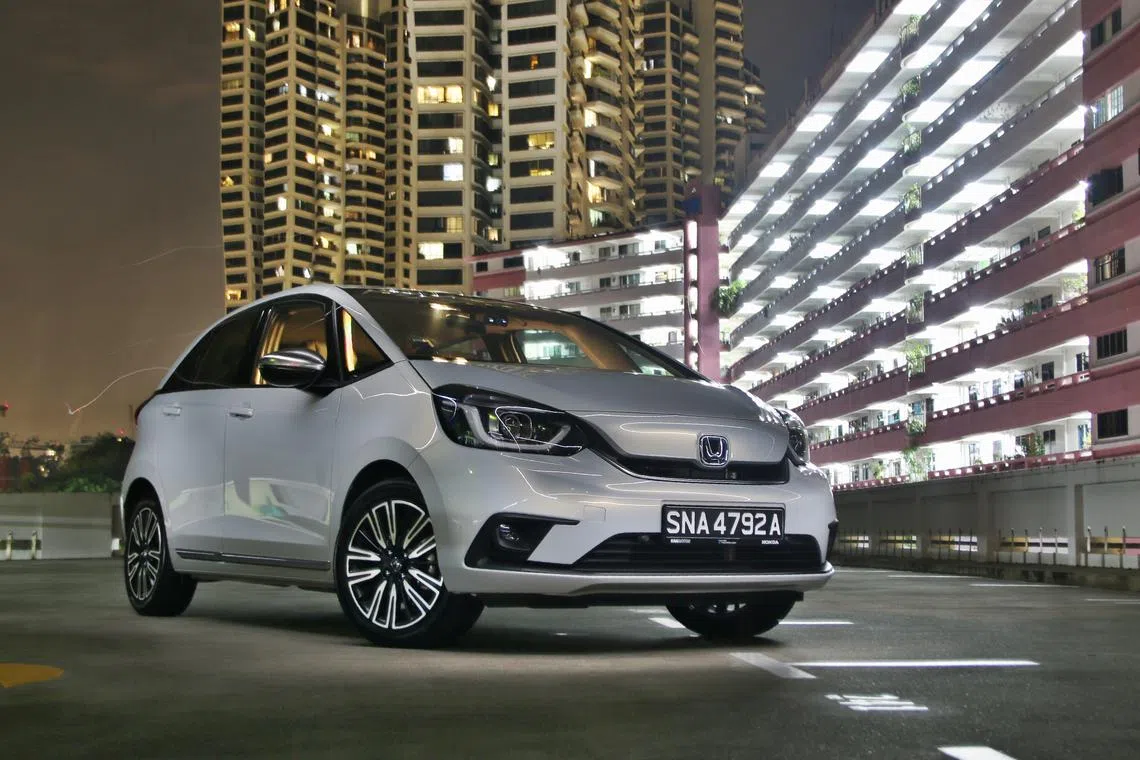
Honda’s mastery of the small car has produced the Jazz, a car whose appeal lies not in its compactness, but the fact that it feels so sophisticated for its size and price point. The most frugal car on this list, the petrol-electric hybrid should cost the average driver less than S$200 a month to keep fed.
Although some of the cabin plastics feel cheap, the Jazz has a cheerily bright interior that feels airy and spacious. The air-conditioning is powerful, the infotainment system is easy to use and the car feels well-connected to the road and surefooted. There’s an amazing amount of space in the back, while the versatile theatre-style rear seats give the little hatchback plenty of versatility when it comes to carrying cargo.
It isn’t a cheap car by any means, but the Jazz e:HEV does feel like a well-engineered one that should be a joy to live with if what you want is something that punches above its weight.
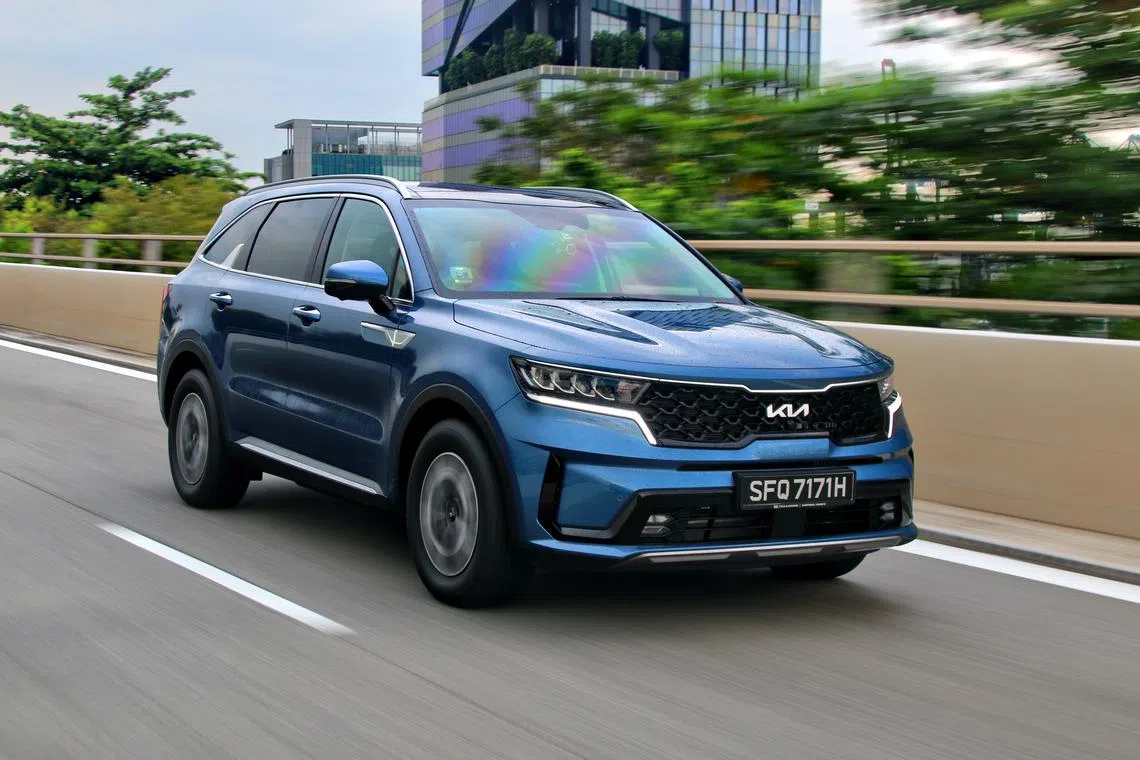
Kia Sorento Hybrid
Price: S$224,999 with COE
Fuel consumption: 5.4 L/100 km
Annual fuel bill: S$3,034
Hybrid drive isn’t new to Korean carmakers, so it’s about time they applied the tech to a 7-seat Sport Utility Vehicle (SUV). With a 1.6-litre turbo engine assisted by an electric motor and battery, the Sorento Hybrid is reasonably peppy on the move despite its size.
It packs plenty of standard equipment (including ventilated front seats, a blessing on scorching hot days) and safety gear, and feels roomy enough to be a genuine family bus. While it’s no more than decent to drive, it does offer enough refinement on the move to work on long road trips.
Like all self-charging hybrids, the Kia does the petrol-electric juggle for you, leaving you to drive it like a normal car, but our experience with Sorento is that achieving the quoted fuel economy takes saint-like restraint on the accelerator pedal. For something so spacious and well-equipped, however, this hybrid has the appetite of a monk.
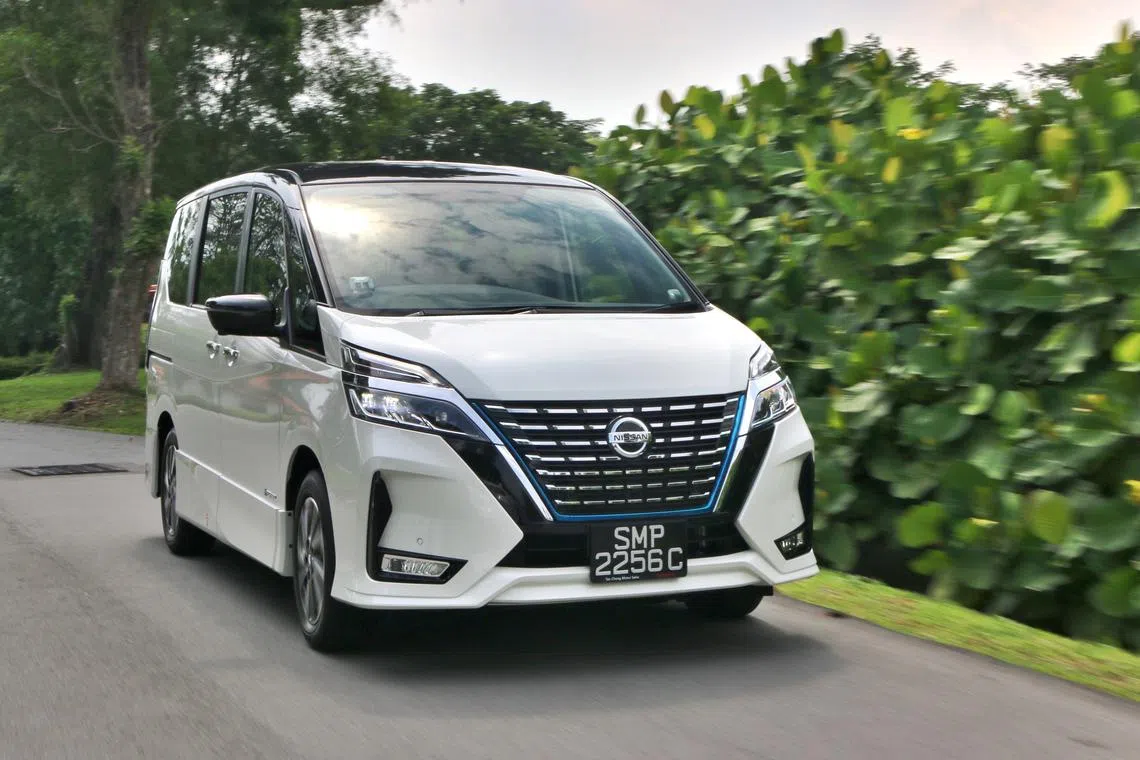
Nissan Serena e-Power
Price: S$184,800 with COE
Fuel consumption: 5.7 L/100 km
Annual fuel bill: S$3,203
Although it isn’t exactly new, the Serena fills a niche in the market by being a large, family-friendly Multi Purpose Vehicle with a petrol-electric drivetrain. Nissan’s take on hybrid tech, which it calls “e-Power”, is a little different from most. It’s closer to a pure electric in the sense that an electric motor does all the work of driving the car, while the petrol engine acts as a small generator; it never powers the wheels directly, and only makes electricity.
Whatever the fine details, the result is a car that actually feels like an EV to drive. The Serena gathers speeds seamlessly, and easing off the accelerator engages regenerative braking that slows the car down by recapturing energy for a small buffer battery. It’s so effective that you can even drive the big Nissan with just one pedal, the way you can some electric cars.
Just don’t expect to be entertained behind the wheel any other way, because the Serena is essentially designed to be a family bus and not a hot rod. Still, that makes its e-Power tech all the more relevant, because who wouldn’t prefer to spend money on the family than on fuel?
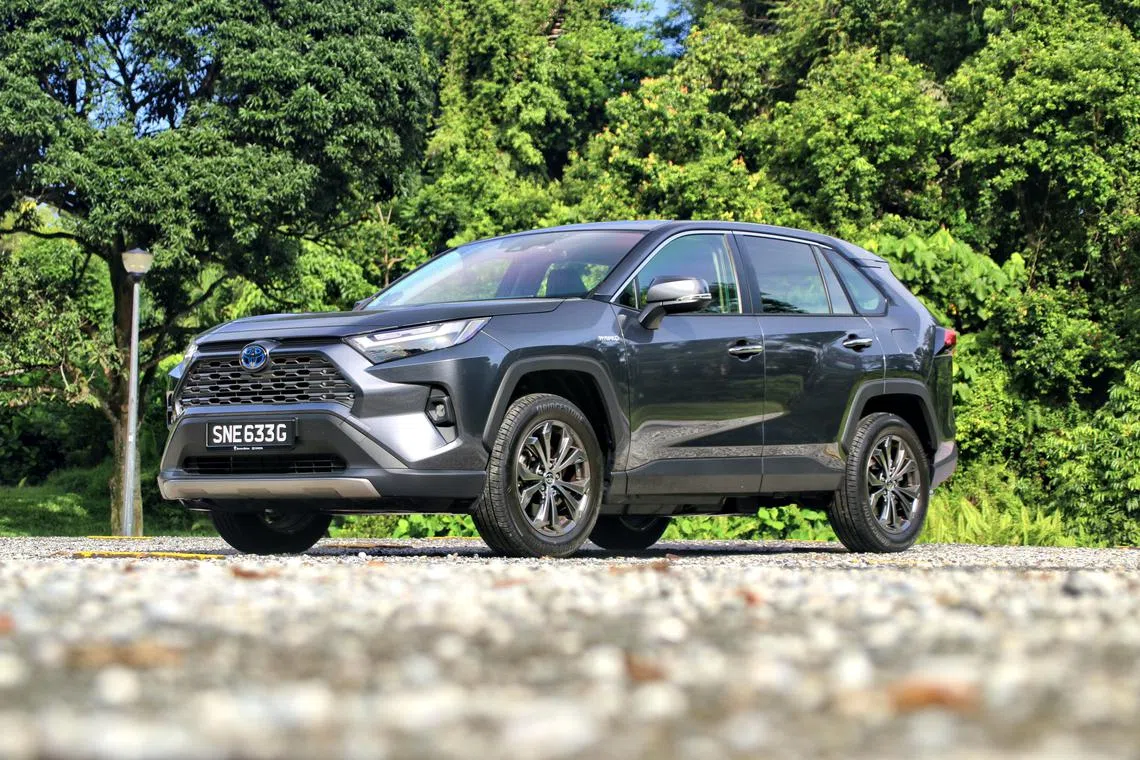
Toyota RAV4
Price: S$201,888 with COE
Fuel consumption: 4.7 L/100 km
Annual fuel bill: S$2,641
If any brand is synonymous with petrol-electric hybrid technology, it’s Toyota. The Japanese giant has been at it for 25 years, and says the millions of hybrids it has put on the road have collectively saved 1.2 billion litres of petrol.
The brand now has the widest range of hybrids in Singapore, and the RAV4 is the quintessential family SUV among them, with an ability to wring more than 20 km from every litre of fuel. It’s a roomy and practical car (although the boot could use some hooks for grocery bags), and it’s soothingly quiet on the move, thanks to the quietness of the petrol-electric drivetrain.
While it doesn’t handle like a sports car, the RAV4 rides comfortably over bumps. It also accelerates smoothly, with a reasonably amount of pep. More importantly, Toyota hybrid tech is typically user-friendly and easy to get the best out of. After a weekend with the car covering 155 km in all kinds of traffic, The Business Times scored 4.6 L/100 km, slightly bettering the car’s fuel economy claim.
Decoding Asia newsletter: your guide to navigating Asia in a new global order. Sign up here to get Decoding Asia newsletter. Delivered to your inbox. Free.
Share with us your feedback on BT's products and services
TRENDING NOW

CSE Global independent director quits after clashes with chairman Eugene Lai over board refresh

Room for more offices, homes and green spaces to make Orchard Road more vibrant

‘I felt like dying’: Thai Singha beer scion speaks up after disclosure of alleged sexual abuse

MAS revises takeover and merger code to enhance competition and disclosures

