

The fairytale life of Horacio Pagani
With pluck and help from an idol, Pagani has created some of the most desirable cars on the planet, enriching himself and customers along the way.
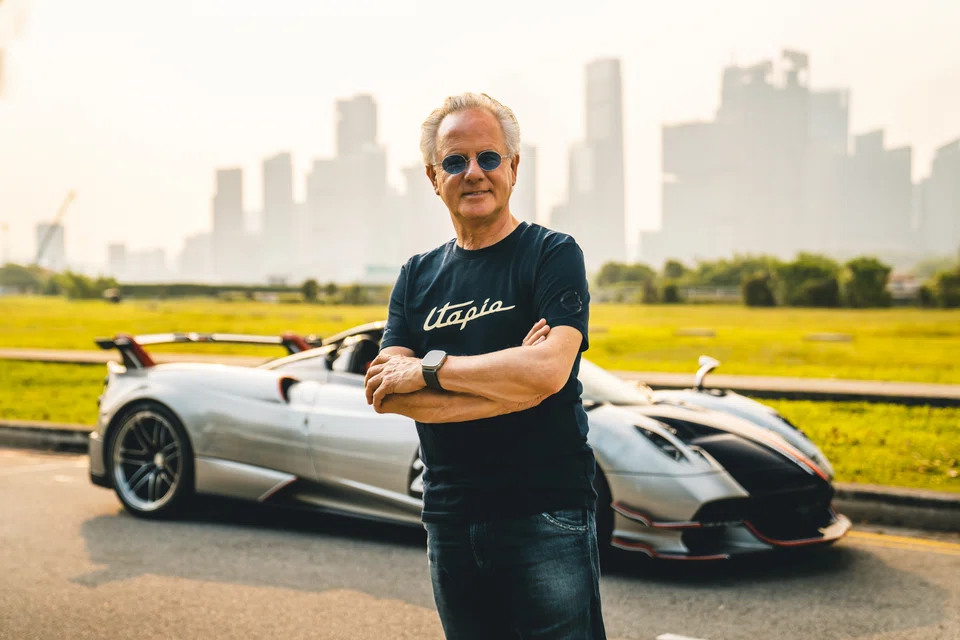
EACH day at work, Horacio Pagani pays quick, silent tribute to a personal hero he is desperate not to disappoint. That seems unlikely to ever happen, judging from how Pagani has built his car company into a boutique of the highest pedigree.
Within the world of exotic cars, words such as “exclusive” and “rare” are bandied about without care, but a Pagani is on a different level to its illustrious neighbours in northern Italy’s famed Motor Valley.
Ferrari, just 25 kilometres from Pagani Automobili, assembles more than a thousand cars a month. Lamborghini (16 km away) cranks ’em out at a rate of 700 a month. Their cars are fast-moving consumer goods compared to Pagani’s: his 200-person company produces just one car a week. In a quarter of a century, fewer than 500 Paganis have been made.
That rarity is one reason Paganis have a habit of paying their owners back, and then some. The brand’s first car, the Zonda, has appreciated remarkably. “If you want to try to buy one, they can go for five times, up to 10 times the original price,” Pagani says.
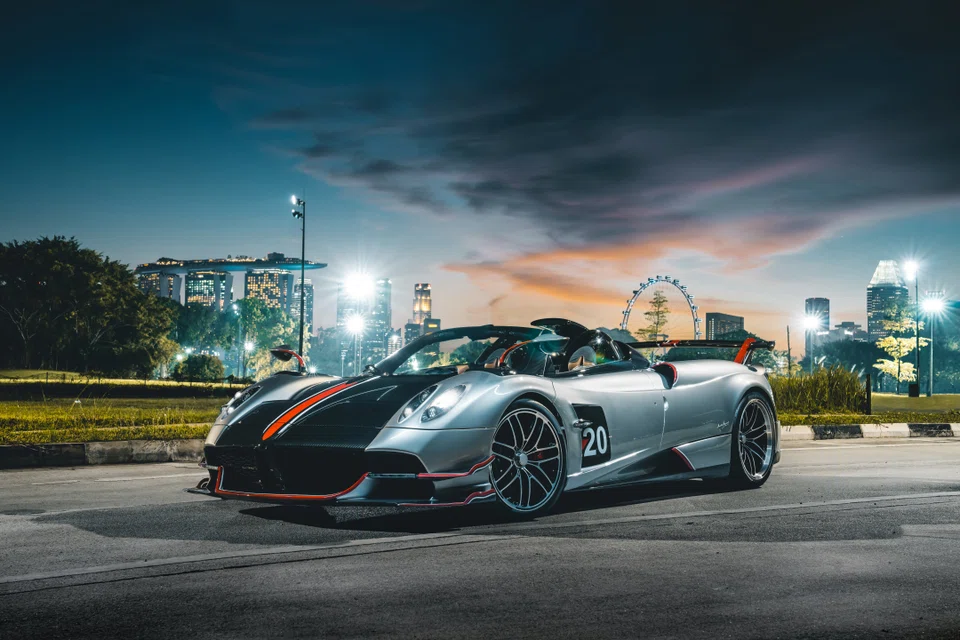
Even the recent models command eye-watering prices in the secondary market. A Huayra Roadster BC, the final edition of Pagani’s second model line, recently transacted for 6 million euros (S$8.8 million), a handsome return on the 3.5 million or so the first owner would have paid. Remarkable, considering the car was first presented less than two years ago.
More comfortable with Italian than English, Pagani presses his son Christopher, nominally the marketing director of the company, into service as an interpreter when chatting with The Business Times. “A most overpaid interpreter,” the senior Pagani jokes.
Jocularity seems to run through the Pagani veins. “See the resemblance?” Christopher asks when introducing himself to me, one hand indicating his father’s hairline. “I’m gonna lose all my hair in a couple of years.”
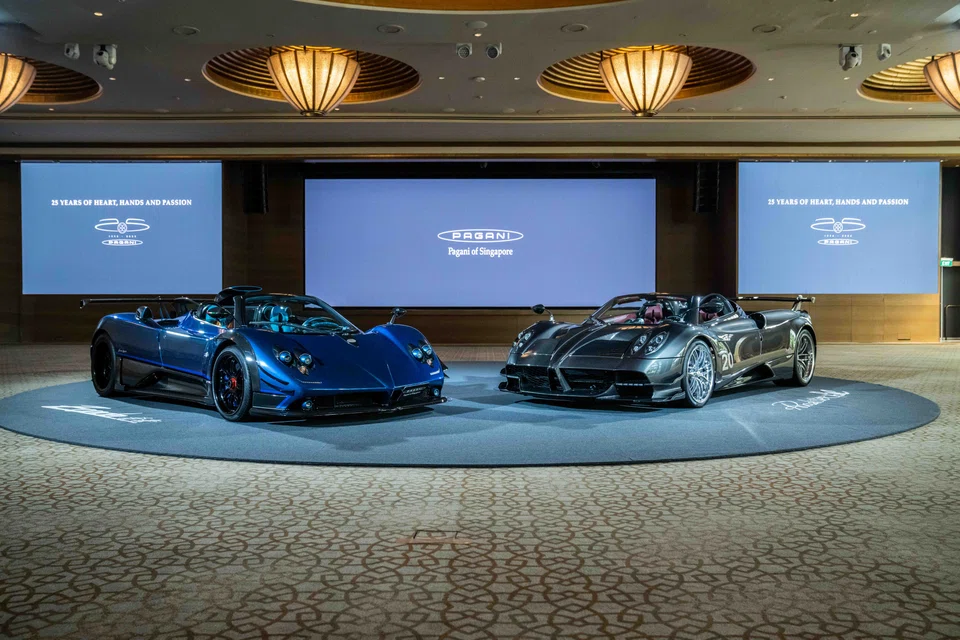
Perhaps the Paganis’ relaxed mood is down to the fact that they happen to be kicking off a tour to celebrate the 25th anniversary of the Zonda in one of their favourite cities.
“It’s a very green city. To be surrounded by all that is wonderful. The people are very educated and culturally, it’s a very beautiful place to be,” the elder Pagani says of Singapore. The younger Pagani once wanted to study for a master’s degree here.
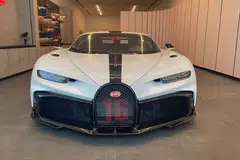
Pagani’s affection for Singapore is mutual. The Zonda 760 Kiryu, a one-off car that Pagani considers his best version of the car, is now in a collector’s hands here. Of the 40 Huayra Roadster BCs built, at least two have ended up in Singapore. An unnamed patriot is reportedly going to stump up the money to tax and register it, and could end up paying S$14 million for the privilege of driving it on the road.
Rarity is not the only factor that makes his cars valuable. Paganis are collectible because they blend art with engineering, and each car is handcrafted and customised according to the owner’s preferences, with Pagani (the man) as artist and the customer as patron.
Then there’s the breathtaking performance, the way they are built to threaten other Italian supercars but flatter the driver.
“To combine the scientific and artistic in a car is very complicated,” Pagani says. With the Zonda he brought materials from aerospace into the car industry, pioneering the use of carbon fibre (the strong, light material that Formula 1 racing cars are made of) and titanium.
“All the different things that pull it all together, they create the car. And on the artistic side you have to make them beautiful,” he says. “We believe in what Leonardo da Vinci said, that art and science can walk hand-in-hand.”
If anything, climbing into a Pagani can be overwhelming to the senses. Every last part seems rich with detail, and everything the driver touches is an art piece in itself. The Huayra Roadster BC has roughly 10,000 components, and Pagani designed every one of them in-house.
You won’t find digital screens in a Pagani because the clients tend to be older, and they prefer an analogue way of driving. The company’s third model, the Utopia, even has a manual transmission. Yet, all 99 were snapped up before Pagani showed anyone what the car even looked like, a feat he calls “great market feedback”.
An ability to have cars fly off the shelves before they even appear there might not even be Pagani’s greatest accomplishment.
It’s difficult to imagine now that global demand for super expensive cars seems insatiable, but Italy’s Motor Valley is littered with financial wreckage. Ferrucio Lamborghini got out of the car game after 10 years, his eponymous company going bust soon after. The Maserati brothers divested just 11 years after building their first car. Even the great Enzo Ferrari had to sell a chunk of his company to Fiat after only 22 years.
The fact that Pagani has kept his company private and in family hands for more than 25 years is a feat made all the more ironic by the fact that he decided to strike out on his own when the business was at its toughest. After the first Gulf War tanked the global economy, and with it the market for pricey four-wheeled toys, Pagani decided to leave Lamborghini, where he had been head of engineering, after the global recession caused everything to grind to a halt.
“It was a very complicated time in the economy,” he remembers. “All the new projects for Lamborghini were cancelled. Most of the orders for high-end manufacturers were cancelled. There was no work. There were no jobs. There was nothing.
“This was the time for me to sit back and work on my car.”
In doing so, Pagani was merely following a dream that went back to when he was 12 or 13 years old, so long ago that he doesn’t even remember when. He studied the market and knew what he had to do.
“I found an empty spot in the hyper-car industry, where most of the cars were not lightweight, were not using carbon fibre,” he says. “They were, at some point, not that easy to drive for all kinds of drivers.” The resulting car, the Zonda, was light, leaned heavily on carbon fibre technology and was made up of other materials then new to cars. It appeared in 1998, but Pagani had been working on many of the technologies that went into the car since the 1980s.
His experience building cars went back far further, when he was still in Argentina. He designed and built his own Formula 3 racing car by himself, and naturally it was significantly lighter than the competition. He was just 20 years old at the time.
The French giant Renault tasked him with redesigning the skin for one of its racing cars, and then its success helped land him his first real big break: he met his boyhood idol, Juan Manuel Fangio, the five-time Formula 1 champion.
“Fangio is a symbol for the Argentinian people,” Pagani says. “He was a very special person – very, very smart. He was not a person who used a lot of words, but he was always saying the right things. I had huge esteem for him and (we had) an amazing relationship.”
The great champion endorsed the young Pagani and helped open doors for him when he moved to Italy to pursue his dreams. Fangio had raced for Mercedes-Benz in his prime, and that association helped unlock a crucial piece of the puzzle for Pagani’s car project: high-performance, evocative sounding engines built for him by Mercedes-AMG.
The engine shop doesn’t merely supply off-the-shelf units to Pagani. It has 70 people working on what has come to be formally called the Pagani V12, an honour that AMG reserves for Horacio Pagani. “Fangio opened the door to our relationship with Mercedes-Benz, and today we celebrate 30 years of working together with them,” Pagani says.
It’s easy for anyone to state that he has a passion for cars, but Pagani embodies it. He has a fine collection of cars from Ferrari, Lamborghini, Porsche and all (“The money we make on Paganis, we spend on other cars,” he laughs), and surprisingly one of his all-time favourite cars is a Toyota Alphard. He had one shipped to Italy after experiencing its comfort on his travels.
Then again, his typical day seems centred around comfort. He is up well before dawn and has breakfast with his two German Shepherds (Mrs Pagani likes to sleep in), before going for a stroll in the countryside near his home. He walks to the office, which is 3 km from home, or cycles in.
Mornings are spent in the design studio, after which he has a light lunch and treats himself to a nap. The afternoon is given over to meetings, very often with visitors to the factory, and time spent in the research and development department.
For someone regarded as an artist, Pagani is fastidious about his cars’ engineering. He builds so few that they qualify for many legal exemptions, but he makes it a point to pass every roadworthiness test out there, to the extent of performing nearly 60 crash tests on the 99-unit Utopia. One particular test he finds “crazy” is a US requirement that a baby asleep on the dashboard should be able to survive a frontal collision.
Like other exotic car makers, Pagani is already working on its first electric car.
“We’re not afraid of electrification. We founded a team that works on a full electric Pagani car, which started in 2018. I’m part of that, and I spend a lot of time working on future platforms,” he says. “But we don’t want to put a time on when it’s going to happen.”
Being a family-run business gives Pagani Automobili the luxury of time, he adds: “Our goal in the next 25 years is to keep releasing things that are technically and aesthetically rich. So they have to be like what we’re doing now.”
One wonders what Fangio, who died in 1995 at age 84, would have thought about electric cars. But his presence continues to loom large over Pagani, both the man and the company.
“We work every day to make sure that we don’t disappoint him,” Pagani says. A picture of the Argentinian champion hangs near the top of the staircase that takes Pagani to the design studio. He pauses there every day to acknowledge his idol.
“A little look,” he says. “Just to make sure that he’s there, following us.”
Decoding Asia newsletter: your guide to navigating Asia in a new global order. Sign up here to get Decoding Asia newsletter. Delivered to your inbox. Free.
Share with us your feedback on BT's products and services
TRENDING NOW

Fed hike throws Singapore banks a margin lifeline; UOB most likely to feel impact

He built the Vingroup empire. Now South-east Asia’s richest man is handing some key roles to his sons

Real-estate veteran Desmond Sim quits from CEO roles at Realion, ETC

Chagee, Mixue and Luckin won the market. Sustaining their edge is the harder part

