

Few clear winners on the road to EVs – only losers
Car dealerships with no electric vehicles to sell are beginning to feel less like showrooms and more like hospices
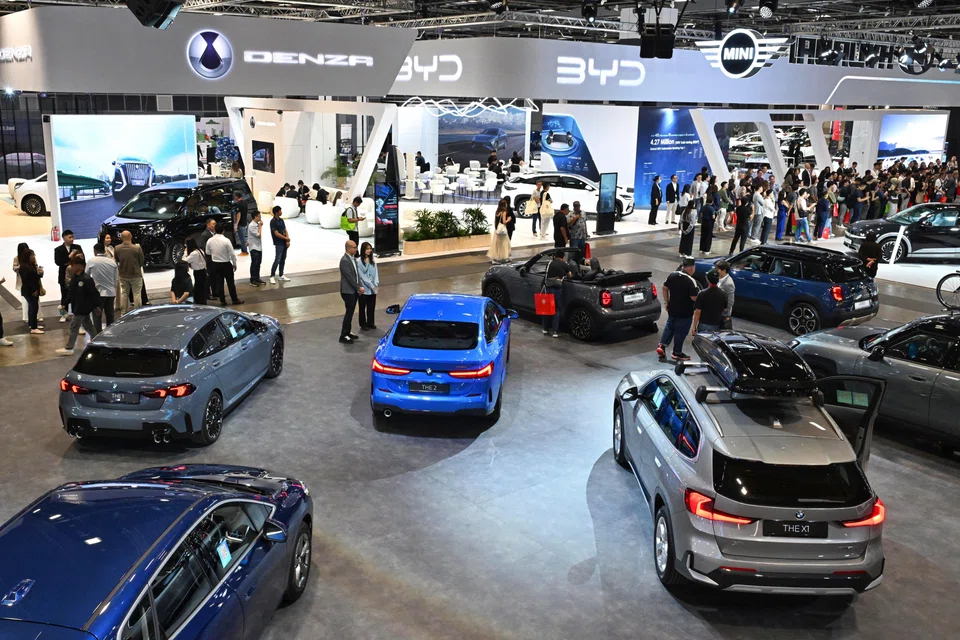
THIS month’s Singapore Motorshow will have driven home just how relentlessly an influx of futuristic Chinese EVs with tantalising prices, at least by our standards, is reshaping the motoring landscape.
The incumbent players and their dealers do not merely have to grapple with the fact that car pricing here is distorted in favour of EVs, for one reason or another, but also that those from China seem to come with more of everything: more space inside, more high-tech features, more performance and more refinement. What Singaporean motorist can resist the idea of getting more car for less money?
While the flood of Chinese EVs threatens to sweep away the old guard, some legacy brands are still on higher ground than others. These include premium nameplates such as BMW, Mercedes-Benz and Porsche, along with those above them: Bentley, Ferrari, Lamborghini, Rolls-Royce and their ilk. They will stay protected for as long as their brands transcend metal, glass and plastic. “I’m ashamed to say I drive a Benz,” said no one here, ever.
Having nowhere else to turn, some have turned to each other. Last month, Honda and Nissan announced plans to join forces, while inviting Mitsubishi to make it a threesome. Apart from allowing them to share the daunting cost of developing new electric cars, it remains unclear just what the three rivals hope to accomplish by becoming bedfellows.
Yet, the road ahead could be just as bumpy for the disruptive newcomers. Success in the car business has only ever been about two things: product strength and cost structure. Even if EV startups nail the first one, few have cracked the second.
Achieving the scale necessary to prosper means selling around 400,000 cars a year, which is when an auto firm stops bleeding money. Precious few new players have done it, which means the vast majority of startups that raised capital to embark on this car-building lark are now simply burning through it.
Unsurprisingly, car executives in China see a coming cull. EV brands best placed to survive, perhaps with some irony, belong to China’s own legacy players, who achieved viability working with Western and Japanese partners. Brands such as Deepal, Omoda and Zeekr are not yet household names and almost certainly lose money, but they have prosperous parents (Changan, Chery and Geely, respectively) who can keep them going.
Still, even well-heeled parents have limits to their patience. Geely acquired or launched at least 10 brands when it was expansion-minded, but is now focused on consolidation. Last year, it bundled its two most promising labels, Zeekr and Lynk & Co, into a new entity, and tasked them with doubling their sales to one million units by the end of 2026, or else. Will it fold its chronic underperformers – Polestar, Lotus and Smart – into the new setup, or let them simply fold?
Clouding the situation is the fact that hybrids, not EVs, now power profits. Chinese consumers have embraced petrol-electric cars so enthusiastically that EV-only players look wrong-footed.
With no clear way ahead, the road to an EV future now seems both foggy and littered with landmines. The car firms that make it through will be those lucky enough to steer around them, or strong enough to survive rolling over one.






