Stellantis Asean head says electric cars must be cheap and good
The sprawling 12-brand Stellantis group’s most important mission is to speed up EV uptake: Christophe Musy
 Add BT as a preferred source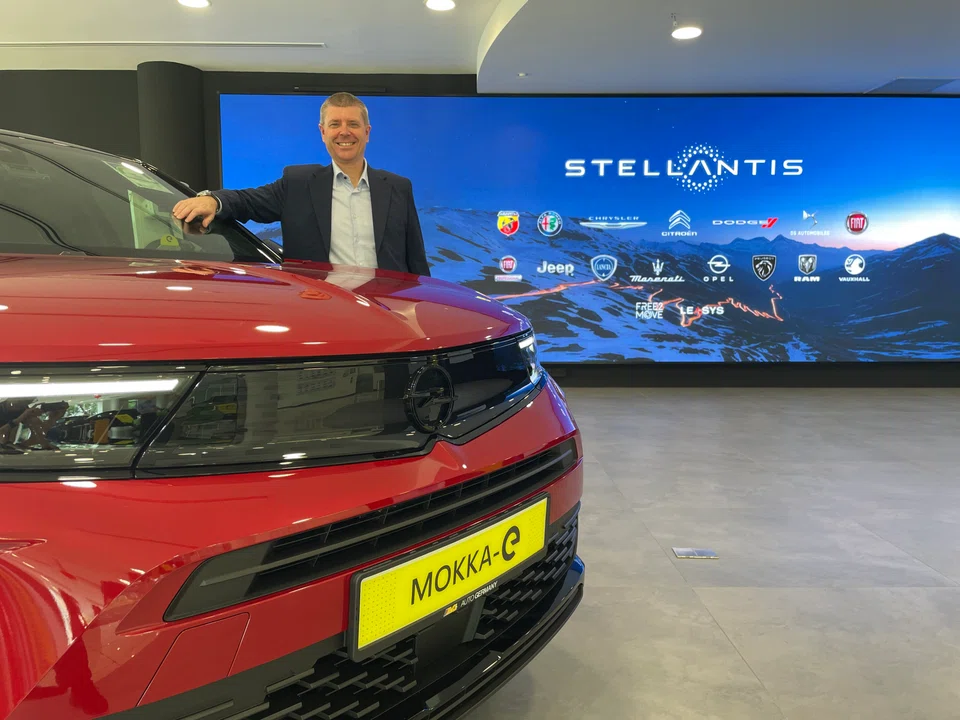
MOVE over, Tesla. A little-known transatlantic juggernaut is gunning for supremacy in the electric vehicle (EV) game, with 75 models set to go from product pipeline to showroom within just seven years.
“If I had to point out the most important project we have in the region now, it’s about going faster than others in electric,” said Christophe Musy, the Asean head for Stellantis, a sprawling collection of 14 car and commercial vehicle brands.
You might have heard of Stellantis’ individual nameplates, which have been here for decades. They include iconic marques such as Alfa Romeo, Maserati and Jeep, alongside more mainstream labels like Citroën, Peugeot and Opel, solid European brands that compete in the sub-premium market with the likes of Honda and Volkswagen.
But if Stellantis itself fails to ring a bell, that might be because the group came into being just 25 months ago, following a merger between US giant Fiat-Chrysler Automotive and PSA Group, the French group behind Peugeot, Citroën and Germany’s Opel.
The Italian-American-French giant (headquartered on neutral ground in Amsterdam) is ranked fifth among global carmakers. While Stellantis struggled last year with falling sales in its home markets, it is seeing growth in the India and Asia-Pacific regions, which includes the Asean operations that Musy heads.
The game plan for Singapore? To be number one in EVs, and eventually more than triple the collective market share of its brands to 10 per cent. “Our vans and cars are appropriate to the market. We just need to launch them as soon as possible to get the results,” Musy told The Business Times.
Stellantis is already right on Tesla’s rear bumper in Europe, where it sold 230,383 pure EVs last year, just 1,635 fewer than Elon Musk’s company, according to Jato Dynamics, an automotive data firm.
Here, EV models have helped Stellantis defy an industry slump caused by a tight supply of Certificates Of Entitlement. Its eight brands accounted for 986 registrations here in 2022. That’s down from 1,179 cars in 2021, but not down as sharply as the industry as a whole, which saw total sales collapse 32 per cent to 30,939 cars.
The ongoing shift to EVs has worked out even better for Stellantis in the Light Goods Vehicle (LGV) market. Between them, Citroën, Peugeot and Opel took 10 per cent of the market by selling 470 LGVs here last year, 462 of them electric.
Musy said Stellantis would have grabbed more of the passenger car market if it could have gotten its hands on more EVs. The problem is that headquarters has been hoarding electric cars for the Europe market in order to meet strict fleet fuel efficiency standards. “We sometimes struggle a bit to get enough production for Asia,” he said. “I think if we had been allocated more cars, we would have even more market share and sales.”
So far, the shining EV star of the group here has been Opel. One in three cars sold by the German brand here was electric last year, three times the industry norm. That performance could get a boost from an additional electric model set to join the Opel line-up this year. Musy declined to say what it would be, but it is likely to be the Astra Electric, a hatchback with more than 400 km of range.
Its arrival would help plug a hole in the EV market for an affordable hatch (so far, EVs have predominantly been sport utility vehicles, sedans and sporty four-door coupes). It’s a product that jives with Musy’s feeling that electric cars need to be cheaper, and more accessible to younger buyers.
“When I was 20, my first goal was to buy my first car because I wanted to go everywhere in Europe and to travel and so on. I wanted to be free,” Musy said.
But his children don’t think the same way because electric vehicles are still priced higher than combustion cars, which are on the verge of becoming obsolete. “I think this is something we have to take care of,” he said.
“We have to make sure that our engineers bring to life cars which are not only safe, clean and matching all expectations, but also affordable and cheap.”
Decoding Asia newsletter: your guide to navigating Asia in a new global order. Sign up here to get Decoding Asia newsletter. Delivered to your inbox. Free.
Share with us your feedback on BT's products and services