

New mobility concepts can solve South-east Asia’s traffic woes
Yuma Ito
AMONG the most unique reminders of the global pandemic of 2020 and 2021 were images of peacefully empty traffic arteries in cities around the region and across the world.
A notorious problem over decades, vehicle congestion and pollution intensified in South-east Asia's metropolitan areas with increased economic intensity.
Efforts to boost alternative forms of transport or even rethink the way in which we design cities haven't produced any visible results in most countries, unfortunately.
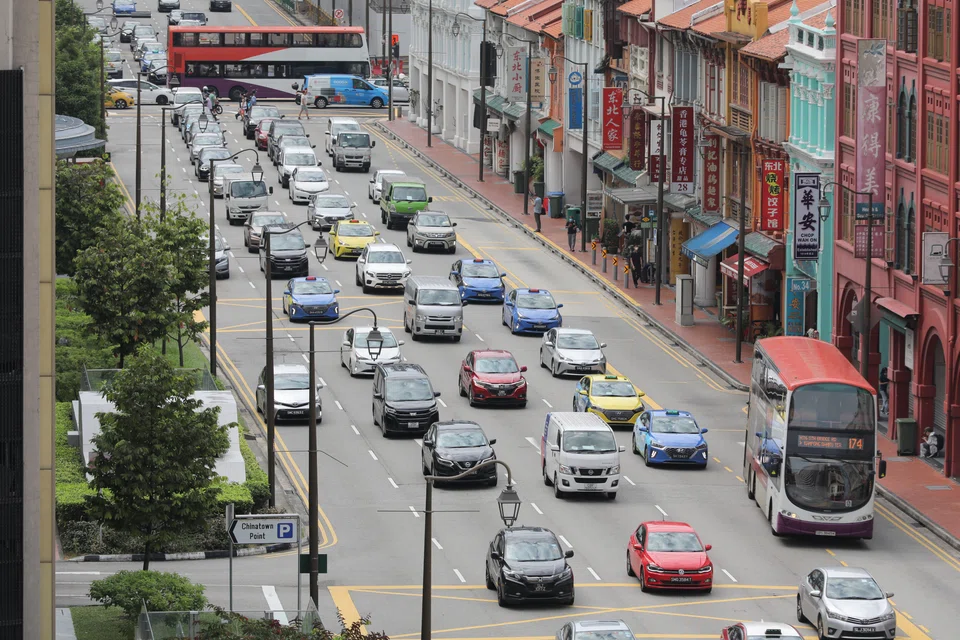
In Singapore, traffic jams during peak hours are back, as many workers head back to the office after mostly working from home over the last two years.
But there is light at the end of the highway tunnel, with Mobility-as-a-Service (MaaS) as a concept.
Mobility-as-a-Service (MaaS) is an idea that combines the different possibilities with the objective to build a more efficient transportation system for better user experience. This is both in the interests of local governments and their citizens.
Getting public and private entities to work closely together, however, can create something that's even more powerful, which can be termed as “Beyond MaaS”.
The technological progress, the remarkable speed at which people have adopted the Internet, and how businesses have digitised are creating opportunities for new mobility concepts.


New services have emerged, from ride-hailing to bike-sharing. Along the way, large amounts of traffic data are being generated and made available to the public via dedicated apps.
Our cities are suffering
Priorities and needs are changing over the years.
Cities have been primarily places to work and do business in.
These days, the quality of life, safety and security, and entertainment options also play a part in attracting people to a city. A high standard of healthcare also benefits the local population, but hospitals have now also become businesses themselves, bringing in a new type of tourists. A basic need of citizens and visitors alike is the air quality, infamously terrible in many of South-east Asia's cities.
A study by the Centre for Research on Energy and Clean Air found that the drop in traffic during the Covid lockdowns in Kuala Lumpur, Manila, and Bangkok significantly brought down the levels of nitrogen dioxide, which causes inflammation in the respiratory system, intensifying symptoms of asthma and chronic pulmonary disorders. Annual mean levels of air pollution in many countries in the region often exceed by more than five times the limits set by the World Health Organisation, the report further stated.
Commuters in many cities endure hour-long traffic jams on a daily basis, greatly due to a lack in public infrastructure. Jakarta opened the first 10.5 kilometres of its new Mass Rapid Transit system only in 2019 and still mostly relies on buses and motorcycles.
Malaysia, with a strong car manufacturing sector, has traditionally, and still favours, individualised means of transport.
Managing the transition
Planning for a more sustainable future doesn’t mean the end of the car industry.
The solution comes with the CASE technologies, which stand for connected, autonomous, shared, and electrified. They represent the profound change the sector is currently undergoing.
The region’s leading car manufacturer Thailand expects 30 per cent of its vehicle output to be electric by the end of this decade, according to a roadmap published last year.
Vietnam is creating with VinFast a national electric vehicle (EV) champion that plans to conquer the United States and Europe. Indonesia, the world’s largest producer of nickel, a key component in lithium batteries, is also aiming to become an EV production and export hub.
Indonesia is also home to the ride-hailing giant Gojek which boasts over 190 million app downloads, according to its website.
The firm is leveraging its vast amounts of traffic data, offering a multimodal journey planner called GoTransit. By raising rates for busy times and roads, ride-sharing services are able to reduce traffic congestion.
Specific carpooling apps, such as Singapore’s Ryde or the Paris-based BlaBlaCar, allow private car owners to offer empty seats to fellow travellers.
Connected cars will also boost security. Advanced driver assistance technology — already in use today — keeps vehicles on track when the driver falls asleep. It can be very beneficial to countries like Indonesia and Malaysia with high rates of traffic accidents.
Fully autonomous driving, which is being trialled in designated areas such as university campuses, can be applicable in smart cities and for certain use cases—for example at airports and amusement parks—before they are rolled out to the entire town.
How do we get there
In order to smoothly implement and enjoy the benefits of “Beyond MaaS”, the government sector with its land transport, urban development authorities, and related ministries should take the lead and seek active collaboration with private entities.
Singapore’s public transport provider SMRT trialled autonomous vehicles with Nanyang Technological University. The service is integrated with several other modes of transport like shuttle buses, bike sharing and e-scooters on a single platform. The university also joined forces with automotive parts manufacturer Continental to develop autonomous robots that communicate with food delivery service providers for last-mile deliveries.
NTU is also partnering Schaeffler, a leading global supplier to the automotive sector, to accelerate innovation in the areas of future mobility, robotics and Industry 4.0 in the Share@NTU project. The collaboration to develop smart mobility devices to support Singapore’s Smart Nation vision focuses on interconnectivity, automation, machine learning and real-time data.
Implementing “Beyond MaaS” requires a long-term vision and roadmap that includes considerations on public transport, investments in road infrastructure, and necessary vehicle taxes.
Key challenges for South-east Asia’s governments though will be to keep budgets balanced during this transition. But they also need to provide support to the domestic automotive industry while creating alternative sectors that can absorb the labour force and guarantee continuous economic growth.
By implementing the concept, Southeast Asian countries are not only upgrading their national infrastructure but also solving several environmental and social challenges, including public health, people movement, housing, social equality, and national security.
Instead of collapsing our cities, the car becomes a part of the social infrastructure supplementing other forms of transportation. It is no longer "sold" but "used" for a fee.
The new mobility offerings finally achieve what they are expected to do -- serving people.
The writer is a partner at global management consultants Arthur D Little and manages the Singapore office.
Decoding Asia newsletter: your guide to navigating Asia in a new global order. Sign up here to get Decoding Asia newsletter. Delivered to your inbox. Free.
Share with us your feedback on BT's products and services
TRENDING NOW
Government to bring forward raising of retirement age, give employers more financial support to create flexi-load jobs

If Europe goes to war, the fallout will be felt in East Asia

Indonesia stocks suffer worst plunge in nearly 30 years as MSCI proposes standalone status

Vietnam’s northern provinces, not Hanoi or Ho Chi Minh City, are powering near 10% GDP growth

