

OCBC and North East CDC’s warm-meal programme aims to offer convenience and relief
1,000 lower-income households will receive S$500 in meal credits for use at food lockers
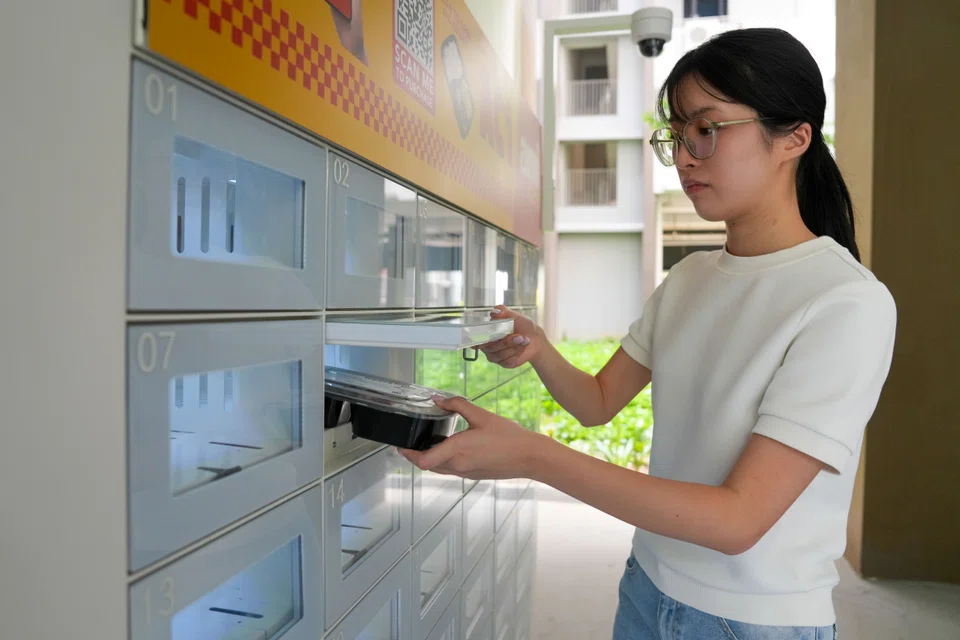
[SINGAPORE] At the void deck of a Tampines Housing & Development Board (HDB) flat, resident Zainul Arifin, 43, uses a QR code to unlock an electronic locker and retrieve a warm bento box.
Preparing meals is often a time-consuming process for the 43-year-old father of three, who does freelance work. He finds the food lockers handy for him and his family.
“They’re very convenient for us as we don’t need to cook,” he said.
He is also impressed by the variety of options available. Zainul’s family often eats brown rice with one serving of vegetables and meat for both lunch and dinner on weekdays. When ordering food from the lockers, he and his family can choose from a range of meals, from rendang chicken and creamy spaghetti with roasted chicken to vegetarian tofu with mushroom sauce rice.
“It’s good to know that there is already a wide variety of dishes,” he said. “Over time, it would be nice if some of the more popular options could be offered more frequently.”
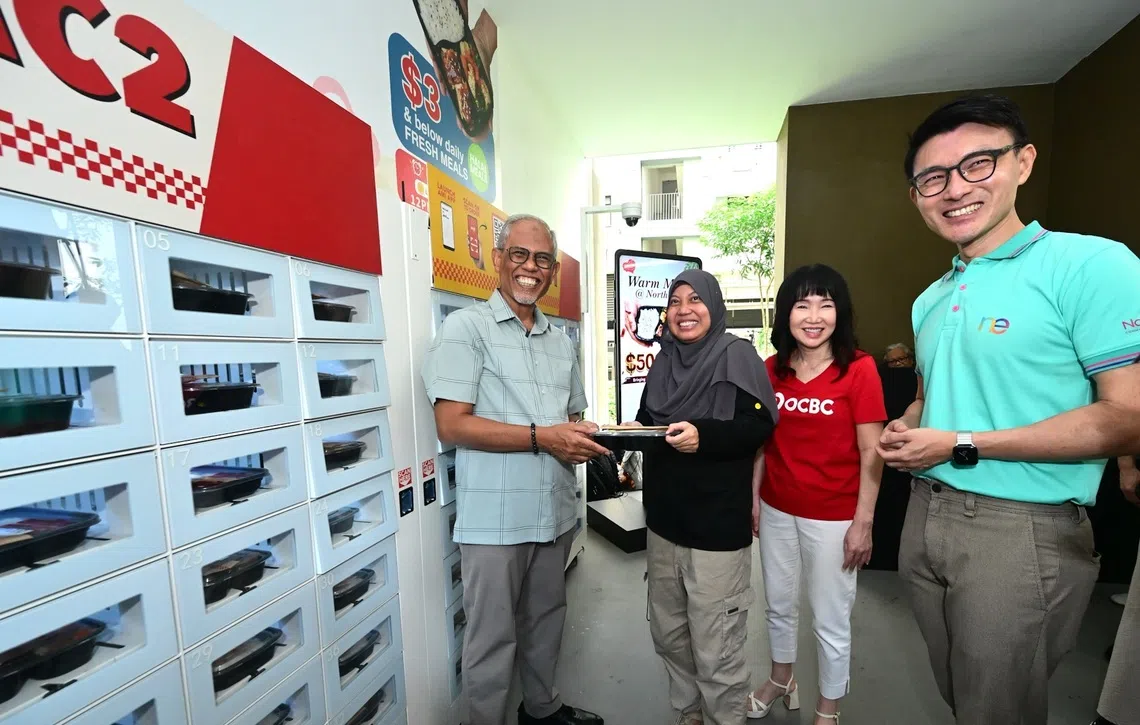
Zainul is one of over 3,000 residents from 1,000 lower-income households in Tampines, Punggol and Pasir Ris-Changi towns who will be given credits to redeem these warm meals from food lockers near their homes as part of the “Warm Meals @ North East” programme.
Participating households will receive S$500 in meal credits via a mobile app under this initiative, which is organised by OCBC and the North East Community Development Council (North East CDC) and supported by the Ministry of Social and Family Development (MSF). The programme aims to provide 165,000 freshly prepared and nutritionally balanced meals over one year.
The households were selected from the ComLink+ and ComCare Long-Term Assistance programmes under MSF’s care. They will receive the credits progressively from September, and can use them at about 30 food lockers located at or near the void decks of HDB rental blocks across the Tampines, Punggol and Pasir Ris-Changi towns.
OCBC said the programme was developed following discussions with North East CDC and MSF, which found that some families faced difficulties preparing regular meals because of caregiving responsibilities, irregular work schedules and other time-sensitive commitments. It added that families with children can benefit, as children can redeem meals on their own when their parents or guardians are at work.

“Warm Meals @ North East” was officially launched on Aug 21 by Minister for Social and Family Development Masagos Zulkifli, Minister of State for Transport, and Culture, Community and Youth and Mayor of North East District Baey Yam Keng, and OCBC head of group brand and communications Koh Ching Ching. Masagos and Baey also serve as advisers to Tampines GRC grassroots organisations.
Not just about food
Residents can take the food from the lockers between 12 pm and 3 pm for lunch, and 5 pm and 8 pm for dinner by scanning a QR code with a mobile app. ComLink+ family coaches will support beneficiaries in learning how to use the app to order and access the food. Other members of the public can also buy these meals at S$3 and below on a first-come, first-served basis.
The meals are halal-certified and nutritionally balanced, and cater to diverse tastes, said OCBC. The menu will be regularly rotated and refreshed based on beneficiaries’ feedback. The lockers also keep the bento boxes warm throughout the usual collection windows.
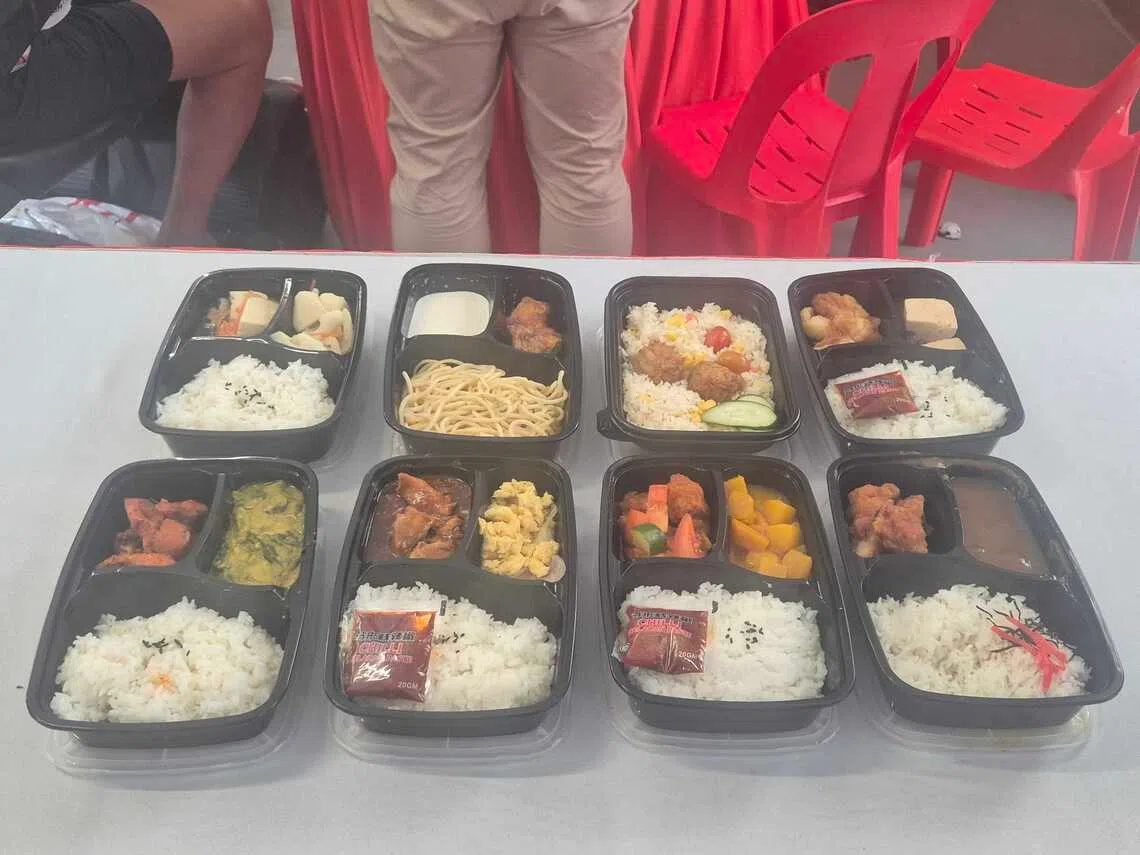
“We tried (the food) during the launch,” said Zainul. “It’s quite nice, and the portion size of each meal is just nice and sufficient for one person. There was also a variety of food for children – like spaghetti – and adults.”
For him, the main value of these food lockers lies in their practicality rather than the cost. Normally, a home-cooked meal for his whole family costs around S$10 – not a huge amount, he noted. But preparing the meal was often time-consuming.
“We intend to use (the credits) during days when we’re busy handling our daily affairs, or when we’re busy managing the children and errands,” he said.
Still, he appreciates the relief offered by the Warm Meals @ North East programme. “(They) will definitely help with our budget because we do not need to spend money on food whenever we redeem the meals.”
In order to uphold food quality and safety standards, uncollected meals will be retrieved by the vendor each day after the redemption windows close. To minimise food wastage, the vendor will adjust its inventory based on redemption rates, said the bank. North East CDC will work directly with the vendor on locker management and food issuance.
Masagos said that the initiative was not just about laying food on the table. “Sometimes, a warm meal is not just about food. As a parent and now a grandparent, I know how these moments around the table bring families together. It is these simple, everyday moments that we will miss if we do not have them.”
Strengthening the support ecosystem
North East CDC will work with the vendor to monitor the programme’s take-up and redemption rates and share recommendations with OCBC and MSF to identify opportunities to enhance or expand its reach over time where possible.
“(MSF is) also working with the Social Service Offices in Sengkang to bring this programme to residents there, so that families across the entire North East district can access this support,” said Baey.
Warm Meals @ North East will complement the financial and social support that the families receive through MSF’s ComLink+ and Comcare programmes, said Masagos.
The initiative follows the Families100 programme by OCBC, another collaboration with MSF that provides long-term, targeted support to ComLink families. The Families100 programme by OCBC was launched in 2023.
“(Warm Meals @ North East) is a direct response to residents’ needs,” said Baey. “We hope to ease daily pressures and strengthen the support ecosystem available to lower-income households in our community.”

Decoding Asia newsletter: your guide to navigating Asia in a new global order. Sign up here to get Decoding Asia newsletter. Delivered to your inbox. Free.
Copyright SPH Media. All rights reserved.
TRENDING NOW
8 public officers referred to police over property buys near unannounced MRT stations: Chan Chun Sing

Grab CEO’s wife Chloe Tong on life with Anthony Tan and finding her purpose

Retrenched PMETs who return on lower pay see median 25% wage cut
Hao Mart owner resisting OG’s mortgage foreclosure on his Tanglin GCB

