An outcomes-focused approach to tackling diseases
Financier Mike Milken’s new book on the future of health offers insights into his staunch focus on practical solutions
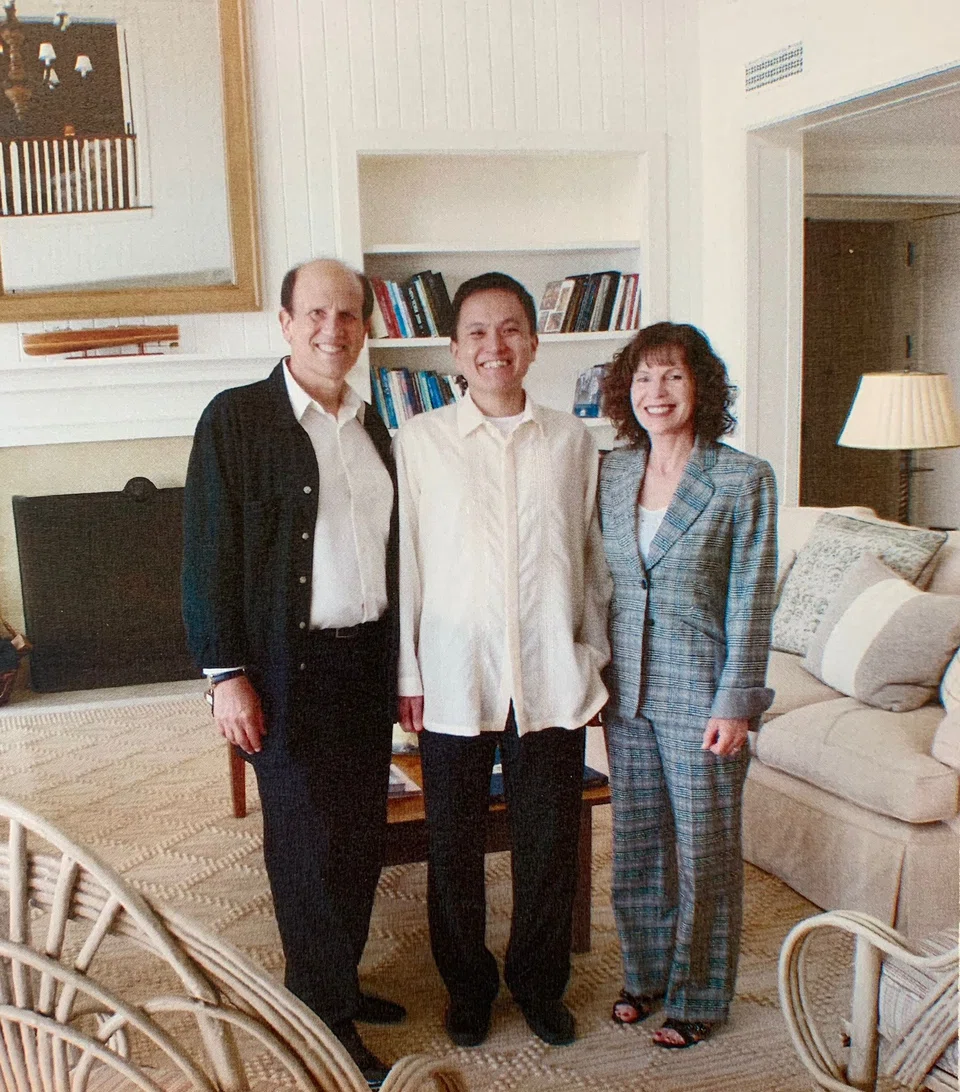
“CHIN Hwee, as you get older, your best friends are doctors!”
Three wise men – Hsieh Fu Hua, Kwee Liong Tek and Choo Chiau Beng, who are my mentors – once advised me so, many years ago.
I remember laughing out loud at their remark and didn’t know what it meant, but kept the advice to heart. This adage struck me as very true later when a few of my closest relationships were diagnosed with cancer; one did not even survive past age 50.
My 85-year old father himself fought colon cancer and went under the knife with two major surgeries within 10 hours. In trying to help, I found myself desperately getting up to speed on the diseases by reading up and talking to doctors.
Over time, I developed a method and thought process of approaching different types of diseases. Given part of my professional training in finance, I focus on what are the practical probabilities of improving the odds of successful outcomes.
Early and frequent screening/testing is the first step for disease prevention. How many surgeries the surgeons have done (Malcolm Gladwell’s 10,000 hours rule-of-the-thumb test comes to mind) is equally important. However, the key is also to focus on the doctor’s background training and, more importantly, upgrading of skill sets in keeping abreast of the constantly changing medical research development.
In a way, the whole discovery process is quite like making an investment decision, based on Bayes’ theorem (of course, the stakes are much higher in the medical case – life and death). It is outcome-focused and based on the highest conditional probability of success with the most current information at hand. Who else but to learn from the legendry financier himself, Mike Milken, whom Fortune magazine dubbed “The Man Who Changed Medicine”?
So I was excited to read about the new book Faster Cures: Accelerating the Future of Health (William Morrow, 2023) by Milken and Geoffrey Evans Moore.
In this part memoir and part history of medicine, Milken has effectively laid down the process of how he fought prostate cancer in 1993 at age 46 (he was given 12 to 18 months to live). After recounting his life story, in the latter part of the book, Milken shared his systematic approach to medicine – as a science with observable data sets, accelerating outcomes-based research to create practical solutions. This is not a medical book, but one for a public interested to have a sense of Milken’s personal story of how he has confronted the problem of cancer and other diseases.

Together with investor Yale David Swensen and my founders at Apollo Global Management, Milken has personally shaped me over the years and laid the foundation of a distinct thought process as I manoeuvred through two professional career paths at the highest level.
I have had the privilege to work with Milken and his team for the first Milken Conference in Singapore (it recently celebrated its 10th year here), and thus have seen first-hand how he used his influence and credibility to come out with a practical pathway to the problems of finance and cancer/diseases.
In the book, Milken talked about the importance of practical and applied research that must be translated to clinical therapies, and not remain theories in highbrow paper publications. Over the last three decades, as he documented in the book, he increased his focus on making the research process more effective and efficient – the bottom-up basis – and getting buy-ins from influential leaders on the top-down basis.
His personal example of his approach to prostate cancer in particular strikes a chord when one of my loved ones had this disease. Prostate cancer is a top three killer disease among men. Many doctors would have conveniently recommended surgery and radiation as a default, as they are trained in medical school to do so. Yet, focal therapy for the prostate may have done the job too, and in a less invasive way. It has been around for 20 years, and yet how many patients here in Singapore know of this alternative treatment which has less side effects?
Albert Einstein is quoted as having said, “If I had an hour to solve a problem, I’d spend 55 minutes thinking about the problem and five minutes thinking about solutions”. Indeed, just like in the investing world, good background preparation holds great value to any problem-solving. The recent Covid pandemic is a humbling example of how much we human beings do not yet know of this world, and how important it is to have a focus on practical solutions – as an individual and as an ecosystem.
Many doctors are now indeed among my best friends.
The writer, a businessman, co-authored Values At The Core: How Human Values Contribute To The Rise Of Nations (2020) and Asian Financial Statement Analysis: Detecting Financial Irregularities (2014)
Decoding Asia newsletter: your guide to navigating Asia in a new global order. Sign up here to get Decoding Asia newsletter. Delivered to your inbox. Free.
Share with us your feedback on BT's products and services