

‘Parasite’ director Bong, South Korean artists urge probe into handling of actor case
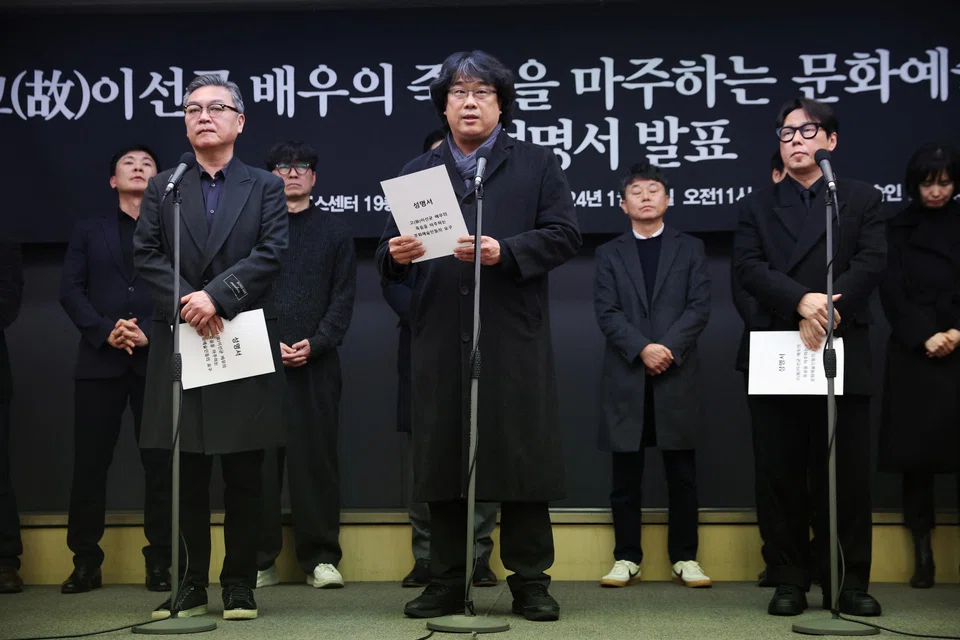
A GROUP of South Korean filmmakers, actors and industry officials, including Parasite director Bong Joon-ho, on Friday (Jan 12) called for a probe into the handling by police and media of drug abuse allegations involving late actor Lee Sun-kyun.
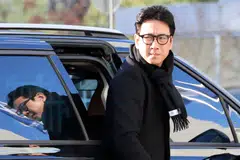
Lee, who shot to global fame with his performance as the wealthy patriarch in the Oscar-winning film Parasite, was found dead last month in an apparent suicide.
Bong and more than a dozen other film, music and entertainment industry figures held a news conference in Seoul, urging authorities to look into whether police handled Lee’s case without violating security and privacy rules.
Since his case was first reported by a local newspaper citing a police official, Lee suffered attacks on his reputation due to constant leaks about the investigation even after multiple drug tests came back negative, they said.
They also denounced “sensational” coverage by some news outlets and YouTubers focusing on Lee’s private life using unverified information, calling it “yellow journalism.”
“We call for a fact-finding probe into whether there were any security problems regarding the police investigation,” Bong said, reading a statement signed by more than 2,000 artists and 29 industry associations.
“We’re asking the press and media,” singer-songwriter Yoon Jong-shin said, “Wasn’t your coverage sensational, highlighting someone’s private life just because he was a pop culture artist?”
Calls to Incheon police, which investigated Lee went unanswered. Its chief has denied violating security rules while expressing regret over his death.
Lee’s death rekindled criticism from the entertainment industry and the public over the often harsh and public nature of any criminal investigations involving celebrities which fuelled media coverage and pressure on them.
Yoon singled out a report by public broadcaster KBS using a recording of Lee’s phone call with a bar hostess, questioning if it was meant to serve people’s right to know and demanding it be deleted.
KBS said in a statement it stood by its reporting that was aired more than a month before Lee’s death and the content was used with “maximum restraint” to uncover the facts of the case.
“The recording was used in a very limited way because it was not irrelevant to the allegations (against Lee) but was in fact supporting the credibility of the claim,” it said.
Lee made three highly public appearances before police between October and December, the last time for 19 hours overnight.
He had denied knowingly taking illegal drugs and said he was tricked by the bar hostess who later blackmailed him, local news media reported before his death.
Lee was the latest in a long line of South Korean artists and celebrities to took their lives, already under intense pressure from competition and prying interest in their personal lives, often aggravated by online bullying and personal attacks.
South Korea has the highest suicide rate among developed countries. REUTERS
Decoding Asia newsletter: your guide to navigating Asia in a new global order. Sign up here to get Decoding Asia newsletter. Delivered to your inbox. Free.
Share with us your feedback on BT's products and services
TRENDING NOW

ComfortDelGro appoints two new independent directors

Once staunchly pro-China, Malaysian Chinese businesses are now distancing themselves from Beijing

NoonTalk needs continued financial support from CEO Dasmond Koh, auditors warn

DP Architects sets the benchmark for sustainability disclosure and design

