

Porsche Cayenne Turbo Electric review: The button that unlocks something scary
A special button unleashes the Cayenne Turbo Electric’s true nature, at fearsome cost to the owner
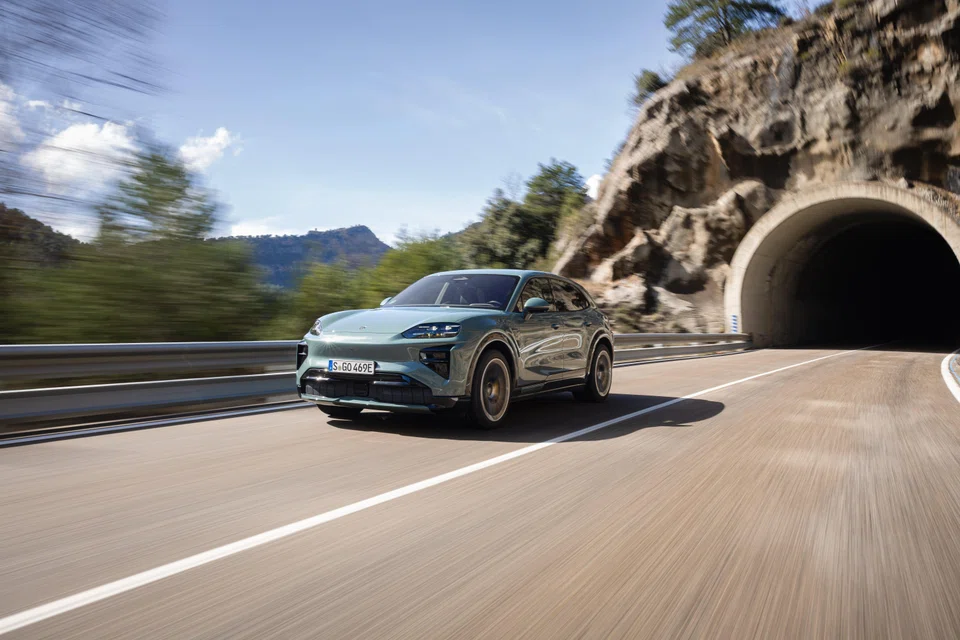
[BARCELONA] There is a button on the steering wheel of the Cayenne Turbo Electric that Porsche politely calls Push to Pass. After deploying it rather more times than was strictly professional during a test drive on mountain roads inland from Barcelona, I have a better name for it: Push to Pass Out.
Pressing it summons 1,156 horsepower (hp) from the motors, and gives you vision-distorting warp drive that is the last thing you’d expect from a five-seat sport utility vehicle (SUV) that weighs a hefty 2.6 tonnes. This is either a magnificent achievement or a sign that the car industry has collectively lost its mind.
The Cayenne’s electrification is a significant moment for Porsche, and represents a measured step in the brand’s electric vehicle transition. The smaller Macan has already gone fully electric and though the Cayenne has followed, Porsche is keeping the combustion-engined model in production for buyers not yet ready to make the leap.
Within the newly electric Cayenne range, the Turbo is the headline act, with a price tag that starts at S$668,288 before you have your way with the options list, and the Certificate of Entitlement system has its way with you. For now, the base Cayenne Electric kicks things off at S$372,788.
Both ride on a new 800-volt architecture with a 113 kilowatt-hour (kWh) battery pack, a modular platform Porsche intends to share across its line-up. The base car, rated at 408 hp and capable of zero to 100 kmh in 4.8 seconds, is the rational choice. It’s competent, quick, and a persuasive argument for switching away from combustion. It will almost certainly be the volume seller.
But this is a review of the Turbo, because for now it embodies what Porsche engineers do when they’re given a big battery and told to cut loose. Nominally, it has 857 hp, but full power is unlocked when you engage the launch control system, which slingshots the thing to 100 kmh in 2.5 seconds. In case the fun is over too soon for you, you can keep the accelerator pinned to see what zero to 200 kmh in 7.4 seconds feels like.
A drag coefficient of 0.25 (which tells you that the car slips through the air) and the 113 kWh pack deliver a claimed range of up to 624 km, though that figure will shrink considerably if driven as the performance invites you to.
The old Cayenne’s styling proved so influential that almost every Chinese manufacturer now offers some variant of it, leaving Porsche’s designers with the unenviable task of differentiating the new car from its own imitators.
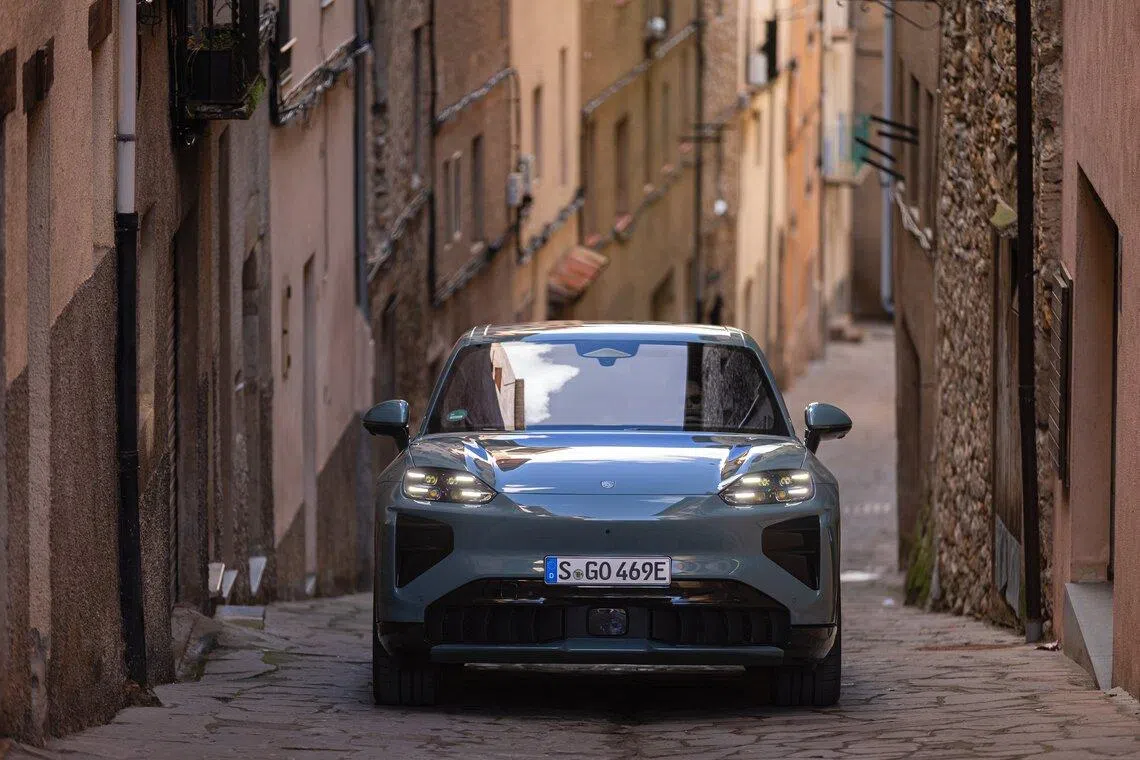
Up front, four-point headlight beams and active aero vents below the bumper provide character. The rear is where the design truly sings and, given the car’s performance, the back of a Cayenne Turbo Electric is all most people will ever see of one.
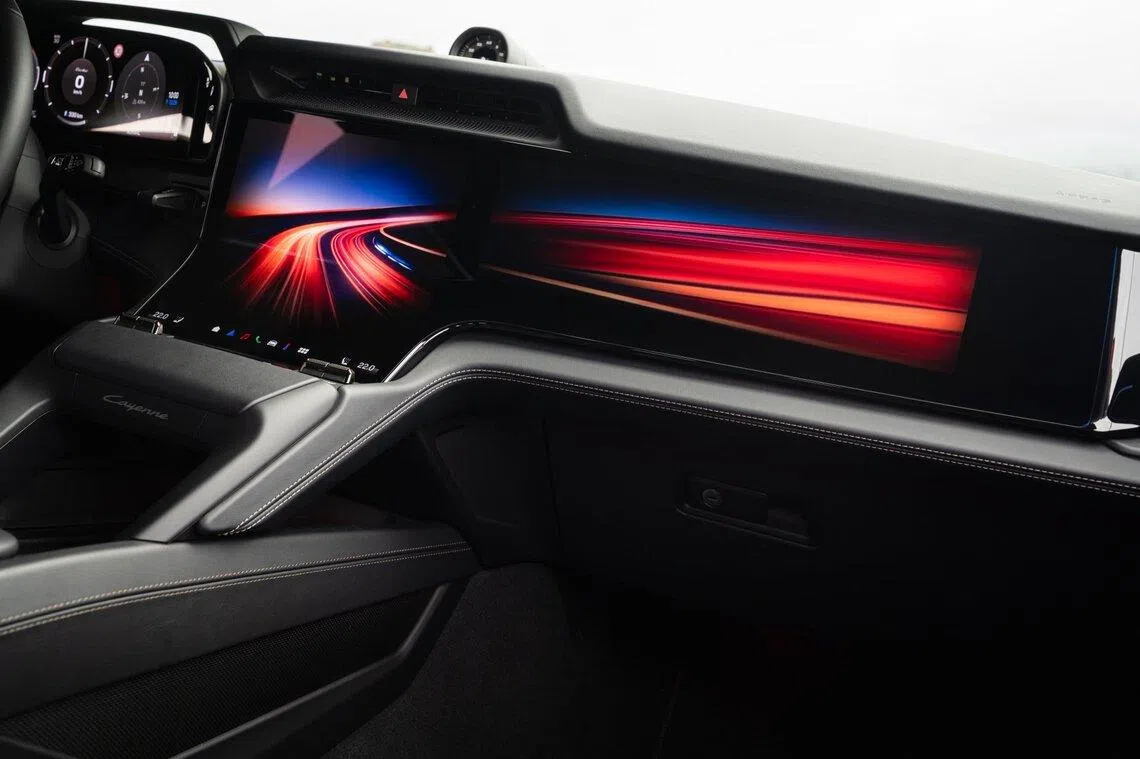
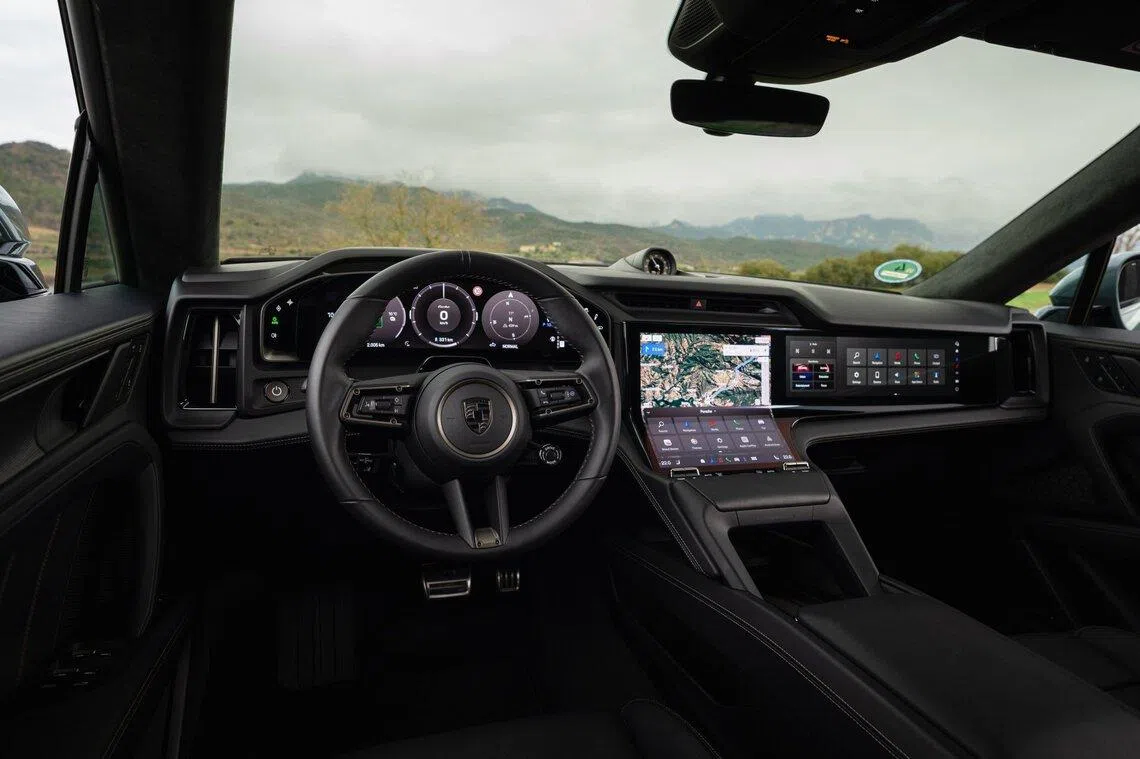
Inside, the standout feature is something Porsche calls the Flow Display, a contoured LCD flowing from a vertical panel into an angled lower portion, a welcome contrast to the wall-to-wall screens that dominate most rivals. The interior looks premium without being ostentatious, and feels built to last.
On the road, the Cayenne handles with an assurance that borders on the improbable. Steering is articulate and well-weighted across all driving modes. Adaptive air suspension is standard, but the Turbo adds Adaptive Ride Control for extra composure under hard inputs.
With their huge battery packs, the electric Cayennes are heavy, but Porsche’s achievement here is not that it erased their mass, but that it disguised it extraordinarily well. In fact, cornering and braking are better sorted than the combustion-era car.
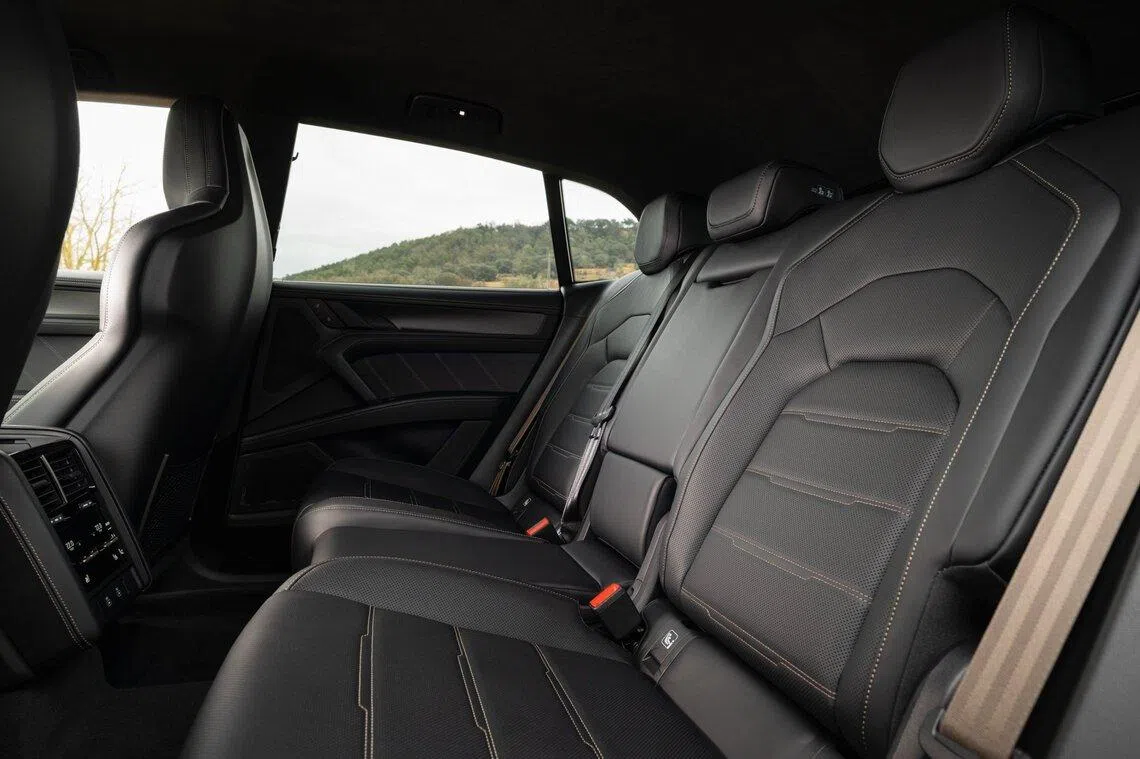
A heavy, five-seat electric SUV that still handles like a Porsche is the knockout blow that this car slings at rivals. Nor is it simply a matter of raw performance. The Cayenne’s Sport Plus mode conjures up synthetic engine and gear sounds that, I will grudgingly admit, work better than I ever thought fake sounds could do.
They give rhythm to throttle inputs and coax the driver into a more engaged relationship with the car’s performance. That engagement, however, comes at a price: continuous use of the prodigious torque will shred tyres sooner than owners might expect.
Tyre wear is just the beginning of the Turbo’s ownership story in Singapore, where road tax is calculated on power output. If you have heart trouble, look away now, because by my calculations, the road tax for one comes up to S$12,782 a year.
Then again, the car’s blistering performance means it’s for the stout-hearted anyway. Still, the base Cayenne Electric is good enough that, for most, springing for the Turbo is near impossible to justify. For those who can, the Push to Pass button awaits.
Porsche Cayenne Turbo Electric Motor power/torque 857 hp (1,156 hp with Launch Control)/1,500 Nm Battery/net capacity Lithium-ion/113 kWh Charging time/type 5.8 hrs 0 to 100 per cent (22 kW, AC) 16 minutes 10 to 80 per cent (400 kW, DC) Range 564 to 624 km 0 to 100 kmh 2.5 seconds Top speed 260 kmh Efficiency 20.4 to 22.4 kWh/100 km Agent Porsche Singapore Price S$668,288 without COE Available Now
Decoding Asia newsletter: your guide to navigating Asia in a new global order. Sign up here to get Decoding Asia newsletter. Delivered to your inbox. Free.
Share with us your feedback on BT's products and services
TRENDING NOW

Malaysian king buys stake in Singapore-listed mining firm expanding into rare earths

Grab CEO’s wife Chloe Tong on life with Anthony Tan and finding her purpose

Once staunchly pro-China, Malaysian Chinese businesses are now distancing themselves from Beijing

Longer wait times expected as S’pore healthcare institutions report system disruptions

