Pushing boundaries to make an impact through design
Three local designers tell us about their projects for Milan Design Week and what else they’re working on
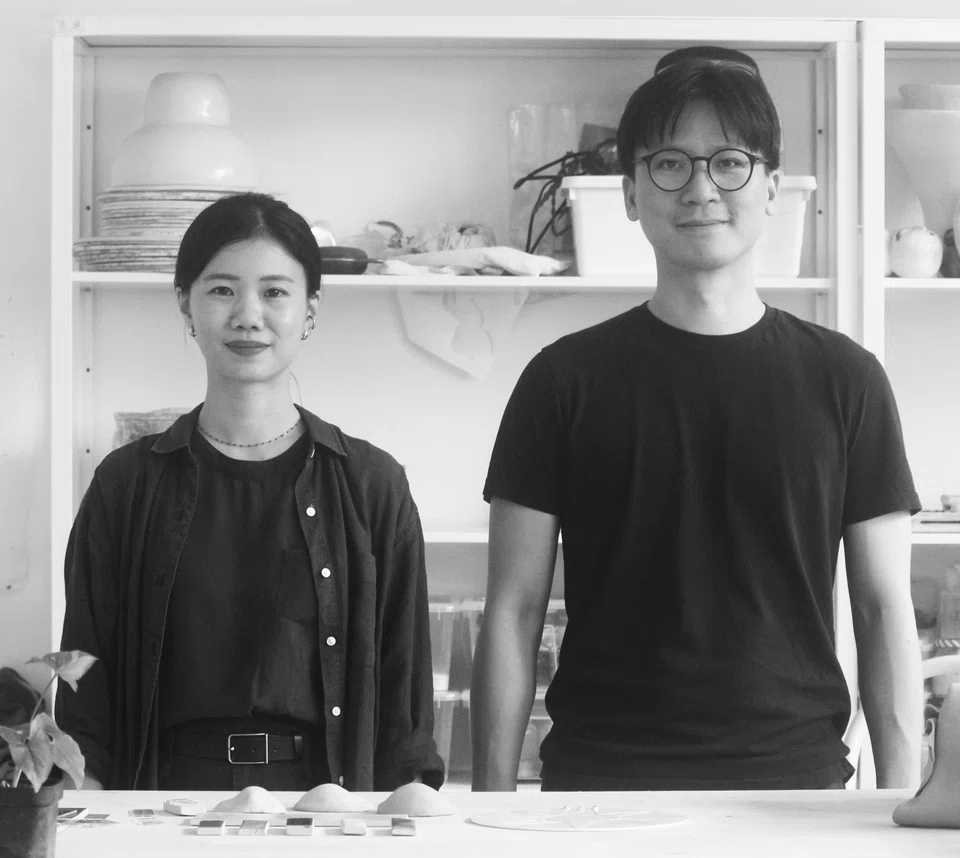
SINGAPORE is sending a contingent of seven designers next month to the world’s foremost design event, Milan Design Week. For Future Impact 2, they are taking with them lamps and furniture, but also some conceptually interesting works that demonstate the transformative power of design when combined with technology.
We speak to three of them to find out more.
Genevieve Ang and Interactive Materials Lab
Designer, artist and maker Genevieve Ang is collaborating with Interactive Materials Lab on Reciproco, a pair of interactive ceramic wares integrated with circuits that when touched, can transfer the user’s warmth from one piece to the other.
The ceramics are formulated with glass waste and enhanced with thermochromic paint that changes colour when the surface is activated and heated by touch. The work challenges boundaries between communication devices, and bridges the emotional and physical gaps prevalent in digital communications.
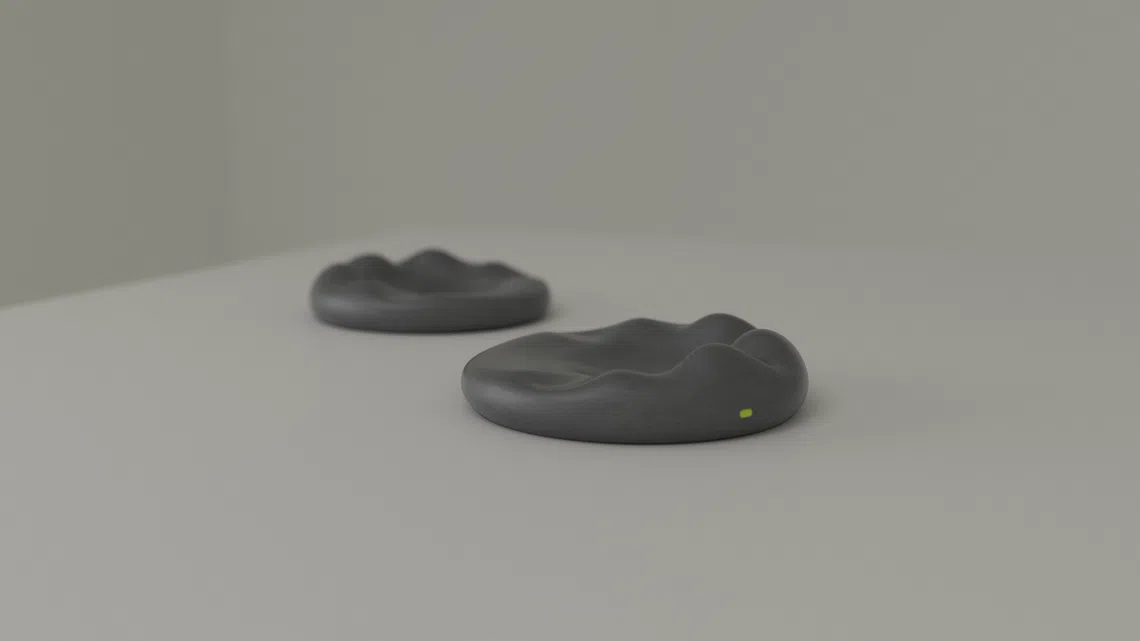
The idea for Reciproco came to Ang as she felt the comforting warmth from a ceramic mug she was holding while reading papers from Interactive Material Lab – a research outfit in the Division of Industrial Design at the National University of Singapore. The lab conducts design research with a focus on human-computer interactions to support physical interaction and experience design.
“What we’re trying to convey is the idea of warmth emotionally and physically that is becoming increasingly scarce when more and more of our meetings are done over a Web call instead of face-to-face,” Ang explains. “We’re attempting to push the limits of digital communications by imagining a new way to connect and sense another person remotely.”

This is why one ceramic piece heats up when the other one located somewhere else is touched.
“We imagine this to be placed perhaps next to someone’s computer and instead of just being able to see the person you are talking to on the screen, the trinket ceramic tray will heat up to our body temperature and you can touch it to feel as though you’re feeling the warmth of the person you’re talking to.”
An architecture graduate, Ang enjoys researching deeply into a given material.

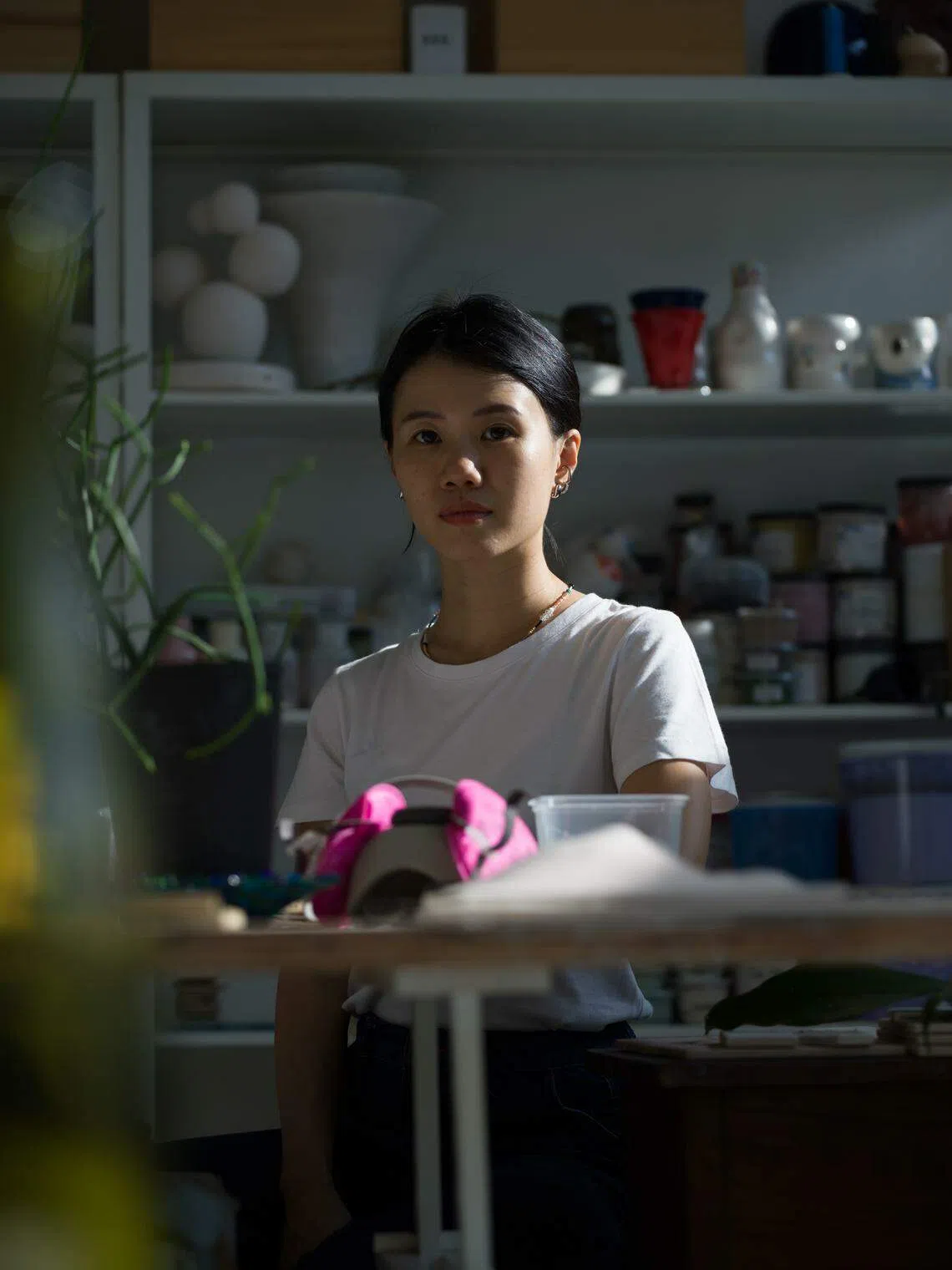
“I’m interested in understanding our surroundings and environment that’s made of a complex mix of materials that, if explored closely, might reveal a larger web of processes that we often miss,” she explains. “It is especially important in Singapore because almost all of our materials are imported and it is crucial that we are aware.”
Her work cuts across different disciplines and includes spatial projects, furniture, art, ceramics and design.
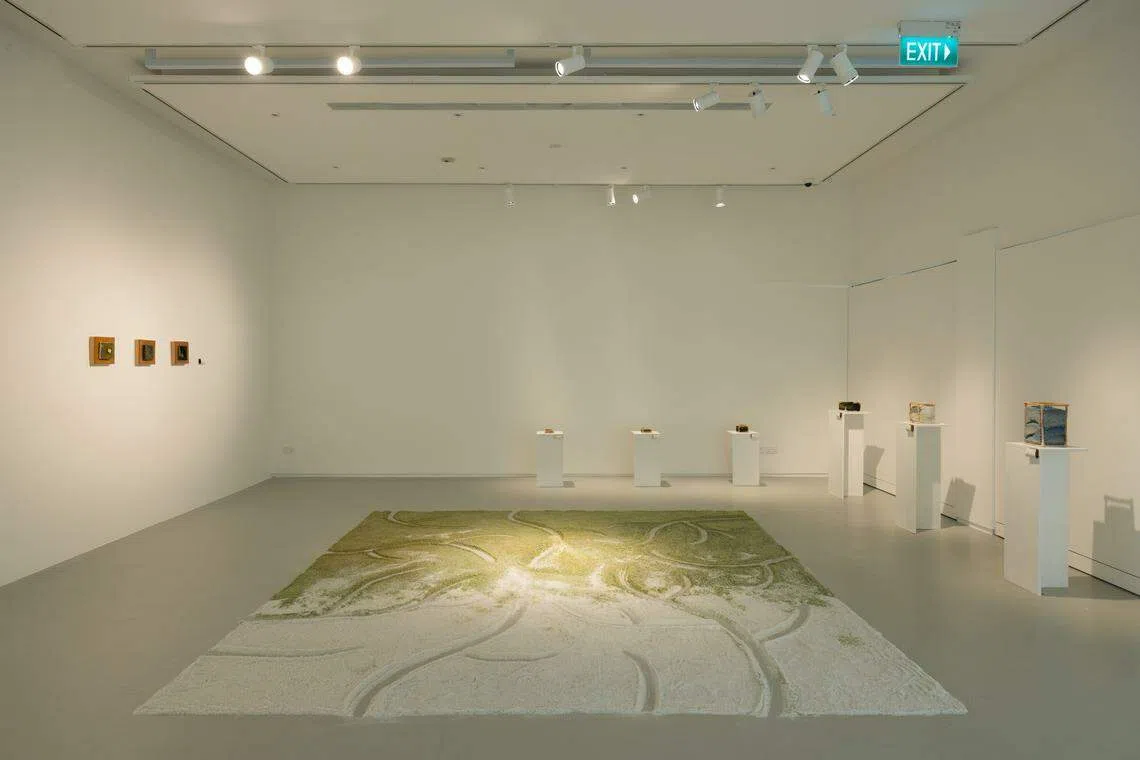
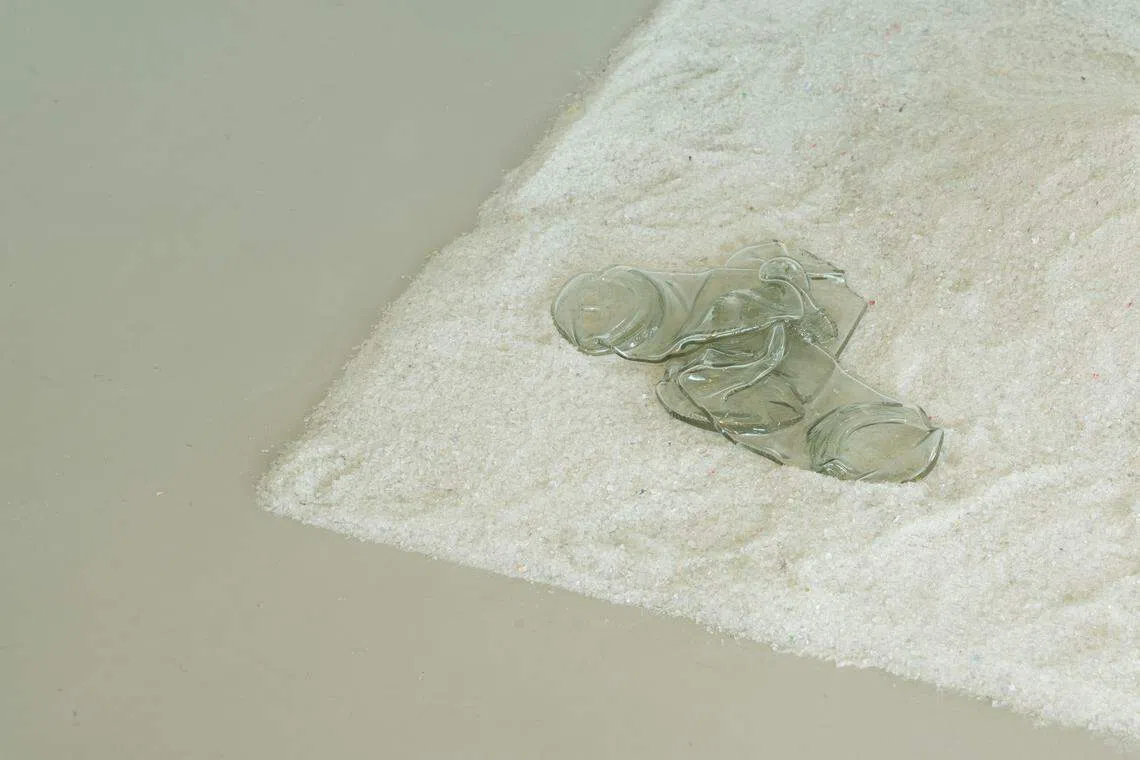
Most recently, Ang mounted an immersive exhibition called A Place With No Sand, the result of a one-and-a-half-year research into glass, geology and the layered and complex technical processes and sociological systems that make and waste the material.
Next, she hopes to work on projects that explore clay and ceramics “beyond our common understanding” of the materials. She is especially excited about working with L Architects’ Lim Shing Hui, to explore the idea of harvesting local clay and using it as building material.
“It’s a process that makes a lot of sense but is surprisingly complex to achieve, and I admire Lim’s persistence in making sure it happens,” she says.
Zavier Wong
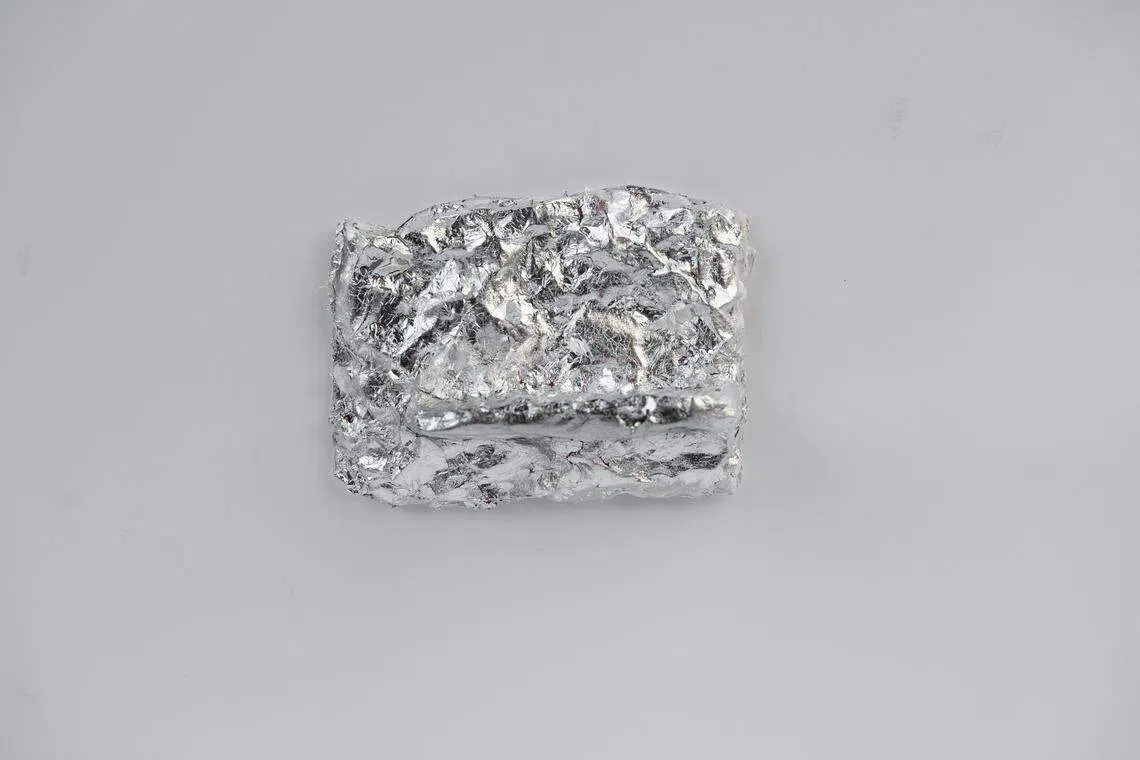
Zavier Wong’s Manifold Steel – Wall Piece No.1 is akin to a piece of art, but used like a shelf. It is formed from thin sheets of metal that are cut, folded, welded and finished by hand with the help of algorithmic and generative design tools. By integrating artificial intelligence into the design process, Wong invokes complexity while minimising the use of materials and reliance on intensive production methods.
Wong’s work is inspired by his reflections on the purpose of social media and how it influences the way we create.
“One of the facets of social media is that it tends to oversimplify and is reductive in nature in relation to our lived realities,” he says. Likewise, on its own, sheet metal is thin, reductive and dull. But this thinness that is seen as a negative effect of social media is flipped on its head in the making of the work, where thinness becomes a potential, and the act of making transforms it into something that has depth and complexity.
“The depth and complexity the object carries mirror who we are – beings with layered stories and complexities in our life,” Wong says. “Social media gives a lot of information as inspiration and it is easy to be influenced by it.”
But if one takes time to search and get to its heart, one can find the essence of the inspiration that resonates with them and take the source of inspiration to a new level.
“Hence, if we know how to engage our complexities and life stories introspectively, we can actually create things that are really honest with intent.”
The Singapore-born designer, maker, artist and thinker has been based in Eindhoven in the Netherlands since he went there in 2016 to study design at Design Academy Eindhoven.
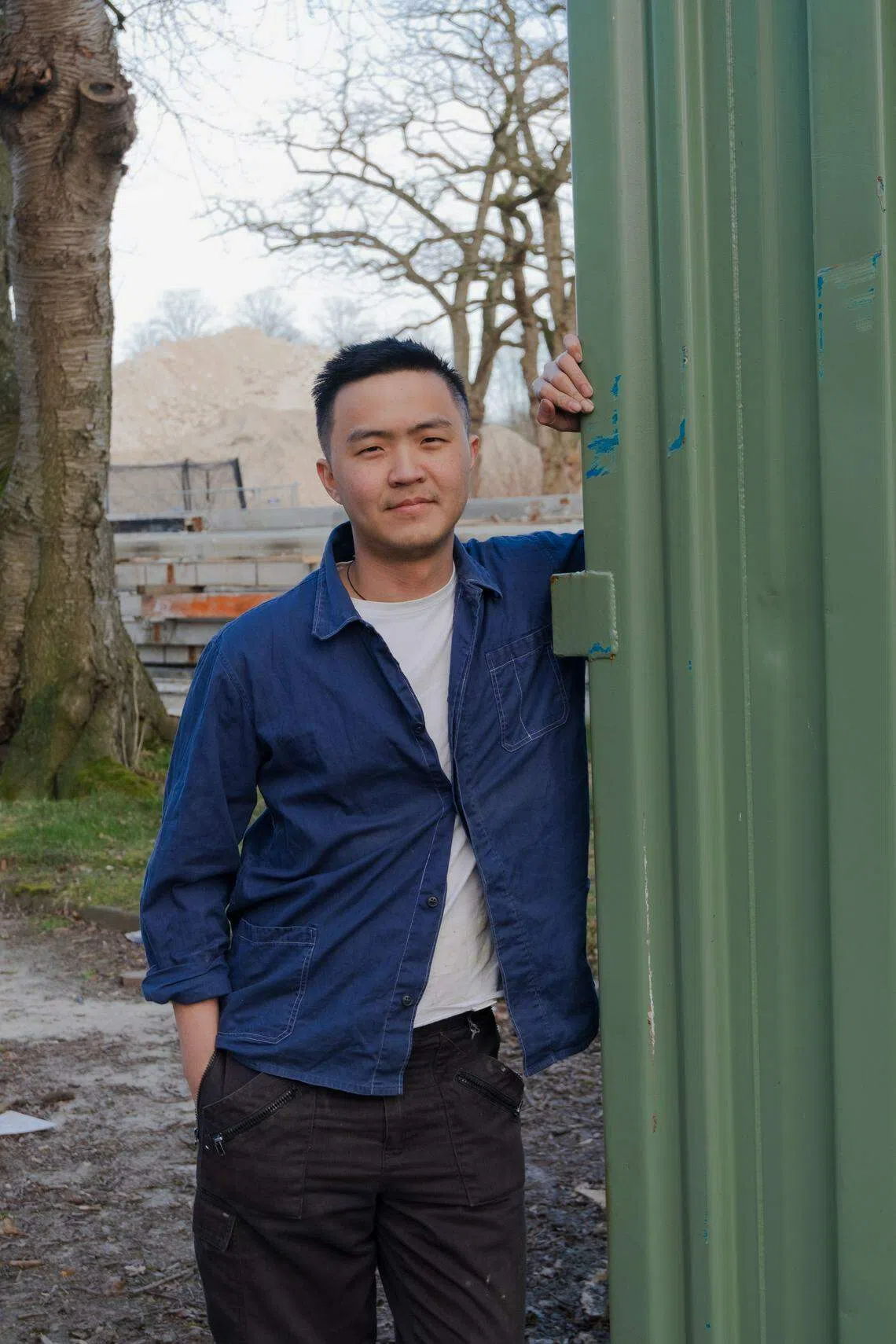
He works mostly with interior objects and likes the fact that furniture can be a very expressive medium that people can relate to compared to more abstract art forms.
One of his more significant works is his graduation project – The Common Table. It came about as he was exploring how to integrate faith and making and ensure it can be understood by a general public who may not be part of any faith tradition.
Inspired by a painting of The Last Supper from the Gospel of John in the Bible, the work translates the communal dining experience into a long table made up of five smaller tables. Each is made from different materials symbolising different characters.
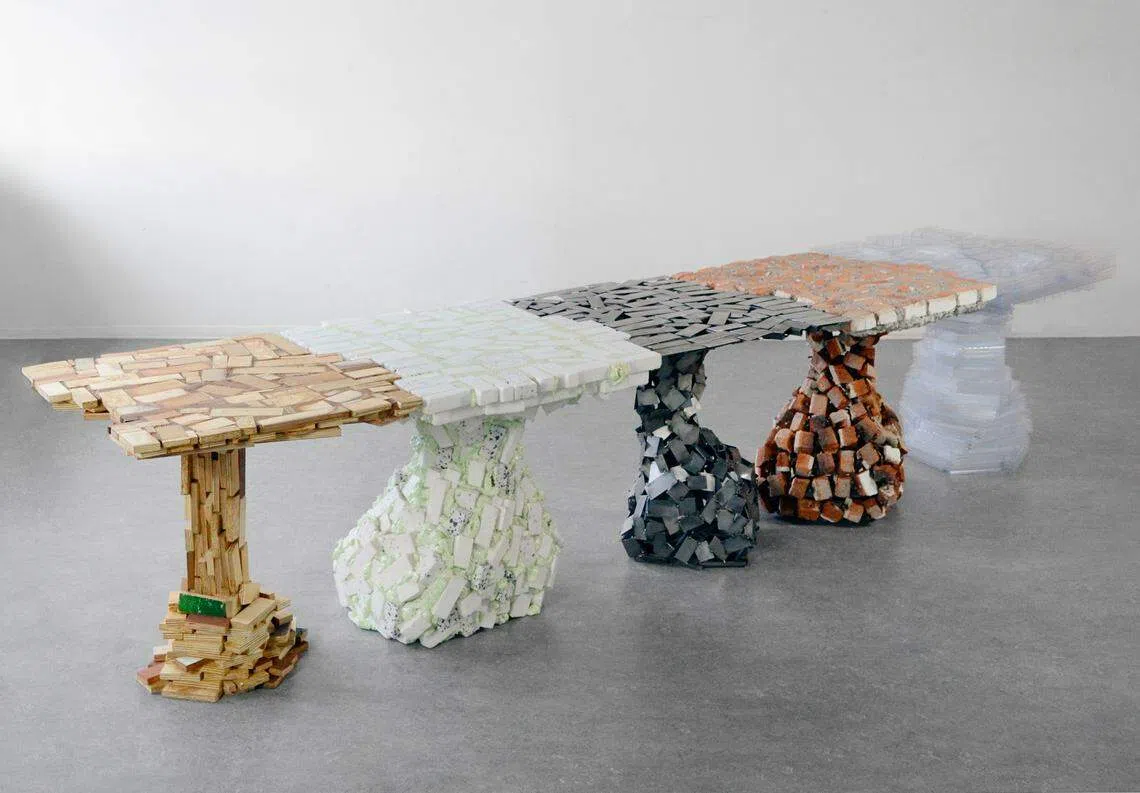
“The Last Supper was a meal that gathered the disciples who were people of very different social backgrounds,” says Wong. “I wanted to capture the gathering of differences as well as the balance of individuality and community.”
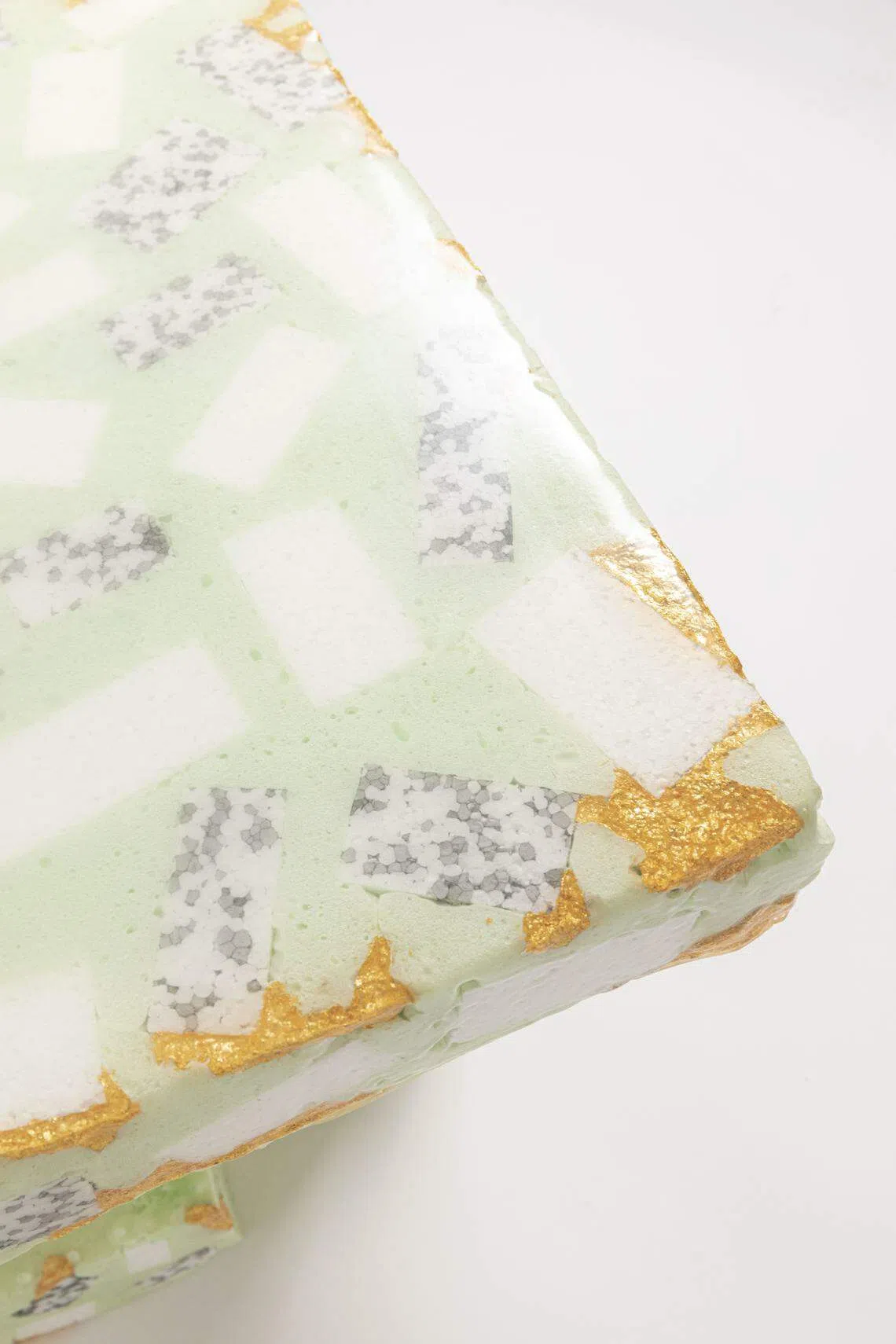
In another work of his, Revalued Foam, Wong played with value perception by pairing foam, a cheap material, with 24-karat gold leaf.
Looking ahead, Wong is trying to find “an optimal way” to juggle his day job as a metalworker in an art and design studio, with experimenting for a body of work to be launched at fairs around the world in the second half of this year and the first quarter of next year.
Faezah Shaharuddin
Multidisciplinary designer Faezah Shaharuddin demonstrates the need for sustainable designs in living spaces with Unlikely Fragments – furniture pieces that remove carbon dioxide from the air.
The work incorporates wood offcuts from Faezah’s furniture production with vintage raw silk treated with COzTERRA. The latter is a cutting-edge formulation that absorbs carbon dioxide using artificial intelligence technology, from Singapore-based material engineers Xinterra.
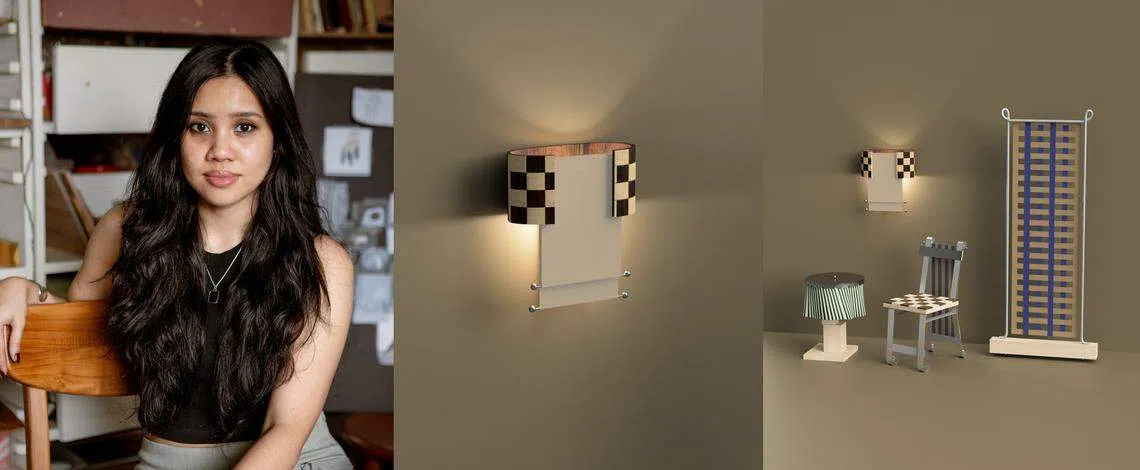
“My intention was to explore the idea of combining fragments of different materials and different techniques to form a more beautiful, cohesive whole,” says Faezah of the collection of interior vignettes, which will comprise a wall-mounted sconce, a screen and potentially a chair and table.
“Conceptually, I thought it would be interesting to merge our usual craft-based techniques with the cutting-edge material technology of COzTERRA, while exploring opportunities for sustainable design. It also explores the theme of unlikely associations which is a concept I return to regularly.”
Faezah, who studied visual communication design at the University of Washington, splits her time between Singapore and Seattle. She started Studio Kallang, a Singapore-based furniture and object design studio in 2021.
“I see the studio’s work as very much an extension of myself and my way of making sense of the world around me and its contradictions,” she says. “It’s heavily influenced by the different places and cultures I’ve experienced and the media I consume.”
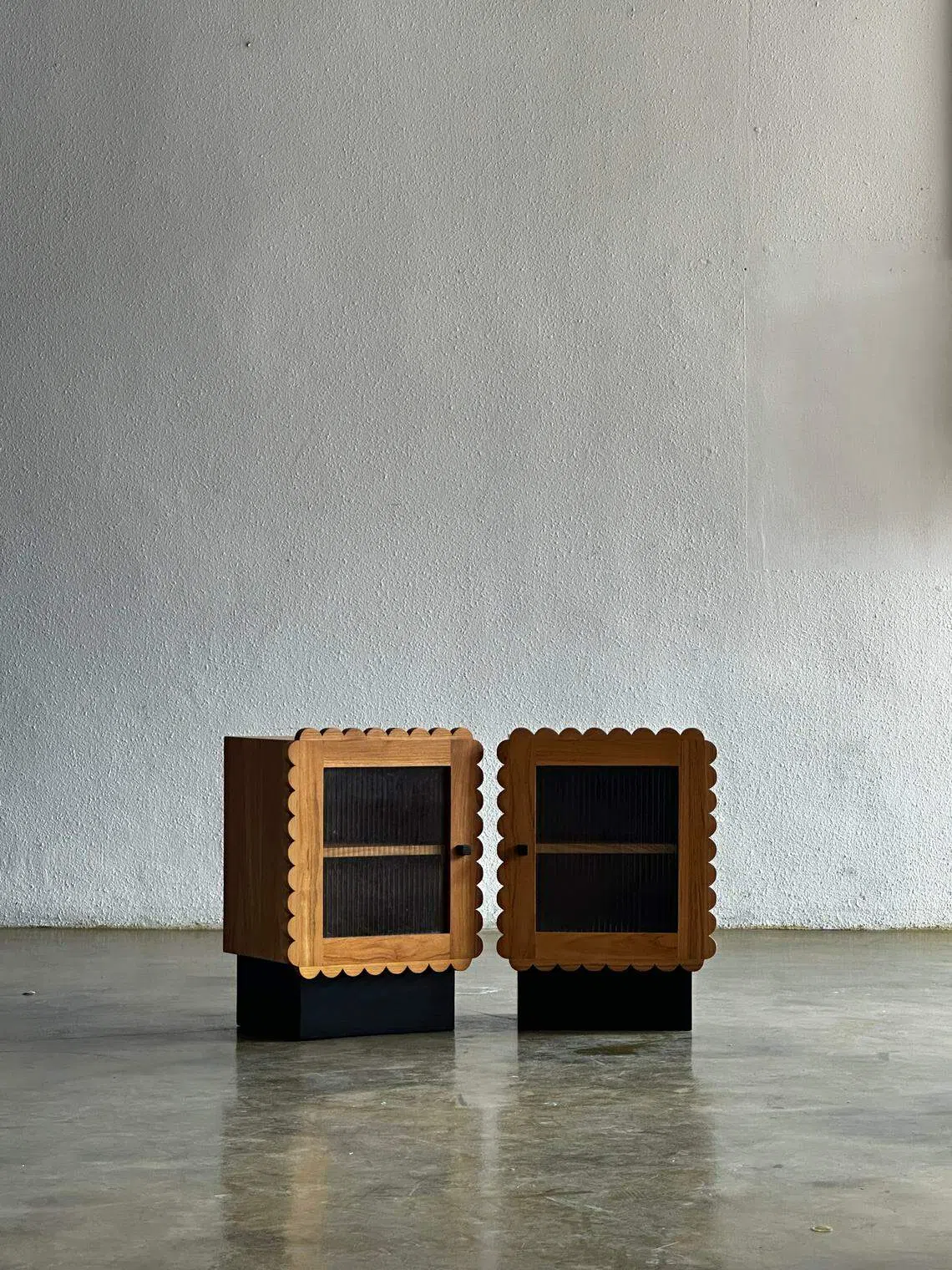
Her most recent work is Mamun No. 2, an iteration of her original Mamun design, which was also one of her studio’s first pieces. The playful side table or nightstand in teak sports a fluted glass door and scalloped fringe. “My intention was to create a piece that is functional but also one that would be a joy to interact with on a daily basis.”
Looking ahead, Faezah is hoping to work on more experimental one-off pieces and expand into space and experiential design.
Who else is presenting what
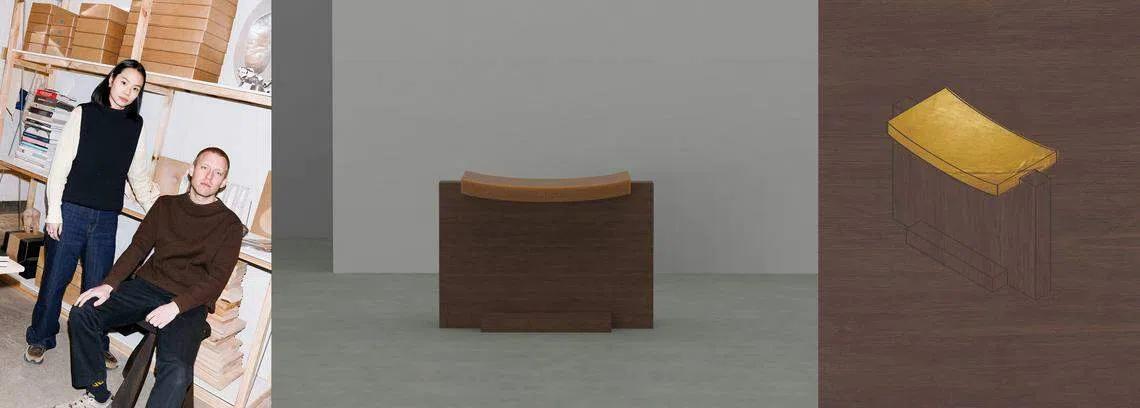
Design duo Christian+Jade’s Para Stool is crafted from the Para rubber tree found in Singapore and South-east Asia. They are repurposing the rubber wood – usually burned after a 30-year lifespan of rubber cultivation – together with natural rubber, to spotlight the beauty and quality of rubber. With a form that takes inspiration from the slicing of the rubber tree during the harvesting process, the project attempts to bridge the gap between preconceptions of the material and its origin as a living tree. The Para Stool is produced with support from Japanese furniture manufacturer, Karimoku, which sources underutilised rubber wood from Malaysia.
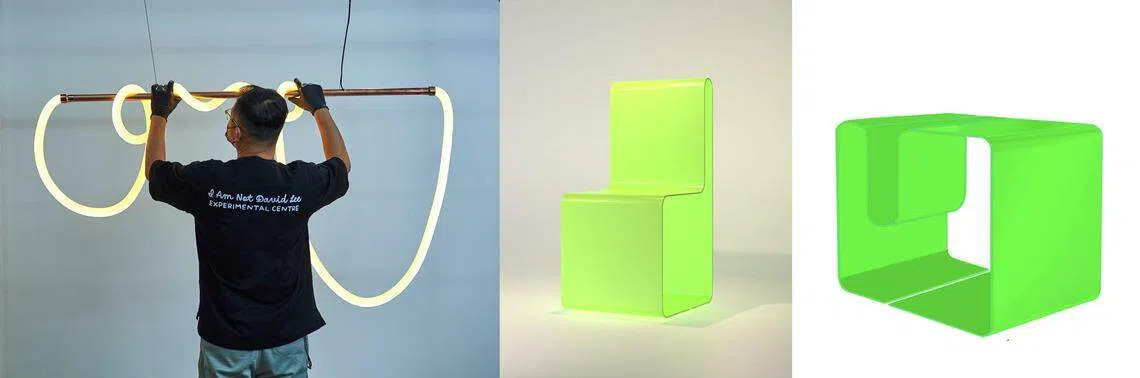
Artist and designer David Lee’s Monolith chair and table is fashioned from a single piece of material that is laser-cut and bent into final form. The design challenges the trend of complex design to return to conventional production and manufacturing methods, which in turn minimises waste, human labour and material consumption. This move addresses environmental concerns and challenges the status quo of resource-intensive manufacturing practices.
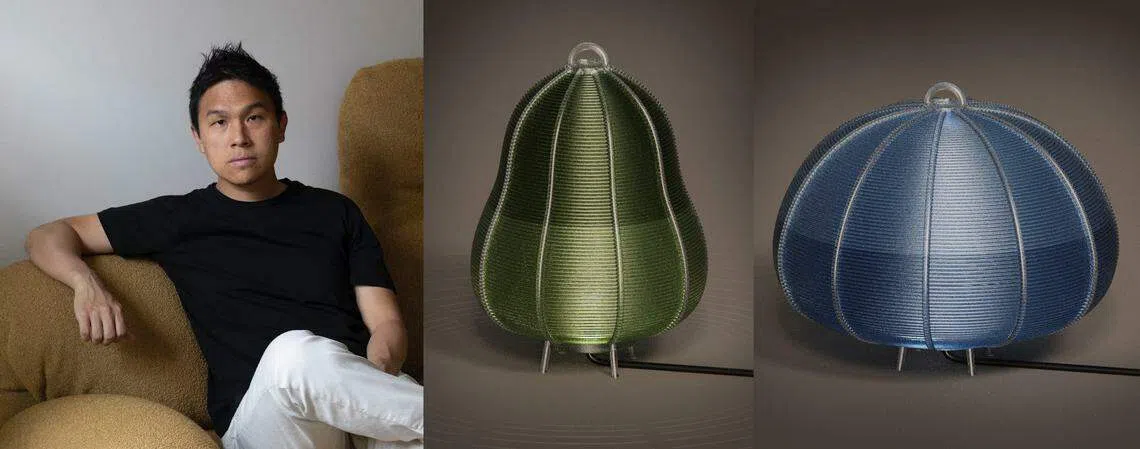
Porto-based designer Gabriel Tan will present Good Gourd – Hybrid Basketry Lamps, a pair of colourful table lamps. Here, translucent fishing lines are handwoven using traditional basket-weaving techniques around 3D printed resin structures. This symbiosis of designer, craftsman and technology seeks harmony between digital fabrication and handcrafting methods. It also demonstrates the importance of technology in preserving traditional methods of craftsmanship, by reducing human labour and increasing accessibility to amateur designers.
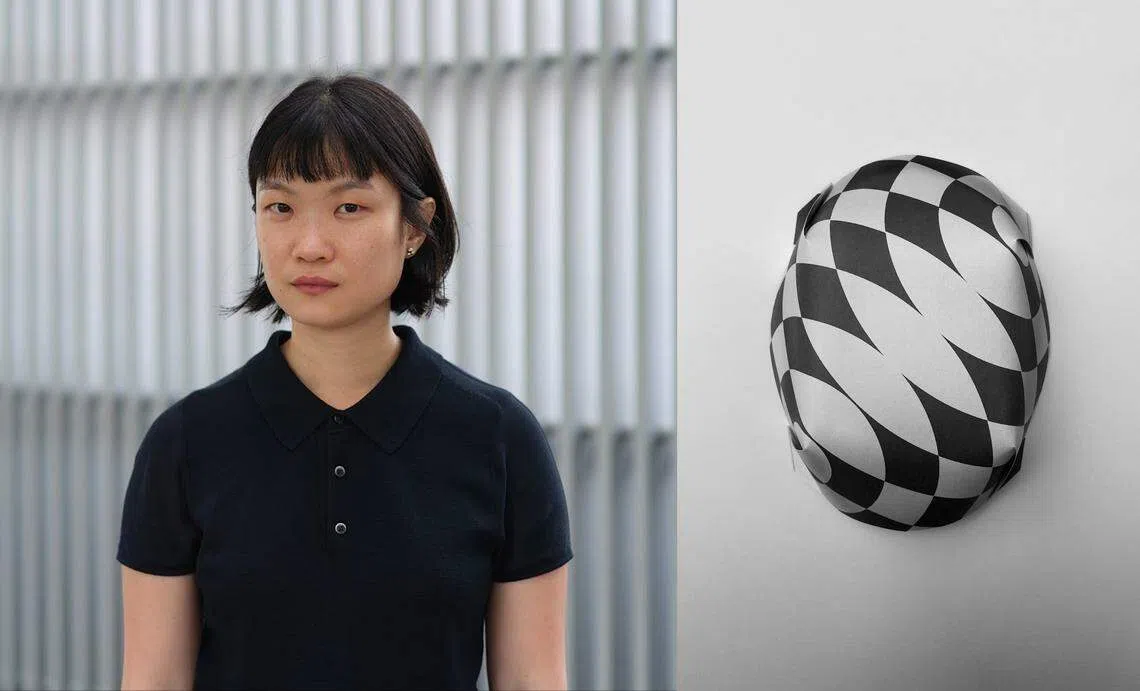
Textile designer Tiffany Loy is collaborating with Italian mosaic expert Friul Mosaic on Mosaic Membrane – a material experiment that presents mosaic tiles in skin-like, three-dimensional forms that can function as pieces of furniture. Mosaic tiles are small pieces of offcut stone that make for an inherently sustainable material choice. Loy takes this further by hollowing the three-dimensional form of the tiles, using as little material as necessary. The work is a celebration of the fluidity of textile and mosaic materials, while also drawing inspiration from the vaulted ceiling and arched structure of La Rotonda del Pellegrini – where Future Impact 2 will be showcased.
Decoding Asia newsletter: your guide to navigating Asia in a new global order. Sign up here to get Decoding Asia newsletter. Delivered to your inbox. Free.
Copyright SPH Media. All rights reserved.