A Rembrandt on your skin: Museum hosts a tattoo parlour in Amsterdam
Patrons can get inked with the artist’s drawings and etchings, courtesy of ‘the godfather of Amsterdam tattoo culture’
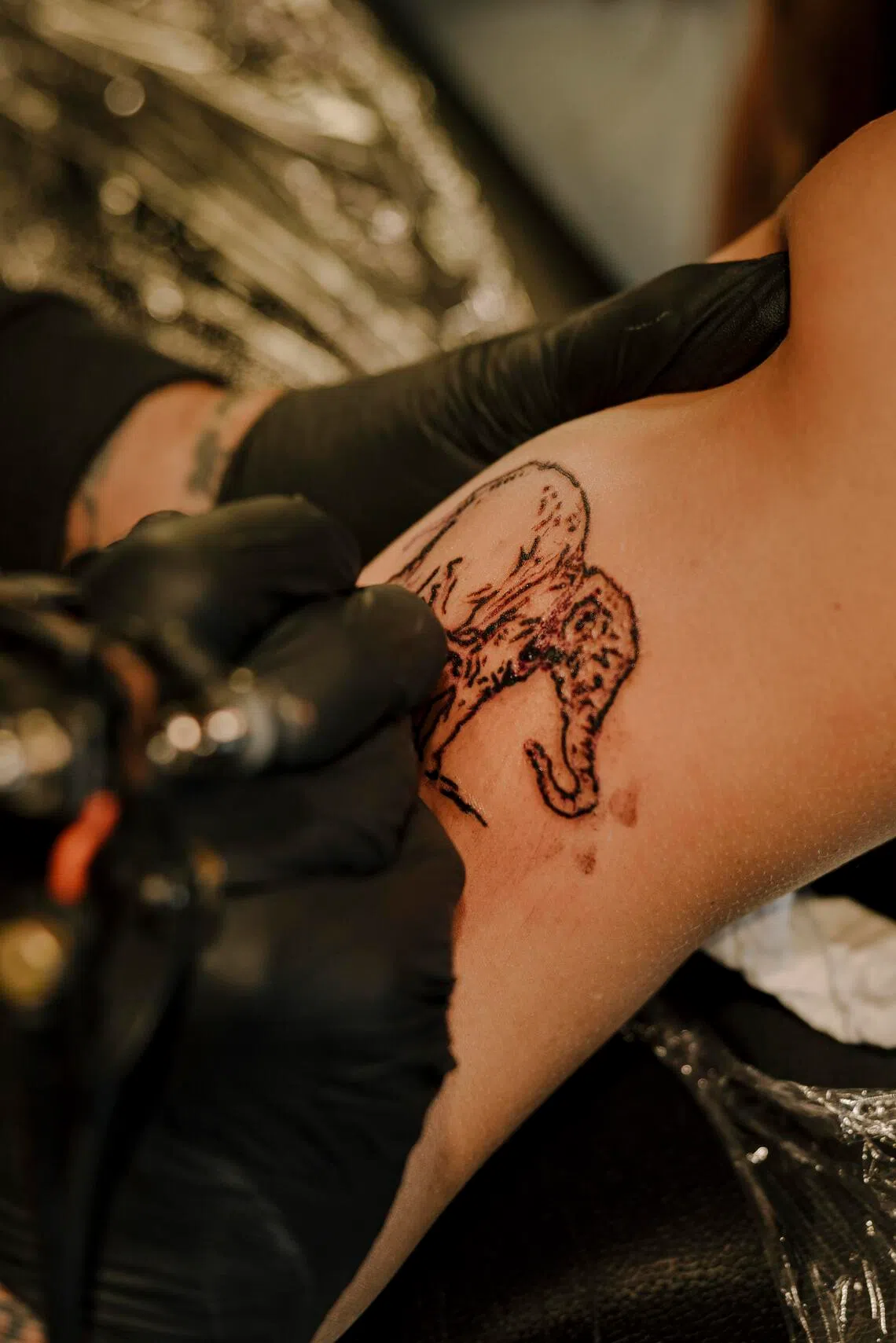
[AMSTERDAM] Henk Schiffmacher, a 74-year-old tattoo artist with gold teeth and a wide-brimmed hat, leaned forward to grasp Rachel van Haren’s arm. He was concentrating on inking a rotund little elephant into her biceps, based on a 1637 Rembrandt drawing.
Schiffmacher, often described as “the godfather of Amsterdam tattoo culture”, grew up admiring the earlier Dutch master. Now, for two weeks, he’s doing his work next door to Rembrandt’s 17th-century etching studio in the Rembrandt House museum in central Amsterdam.
As “The Poor Man’s Rembrandt Project”, the tattoo artist and his studio, Schiffmacher and Veldhoen, opened a pop-up tattoo parlour in the Dutch museum, and through Saturday (Nov 7), visitors can request a permanent remembrance of Rembrandt inked into their skin.
“It’s a highbrow-meets-lowbrow thing,” Schiffmacher said in an interview.
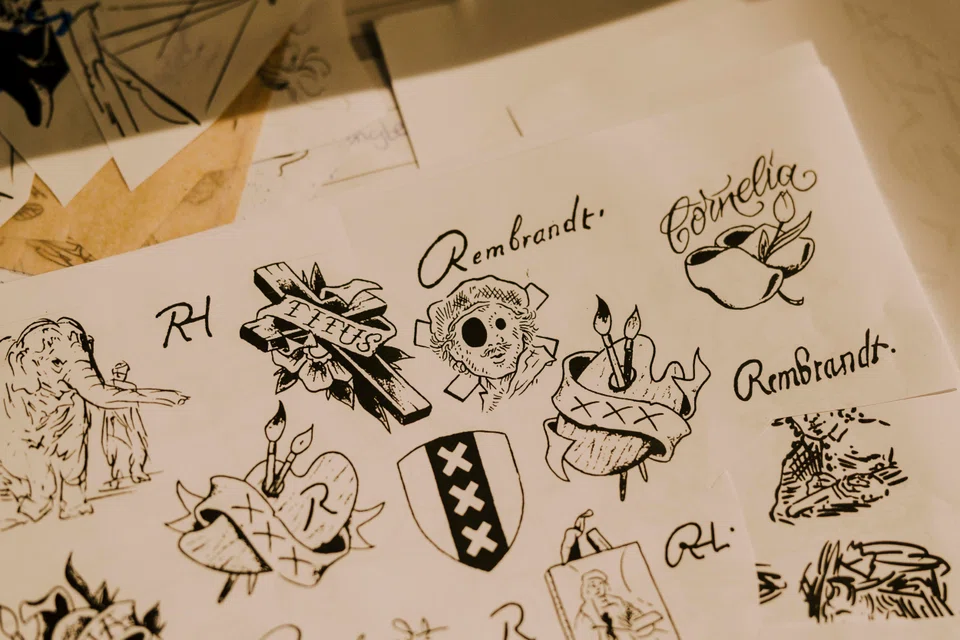
On the wall behind Schiffmacher were dozens of his versions of Rembrandt drawings and etchings that clients could select. Customers, paying 100 to 350 euros (US$110 to US$390), depending on the image, were seated in chairs or lying on tables around the room.
Van Haren, 28, said that she had selected Hansken, an elephant that Rembrandt drew several times in the 1600s, because it was simple without being simplistic. “He drew things just as they were, so it’s not too much,” she said.

This is the second time the Rembrandt House has worked with Schiffmacher and his team, having previously done so in 2023. This time, they had a greater ambition: to reproduce one of Rembrandt’s most famous etchings, The Descent From the Cross, from 1633, across a man’s back.
They put out a call about a month ago and received about 50 applications, Schiffmacher said. But some volunteers had scars, birthmarks or other tattoos that would have competed with the image. They found the right candidate in Bo Kwakernaak, 28, a production designer for film sets.
“We finally found a completely clean, young man with a beautiful back, and now we’re working on him as a team,” Schiffmacher said.
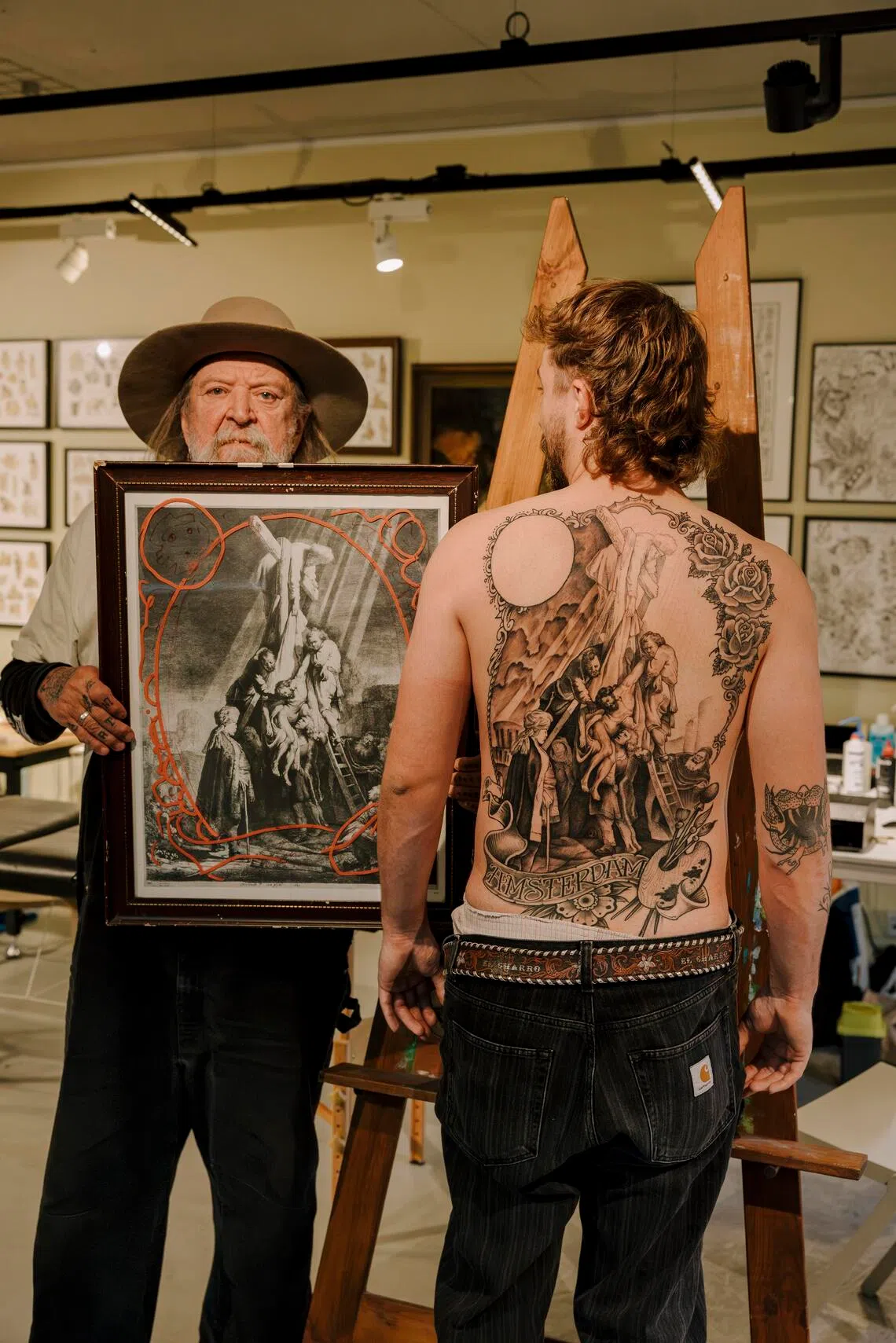
Epco Runia, the Rembrandt House’s head of collections and research, said that Rembrandt and Schiffmacher – both masters of their disciplines – were linked by their efforts to popularise their art.
Rembrandt, Runia explained, made prints as smaller, affordable artworks that were within reach for those who couldn’t afford his paintings. “We are a print museum, so I think this fits us really well.”
What might Rembrandt have made of the tattoo artist’s work?
“I think he would have some kind of click with Henk Schiffmacher,” Runia replied. “They have a little bit the same kind of character.”
The idea behind the pop-up studio was to draw a younger generation of visitors to the Rembrandt House, its director, Milou Halbesma, said. They did come, judging by the crowds filling the studio.
There were also surprise guests, such as a Rembrandt art dealer, curators and scholars from other museums, and a 75-year-old Rembrandt fan.
While contemplating which of his drawings might make a good tattoo, people tend to look at Rembrandt’s art in a new way, Halbesma noted: “It’s a way of looking at Rembrandt – really closely, so they start loving his work again.”
Schiffmacher said that a tattoo was basically “just a little ink drawing” on human skin and that both Rembrandt’s work and the tattoos would endure. “We give a guarantee till at least 14 days after death.” NYTIMES
Decoding Asia newsletter: your guide to navigating Asia in a new global order. Sign up here to get Decoding Asia newsletter. Delivered to your inbox. Free.
Share with us your feedback on BT's products and services