To save Japan’s heritage homes, people are shipping them across the world
Teams of enthusiasts are dismantling and rebuilding the country’s abandoned kominka overseas
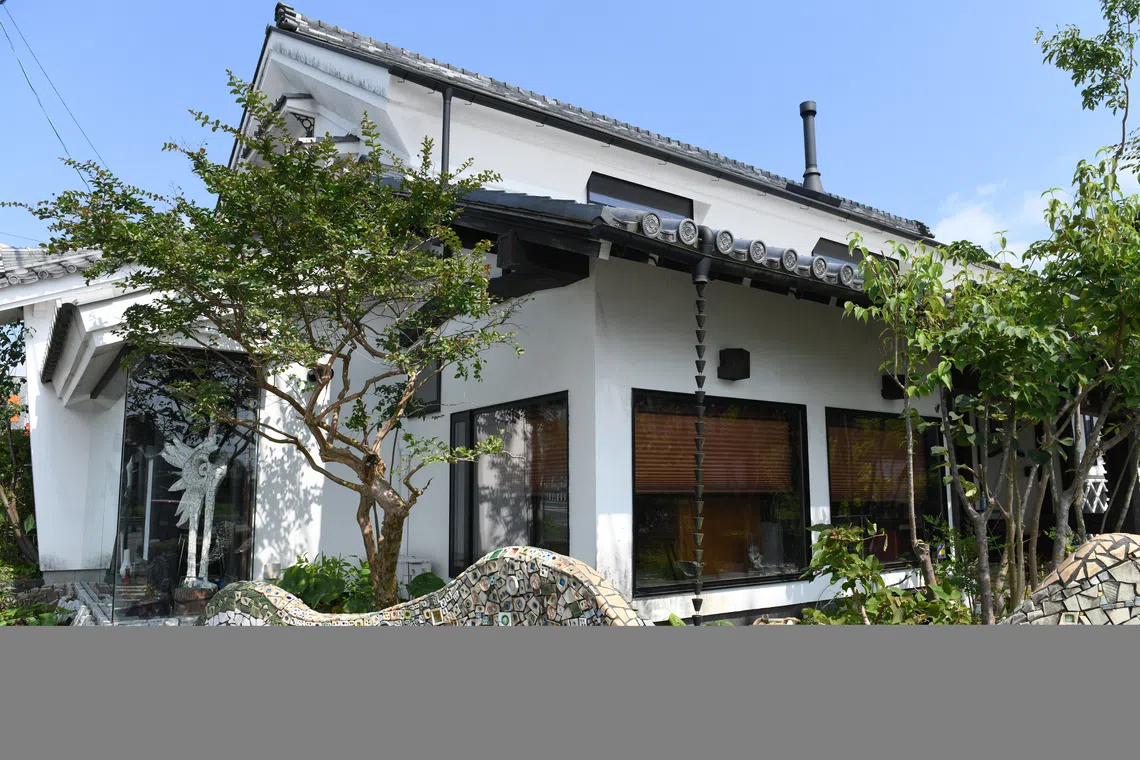
HIGH in the foothills of the Wallowa Mountains stands a compact home of white walls, wood and shingle.
Set against a backdrop of snowcapped peaks in this corner of eastern Oregon, the house appears tiny and slightly out of place, especially when you step inside to find shoji screens, tatami mats and thick, curving rafters overhead.
It is a kominka, or a traditional Japanese folk house, but its existence in the US is anything but traditional.
The house was built a couple of years ago using parts taken from old Japanese houses that had been left vacant, as countless homes are in Japan every year.
While some Americans have crossed the Pacific to buy and restore these forsaken homes, a small but growing number are doing the opposite: having the houses dismantled, shipped to the US and rebuilt here.
“I was born and raised in Aichi prefecture, and this kominka came from Aichi,” said Kiyomi Koike, who owns the property in the Wallowa Mountains with her husband, Bill Oliver.
“In many ways, it felt like returning home. But beyond the personal connection, I wanted to bring something to America that modern life is missing.”
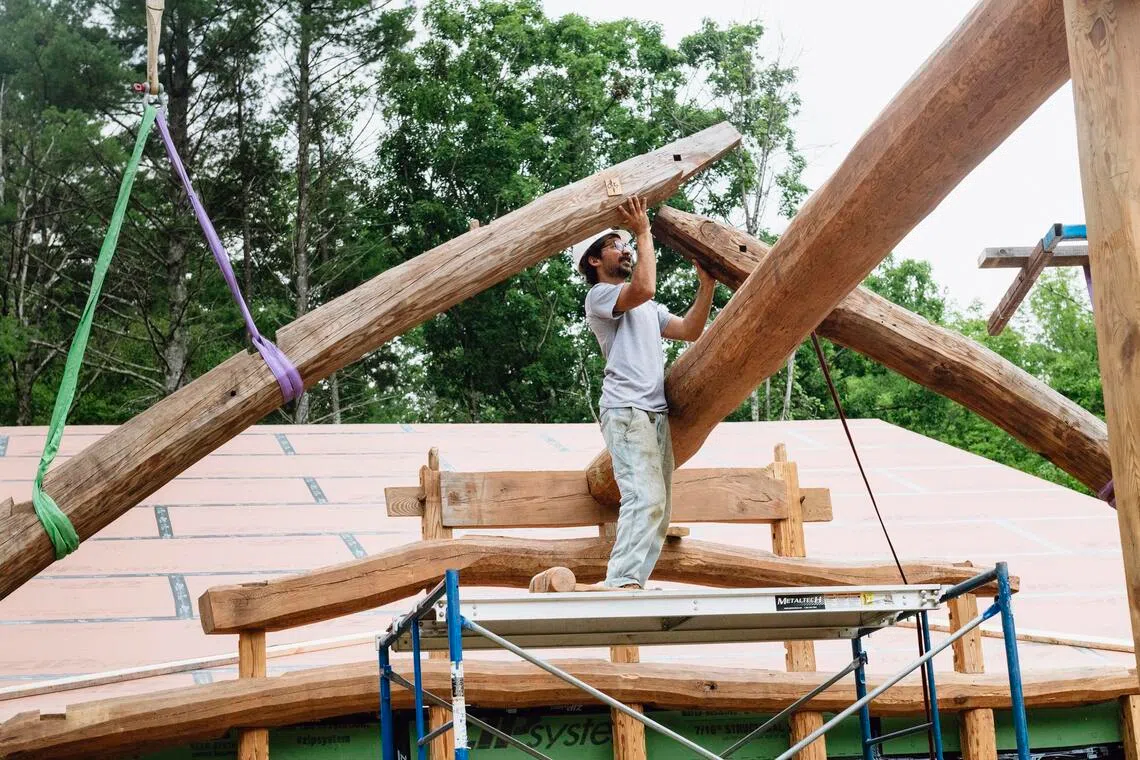
Some of the parts are over 200 years old. When the 800 square foot (sq ft) house was put together in 2024, there was no county permit process for old Japanese buildings.
Koike, 61, a former organic tea entrepreneur, and Oliver, 80, a former planning director for Wallowa County, had to surmount those municipal and logistical challenges, such as the way wooden beams can warp during long sea voyages.



It took an international collaboration between Toda Komuten, an Aichi architecture firm; Kominka Collective, a Japan-based preservation group; and Devco Engineering, an Oregon structural-engineering company.
After about two years, Koike and Oliver opened the house as a part-time residence and rental property with serenity and wellness courses, including tea ceremonies. (Their primary residence is half a mile down the road.)
“The first thing many people notice is mental spaciousness; the structure creates a feeling of expansion, almost like an exhale,” Koike said. “The proportions, the transitions between rooms, the natural materials, the way light moves through the structure and the simplicity of the design all invite a different relationship.”
The couple say their house is the only residential kominka in the country, though there are others in public facilities, including a 320-year-old house from Marugame, Kagawa prefecture, at the Huntington museum in San Marino, California.
Falling behind the times
Kominka are old minka, traditional private Japanese residences occupied by commoners.
Most were erected before post-World War II building codes were implemented, and all share a common design: a post-and-beam system to define the space, with sliding doors, tatami floors and paper screens serving as minimalist, multipurpose and flexible elements.
But they’re not treasured the way they once were. Japan’s rapidly ageing and shrinking population has left it with at least nine million uninhabited homes, or akiya, particularly in rural areas.
Kominka can be seen as dark, cold and isolated, especially by younger Japanese. They’re also difficult to maintain under Japan’s rigid earthquake-resistance standards.
As a result, many have little value and end up abandoned or demolished. Japanese preservation groups estimate that tens of thousands of traditional houses disappear each year, which has sparked efforts to save them.
Meanwhile, the crashing value of the yen has made old houses very cheap – they can be had for less than US$50,000 – and YouTubers chronicling their renovations have gone viral. A fully rebuilt, redesigned kominka will cost about the same as a custom-designed, timber-frame home.
“You can’t spend time in these extraordinary old buildings and not just become besotted,” said Andrea Carlson, 66, co-founder and representative director at Kominka Collective, the non-profit based in Aichi that codesigned the house in Oregon.
The non-profit’s goal is to preserve houses in Japan, but when that isn’t possible, export is an option.
“It’s heartbreaking to see them torn down,” Carlson said. “Not only the structures, but everything inside them: the shoji doors, the tansu chests, the roof tiles, the ranma panels. It’s all destroyed.”
Out of the ashes
But one country’s trash can be another’s treasure.
On a recent day in the hills around the city of Shinshiro, Koji Toda, an architect at his family’s firm Toda Komuten, switched on the lights in an old lumberyard warehouse.
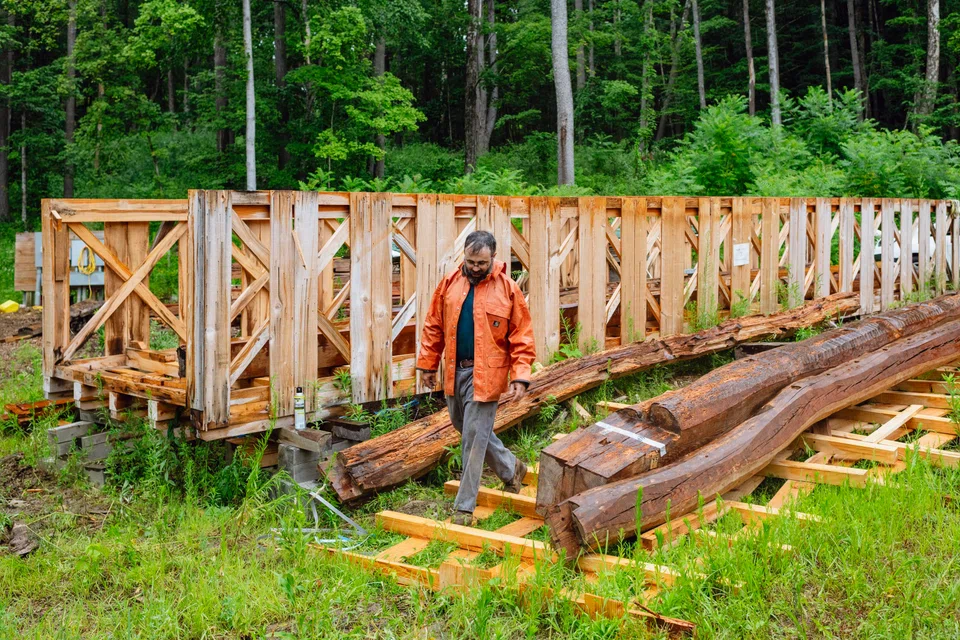
Inside were racks and racks of heavy wooden beams taken from dismantled kominka, some hundreds of years old, inscribed with kanji characters and curved like ship timbers. There were also ridgepoles, tansu chests, kura plaster doors and shoji screens.
The parts, all awaiting export, were reclaimed from unwanted kominka by Toda’s father, Yoshibobu Toda, a fourth-generation architect and the chair of Toda Komuten. The handcrafted wood is so undervalued in Japan that there isn’t even a lock on the warehouse doors.
“Overseas, these are antiques, but here they are regarded as junk,” said Koji Toda, 47. “We want to conserve kominka by using their traditional construction methods in the creation of comfortable structures built with the climate and standards of other countries in mind, structures that could last a century or more.”
In recent decades, architects, including Yoshibobu Toda, rediscovered the legacy of prewar wooden structures, formed preservation societies and lobbied for conservation.
In 2020, Unesco added traditional Japanese architectural timber framing to its Intangible Heritage list. Since then, preservationists have flourished.
Outside Boston, a retired timber framer named Billy Dillon had ample experience moving barns and other old structures.
In 2023, after a visit to a kominka in Aichi left him “a little bit in awe” at the craftsmanship, he decided he wanted to save similar homes from the wood chipper. So he began supervising the disassembly and import of several old structures, and eventually launched a business, Kominka North America, with fellow timber framer Adam Miller.
“If we can import old houses and turn them into beautiful housing, that appeals to me,” said Dillon, 70, who often collaborates with Carlson on sourcing and design.
“We can have people live in them again. The kura are just the right size for ADUs (accessory dwelling units) as housing for families, grandparents, anything.”
American buyers, he said, want the original, soot-blackened beams with hand-drawn calligraphy markers, and they’re willing to pay US$500,000 or more to import and rebuild a basic Japanese heritage home.
One of his clients wants to source old houses for a planned Japanese-themed spa in New England; others are US-based Japanese cultural centres that want authentic architecture.
One kominka that he and Miller are developing is set to become a woodworking shop in Tyringham, Massachusetts. Shiose Kura, a 130-year-old kura plaster warehouse that once stored silk thread, was dismantled in Shinshiro, with each piece catalogued before being shipped to the US.
The old-growth timber, valued for its tight grain, resin content and strength, has remained intact for more than a century.
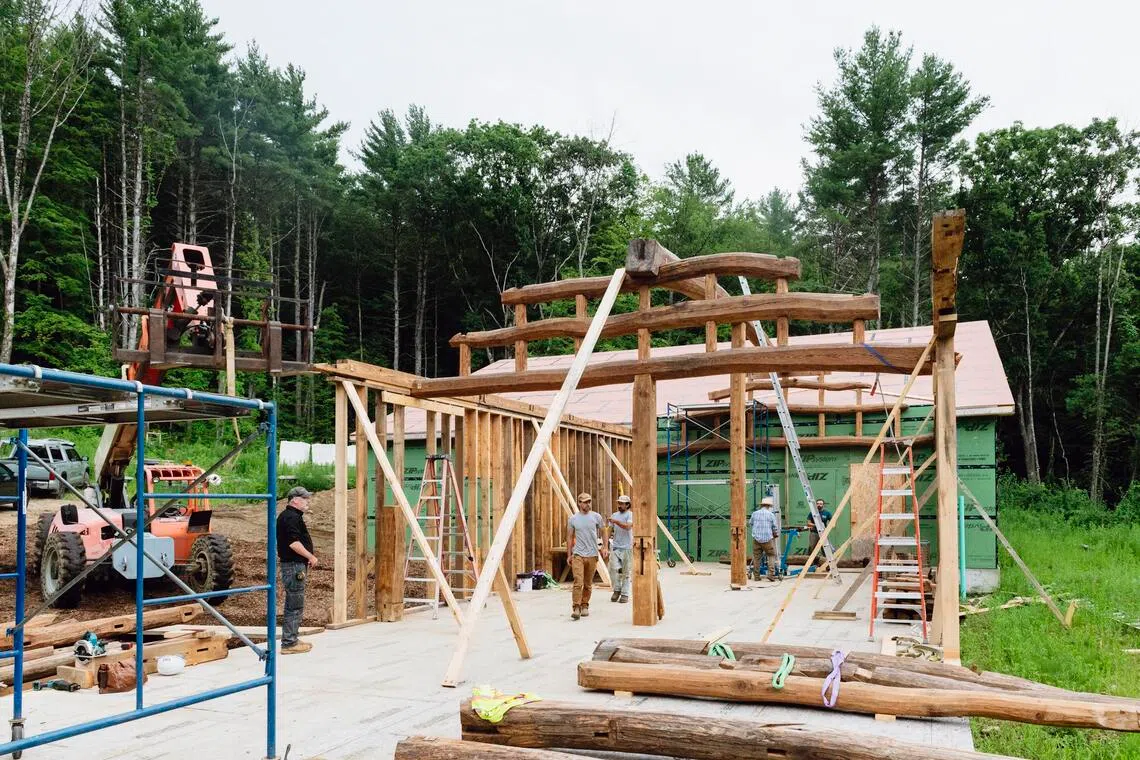
On a recent afternoon, Dillon and Miller examined the original pine beams before carefully moving them into place, using wooden mallets to set them into their mortise-and-tenon joints as the structure began to retake shape.
Another kominka, built from the remains of a theatre from a Shinto shrine, will find a new life as a 900 sq ft ADU, on Martha’s Vineyard.
Dillon and Miller are also helping Kominka Collective and Toda Komuten move a thatched-roof house, shrine, torii gate and parts of a desanctified Buddhist temple to a public garden in California.
Crossing cultures – thoughtfully
In Jamaica, a preservationist named Chris Ohrstrom is working with Toda Komuten and Kominka Collective to relocate a 1905 kominka from Niigata prefecture and reimagine it as a four-bedroom guesthouse for a retreat centre.
Ohrstrom, former chair of the World Monuments Fund, has done restoration work at Monticello, Mount Vernon and the Sir John Soane Museum in Britain, among other sites.
This project is not a rebuild, but an adaptation: The traditional thatched roof will be replaced with a timber-frame, wood-shingled roof that can withstand hurricanes. Because the original home lacked hallways, its progeny will be given an engawa wraparound veranda.
“We also added a ton of windows and a clerestory for added light, as minkas are horribly dark and also very, very cold,” said Ohrstrom, 69.
“Thus, they are well suited to adaptive reuse in tropical climates. Adding and redesigning this stuff and still maintaining a traditional Japanese flavour was very tricky. We have used extensive Japanese design cues. We jokingly call the result ‘Japaican’.”
Concerned about cultural appropriation, Dillon consulted a Buddhist theologian who told him that reuse is a fundamental tenet of the faith; there’s a long tradition of moving old buildings within Japan itself.
“As carpenters,” Miller said, “we understand the breadth of resources that must be committed to create a structure – material, time and skill among them – motivating us to preserve buildings that would otherwise be demolished.”
He added that this “resonates with the Japanese concept of mottainai, essentially an appeal to thrift and mindful consumption of limited resources, which we understand to come from tenets of both Buddhism and Shinto”.
These days, moving the endangered buildings abroad is often a last-ditch option for saving them, said Yoshihiro Takishita, an architect and kominka conservationist, who has moved houses both within Japan and to foreign destinations, including Hawaii and Argentina.
“Minka have a tremendous power that crosses borders and has nothing to do with politics or religion,” said Takishita, 80, whose own Kamakura home was saved from a valley that was flooded in the 1960s.
“As long as the new owners understand the value of the home, and as long as this important historical heritage can be preserved, it doesn’t matter where it is, in Japan or abroad.” NYTIMES
Decoding Asia newsletter: your guide to navigating Asia in a new global order. Sign up here to get Decoding Asia newsletter. Delivered to your inbox. Free.
Share with us your feedback on BT's products and services