The secrets of a football turf master
Prof John Sorochan is behind the multimillion-dollar effort to develop perfect fields for the World Cup
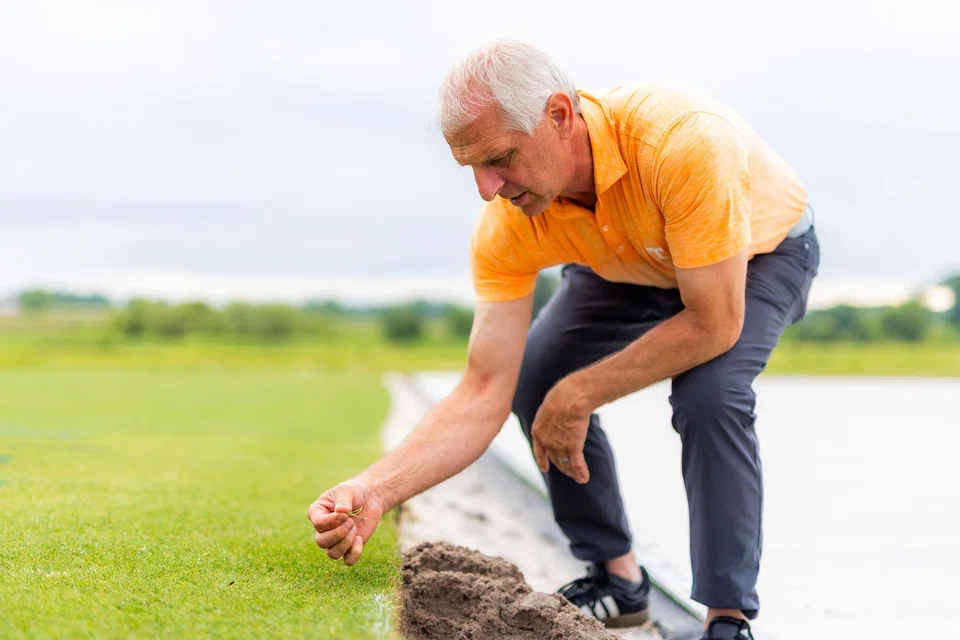
[NEW YORK] Imagine the world’s best football field: blade-perfect natural grass, fit for the likes of Lionel Messi and Vinicius Jr, and capable of withstanding nearly 40 days and 40 nights of top-level wear and tear.
Now imagine creating 16 such fields for 16 stadiums, each with its own climate: in Toronto; in Guadalajara; indoors and air-conditioned; outdoors in pouring rain or the blazing sun; some with artificial turf already in place.
Now make the playing experience effectively identical from one to the next. Don’t disappoint Messi!
Where to begin? Start, as Fifa did, by tapping Professor John Sorochan, an expert in turf grass science and management at the University of Tennessee.
Since 2018, Prof Sorochan, in collaboration with Professor John Rogers at Michigan State University, has led the Fifa Pitch Research Project, a multimillion-dollar effort to level the playing fields of the 2026 World Cup to a flawless consistency. Prof Rogers, a former professor to Prof Sorochan, is known to some as the Sodfather.
Prof Sorochan spoke to The New York Times a few days before the tournament opened on Thursday (Jun 11).
The fields were safely in place, and all that was left was “crossing the Ts and dotting the Is”, he said. “The light at the end of the tunnel is no longer a bear holding a candle.”
This conversation has been edited for clarity and brevity.
Did you grow up playing football?
Yeah, I’m a lifelong fan and player. I grew up in Calgary, Alberta. My boys played and still do. I like Chelsea and the English Premier League (EPL). But I’ve become good friends with a lot of the field managers, so I’m an Arsenal fan, too.
SEE ALSO





Are you able to watch a match for the actual game, or is some part of your eye always assessing the pitch?
It’s a little of both. I’m always looking at the pitch in some way. If a player slips or falls, I’m like: “What was the cause?”
What drew you to turf science?
I started my academic career at the University of Calgary studying political science and geology. I was thinking I could be a lawyer in the oil and gas industry.
But I didn’t like the idea of being inside all the time and doing a desk job. So I went and worked on a golf course, and I said: “Yeah, that’s what I want to do, I want to get into golf course construction and design.”
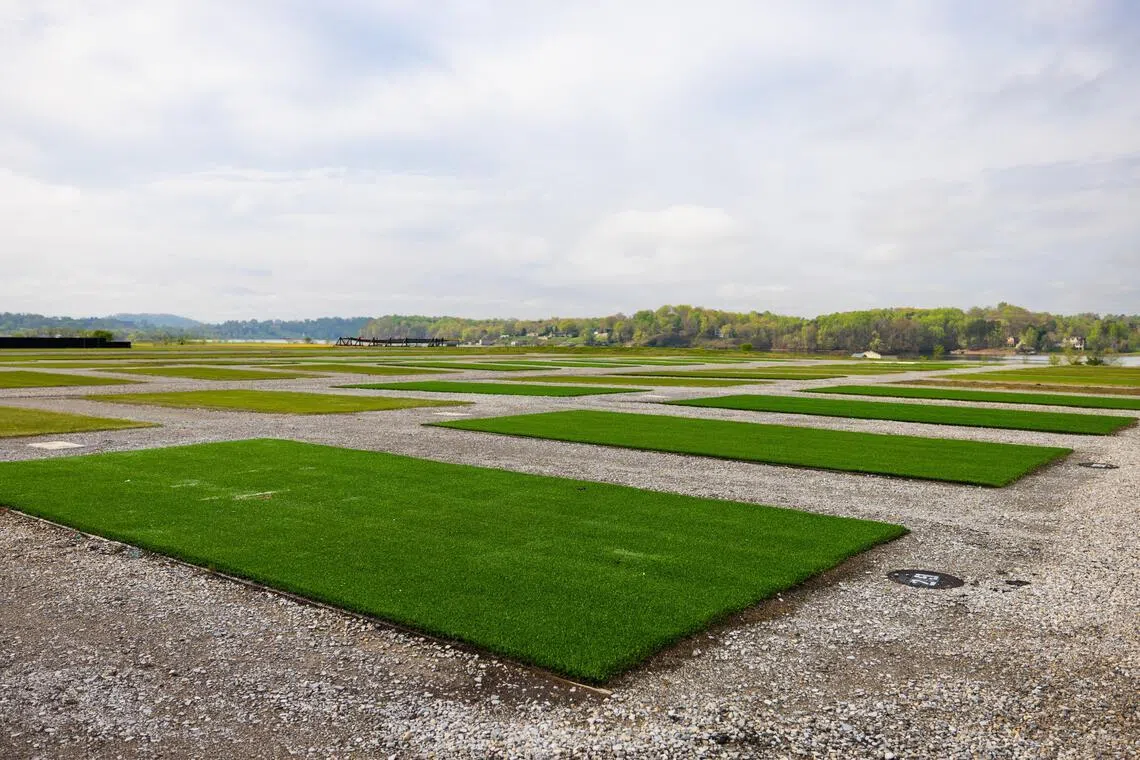
I ended up transferring to Michigan State University, into the two-year turf programme.
That’s when Michigan State got the project to try to figure out how to grow grass indoors for the 1994 World Cup in the Silverdome. I’m like, “This is the best thing ever!” I started working on it as a student; Trey Rogers was the professor in charge.
That field was a portable field. They established it outside in hexagon modules, 6 inches (15.2 cm) deep, and then moved them into the Silverdome, like a honeycomb. But it would be in there for 30 days, with very little light.
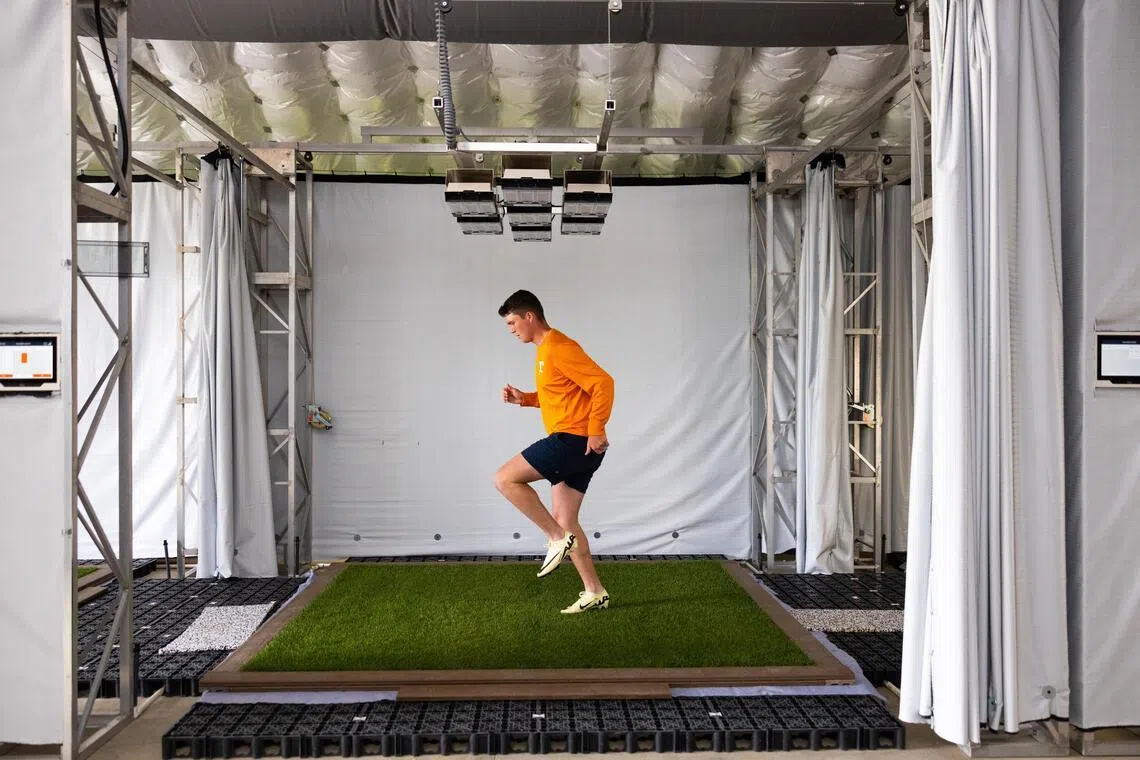
How long could we make it last? I literally put on football cleats and ran back and forth simulating traffic on the plots.
After 30 days, you could see the diamond-shaped wear, from the goals to the sidelines at the middle and back in, and where the assistant referees had been running up and down. That was the “aha!” moment to me: I remember looking down from the roof of the Silverdome, the wind blowing in my face, thinking: “How do we make this better?”
How was the final product received at the time?
We had a trial run in 1993, with the US Cup. At the end of the tournament, Graham Taylor, the manager for England, said that the only people who wouldn’t like the pitch would be the bad players because they couldn’t blame the pitch. It was perfect.
Is it fair to say that expectations have changed since then?
If you watch an EPL (match) from 1994, the players have mud on their uniforms, because it’s always cold and raining in England, and the goalmouth has that birdbath, worn-out area in front.
Those pitches weren’t great. Since then they’ve gotten grow lights, they’ve got hybrid reinforced pitches all constructed on a root zone of sand. Now at the end of the season, they all look fantastic.
What do you like about grass?
The grasses are the most important of all plants. Why? I ask my students this in Intro to Turf and they’re like: “golf.” They think I’m talking about turf grass. Really, come on!
Wheat, corn, millet, rice – those are grasses and the staples of the world’s diet.
Of the thousands of grasses in the world, we identify maybe 25 to 30 as turf grasses. They’ve evolved with grazing animals.
Turf grass has three things that separate it:
- It grows in a contiguous community, all among itself.
- It can tolerate traffic: You can play on it, walk on it, park on it.
- It tolerates frequent defoliation or mowing; you can mow it every day. You can’t do that to rice, wheat, corn; if you mow those every day, they’ll stop growing and die.
The turf grasses each have their different utility. Some, like fine fescues, are on some cool-season golf courses, but I wouldn’t want to play a football game on it; it’s not going to wear or recover well.
Bermuda grass is big for sports fields, because it spreads through rhizomes and stolons – horizontal stems. These help anchor the turf and knit it together, so it has excellent wear tolerance and recuperative potential.
A lot of breeding has focused on things like drought resistance and reducing fertilisers. And then there’s pest management: controlling weeds, diseases and insects. The other pest is the athlete, right?
What have you learnt about that particular pest?
A lot of turf research has been about the traffic tolerance and wear tolerance of different grass varieties. For golf, we always did a lot of ball-to-surface interactions: how the ball rolls on the greens, green speeds, things like that.
I started asking: “How does the athlete interact with the surface?” Eventually, we developed the Flex. It’s a machine that can strike the turf with a foot – a 3D-printed foot with a cleat – coming in at an angle.
It’s given us a lot of data. We can measure many parameters of recoil, the energy being pushed back on the foot. We can measure traction – how many millimetres the foot displaces the surface.
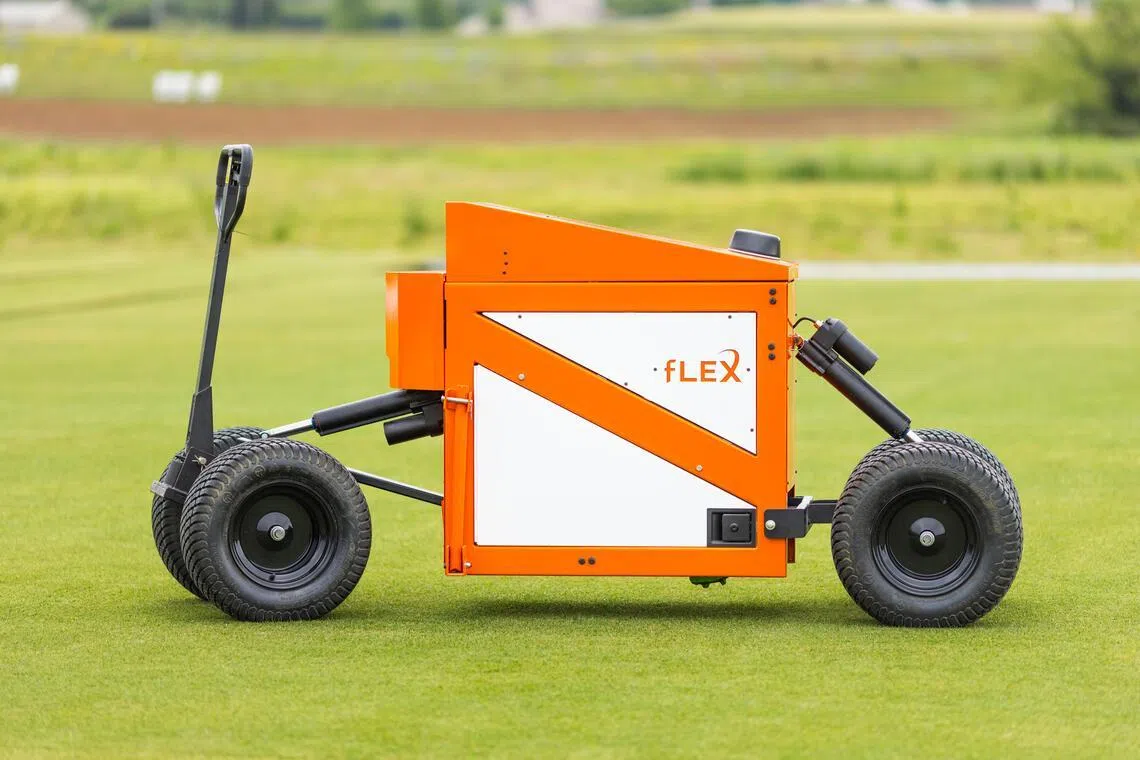
Because we put sensors and load cells throughout the foot, we know the load that the athlete is feeling, too.
We can strike with different masses: little Maryanne playing football at 35 pounds (15.9 kg) to Bubba playing American football at 350 pounds. We can measure how well a natural grass surface complies with regulations, and we can compare one pitch to another.
I was just thinking of it from the concept of a game.
You drop the ball to your left back, and he switches it to the midfielder on the other side. When that ball’s coming in, you want that ball to hit and skip, and not bounce up above their knees, so they can trap the ball and make their move. If it bounces too high, they have to trap it with their chest – then the defender’s on them and maybe takes the ball away.
The game of football has changed significantly over the last three decades. How much has the modern field played a part?
So much is different. The athletes have wearables that track their vitals; they’re health-conscious, more fit. They wear cleats that improve their performance. But yeah, having a uniform pitch that’s not worn out, with a ball bouncing in mud...
The Spanish team that won the 2010 World Cup in South Africa might have been the most beautiful team to watch. I got goosebumps.
They didn’t score a lot of goals, but man, they controlled the game with their technical skill and passing. The surface made that team better, because the ball was on the surface so much of the time. NYTIMES
Decoding Asia newsletter: your guide to navigating Asia in a new global order. Sign up here to get Decoding Asia newsletter. Delivered to your inbox. Free.
Share with us your feedback on BT's products and services