Smart #5 review: Smart is big, stupid was small
Now that Smart is back as a Chinese-German joint venture making family EVs like the #5, it might actually work
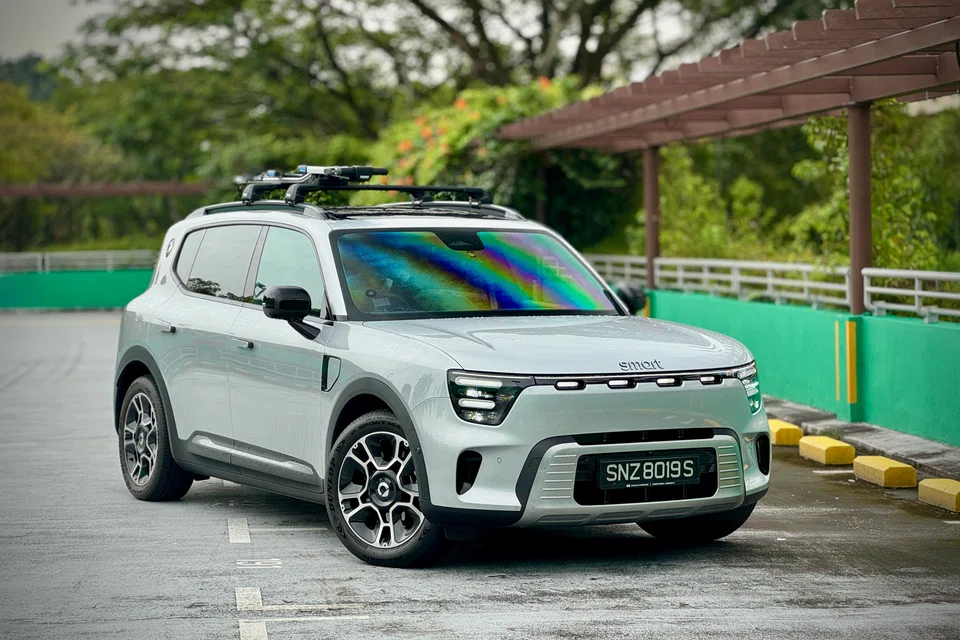
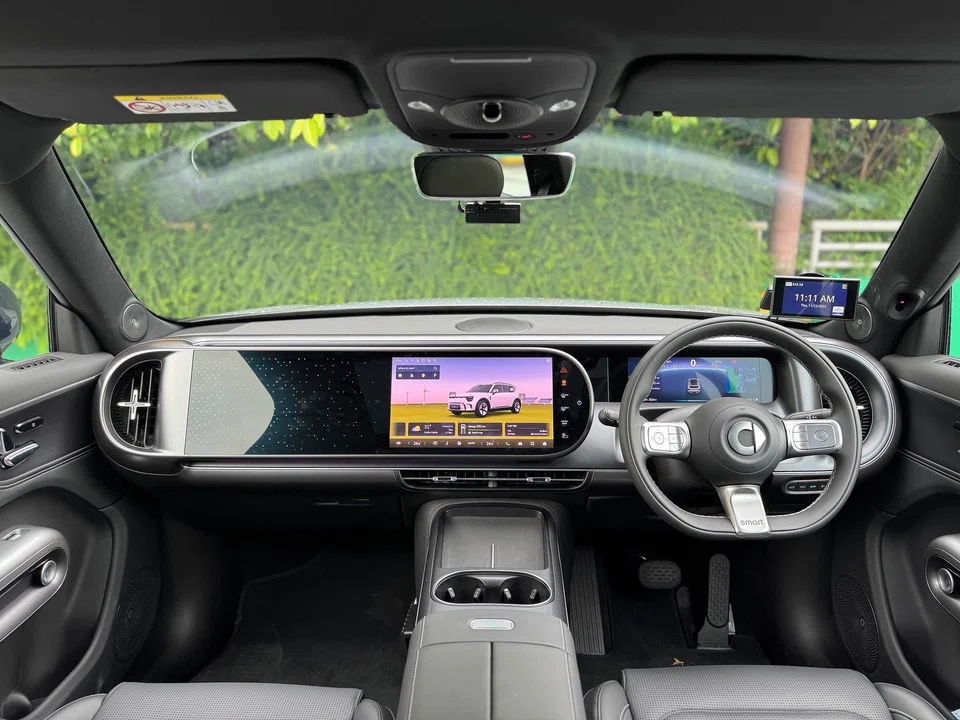
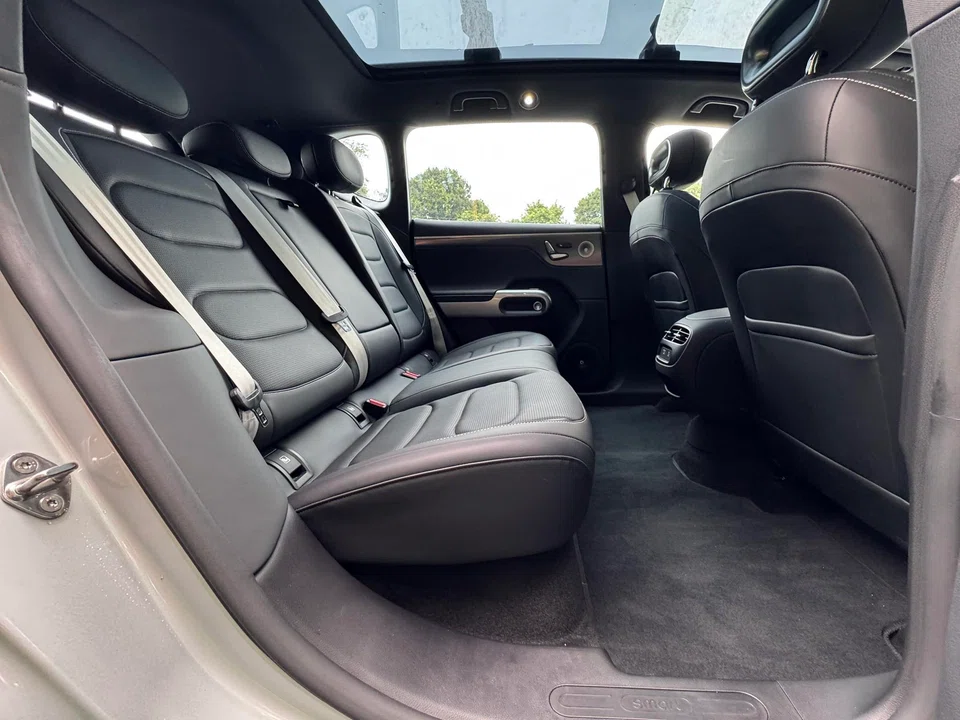
[SINGAPORE] Driving the Smart #5 brings a question to mind: can you remember the brand’s dinky two-seater runabouts? If not, that’s hardly surprising. Building urban micro cars is a lousy business, with margins so slim they make Ariana Grande look tubby.
Which is why Smart has reinvented itself and why, as its biggest ever model, the #5 is also its most promising car.
The brand is now a 50-50 joint venture between Mercedes-Benz and Geely, the auto giant that owns a clutch of foreign brands such as Lotus, Proton and Volvo. In terms of who does what, the styling is from the West while the hardware is from the East, which is a sensible arrangement.
The Chinese build electric vehicles (EVs) better than anyone, and Mercedes knows a thing or two about what premium looks like.
The result is this boxy five-seat sport utility vehicle (SUV) that tries to split the difference between practical family transport and something vaguely aspirational. If you head to the Mercedes-Benz Center on Alexandra Road, where Smart has a showroom, and seek out a #5 (pronounced “hashtag five”), you’ll find two versions: the Pro version tested here (at S$233,000 with Certificate Of Entitlement) and the Premium (S$273,000).
That price difference buys you some meaningful upgrades and a few frivolous ones. The Premium gets a larger 100 kWh battery delivering 590 km of range versus the Pro’s 76 kWh and 465 km. Power climbs from 335 hp to 358 hp, shaving 0.4 seconds off the 0 to 100 kmh sprint time of 6.9 seconds.
You also get a Sennheiser sound system with 20 speakers instead of nine, real leather instead of synthetic upholstery, ventilated seats and a head-up display. Most important of all, the Premium comes with a 13-inch infotainment screen ostensibly for the front passenger, which literally allows you to wave the fact that you spent an extra S$40,000 on your car in their face.
At 4.7 m long with a 2.9-m wheelbase, the #5 is bigger than a Mini Countryman or BMW iX1, yet it doesn’t feel like a clumsy barge to drive. It rides reasonably comfortably and accelerates with that immediate electric smoothness.
At the same time, the brakes feel snatchy, and the chassis moves around more than it should, so you never really feel like seeking out a twisty road in it, but at least it’s not slow and boring, like many of the EVs detuned for the cheaper Category A COE. That’s the good news.
The less good news is that the #5 does feel like a Chinese EV wearing European clothes, with the seams occasionally showing. For starters, there’s a kind of overcautiousness to the driver aids. The adaptive cruise control jabs at the brakes nervously when another vehicle drifts vaguely towards your lane. The speed warning system lets out an admonishing bong every time the Smart thinks you’ve gone past the limit.
You need five taps and a swipe through the menu system to silence it, but you have to do this every single time you drive the car. If I wanted to be nagged about speeding, I would install my mother in the passenger seat, thank you very much.
Then there’s the broken English. You’ll find navigation that’s “not opened” and functions you “close” rather than switch off. They’re minor details, but they pierce the veil of European refinement.
Still, there’s plenty to like about the #5 if you can see past its quirks. The cabin quality is genuinely impressive for the money, with soft materials everywhere, even in places where more expensive cars try to sneak in some hard plastics.
The rear seats are palatial and recline electrically, while the enormous glass roof floods the cabin with light, and you can shut the sun’s rays out with a roller shade, if you want.
Storage is abundant, as if to make up for all the times someone tried and failed to fit something into one of the early two-seat Smarts. Along with a 72-litre frunk, the boot offers 630 litres of space (expandable to 1,530 litres with the rear seats folded), as well as hooks for plastic bags, so your groceries won’t try to make a run for it.
Not only is there a luggage cover for you to hide things under, there’s a place to hide it as well. You’d be surprised how often car companies leave out useful things like these.
That practicality might be the #5’s Mercedes DNA expressing itself, but what the car really offers is some style and character in a segment crowded with BYDs and Teslas. Smarts were always characterful, come to think of it, but this one is also useful, comfy and even a little plush. It just goes to show that sometimes it pays to think big.
Smart #5 Pro Motor Power/torque 335 hp/373 Nm Battery type/Net capacity Lithium-ion/76 kWh Charging time/Type 5 hours 10 to 80 per cent (11 kW AC), 30 minutes 30 to 80 per cent (150 kW DC) Range 465 km 0-100 kmh 6.9 seconds Top speed 200 kmh Efficiency 18.5 kWh/100 km Agent Cycle & Carriage Smart Price S$233,000 with COE Available Now
Decoding Asia newsletter: your guide to navigating Asia in a new global order. Sign up here to get Decoding Asia newsletter. Delivered to your inbox. Free.
Share with us your feedback on BT's products and services