

‘Street Fighter’ review: Choose your fighter
Big-screen translation of iconic arcade game is dedicated to the punchy pyrotechnics of its fight sequences
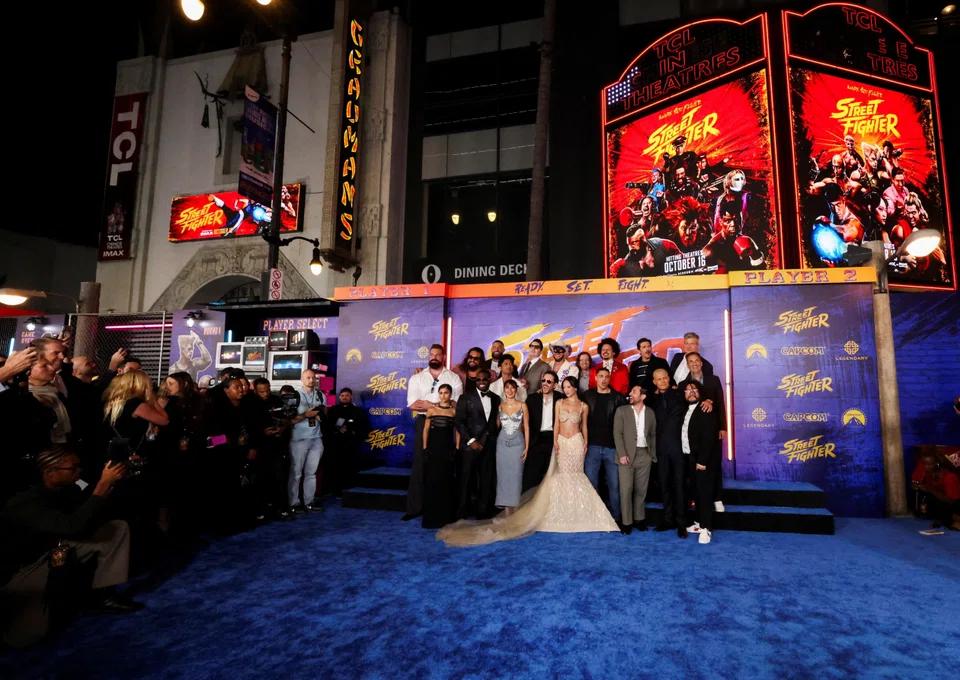
[NEW YORK] In the neon-drenched nightclubs of Metrocity, chaos has broken out. Zangief is yanking up Ken and Ryu by their collars. Vega is clawing at the undulating arms of Dhalsim. Balrog is punching the lights out of anyone near him.
This scene, halfway through Street Fighter, is presumably why you, and the memory of your childhood self, would go to a big-screen translation of the iconic arcade game: the chance not to choose your fighter, but to choose all of them, in Imax. It’s a moment of unadulterated fan service. It also works in an adaptation that mostly has the pugilistic juice.
In retrospect, it’s a wonder that this film, directed by Kitao Sakurai (Bad Trip), arrived so late to the fandom age of movies. If the superhero era was defined by the low-hanging fruit of property plugging and winking, the premise of Street Fighter – the game – is built for it: a fighters’ tournament where all your characters live and where, in the simple, two-dimensional beat-down gameplay, their getups, catchphrases and fighter moves are the entire basis of our love of them.
At least, that’s what on paper might make movie studio executives rub their hands maniacally. In execution, it’s much harder to introduce a dozen or so cartoon fighters and balance them in a story, but Street Fighter has a sturdy enough script to bear the load, even if it buckles a bit by the end.
The tournament is still the reason that everyone gathers in Street Fighter, but the focus here is on the strained bond between Ken (Noah Centineo) and Ryu (Andrew Koji), brothers-in-arms who became estranged after their master died. That death revolved around a dark power in Ryu that M Bison (David Dastmalchian), the tournament’s organiser, is secretly hoping to harness for himself.
This lore is rendered in animated form, one of several deft structural tricks that Street Fighter uses to flesh out its universe and lay out Easter eggs. It also speaks to Sakurai’s understanding that the best approach here is to embody, tonally and stylistically, the kid-like sensibilities of the arcade world – to adapt live-action form to the ethos of the game, not the other way around.
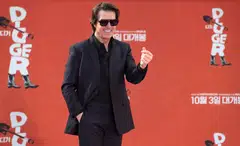
Accordingly, the ensemble is committed to the bit. The cast, including a washed-up himbo Centineo and real-life professional wrestler Cody Rhodes, with his Yosemite-peaked coif, knows not to humanise but instead to lean into the caricature and theatrics.
Most importantly, the film is dedicated to the punchy pyrotechnics of its fight sequences, most of which are constructed to feature the diverse personalities of its many fighters. This can eventually seem like a weakness, as the film tries to flit between one too many showdowns, tiring viewers out while confusing them on the movie’s priorities.
But in another sense, it simply feels like the natural zenith of an arcade player’s imagination, the “and then, and then” output of fighter fantasies running wild. By the end, you can practically see the ’90s kid smashing and kicking at the air on his way out of the theatre. NYTIMES
Decoding Asia newsletter: your guide to navigating Asia in a new global order. Sign up here to get Decoding Asia newsletter. Delivered to your inbox. Free.
Share with us your feedback on BT's products and services
TRENDING NOW

Philippine power giant First Gen rebuffs foreign offers, plans up to US$2.6 billion in expansion

Vietnam’s data-centre investment rush faces reality check on power and site constraints
Singapore should prepare for prolonged haze until November, says Grace Fu
Is stagflation returning? That mostly depends on the Iran war

