Departing from Singapore, a luxe locomotive redux
After a four-year hiatus, the Eastern & Oriental Express returns with a fresh look, new routes and an Andre Chiang menu


IN THE wake of the pandemic, a growing number of travellers are embracing the ethos of slow travel, opting for leisurely journeys to fewer destinations that allow for deeper immersion in local culture and cuisine.
Seizing this trend, the Eastern & Oriental Express re-emerged this February following a four-year hiatus, with two new seasonal itineraries that connect Singapore and Malaysia and inviting passengers to delve into the authentic charms of each stop.
Between November and February, the Belmond train offers a three-day round trip journey from Singapore to Kuala Lumpur, followed by island escapes to Langkawi, where Pulau Payar Marine Park awaits for snorkelling adventures, and Penang where rich cultural heritage meets delightful gastronomy.
Alternatively, from March to October, the train offers a different three-day round trip itinerary towards the eastern side of the peninsula, with excursions into the Taman Negara National Park, renowned for its rich biodiversity and the chance to encounter majestic creatures such as tigers, leopards and Asian elephants.
Belmond, which operates five other luxury trains around the world, halted operations for the Eastern & Oriental Express from 2020 to 2023 because of the pandemic. During that time, the company returned to the drawing board to see how it could best cater to the changing demands of travellers.
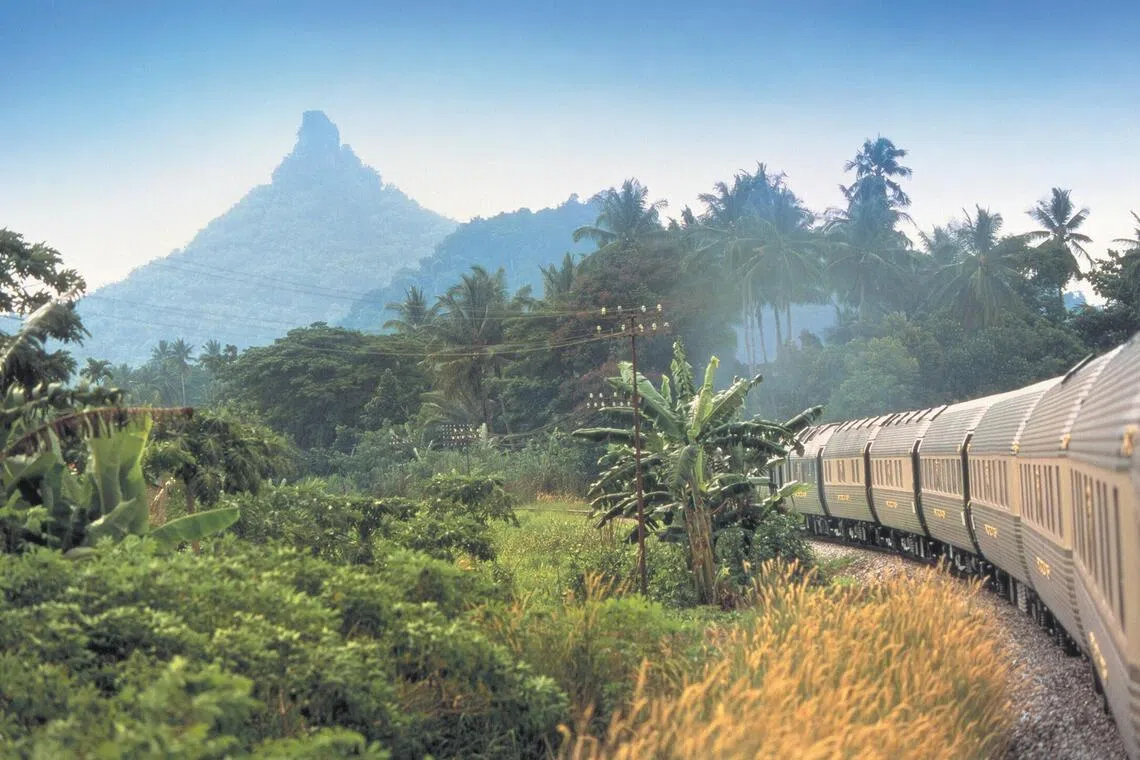
Arnaud Champenois, the senior vice-president of marketing and brand at Belmond, says: “What we’ve found is that people want to reconnect to what matters most: nature, culture, and their friends and family on board. So we have reimagined the train to serve as a time capsule, going back to an era where life moved more slowly, and you could take time to observe and appreciate things… For many of us today, time has become the new luxury.”
Drawing on the idea of “contemporary nostalgia”, the train was restyled to feature ornate marquetry using locally sourced materials, plush Malaysian embroidery and oriental silks, and other furnishing elements from local craftsmen. The three cabin categories – Pullman, State and Presidential – each boasts different design details and colour schemes inspired by Malaysia’s nature and heritage.
Meanwhile, the train’s menus have been reimagined by Belmond’s newly appointed culinary curator Andre Chiang, whose region-inspired creations include a laksa bouillabaisse, black-bone chicken consomme and jungle spices cacao ganache.

Chiang says: “What distinguishes each region’s culinary tradition is often the spices, and Malaysia has so many spices. For instance, we found so many types of pepper here that we decided to create a nine-peppered beef dish, marinating the beef in nine different peppers, from long pepper to Sarawak pepper.”


Meanwhile, at the observation car and piano bar, guests can enjoy botanical-inspired libations and vintage cocktails while being serenaded by live musicians playing classic Malay, Chinese, and Western tunes, from Getaran Jiwa to Fly Me To The Moon.
These enhancements have broadened the train’s appeal. Where it once drew mostly bookings from the US and UK, Belmond now sees more bookings coming from Singapore and Australia, right up to the end of 2024.
Not only that, its programme changes to include more culinary, wellness, and arts and culture activities are attracting a new generation of passengers: Belmond’s consumer demographics have shifted, with those in the 20- to 40-year-old age bracket rising from 18 per cent in 2019 to 25 per cent in 2023.
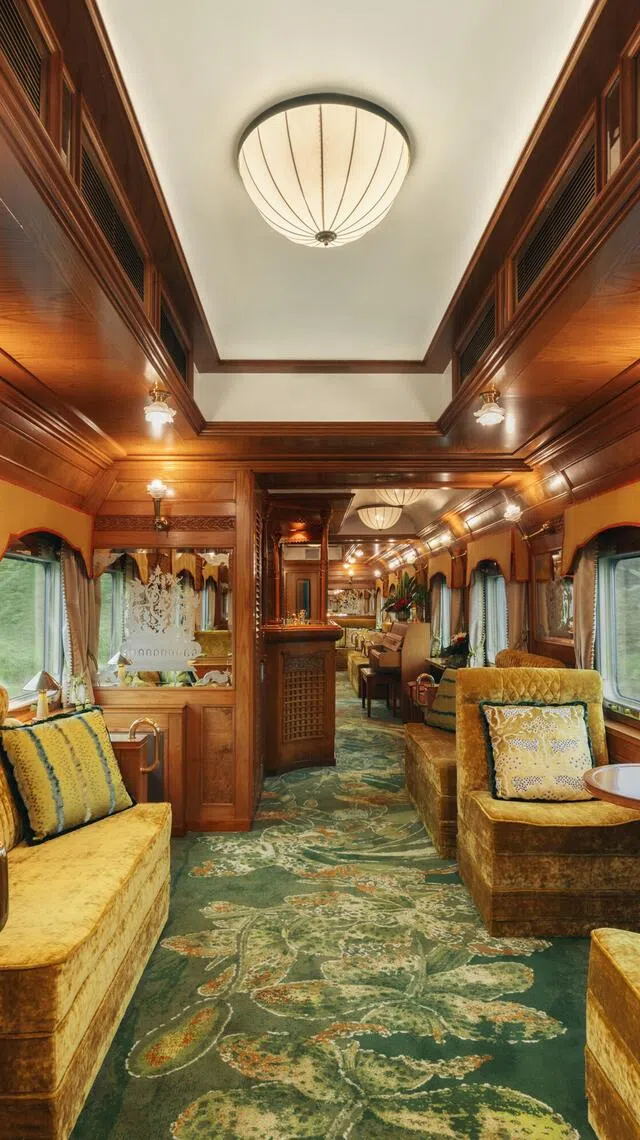
For many, rail travel certainly aligns with the principles of slow travel. Trains traverse through scenic countryside and cultural landmarks that may be missed when travelling by other means. Passengers have the opportunity to observe daily life unfolding gently outside their windows.
Trains are also core to the ethos of sustainable travel, since it leaves a far smaller carbon footprint compared to other modes of transportation, such as driving and flying. According to some calculations, a train emits on average 50 times less carbon dioxide compared to a car, and 80 times less carbon dioxide compared to a plane.
Champenois says: “The world has changed a lot over the past few years. It’s not just what the young travellers want, but also what the older travellers want. They want slower, more genuine experiences that can be enjoyed sustainably and without harming the environment, to be more in contact with local communities and craftsmen, and to have locally sourced gastronomic experiences… We’re seeing a shift in mindset.”
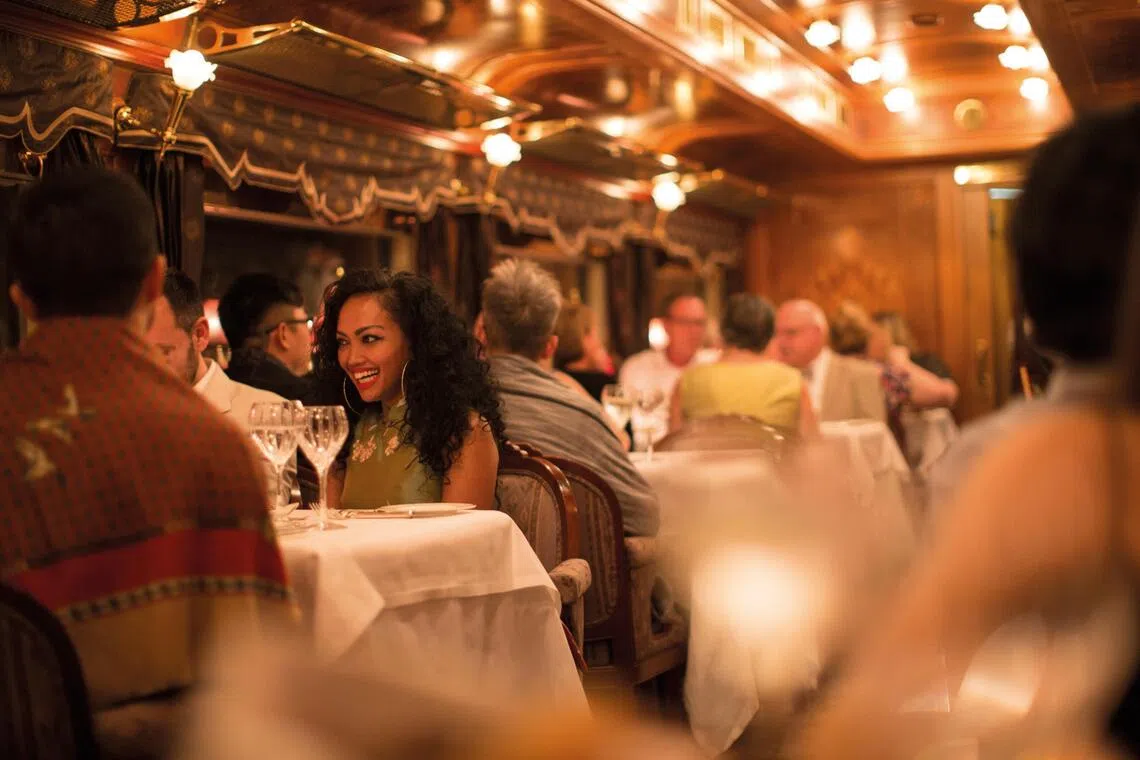
Three-night trips on the Eastern & Oriental Express, a Belmond Train, South-east Asia start at US$3,410 per person. Visit belmond.com
Decoding Asia newsletter: your guide to navigating Asia in a new global order. Sign up here to get Decoding Asia newsletter. Delivered to your inbox. Free.
Copyright SPH Media. All rights reserved.