With surprises galore, Qatar World Cup is a watershed for international football
Teams from Asia and Africa have snapped up five of the 16 spots in the knockout stage
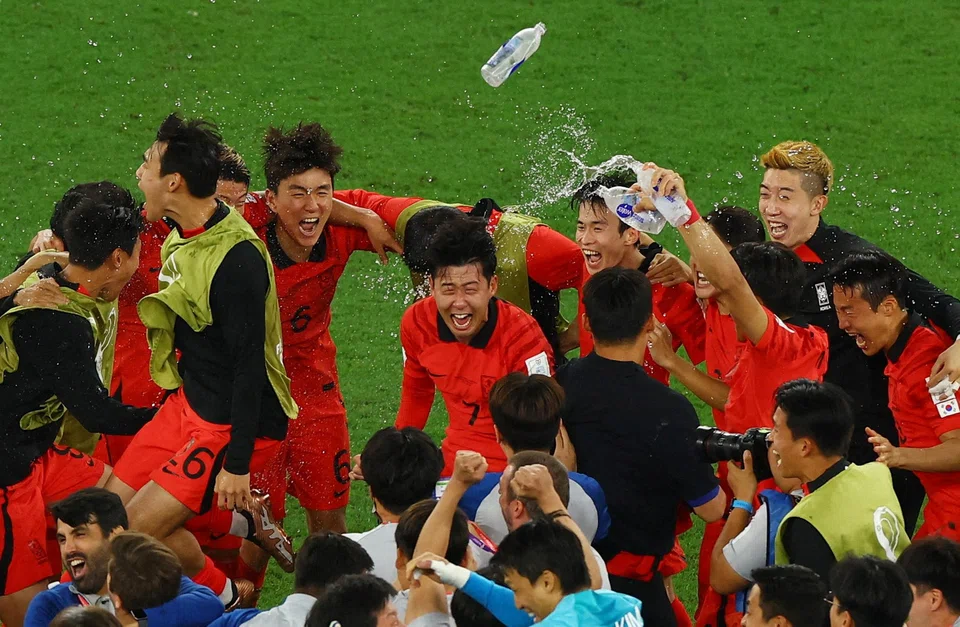
THE WORLD Cup in Qatar is now in the knockout rounds, and so far the 2022 edition of this tournament is poised to go down in football’s history books as one that will be talked about for years.
While there is inevitably a lot of focus on the controversy surrounding Qatar’s hosting of the World Cup, there has been plenty of action on the pitch that will live long in the memory of fans around the world.
There is a buffet of surprise results to pick from – Saudi Arabia’s shock 2-1 defeat of favourites Argentina, Spain steamrolling Costa Rica by seven goals, Japan’s 2-1 victories over powerhouses Germany and Spain, Morocco beating Belgium 2-0, South Korea’s 2-1 win over Portugal, and Tunisia and Cameroon edging the second-string teams of France and Brazil respectively.
Already, among the world’s top 12 footballing nations, according to Fifa’s latest rankings, only the Netherlands, England and Croatia have yet to experience upset defeats at the tournament.
Of course, upsets and surprises are not new on the world’s biggest sporting stage. Asian and African teams – which are typically regarded as underdogs whenever they face more established and successful opponents from Europe and the Americas – have proven that they have the ability to give any nation a fight at the World Cup.
My first recollection of a World Cup tournament was the 1990 edition played in Italy. I remember clearly watching Roger Milla dance around the corner flag as he celebrated Cameroon’s unlikely march to the quarter-finals with remarkable victories over Argentina, Romania and Colombia.
There’s also Saeed Al-Owairan’s dazzling solo goal in 1994 as Saudi Arabia defeated Belgium in what was a major shock. And in 2002, South Korea famously beat Portugal in the group stages before knocking out Italy and Spain to reach the semi-finals of the competition on home soil.
Japan surprised Denmark 3-1 in 2010 and beat Colombia 2-1 in 2018. Also in 2018, South Korea scored twice in injury time to send Germany – the defending champions that year – packing in the first round.
Football fans of a greater vintage would remember North Korea’s famous defeat of Italy in 1966 – the first victory ever by an Asian team in the World Cup.
However, as impressive as these victories were, they were mostly isolated and usually the sole highlights of the tournament for those countries. The main exceptions are Cameroon’s run to the quarter-finals in 1990 and South Korea’s impressive semi-final achievement in 2002.
In 1994, Saudi Arabia were eliminated in the Round of 16 by Sweden. Japan followed suit in 2010 as it lost to Paraguay while in 2018, it failed to register another win after beating Colombia. And in 2018, despite the Koreans’ victory over Germany, it was not enough to see them qualify for the next round.
Shift in balance of power
This time in Qatar, things are quite different particularly because of the sheer volume of upsets the underdogs of the tournament have chalked up. In the group stages alone, lower-ranked teams from Asia and Africa have chalked up a total of 35 points against their more illustrious opponents in Qatar. This is unprecedented.
This tide has pushed Asian and African teams to already create another record in the tournament. Indeed, five of the 16 teams in the knockout stage come from these continents. Previously, the best showing by Asian and African nations at the World Cup was in 2010 and 2002, when three teams from these continents progressed beyond the group stage.
Why this is happening now is a discussion for another day, but perhaps it is worth noting that venue appears to be a factor. In Qatar this year, in South Africa in 2010 or in Japan and South Korea in 2002 – when Asian and African teams generally performed well – these were the only times that the World Cup was staged outside of Europe or the Americas.
But there is also something to be said about how the traditional powerhouses of football are looking like a pale shadow of themselves in Qatar. Some of these teams appear disunited while their players look jaded and tired.
A few of these teams seem overconfident while their players appear distracted with their club and personal issues. Most of the traditionally stronger nations appear in desperate need of rejuvenation, having placed their hopes on their ageing players.
These trends indicate that a tilt in the balance of power of football may be happening and this year’s World Cup could well be that watershed moment.
With nearly a third of the remaining teams in the tournament coming from Asia and Africa, there is a strong probability of a good showing by some of them in the latter stages. Should that happen, we may see this shift in the balance taking place much sooner than expected.
The writer is a public affairs consultant with Hume Brophy and a former Business Times correspondent
Decoding Asia newsletter: your guide to navigating Asia in a new global order. Sign up here to get Decoding Asia newsletter. Delivered to your inbox. Free.
Share with us your feedback on BT's products and services