Transforming heritage buildings into vibrant communities
Placemakers share how long-term vision and the right partnership can breathe new life into heritage landmarks
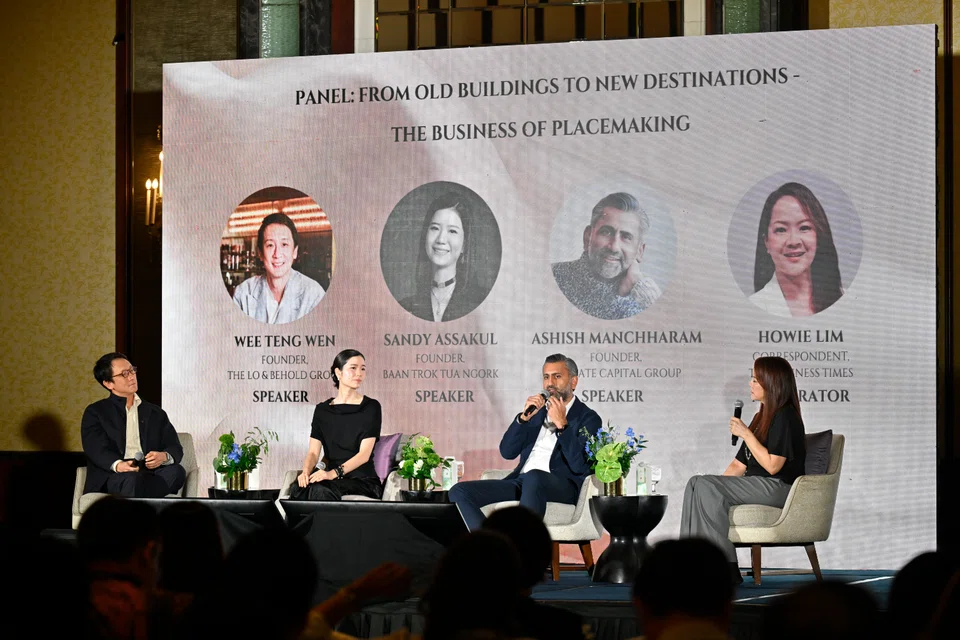
[SINGAPORE] Placemaking as a form of urban renewal has been gaining momentum in Asia.
As economic growth leads to old buildings being demolished to make way for shiny complexes, a group of leaders are rethinking the ways heritage landmarks can be repurposed into meaningful social, cultural and artistic spaces.
On Oct 28, prominent placemakers Wee Teng Wen of The Lo & Behold Group, Ashish Manchharam of Elevate Capital and Sandy Assakul of Bangkok’s Baan Trok Tua Ngork gathered at Shangri-La Singapore to share their experiences at The BTLuxe Edit - Future:Legacy symposium.
A collaboration between The Business Times and Schroders Wealth Management, the event saw business leaders and creative founders discussing the Asian luxury landscape and its future.
In Manchharam’s case, he was drawn to the former Stamford Court building, which was overlooked for renewal for decades despite its convenient location at the junction of Stamford Road and Hill Street.
In 2024, Elevate Capital acquired and redeveloped the property into the mixed-used Stamford Place. As many people associated the building with its iconic clock tower, the imagery was incorporated into its branding, design and art pieces commissioned for its interiors.

Beyond the historical connection, Manchharam, who is founder and managing partner of Elevate Capital, shared that it was important to make the venue relevant.
He said: “We asked ourselves what the neighbourhood wanted and what would bring people there, hence the service apartments, a co-working space, retail and F&B outlets.
“Our journey and story is really about the whole neighbourhood creating something for itself and bringing the history of the building into what we were doing.”

The power of “why”
For Wee, who is managing partner at Lo & Behold, good placemaking always begins with a “why”.
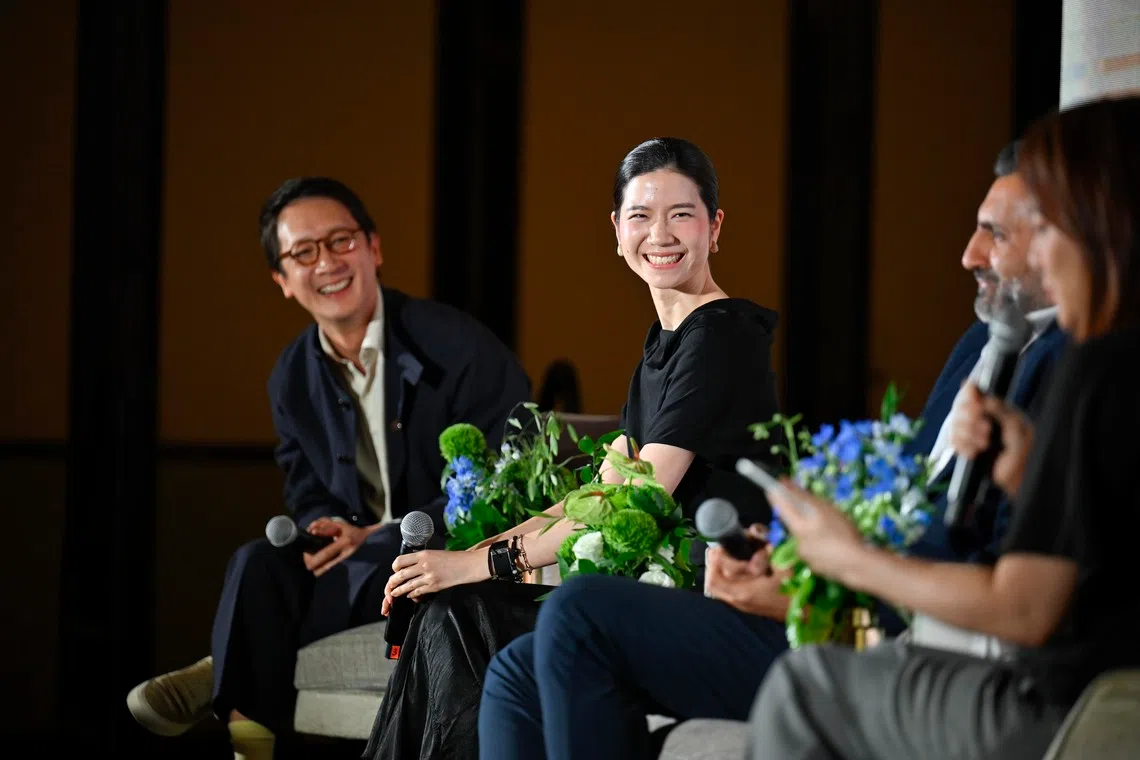
In the transformation of New Bahru from the former Nan Chiau High School, Wee recalled how he had always loved the space – the classrooms, the canteen and “everything that made a school a school”.
He saw potential in its good structure, location and soulful interiors but knew it could do more.
Wee said: “We asked what New Bahru could potentially do for Singapore. We thought how meaningful it would be for this project to help local entrepreneurs and creative businesses to find a home, to be given the best chance of succeeding in a very small and tough market and industry.”
This meant that Lo & Behold had to see itself as more than just a landlord, said Wee. “We help them with feasibility plans, connect them with designers and contractors, all with the view that we want them to win and thrive.”
For Wee, there must be three elements to successful placemaking: the power of an evocative space; an intentional and thoughtful curation of concepts and experiences for visitors; and finding the right partners who can make all of them happen.
He also emphasised that nostalgia cannot dictate a project alone; every decision must make commercial sense.
Case in point: instead of turning New Bahru’s school hall into a ballroom, it was refurbished with the same tiles from Penang and re-configured into a multi-purpose event hall with the badminton court markings intact.
The versatile space has since been used for events from padel court pop-ups to exhibitions.
Circumventing physical restrictions
Assakul, who is the fourth-generation custodian and co-founder of Bangkok’s creative space Baan Trok Tua Ngork, had to find its unique proposition when she was working on the five-storey building that used to be her great-grandmother’s home.
The Thai-Chinese said: “For me, placemaking is about creating positive alternative futures through developments and hospitality. Baan Trok is an old building and in Bangkok, old buildings are usually forgotten.
“They are less desirable, more expensive and difficult to take care of. We wanted to challenge how people can interact with old buildings in a different way.”
The over-a-century-old ancestral home is now a vibrant hub featuring four levels of F&B concepts and a rotating creative arts programme.
As its structure was operationally challenging for restaurants, and it was located off the main Chinatown street with no on-site parking and little footfall, Assakul knew they had to think differently in order to succeed.
She said: “We decided to be good creators through four core values: originality, authenticity, owner involvement and progression.”
There are no restaurant chains in Baan Trok, only one-off F&B concepts. “If you want to try our Mexican eatery, this is the only place,” said Assakul, who is on-site daily with her three siblings to feel the ground and to ensure the programming stays relevant and exciting to its market.
She said emphatically: “We want everyone to walk into the building and feel the heart and energy of each concept and partner.
“Baan Trok is a long game. We want to be able to sustain the building through generations, and so we’re always looking ahead.”
Manchharam agreed, recalling how his team navigated unexpected architectural challenges in their 21 Carpenter hotel project that resulted in many rounds with the authorities on what could or couldn’t be done.
He said: “It took us a long time but once it was done, it was extremely unique. You won’t be able to find a building like this anywhere else and that creates value because people are going to come and hopefully, they’ll enjoy it.”
Decoding Asia newsletter: your guide to navigating Asia in a new global order. Sign up here to get Decoding Asia newsletter. Delivered to your inbox. Free.
Share with us your feedback on BT's products and services