

‘I gave up my dream to realise the dreams of others’: Cambodian law graduate-turned-NGO co-founder
Smiling Gecko Cambodia shows that holistic, regenerative approaches can be used to create lasting impact
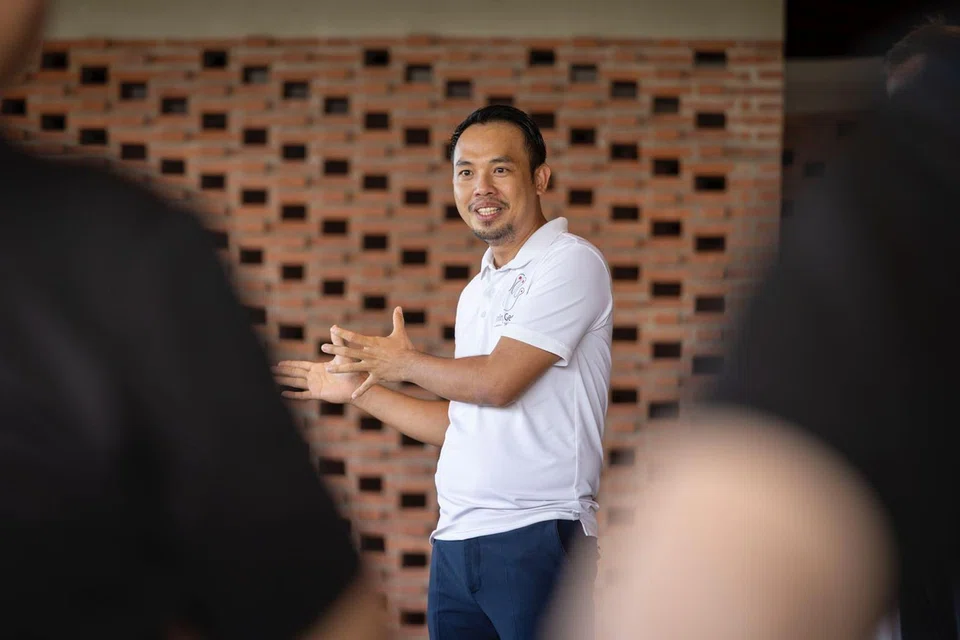
[SINGAPORE] After Ngon Sokleap – or Leap, as he is known – graduated from law school in Cambodia, he was offered financial support to further his studies in Australia.
It was quite an opportunity for the English-speaking young adult, whose family of five had, in the early 2000s, moved from his childhood village along the Mekong in Kampong Cham to Phnom Penh in search of work.
His parents, small traders of woven bamboo rice-storage containers, saw their source of income disappearing as plastic products increasingly replaced traditional materials.
The family became food vendors in Cambodia’s capital and could only afford to send one child to secondary school. Leap, being the youngest of three, was “the chosen one”.
Later, he went on to study law on a government scholarship at the Royal University of Law and Economics; he then interned at the Khmer Rouge Tribunal and worked at The Cambodia Daily newspaper.
In 2013, a promising new life to do his masters in the University of Western Australia in Perth, beckoned. But another calling came.
A different turn
Leap was introduced to Swiss photo-artist Hannes Schmid, who founded Smiling Gecko Switzerland the year before as a charity to raise funds for vulnerable families in Cambodia. Schmid had hit a wall trying to meaningfully sustain help for the constant stream of poverty-stricken slum-dwellers and needed a reliable local partner.
“We shared the belief that sustainable change required more than emergency aid,” recalls Leap. “It needed education, skills, jobs and opportunities for self-reliance.”
Schmid also convinced him that he would learn more by staying in the country and helping Cambodians immediately.

So Leap said “Okay”.
The following year, the duo co-founded Smiling Gecko Cambodia (SGC) as a non-governmental organisation and acquired its first piece of land in Kampong Chhnang, about 90 minutes from Phnom Penh.
They started a farm and brought over 12 families who were living in the city’s dump site.
“The idea is that instead of sending them home and giving them fish, pigs or chicken and hope that they grow and so forth, we put them together in the same place so there was oversight, guidance and training.”
Another reason was that aid recipients from the dump site often tap into different pools of support without any intention to change their own lives.
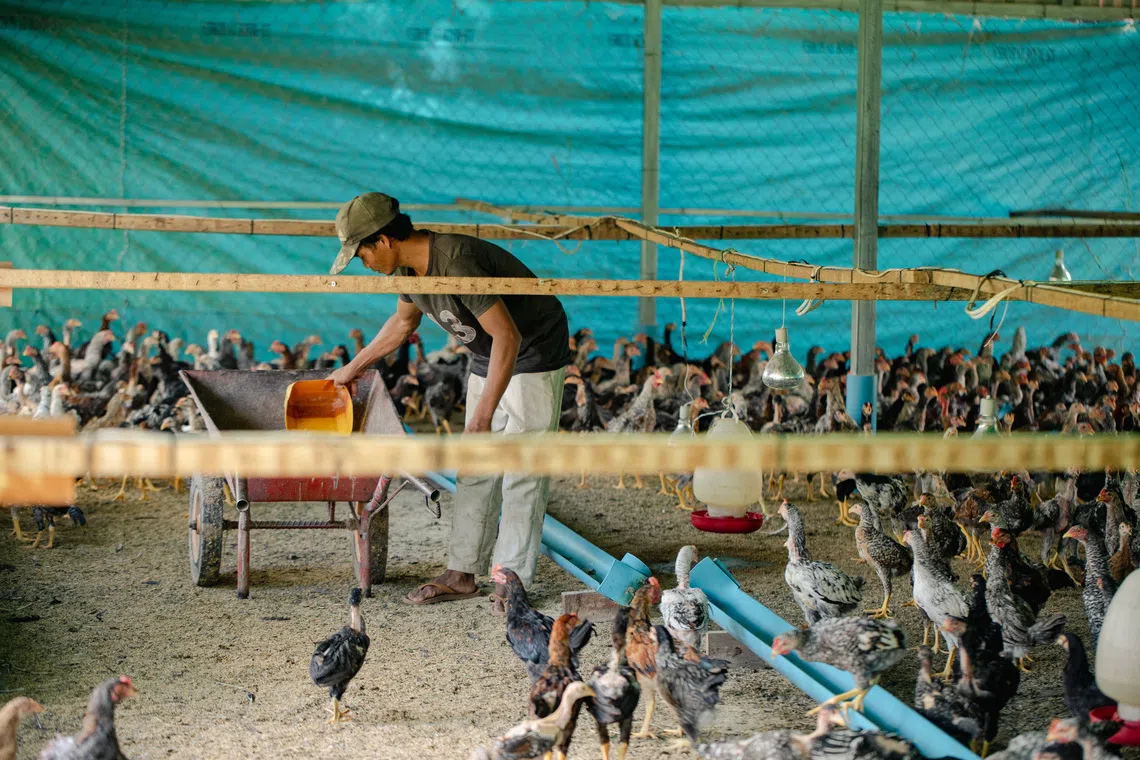
At SGC, the families received husbandry training and resources, as well as help to sell the animals they reared and the vegetables they grew. They were also taught financial literacy so they do not squander their money on, say, a motorbike “because the neighbour got a new one”.
Those who squirrelled away enough savings to build their own home and farm outside were free to leave and become SGC’s contract farmers, while their kids continued attending school on campus.
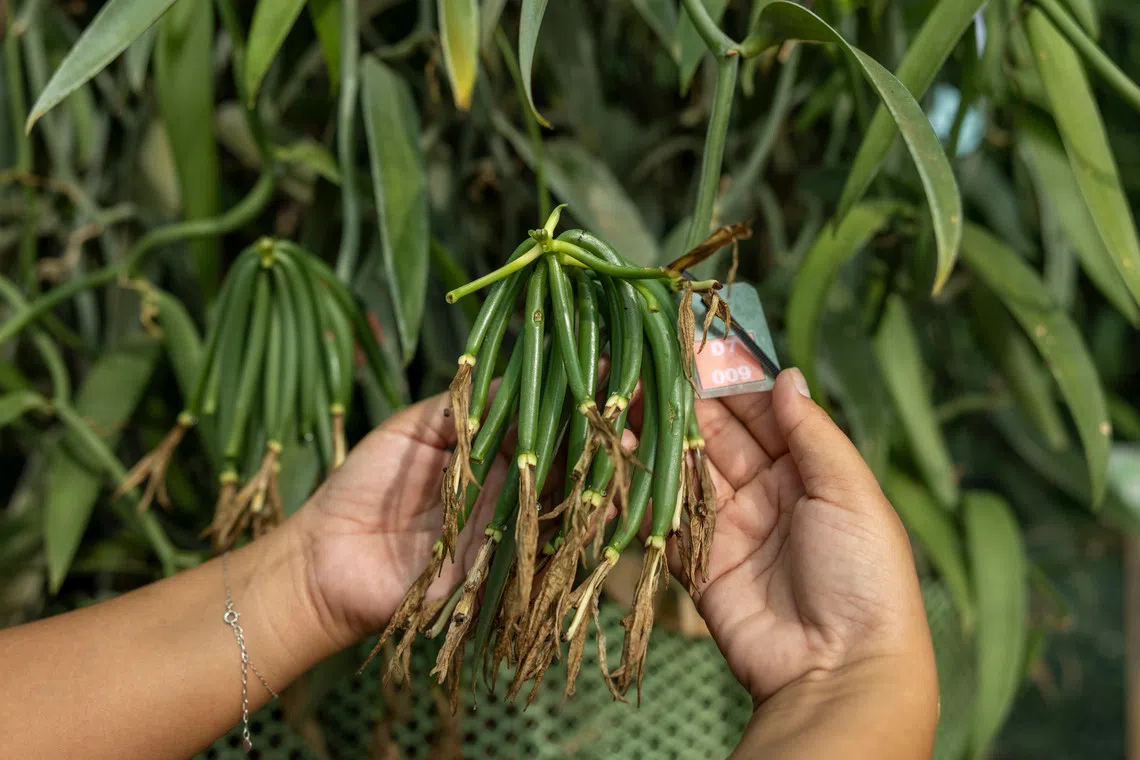
Today, SGC is mostly working with those living in the surrounding countryside, where many are directly supported, employed by or sponsored through SGC’s projects.
Leap says: “A majority of rural Cambodians have a piece of land and call themselves farmers, but they don’t know how to farm.”
Meanwhile, the campus grew.
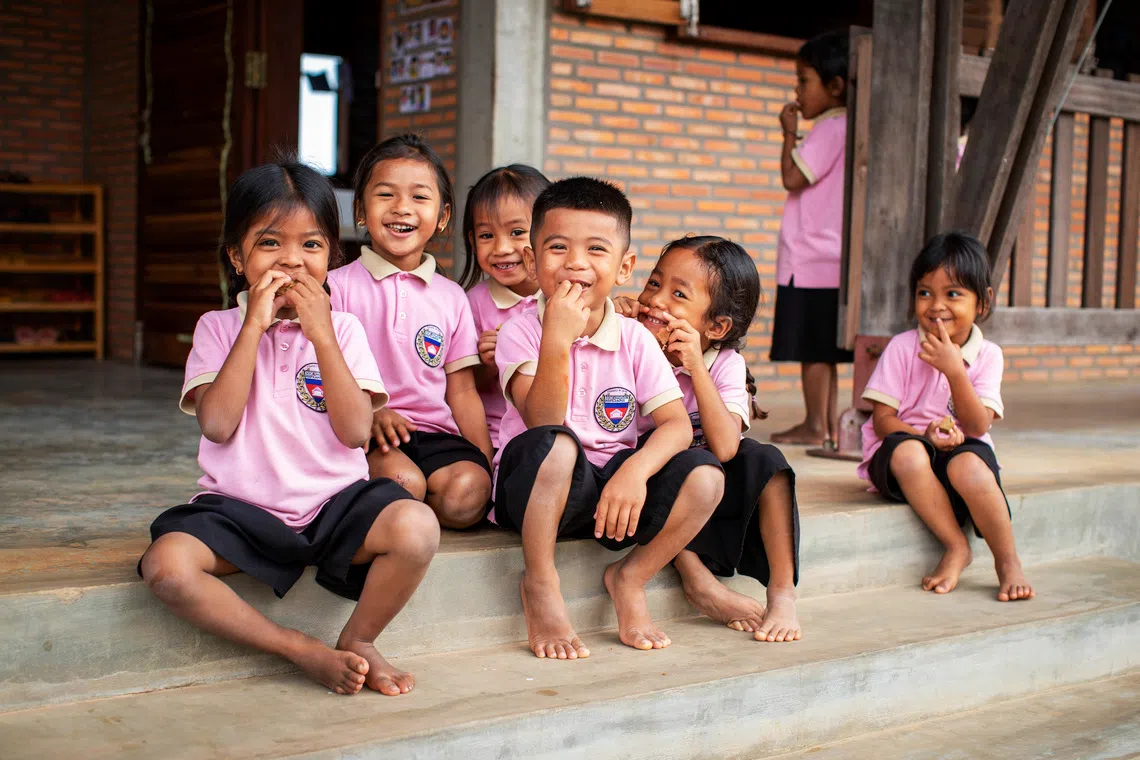
Education is at the heart of SGC, with more than 600 children aged three to 18 studying at its school, where both Khmer and English are taught. There are also more than 400 people working in some 20 roles, ranging from farming and food production to carpentry, metalwork and hospitality.
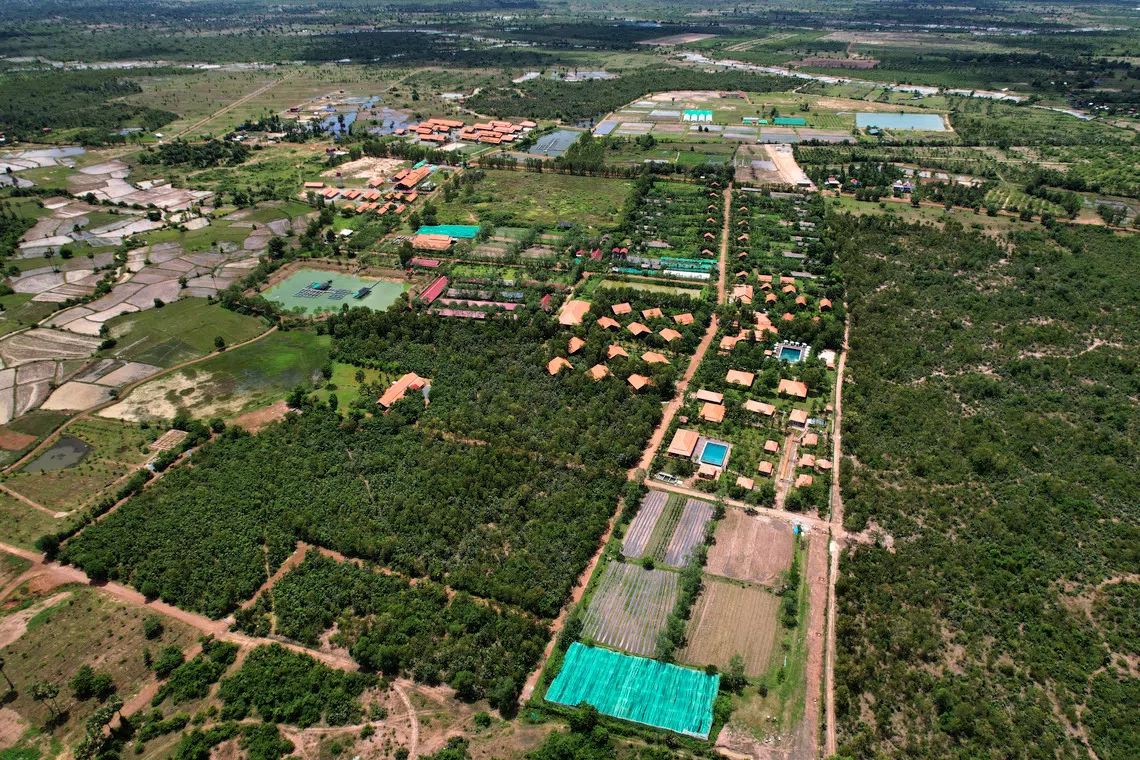
SGC’s grounds now take up 150 hectares, and include breeding stations for fish, chicken and cattle and a multi-faceted agricultural operation that feeds its schoolchildren and people.
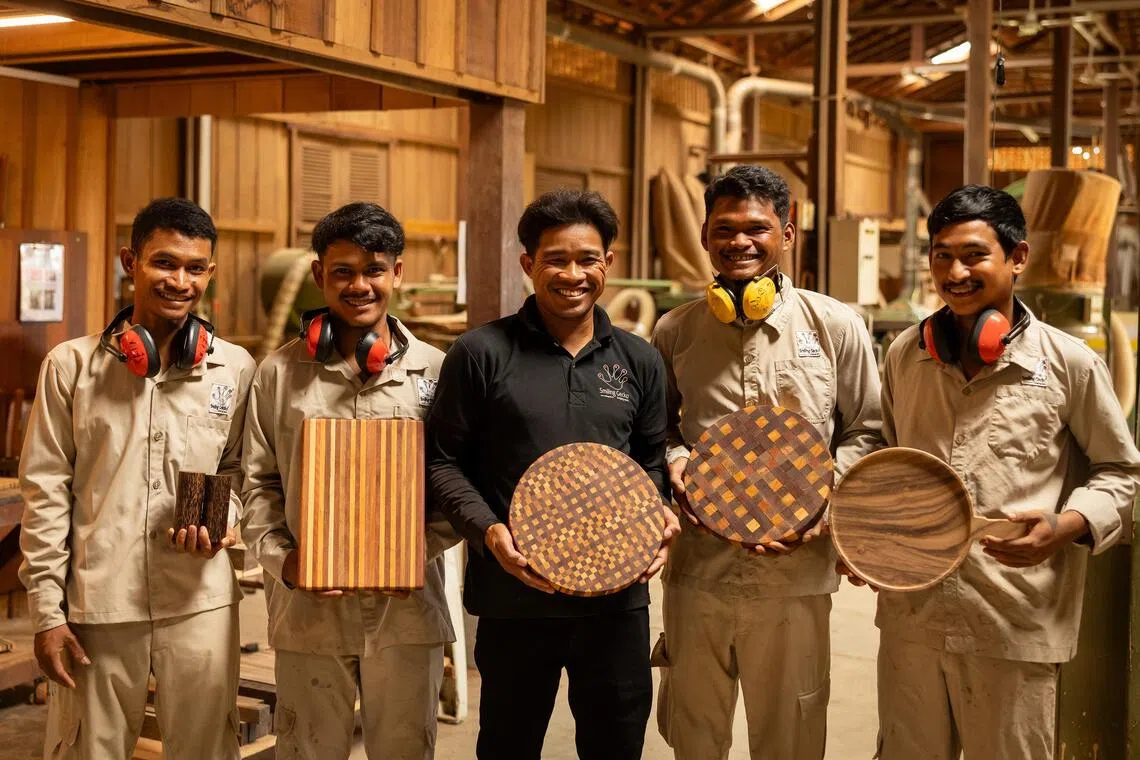
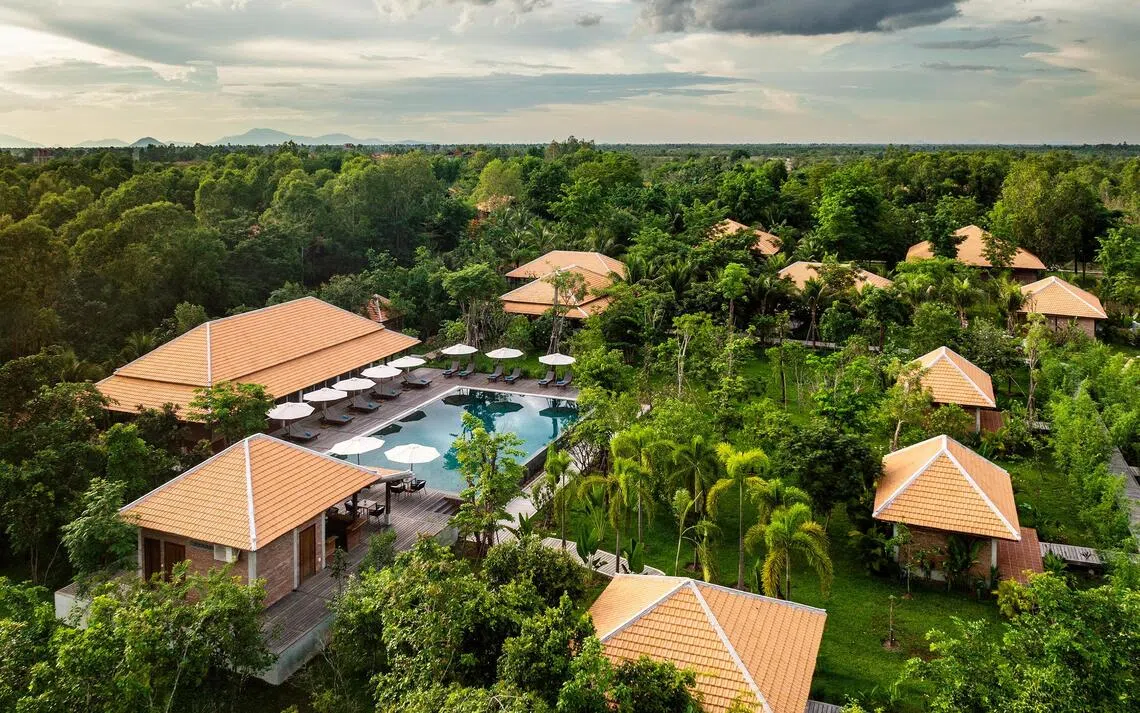
Its carpentry workshop makes almost all the furniture at SGC’s 34-room luxury Farmhouse Resort & Spa – which is highly rated on online booking sites – while its bakery and butchery supply to hospitality businesses like the ultra-luxury Rosewood Hotel and Aqua Mekong cruise ships.
“We make the best salami,” adds Leap, SGC’s CEO, with pride.
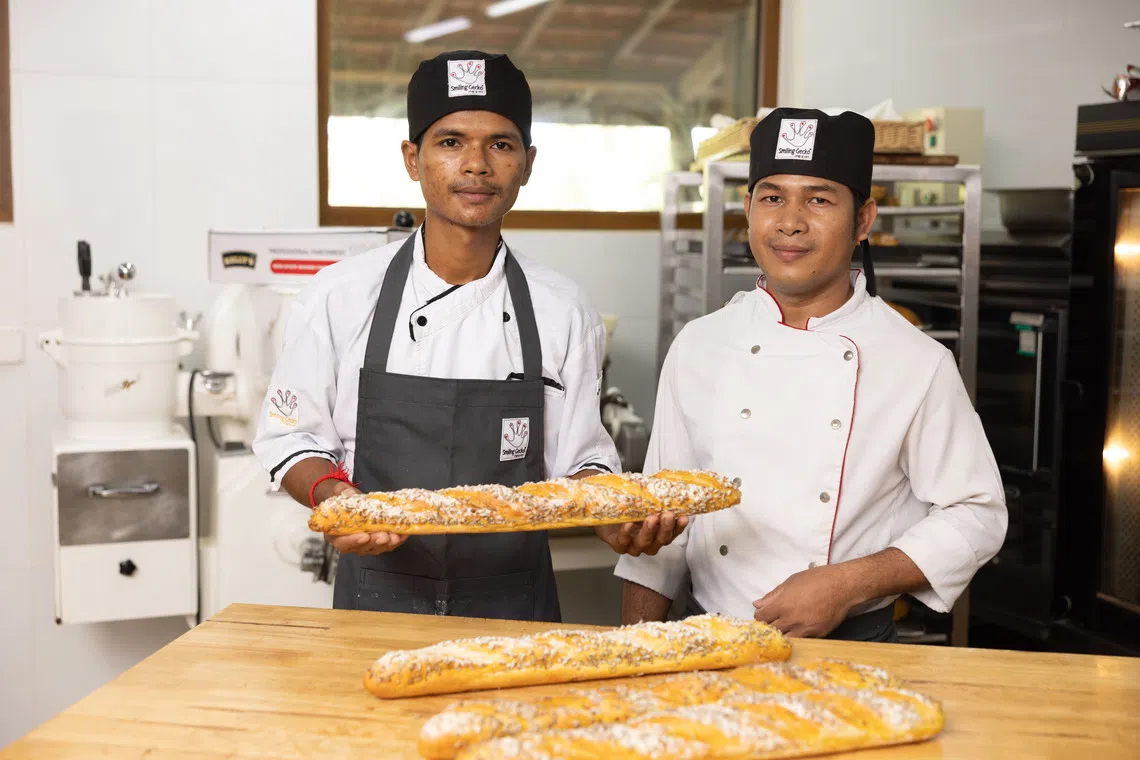
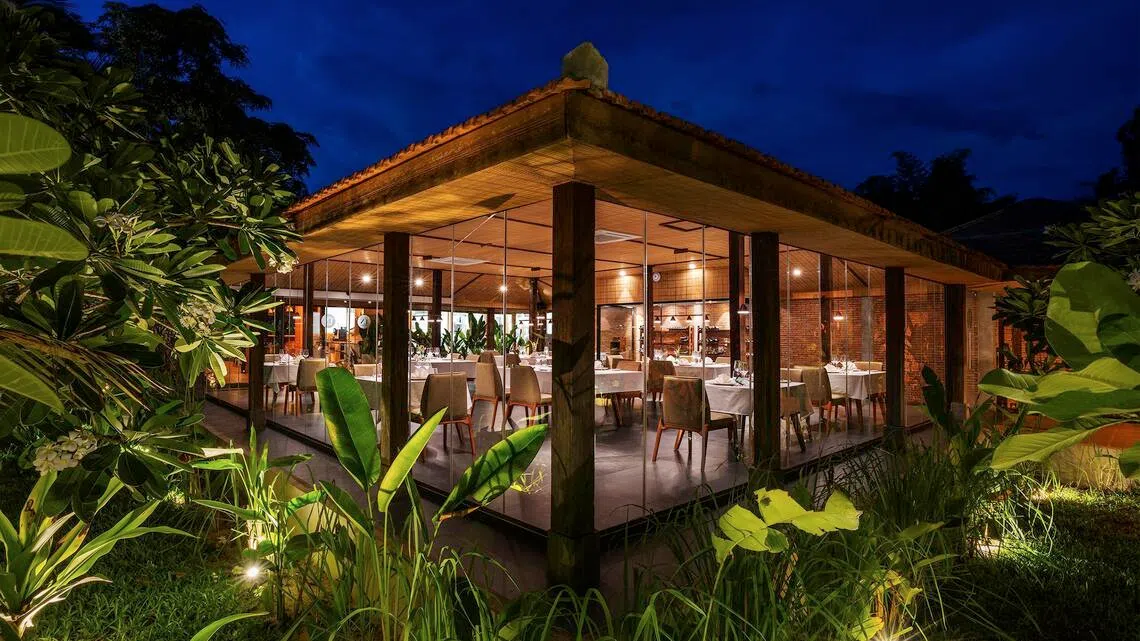
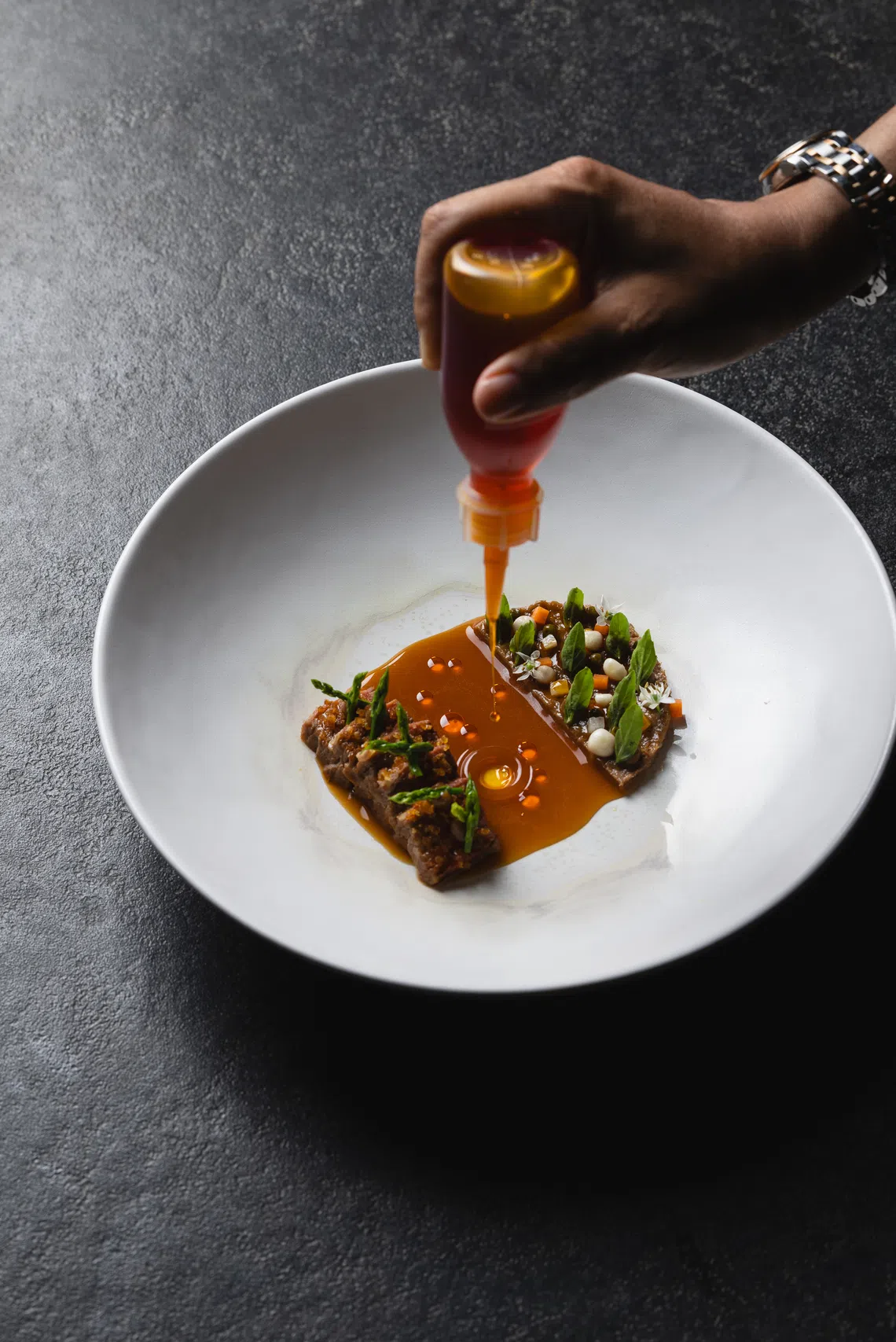
These manufacturing sites also form the cornerstone of professional education and vocational training for young adults. Adding to the mix are its fine-dining Restaurant UN and cultural centre for traditional Khmer music, complete with recording studios called The Gong.
One vision, many parts
In its entirety, the SGC campus combines education, vocational training, agriculture, environmental systems and enterprise into a sustainable ecosystem that uplifts vulnerable local communities.
Last year, Smiling Gecko Singapore was incorporated as a non-profit company to raise awareness, mobilise funding and build collaborations with individuals, organisations and businesses across Asia.
Since then, it has hosted two academic and two corporate retreats from Singapore. They include participants of the National University of Singapore’s Distinguished Senior Fellowship Programme, who worked with the Cambodian team and got “an honest picture” of rural Cambodia and how the campus’ circular community model works.
“The most important thing is that they see a different reality, one that contrasts with how they have spent their own lives,” says Leap. “It’s an eye-opener on what life is like in Cambodia and what it takes to run a project that can actually sustain itself.”
Still, the work is far from done.
Every year, there are more than 10,000 room nights to fill at its resort, while economic problems and trade and tourism disruptions following the Covid pandemic, the border conflict with Thailand and high fuel prices are making it costly to run operations.
“Social businesses must break even or be profitable so we can contribute to education, which we provide nearly free to these poor community children,” Leap emphasises.
Besides, a self-sustaining ecosystem should reduce dependency on aid while generating long-term impact.
That impact will continue to reach further. There are plans to enrol an additional 150 children in SGC’s school in the next two years – on top of more vocational training. This means it needs more teachers and more resources.
“So I want to tell people what we’re doing there,” says the 38-year-old father of two with passion.
Many of Leap’s friends are now lawyers, some of them working in the justice department. Indeed, his own life would have turned out very differently too, had he gone to Australia and built his future there.
“Yes, I gave up my dream. But by staying, I have had the opportunity to realise the dreams of many others – from our students and trainees to their families,” he says.
“We cannot change the whole country, but we want to build a model which others, locally and internationally, can also look at.”
Decoding Asia newsletter: your guide to navigating Asia in a new global order. Sign up here to get Decoding Asia newsletter. Delivered to your inbox. Free.
Copyright SPH Media. All rights reserved.
TRENDING NOW

IOI Properties and CapitaLand Investment closer to acquiring One Raffles Place in joint bid

OCBC sheds S$8 billion in value as shares close nearly 6% down; analysts cautious on banks

Grab CEO’s wife Chloe Tong on life with Anthony Tan and finding her purpose

Crystal Jade closes four more outlets, cuts 120 jobs ahead of proposed sale

