

Walt Disney: creative genius, terrible businessman
New York
HERE is something that might surprise you: Walt Disney, that icon of American ingenuity, was in financial straits through most of his career. You probably thought he would have been a business genius - a model for others to study. But Disney was an atrocious businessman, constantly running his company into the ground. At the same time, though, he was a corporate visionary whose aversion to typical business practices led to the colossus that the Walt Disney Co became.
Before he was even old enough to legally sign the incorporation papers, Disney wrangled a few friends together, raised some cash and started Laugh-o-Gram, a studio in Kansas City, Missouri, that made comic cartoon shorts based on fairy tales. But he seemed less interested in making money than in having fun, and the company promptly went bankrupt, sending Disney, by then 21, to Los Angeles to look for work in the film industry.
He was saved when a New York distributor picked up a short he had made, featuring a real-life girl named Alice who lived in a cartoon world. Things went swimmingly for a while, even when the Alice films ran their course and Disney had to invent a new hit character, Oswald the Lucky Rabbit. But Disney was both financially reckless and egotistic. His distributor doubled-crossed him, surreptitiously poaching his animators, who bristled at his highhandedness. Since the distributor owned the rights to Oswald, Disney, then 27, had to start from scratch again.
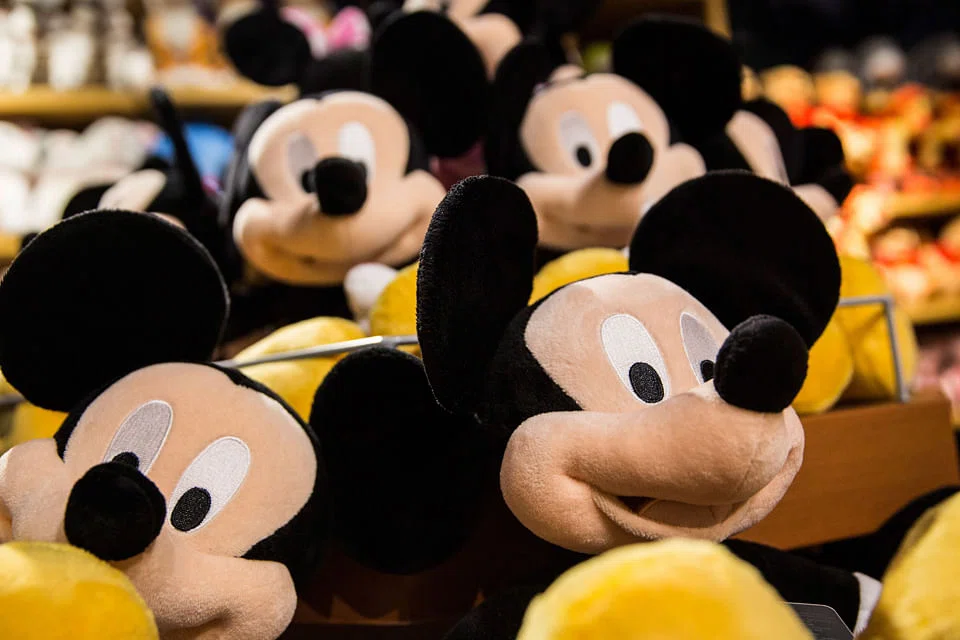
He replaced Oswald with Mickey Mouse, an instant success. But as his creativity continued to flourish, his business acumen flagged. Even Disney's older brother Roy O Disney, who oversaw the infant studio's finances, said his brother would have been constantly fleeced were it not for him. In the case of Mickey Mouse, he was. A New York businessman named Pat Powers finagled Disney into contracting for his sound services - with onerous terms. Even though the Mickey Mouse cartoons did well, by the time Disney paid Powers his enormous cut and the studio's expenses, there was very little left. Only when Disney persuaded Columbia Pictures to buy the distribution rights for a second series of cartoons called Silly Symphonies did he get a steady cash flow. In time, Columbia also secured from Powers the rights to the Mickey cartoons.
Then Disney placed a huge and highly risky bet on feature animation. Snow White was four years in production and cost over US$2 million (US$33.5 million in today's dollars), most of it borrowed from Bank of America against the receipts of the cartoon shorts. The gamble paid off. Snow White earned nearly US$7 million (US$117 million today), most of which he immediately sank into a new studio headquarters in Burbank, California, and a slate of features.

But as hard as it may be to imagine now, these new films - Pinocchio, Fantasia and Bambi - were expensive duds, as World War II damped the European market and audiences' interest in feature animation waned. The losses were catastrophic - US$1.5 million on Pinocchio alone, or more than US$25 million in today's dollars. Owing millions to Bank of America, the company was once again in financial trouble, and it survived the war only by forgoing big animation and instead producing training films and propaganda for the government.
And yet for all his financial difficulties, Disney resisted compromise. And though Disney's capriciousness and constant reinvention of his company drove his brother and others crazy, it also kept re-energising the Disney studio and led, in 1955, to Disneyland - a triumph that at last put the company on solid financial footing. Walt Disney, at his core, was an artist who tossed out the corporate playbook and operated, as artists usually do, by inspiration. In the end, the company flourished precisely because Disney was such an indifferent businessman. NYT
Share with us your feedback on BT's products and services
TRENDING NOW

Ex-Nvidia CEO Jensen Huang carried a secret for more than a year. It led to his downfall

South-east Asia has lost Nvidia’s best salesman

Demand, tech capabilities position Apac and AI as Skyscanner’s next growth frontiers: CEO Bryan Batista

Jensen Huang discusses comeback as Nvidia CEO with allies: report

