

Parag Khanna
Author & Global Strategist
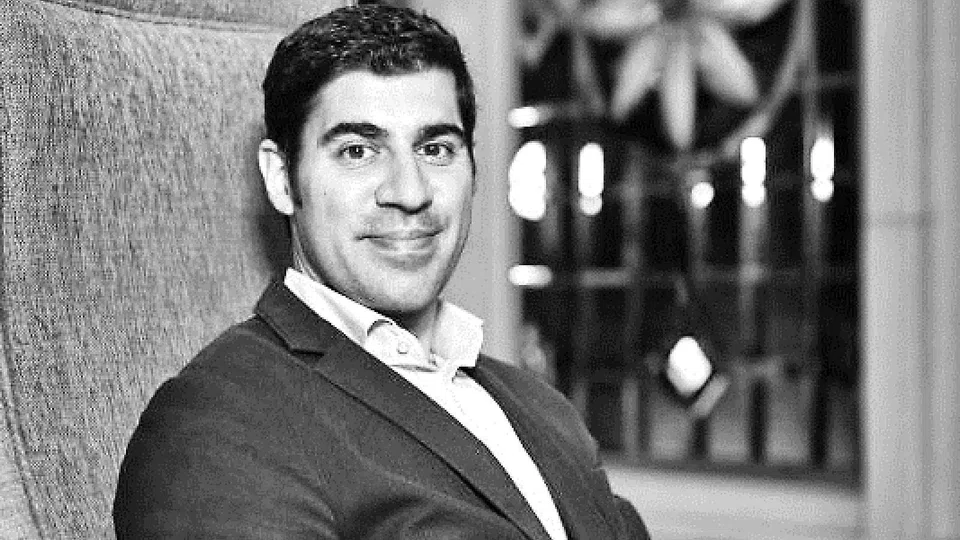
Redefining the world order isn't usually on the to-do list of ordinary citizens but it's all in a day's - or book's - work for author, global strategist, geopolitical commentator and all-round deep thinker Parag Khanna, whose views on the matter are sought by political scientists, policy-makers and fellow intellectuals.
Mr Khanna, 41, is an archetypal postmodern authority on geopolitical shifts and what he calls the new, new world order. He made an impact in 2008 with his bestselling first book The Second World, about the battle among three established superpowers (the United States, the European Union and China) for influence in natural resource-rich second-tier countries around the globe.
Mr Khanna showed up early on the geopolitical radar and had never dropped off it. He is founder and managing partner at strategic advisory FutureMap and his just-published sixth book The Future is Asian advances a theory about Asia (and not only China) at the leading edge of economic and technological progress in the 21st century.
As might be expected of someone with Big Ideas who also has a habit of courting controversy and challenging the conventional wisdom at every turn, his new book presents a persuasive vision of Asia's collective future - with Singapore as its de facto capital. It's enough to make him a blue-eyed boy among the Lion City's ruling elite.
Mr Khanna, who holds degrees in diplomacy from Georgetown University and a doctorate in International Relations from the London School of Economics, is a TED Talk regular and serial globe-trotter whose travels have taken him to more than 100 countries. He has worked at various think tanks including the Brookings Institution and the Council on Foreign Relations, been a research fellow at the Lee Kuan Yew School of Public Policy and hobnobbed with world leaders. Among other gigs, he writes opinion pieces for a variety of major publications. Not least of all, he is one-half of a Next-Gen, Singapore-based power couple: wife Ayesha is a software engineer-turned-A.I. entrepreneur whose firm provides advice on topics like smart cities and fintech.
In between mouthfuls of tiger prawns and chicken salad at the 1880 club, Mr Khanna waxed geopolitical on his personal journey, the rise of Asia, living in Singapore and the benefits of being self-employed.

Your new book emphasizes the growing importance of Singapore and ASEAN in the emerging world order.
It's been about 500 years since Asia was fully Asian, when caliphates, dynasties and empires ruled from West Asia to East Asia. The cycle was broken first by colonialists and then the Cold War. We have been China-centric in good ways and bad. If you look at Asia right now, you have a continent with just under five billion people - only 1.5 billion are Chinese. There is a fuller picture of Asia than meets the eye and the rise of Asia doesn't mean the rise of only one power - it's multipolar. China represents the third of four waves of Asian growth (Japan and the Asian Tigers being the first two); South- and Southeast Asia will follow. By 2014 ASEAN was getting more foreign direct investment (FDI) than all of China. There is a growing confidence that Asians have in investing in each other and ASEAN will become the market maker for Asia.
Your connection to Singapore extends beyond an admiration for its system of technocratic democracy: you've advised various government agencies and became a Singapore citizen two years ago.
It's more about Singapore than about me. It's fair to say I could have chosen anywhere to live but it's not abnormal to take for granted what Singapore offers. I took a very analytical approach. I was writing things about Singapore before I ever set foot here - now that I live here, I'm even more convinced. It ranks in the top in terms of quality of life. The only difficult part of moving around constantly is planning the schools your kids go to.
Speaking of kids, you were a young boy when you experienced a geopolitical awakening.
It goes back to the collapse of the Soviet Union when my parents took me to Berlin. I was 12 when the Berlin Wall fell (in 1989) and I already knew what I wanted to do. I sat on the remains of the wall, hacked away and gave pieces of it to my eighth-grade classmates. I was hooked on politics and adventure and later on I was an exchange student and backpacked around Europe. When I graduated in 1999 there was only one job I wanted: to work in New York at the Council on Foreign Relations. I went back to coaching tennis and before the summer was over, they had a position open. A lowly job in a prestigious think tank making US$22,500 a year wasn't what my parents had in mind for my career but now I think they're perfectly happy with me.
You met one of your mentors during your stint in New York. He later recruited you to work for him.
I was assigned to be a researcher for General Stanley McChrystal who was there on a military fellowship. He was a future legend of the global special operations community (and subject of the 2017 film War Machine, starring Brad Pitt). We bonded, running in Central Park, weightlifting in the gym, sleeping on aircraft carriers. He was tapped to run the Joint Special Operations Command (JSOC) - the most secret military unit in the world. Three years later I joined him and got to do things no civilian ever got to do, all because of sticking to my guns and being inflexible on getting that one job.
How did you transition from political analyst to bestselling author?
My epiphany came when John Kerry lost the presidential election in 2004. I was working at the Brookings Institution - the brain centre of the Democratic establishment and they lost that election. This is when you feel you're being pulled by forces beyond your control - I was young enough to save myself. The day Kerry lost, I literally started work on my book proposal and sold it three months later. I got a big enough advance that Random House funded my travel for years. The book did well and I asked myself: do I want to go back to being a junior, junior, junior guy in a think tank?
You enjoy the freedom and flexibility of being your own employee, consulting, writing and giving lectures.
Only by having total independence from your client can you be independent and not have any conflict of interest. My title is Unaccountable Advisor: I give you advice, you take it or leave it. I give advice based on the best analysis, not because I have skin in the game. I shifted from associating with think tanks and major institutions; now, I control everything and it's a luxury I can't give up. I decide what I write, when I write, what governments I work with. My next book is called Citizen of Everywhere and it will be completely different from anything I've done before. One thing hasn't changed: my dad still edits everything I've ever written.
Share with us your feedback on BT's products and services
TRENDING NOW
Motoring tycoon Peter Kwee is back in court: Here are his previous legal battles

Demand, tech capabilities position Apac and AI as Skyscanner’s next growth frontiers: CEO Bryan Batista
Beyond the greenback, Vietnam’s big borrowers turn to Asian-currency bonds
Nvidia’s outlook cut to stable by Moody’s on governance concerns

