When is scotch worth US$36,000? Take a look at the packaging
The bottle has a part in ‘creating a once-in-a-lifetime experience’, says Glenmorangie CEO Caspar MacRae

IN NOVEMBER 2024, ceramicist Peter Pincus walked into his studio in Rochester, New York, hugged his wife and business partner Laurie, burst into tears, and asked: “What did I do to our family?”
The project that brought him this close to a nervous breakdown was just getting out of the prototype stage. More than 25 attempts had failed before the stars aligned, and he produced a vessel good enough to send across the Atlantic to the client in Scotland.
In the end, it took a total of three years to complete the project, which would ultimately involve a production crew of 15, including scientists who developed techniques for firing large ceramics with complex three-dimensional curves on both the front and back.
The final product is essentially an unfolded barrel, encompassing an abstracted version of Fingal’s Cave in Staffa Island, in the Hebrides.
The project that consumed three years of the Pincuses’ lives was, to oversimplify only a little, a package for a bottle of whisky.
Glenmorangie, a Highlands distillery founded in 1843, released Glenmorangie 50 Years Old in September, housed in the Pincuses’ vessel and priced at 30,000 euros (US$33,450).
Its ceramic box is one of dozens that whisky distilleries have commissioned for their most expensive products. Each box can easily cost thousands of dollars to produce, which means that total packaging costs for a limited-edition run can surpass US$1 million when brands commission 149 boxes or more.
Such extravagance can elicit eye rolls from whisky snobs, who like to think of themselves as caring only about the quality of the liquid, with the packaging being entirely superficial. But the distilleries would not be spending this kind of money if they did not think they were getting a return on it.
The category of very, very old scotch whiskies – those aged in barrels for half a century or more – has exploded over the past 15 years or so, with sites such as Whisky Marketplace offering a range of more than 100 options across 50, 55 and 60-year age expressions.

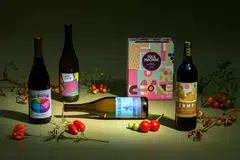
Glenmorangie, however, had never released anything this old until this autumn and, as you would expect from a Scottish distillery owned by French luxury behemoth LVMH Moet Hennessy Louis Vuitton, it wanted to make a splash.
The aim was not to make lots of money.
The bottling isn’t a big driver of profits, says Glenmorangie CEO Caspar MacRae, once you take into account “all the investment and time and effort that’s gone into it”. Rather, the aim was to “generate awareness and desire for the wider brand”.
“We are creating a once-in-a-lifetime experience,” he adds. “Consequently, the packaging is important.”
MacRae’s intuition is borne out by auction results.
“If you have a really great whisky and really fantastic packaging, then you end up with something which is much greater than the sum of its parts,” says Jonny Fowle, the global head of whisky at Sotheby’s.
“The price point that 50-year-olds used to command was based largely on their rarity.”
Now that those bottles have become much more common, distillers have spent the past seven years or so making their old whiskies stand out in other ways – primarily via their packaging.
There are many reasons a collector might prefer a 50-year-old Glenmorangie costing 30,000 euros to a 50-year-old Glenburgie priced at 1,700 euros, but the fact that it comes encased in a unique work of art (each of the Pincuses’ vessels is subtly different) may be a significant one of those factors, and indeed helps to make the two bottles less directly comparable.
The result has been the whisky equivalent of a Fisherian runaway, the evolutionary process whereby animals such as peacocks develop seemingly maladaptive exaggerated features in a race to one-up each other.
The Macallan started the arms race in 1986, when it first positioned its 60-year-old 1926 bottling as a £5,000 (US$6,664) ultra-premium experience; elaborate packaging started arriving in the early 2000s.
The reaction at other distilleries was “we’re just going to get left behind” unless they followed suit, says London-based packaging designer Alexis Burgess.
Biologists hypothesise that the peacock’s unwieldy tail feathers might serve a signalling function – that they don’t just attract mates, they also demonstrate the presence of good genes and outsized vigour.
Bottles of scotch are similar: Each distillery wants to outdo the last on the design front, signalling that it’s willing and able to spend many years and thousands of dollars just to construct the package that the liquid is presented in.
The message: We wouldn’t do this unless the whisky were something extraordinarily special, therefore the packaging alone should reassure any potential purchaser that they’re getting their money’s worth.
Among all very expensive bottles, scotch in particular lends itself to such extravagance.
Extremely old bottlings generally come in very small quantities; unique bottles are common, often sold at the biennial Distillers One of One auction in Scotland, while the 149 bottles of the Glenmorangie place it at the upper end of the range.
As a result, time-consuming, handmade workmanship starts becoming tenable in a way that wouldn’t be possible for, say, Remy Martin, with its Louis XIII cognac, which requires Baccarat to produce an estimated 15,000 decanters annually, and which is designed to be extraordinarily consistent from year to year.
No scotch can boast the combination of price, volume and recognisability seen in Louis XIII cognac. It retails for about US$4,000 a bottle, is basically unchanged since 1874, and markets itself admirably from its perch on the top shelf of thousands of bars around the world.
The most expensive blended whiskies, which look for consistency from year to year, top out at about US$3,500, are made in even smaller quantities and haven’t been around nearly as long. Royal Salute 62 Gun Salute was launched in 2010, Chivas Regal The Icon, in 2015.
The fact that scotch whisky distillers have a very broad line-up can make it harder to convey that one bottle of Balvenie or Macallan might be worth 1,000 times more than another. A bottle of Johnnie Walker Black, described by Christopher Hitchens as “the best blended scotch in the history of the world”, is about US$30.
So, while a high-end cognac naturally emphasises a century and a half of continuity by trying its hardest to be the same every time, high-end scotch emphasises how unique and special it is.
As MacRae says, even if he had a second cask of 50-year-old whisky lying around, it would taste very different from this one, and precisely because many collectors would want both, it would make sense to clearly distinguish the two.
Ostensibly, the packaging surrounding the whisky comes “free” with the bottle, and the thing that collectors are paying for is the liquid. Put that same liquid in a milk bottle, and you’d think it would remain hugely valuable.
That theory, says Burgess, has “proven to be completely untrue again and again and again” – in large part because, per Sotheby’s Fowle, collectors “buying with their eyes is pretty common when it comes to these kind of price points”.
If you’re spending tens of thousands of dollars on any kind of object that’s going to go on display in what is surely extremely expensive real estate, you want it to look good.
Glasgow-based John Galvin, the other go-to designer of whisky packaging, says his pieces will often end up in “a super yacht, a New York penthouse or a stately home”, and be valued as decoration in a way that expands the number of potential buyers.
“We’ve blown open the net,” he says. “Instead of it just being whisky collectors, now art collectors collect our work” – including Macallan’s US$190,000 Time: Space and an 85-year-old Glenlivet priced at £125,000.
To be clear, these whisky connoisseurs aren’t necessarily putting a dollar value on the packaging. It’s not like the box without the whisky has any financial value on its own.
But once the whisky is drunk, the same package – sometimes even with the same bottle – can remain in place with a different liquid inside. That has non-financial value to people who like to live with beautiful objects.
As Laurie Pincus puts it: “It’s a piece of fine art that you can put another piece of fine art into.” Two arts are better than one!
Or, as Burgess says: “A bad whisky in a great piece of packaging is still a bad whisky. But a great whisky in a poor piece of packaging is just a wasted opportunity.” BLOOMBERG
Decoding Asia newsletter: your guide to navigating Asia in a new global order. Sign up here to get Decoding Asia newsletter. Delivered to your inbox. Free.
Share with us your feedback on BT's products and services