

Why golf’s Singapore Open matters more than ever
The sport has often been viewed as exclusive here, but that perception is gradually changing

[SINGAPORE] The 2026 Singapore Open presented by The Business Times golf tournament was held with conviction, confidence and momentum.
Played at Sentosa Golf Club, this year’s edition – held from Apr 23 to Apr 26 – reminded us that Singapore is not merely hosting a golf competition. It is nurturing a complete golf ecosystem that connects elite competition, grassroots participation, industry growth and international relevance.
And that is something worth celebrating.
Since its inception in 1961, the Singapore Open has grown into one of Asia’s most prestigious championships, helping to lay the foundations of professional golf in the region.
It was part of Asia’s earliest professional circuit and has evolved across decades to remain relevant, resilient and respected. Today, it stands proudly as Singapore’s flagship golf tournament, attracting top global talent and commanding international attention.
This year, that legacy was refreshed. As part of the International Series on the Asian Tour, the Singapore Open offers pathways not just to regional success, but to the highest levels of the sport. This includes two qualifying spots for The Open Championship – one of golf’s most coveted Majors – at Royal Birkdale in the United Kingdom in July.
Stage for world-class competition
The return of elite competition to Singapore reflects growing confidence in the country as a global sporting hub.
With a US$2 million purse and a world-class field, the Singapore Open ranks among Asia’s premier events. Players from all over the world gather here not just for prize money, but for ranking points, qualification opportunities, and global visibility.
Sentosa Golf Club’s Serapong course, consistently ranked among Asia’s finest, presents a demanding yet fair test that challenges the world’s best.
SEE ALSO

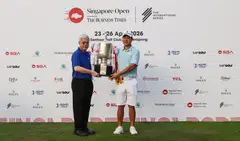



When top players compete here, they do more than chase titles. They raise standards, inspire local players, and energise the entire golfing community.
Building a thriving golf ecosystem
The success of the Singapore Open is part of a bigger story.
Singapore now hosts multiple marquee golf events, including the HSBC Women’s World Championship and LIV Golf Singapore. Together, these tournaments create sustained visibility for the sport and reinforce the Republic’s reputation as a global sporting hub.
This concentration of high-quality events creates opportunities for local players to compete at a higher level, supports the wider industry from coaching to hospitality to tourism, and deepens engagement with the golf community at all levels.
A virtuous cycle is established as events drive interest, interest drives participation, and participation drives excellence.
Rise of local participation
Perhaps the most encouraging sign is the growing presence of Singaporean golfers. Thirteen local players competed at the Singapore Open last week. For the first time since the 2018 edition, four Singaporeans made the cut.
Ryan Ang emerged as the highest-placed Singaporean after posting rounds of 70, 69, 73 and 66 to finish tied-12th. James Leow also enjoyed a creditable finish, ending the week in tied-17th place.
When local golfers step onto the same stage as international champions, it shifts perception. Young players begin to believe it is possible, Amateur golfers feel connected to the game’s highest level, and the broader public develops a sense of ownership and pride.
Inclusive growth
Golf in Singapore has often been viewed as exclusive, but that perception is gradually changing.
Events like The Singapore Open play an important role in this shift. By opening its doors to spectators, having global broadcasters and showcasing diverse players, the tournament helps reposition golf as a sport of aspiration and inclusion.
Backed by BT as its presenting partner for the first time, the Singapore Open has further strengthened its commercial relevance, with corporate support playing a vital role in elevating the event’s profile and supporting the broader ecosystem.
The next step is clear. We shall expand junior programmes, strengthening school and community engagement, and promoting more accessible formats of the game.
A sustainable ecosystem is not built solely at the elite level. It must grow from the ground up.
Industry, innovation and opportunity
Beyond sport, the Singapore Open is also a platform for economic and industry growth. Major events attract sponsorship and brand partnerships, tourism and hospitality spending, media exposure and global attention.
They also stimulate innovation – whether in course design, event management, sports technology or fan engagement.
Singapore’s ability to consistently deliver world-class events reinforces its position as a regional hub not just for golf, but for sports business and innovation.
Why continuity matters
Success, however, is not guaranteed. It must be sustained. The temptation after a strong showing is to celebrate and move on. That would be a mistake. The priority should not be to pause, but to build further. That means continuing to host top-tier events, investing in player development pathways and strengthening the broader golf community.
Ecosystems take years to develop, but can quickly lose traction without sustained effort.
The future of golf in Singapore does not rest on one organisation alone. It requires collaboration across the Singapore Golf Association, government agencies, private clubs and facilities, sponsors and industry partners, coaches, schools and families. And most importantly, the players themselves.
The 2026 Singapore Open has shown what is possible.
Singapore has demonstrated its ability to host world-class events, develop competitive players, and grow a vibrant golfing community. The task now is to build on that foundation and strengthen its position within the global game.
The ambition is clear: not just to be a stop on the international calendar, but to become a centre of excellence for golf in Asia.
And that is something worth celebrating.
The writer is president of the Singapore Golf Association
Decoding Asia newsletter: your guide to navigating Asia in a new global order. Sign up here to get Decoding Asia newsletter. Delivered to your inbox. Free.
Share with us your feedback on BT's products and services
TRENDING NOW

Once staunchly pro-China, Malaysian Chinese businesses are now distancing themselves from Beijing
The middle power moment arrives in South-east Asia – but not for Asean

DBS, OCBC, UOB face rate hike reality check

Vietnam’s northern provinces, not Hanoi or Ho Chi Minh City, are powering near 10% GDP growth

