

Why so many football fans deplore Infantino’s Fifa funding plan
The governing body’s chief has issued a September deadline for members to back the proposal or face a reduction in potential support
[ZURICH] Just over a week after a World Cup that saw record attendances, record ticket prices and record revenue for the tournament organiser Fifa, its president Gianni Infantino shocked the sport by announcing a plan for football’s governing body to generate even more money.
The proposal for a new subsidiary to house media and commercial rights to Fifa tournaments – including the World Cup – aims to boost revenue for its 211 member associations and would open the non-profit body to external investors for the first time.
It is a playbook followed by other sports including golf’s PGA Tour, which launched a for-profit commercial arm in 2024.
But the plan has already triggered a backlash, especially in Europe. Football purists decry what they see as the grubby debasement of an institution that is supposed to uphold the highest ideals of the sport.
The cast of characters at the heart of the plan is also a factor. What plays out over the next few weeks will have repercussions for Fifa, the World Cup and the direction of football.
What is Fifa for?
Its official role – and the one many fans want it to stick to – is to be the sport’s global governing body. That includes organising tournaments like the World Cup and distributing revenue from those competitions in a way that develops football at grassroots level, usually via the national associations that make up its membership.
What is new about more money in football?
In short, nothing – as any fan of a club in England’s Premier League can attest. Valuations have soared as Middle Eastern and US investors poured money into the likes of Manchester City, Chelsea and Newcastle in recent years.
Real Madrid tops the Deloitte Football Money League with 1.2 billion euros (US$1.4 billion) in revenue, and Saudi Arabia is shaking up the transfer market with eye-watering sums to boost its own league before hosting the 2034 World Cup.
Still, many fans see national team football as a respite from the money game that increasingly dominates club football.
SEE ALSO
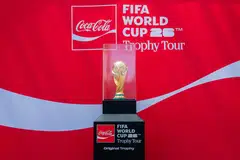
Huge sums do flow through the international game. Fifa raked in about US$15 billion from this year’s World Cup, including from sponsorship.
The nuance is that a chunk of Fifa’s revenue goes to nurture emerging talent, build training facilities and assist less-wealthy football federations. National associations cannot – directly, at least – buy players to stack their teams with talent.
Is Infantino trying to sell the World Cup?
Infantino argues that nothing will change in the governance of the sport or the way tournaments such as the World Cup are organised.
“The Fifa World Cup is not for sale,” the organisation said in a statement. “Fifa is proposing a Fifa-owned and controlled commercial subsidiary to bring dedicated commercial expertise and long-term capital to its existing rights and events.”
The new vehicle, Fifa Forward Enterprise, would focus on boosting revenue from its most valuable commercial assets at a time when demand for premium live sports rights is high.
It would be valued at US$20 billion, and Infantino wants to raise as much as US$4.2 billion by selling a stake to outside investors. Fifa cites similar moves by Formula 1 and football leagues including Spain’s La Liga, and says member associations would get a 150 per cent boost in funding.
Why the backlash?
Part of the criticism pertains to Infantino himself. Fifa was established by seven national associations in 1904 with a mandate focused solely on the sport.
Infantino has been accused of blurring the lines between football, money and power with his decision to award the inaugural Fifa Peace Prize to US President Donald Trump and his attendance at Trump’s inaugural Board of Peace.
Critics see Trump’s subsequent intervention in the World Cup after US player Folarin Balogun was given a red card as the inevitable result of Infantino’s courting of Trump.
Corruption convictions of ex-Fifa officials under Infantino’s predecessor, Sepp Blatter, also help explain the backlash. The involvement of Joshua Kushner, the venture capitalist with family ties to Trump, in the funding plan has not helped to appease critics.
The condemnation has been especially strident in Europe. A beefed-up Fifa Club World Cup could undermine the valuable Champions League tournament run by Uefa, the powerful group in charge of the region’s football associations.
Major clubs including German side Borussia Dortmund warned of extra demands placed on players if Fifa expands tournaments to maximise revenue. Chairman Hans-Joachim Watzke, who is also vice-president of the German Football Association, called it “an outright attack on the sport”.
Fifa denied reports that it would enrich Infantino by guaranteeing him a future role and compensation.
Can anything stop Infantino’s plan?
Infantino has issued a September deadline to Fifa’s members to back the plan or face a reduction in potential funding.
Europe’s powerful national associations are pushing back. At a virtual crisis meeting on Thursday (Jul 30), Uefa’s 55 member nations resolved to boycott Fifa tournaments unless Infantino reverses course.
Majority support is required to proceed, and the European associations have long been outnumbered in Fifa by countries in Asia, Africa and Latin America that may be more likely to back the plan.
But it is hard to imagine future World Cups bereft of 2026 world champions Spain and other top European teams, and their absence would dent revenue from the next tournament – with financial consequences for football associations across the world.
How secure is Infantino?
The outcome of the vote on Infantino’s proposal could affect his bid to secure a new term as president in March 2027.
He already has support for his re-election from more than 200 members. But there are reports that European football officials are seeking to challenge Infantino’s re-election, potentially with Nasser Al-Khelaifi, chairman of Qatar Sports Investments, the majority owner of Paris Saint-Germain, as a candidate. BLOOMBERG
Decoding Asia newsletter: your guide to navigating Asia in a new global order. Sign up here to get Decoding Asia newsletter. Delivered to your inbox. Free.
Share with us your feedback on BT's products and services
TRENDING NOW
8 public officers referred to police over property buys near unannounced MRT stations: Chan Chun Sing

Grab CEO’s wife Chloe Tong on life with Anthony Tan and finding her purpose

Retrenched PMETs who return on lower pay see median 25% wage cut
Hao Mart owner resisting OG’s mortgage foreclosure on his Tanglin GCB

