

On Wimbledon’s slippery grass, the art of falling is as important as any tennis shot
The surface presents maximum risk to onrushing players in the tournament’s first few days
[LONDON] No tennis player wants to fall down. But if it is inevitable, then like a forehand, a backhand or a serve, it can be practised – or at least studied.
“You’ve just got to fall well, because you’re going to fall at some point on the grass,” said Tommy Paul, the American world No 25.
On the Wimbledon grass, falls from players are as constant as the strawberries and cream. Grass is already tennis’ slipperiest surface; in the first few days of the tournament, when it is as lush as it gets, it presents maximum risk to an onrushing player clad in white.
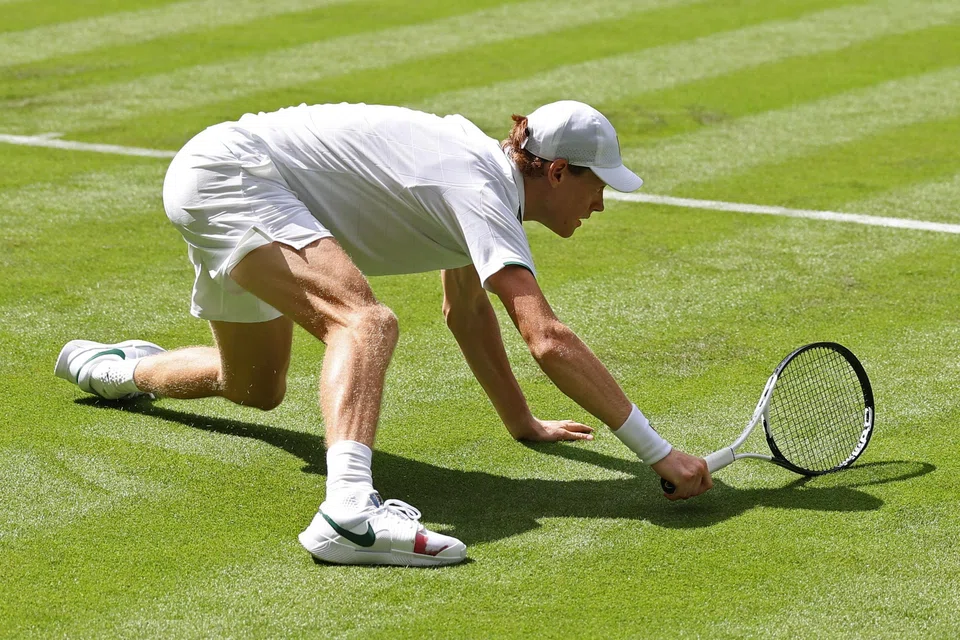
On the opening day, defending champion Jannik Sinner took a couple of nasty falls during his win over Miomir Kecmanovic, the second of which looked as though it might have caused a serious knee injury. But Sinner came away unscathed, springing upward as his legs gave way and absorbing the impact through his hip.
“It is the most normal thing,” he said at a news conference. “Grass court is like this. Especially the first couple of matches, when the grass is very new, you slip a little bit more,” he explained.
“We did a lot of prevention before this tournament because we knew things like this could happen potentially. Today, it happened. So most important is to take this part away and keep moving like before, because if not, when you are very scared, everything goes too slow.”
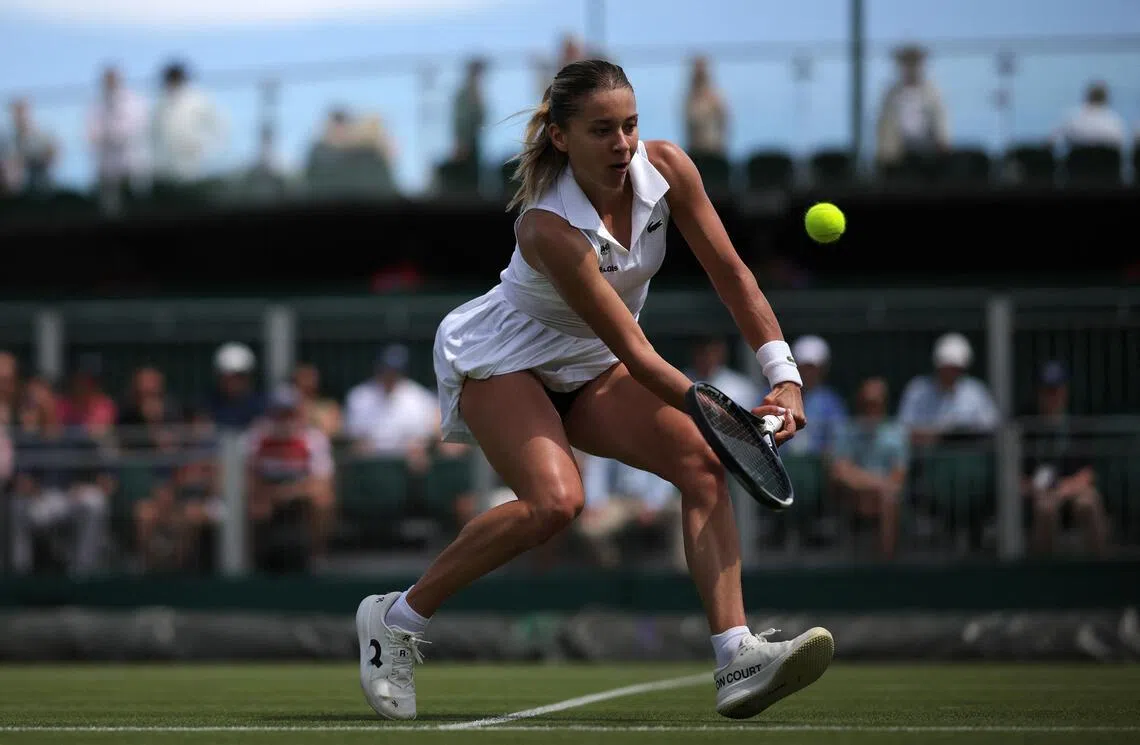
Maja Chwalinska, a finalist at this year’s French Open, wasn’t so lucky. She had a match point on Jun 29 against Thailand’s Mananchaya Sawangkaew when she slipped and injured her right ankle on Court 12.
Chwalinska took a medical timeout for the injury at the end of the game, and she was clearly hampered by it for the rest of the match. After eventually losing in three sets, she said at a news conference: “I don’t have a huge experience playing on grass. I know that it happens.”
Argentina’s Camilo Ugo Carabelli and Canada’s Denis Shapovalov were forced to retire from their first-round matches on Jun 29 after injuring themselves slipping on the lush grass.


A day later, French Open champion Alexander Zverev slipped worryingly on the baseline but was able to get straight back up. Coco Gauff did the same in the final-set tiebreaker of her win against Solana Sierra on Jul 1.
Falling over on grass is an occupational hazard, and whether a player is injured most often comes down to pure luck.
But having an awareness of how to mitigate the impact of falls, and developing the mentality not to be afraid of falling, can be crucial to making a deep run at the slipperiest slam.
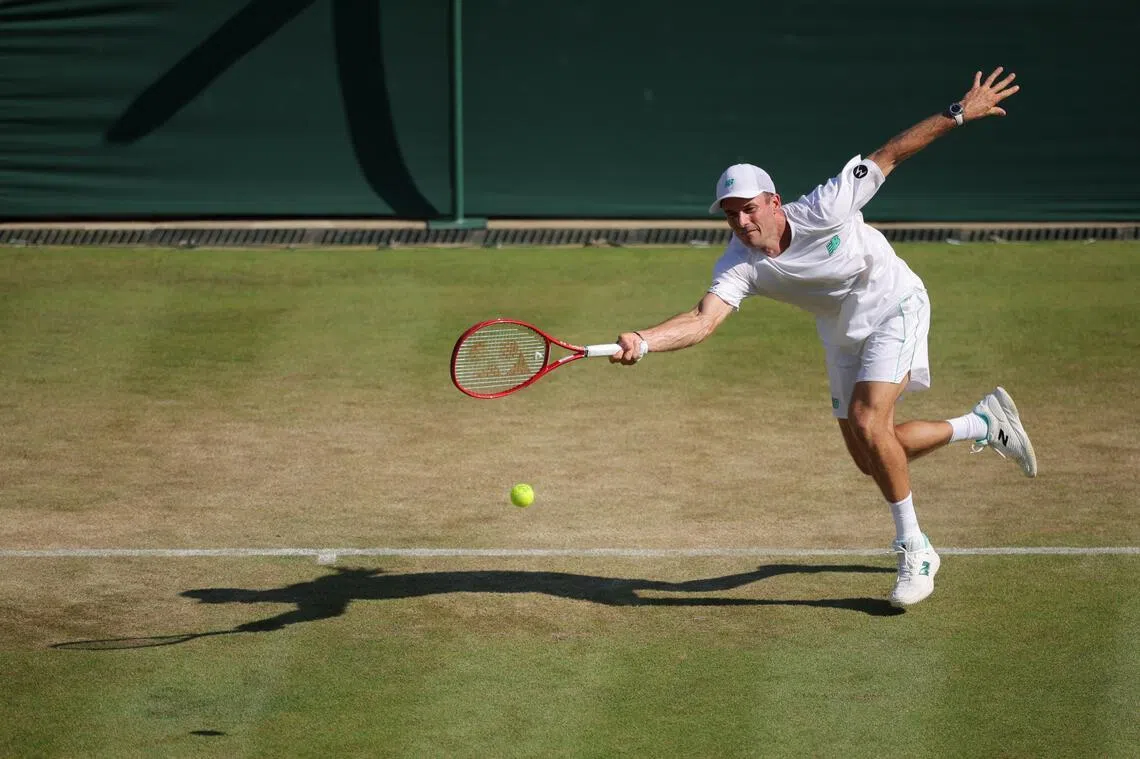
Paul is an accomplished grass-court player. He won Queen’s in 2024 and lost in this year’s Queen’s final to Argentina’s Francisco Cerundolo.
His compatriot, women’s No 4 seed Jessica Pegula, said her approach was more to try to avoid falling altogether.
“I need to ask Tommy, maybe, how to fall,” she said in a news conference ahead of Wimbledon. “I know they say: ‘Don’t brace. Don’t put your hands out,’ just because a lot of people hurt their wrists. But I don’t really know what he’s doing, rolling?”
Paul does not employ a Jason Bourne-style roll, but he does have a strategy.
“Ideally, not with your knees going inward. I feel like that’s the most dangerous way to fall on the grass. Like maybe a split step a little too hard and one knee goes in; that’s kind of the scary fall,” he said.
“Ideally, you’d rather almost have your feet slide out and fall down and not on your wrist. I think those are the most important things on the grass when falling.”
Ben Shelton, a quarterfinalist last year but a first-round loser to Otto Virtanen on Jun 30, said that a key element for him in avoiding a bad fall is learning how to slow down.
“You have to be able to have body control,” he said at a news conference on Saturday (Jul 4).
“I think it takes out an element of explosiveness or athleticism, if you will. It kind of works against you. If your body gets too out of control, you’re moving too fast, it’s tough to decelerate,” he added.
“That is something you kind of have to learn: how to move at a slightly slower and more controlled cadence.”
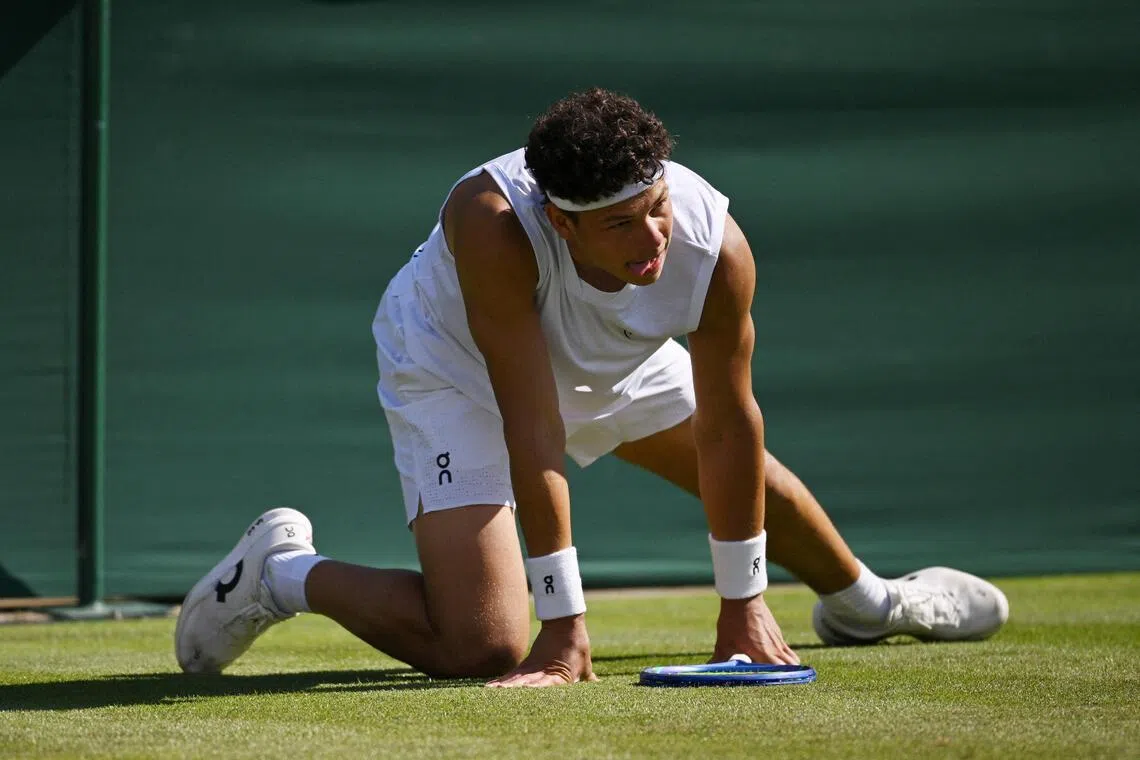
Shelton said he is still learning how to take extra steps and move through the ball to avoid a bad fall.
“Sometimes I wish I could slide like some of these guys out here,” he said. “I think I’d get seriously injured trying to do that all the time.”
The importance of falling well has only grown as players have adapted movement patterns from clay and hard courts to grass. Novak Djokovic, a seven-time Wimbledon champion, was one of the first to do it, and Sinner, last year’s winner, does it routinely.
Both are extremely effective at it, but they make other players wince in the process. Iga Swiatek, last year’s women’s champion and a master of the slide, tends to avoid it on grass.
Sinner said at a news conference at the Hurlingham Club in London that it usually takes him three or four days to feel comfortable sliding on grass. Djokovic said at Wimbledon that on grass, “you always have to be a little bit more careful compared to the other surfaces”.
“I do continue to slide also on grass,” he said. “I do have to adjust my footing and my steps on the grass a bit more in order to, I guess, have a more effective movement. It’s not like the other surfaces.”
Aryna Sabalenka, the women’s world No 1, is another player who grimaces watching her peers slide across the baseline.
“One wrong move, you can twist your ankle,” she said. “I’m trying to work as fast as possible, move my feet as fast as possible, just so I don’t have to slide. Trying to stay low and move as fast as possible.
“I sometimes feel like I’m a small cat getting to the ball.”
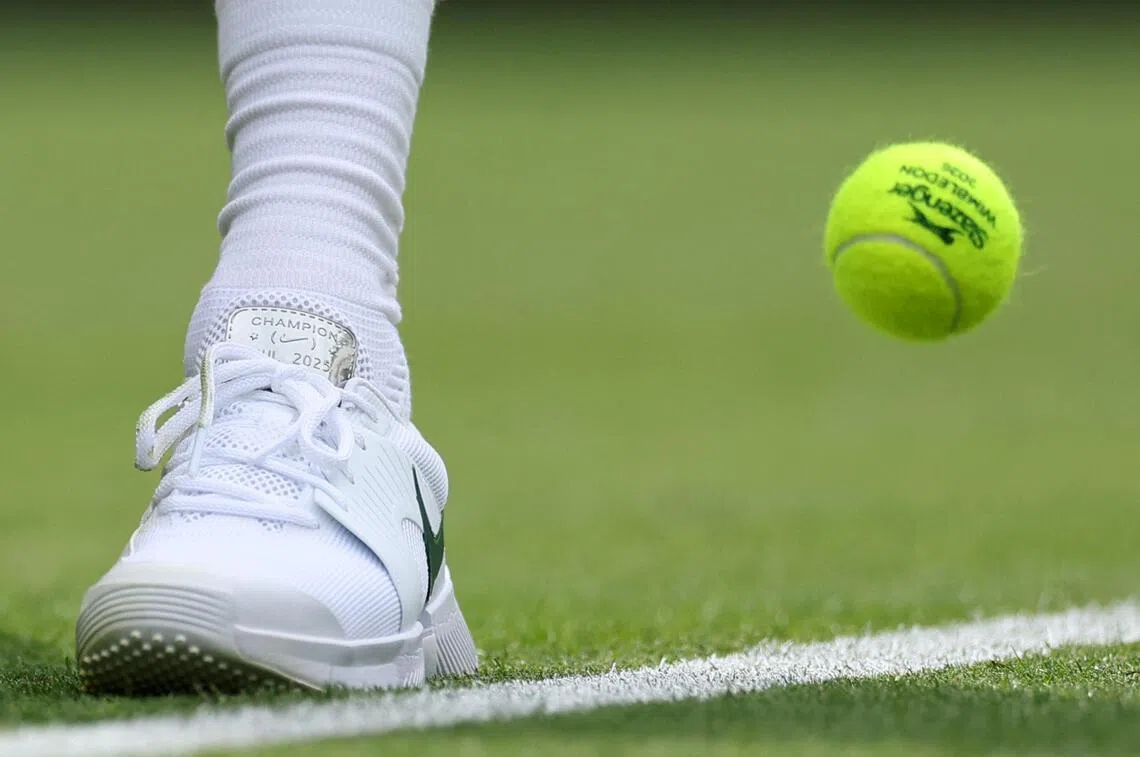
For players who have accepted that they are going to fall over a lot, the key along with their landing is how they get back up.
“You’re going to eat it sometimes,” Frances Tiafoe, who won the biggest title of his career on the grass courts at Halle a couple of weeks ago, told reporters. “I fall a lot. I mean, I hurt myself a couple years ago where I thought I wasn’t going to play here.
“It’s like, as a kid, you fall down, you just dust off, you’re trying to get up. You’re competing at the end of the day. So, yeah, I mean, don’t let one maybe misstep or slip deter you.”
Madison Keys, who won the Eastbourne Open, said the key to falling is not fighting it. “When you are trying to brace or prevent actually falling, that’s where things go wrong.”
She added: “It happens all the time. It’s nothing to freak out about. If you go into it thinking that way, just knowing, ‘OK, when it does inevitably happen, as long as I just roll with it, things will probably be fine.’ Nine times out of 10, we go down and pop right back up.” NYTIMES
Decoding Asia newsletter: your guide to navigating Asia in a new global order. Sign up here to get Decoding Asia newsletter. Delivered to your inbox. Free.
Share with us your feedback on BT's products and services
TRENDING NOW

Government to bring forward raising of retirement age, give employers more financial support to create flexi-load jobs

Former minister Maliki Osman, Revolut chairman join Asia Gulf Holdings advisory board

Is Manila Asia’s new dining hot spot?

Simba at risk of losing operating licence over spectrum misuse

