

Young Cambodians know they can’t claim heaven if they’re just going to sit under it
Amid signs of prosperity everywhere across the country, they are choosing a life of action
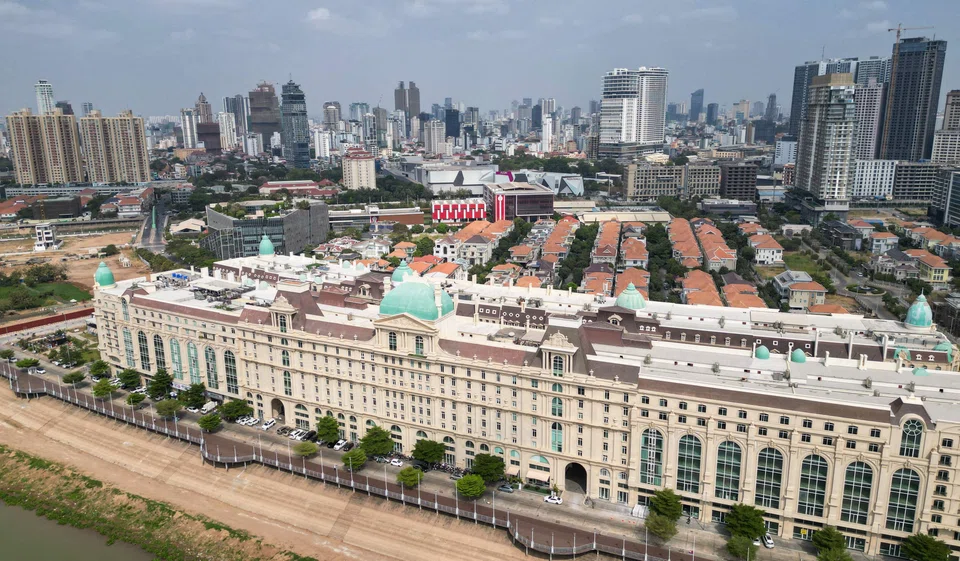
ORDINARY Cambodians, such as Phnom Penh resident Leng Sochea – who survived genocide, food shortages, and civil war – have changed in ways they’d never thought would be possible. The signs of prosperity everywhere across the country make it hard to believe that two million people died in the killing fields between 1975 and 1979.
Leng’s life was a long struggle. He was born into a Chinese family in 1960 in a home south of Phnom Penh. His grandparents and his father had migrated from China following the Japanese invasion in 1937. They came on a Chinese junk.
The Chinese, now consisting of less than 1 per cent of the population, lived under the largely benevolent rule of the head of state, Prince Norodom Sihanouk, who made it his priority to develop the country and create wealth as much as possible. Life was good for Leng and his 10 siblings; they lived off the Tonle Sap River’s bounties, and their land. But history intervened.
On Apr 17, 1975, the Khmer Rouge took power and sent almost the entire population to work in the rice fields. “We all were sent down south to Saang district around 20 km from the capital. In June 1975, there was a mass mobilisation. The Khmer Rouge began dispersing the people all over the country, by train, to cultivate new land.”
On Jun 20, 1975, when Leng’s family reached Phnom Penh, he observed that there were no people around, the streets were empty except for Khmer Rouge soldiers on patrol, and the National Bank building had been blown up by a bomb because the new rulers had abolished money and started an agrarian economy afresh.
“My family was dropped off at a factory producing fishing nets just 1 km north of the Orussey Market in Phnom Penh. My sister advised that we break up into three groups, so that if something happened to one, the others would survive.”

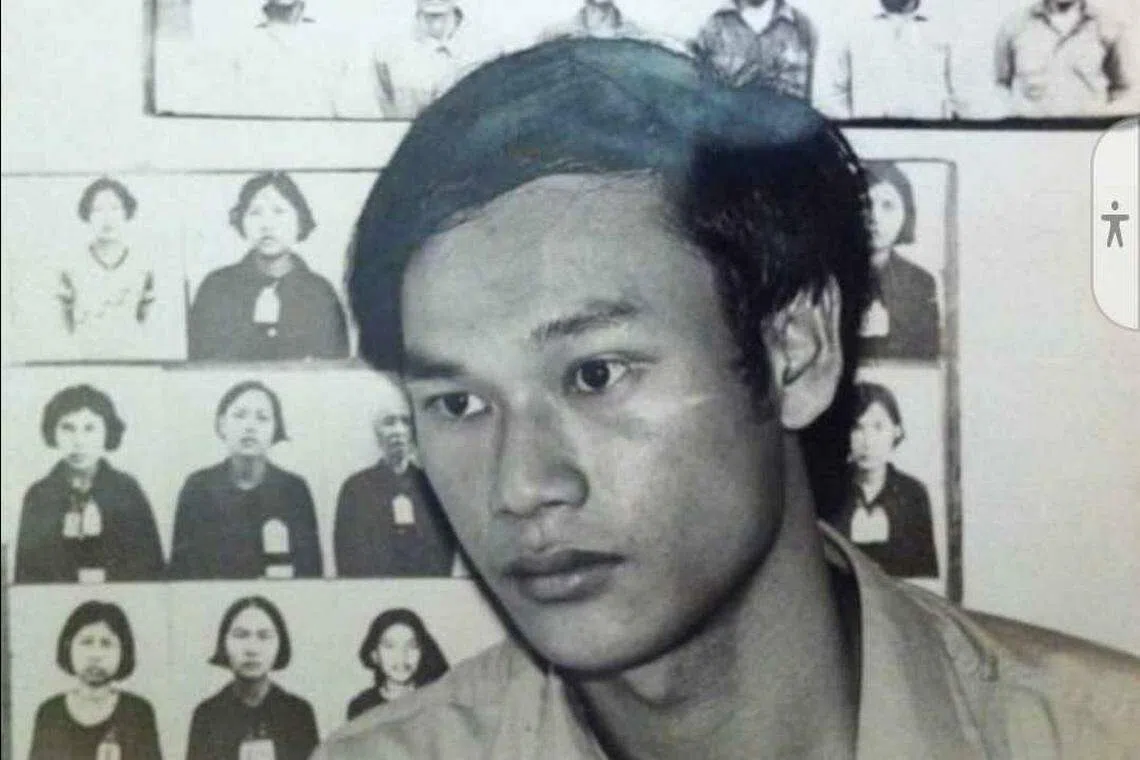
The Khmer Rouge, who had banned all forms of learning or education, executed his sister because she was studying Chinese. They also executed his grandparents. They were killed in 1976 at the Tuol Sleng, now a genocide museum in Phnom Penh.
Leng was made in charge of making fishing nets. After dinner on most days, the Khmer Rouge made the citizens hold meetings to censure and self-criticise each other. The Leng family stayed in separate houses among a group of women, men, children and old people. They ate the bananas and vegetables that they planted under the regime’s self-sufficiency policy.
History intervened again. The Khmer Rouge faced an external threat from Vietnam. On Jan 6, 1979, the rulers ordered the people to prepare for a long march from Phnom Penh to the west to escape from the advancing Vietnamese army.

“A few days later, we went to National Road No 4 to meet the Vietnamese soldiers. The first word we heard from them was ‘go back to your home town!’ We were all very pleased and went back to the fishing-net factory to continue our routine job – but under a new government led by Heng Samrin.” The government soon appointed Hun Sen as prime minister.
Leng’s life changed in December 1981 when the new government announced that it was recruiting young people who could speak and write English, French, Russian, and Vietnamese. “I took this opportunity to enrol and passed the entrance exam. I was given a position in the Press Department of the Ministry of Foreign Affairs (MFA).
“On Jan 10, 1982, I changed my career from a fishing-net labourer to a cadre of the MFA. As my dream was partially fulfilled, I decided to change my job again. I was supported by Khieu Kanharith, the head of the Ministry of Information. My boss, Mr Kanharith, saw my talent, and appointed me the head of the Media Centre Department during the tenure of the United Nations Transitional Authority in Cambodia in 1991-1992.”
Leng rose to become the head of the Public Information Office and the spokesperson of the National Election Committee from 1998 to 2006. He has served as an adviser to the Committee’s chairman since 2016.
Like many Cambodians, he realised that his career path was hindered by a lack of higher education. When the government reopened schools and colleges that had been laid to waste by the Khmer Rouge, Leng earned a Bachelor of Law degree in 1999 from the Royal University of Law and Economy in Phnom Penh, and a Bachelor’s degree in Business Administration in 2002 from the National Institute of Management in the capital.
It helped enormously. He was appointed the deputy secretary-general of the Cambodia Mine Action Authority, a post he held from 2000 to 2011, and then became the permanent vice-chairman of the governing council of the Cambodia Mine Action Centre in 2011-2012, a rank equal to a senior minister.
He kept an eye on education. He went on to earn an MBA in 2005 from the National University of Management in Phnom Penh, and completed his PhD in Business Administration in 2018 from Asia Europe University in Phnom Penh.
During our conversation, Leng drifted back in time to matters of the heart.
“When I was 27 years old (in 1987), a friend introduced me to a beautiful girl who was working at the National Bank of Cambodia. We made our acquaintance quickly and decided to marry on Mar 23, 1987. My wife was born in 1965. She was five years old under the Khmer Rouge regime.
“We have spent 37 years together. Now we have three sons. The first son, born at the end of 1987, was nominated as deputy director of the public relations department of the Cambodian Mine Action Authority. The second one, born in March 1991, is working in the private sector, as well as the youngest one who was born in 1995.”
Forty-five years after Khmer Rouge rule ended, the country bears the signs of economic resurgence. Leng is pleasantly surprised at the massive change. He says : “The capital city of Phnom Penh is making a powerful statement in prosperity in its architecture, and the economic, social and cultural lives of the people. The smaller cities project similar images of personal and collective success.”
Change was slow in coming, though. The lives of the people began improving some 20 years ago as foreign investments poured in, mainly from China, as well as from Singapore and South Korea.
Leng saw thousands of young people migrating from the provinces into the industrial areas in the cities.
“And millions of youths are also moving to work in the neighbouring countries,” he notes. “They’re all mobile.” There are more than 1.3 million Cambodian workers abroad, who send almost US$3 billion back home each year, according to the country’s Ministry of Labour and Vocational Training. The overseas Cambodians keep in mind a local Khmer proverb, “Negotiate a river by following its bends, enter a country by following its customs.”
The living standard of Cambodians is improving every year, Leng says. Per capita income is around US$1,590. He adds, “The houses in rural areas are changing from huts to wooden houses or even concrete buildings. The workers abroad send back hundreds of millions of dollars to their families.”
“If we visit the provinces we will find mostly old people at homes, taking care of their grandchildren and agriculture production. The young people are working abroad or in Cambodian cities.”
Leng’s parents died years ago. Some of his surviving siblings are abroad. Two of his brothers live in the United States, and two sisters and a brother are in Cambodia.
Young Cambodians are choosing a life of action. They have learned from an old proverb, “You can’t claim heaven as your own if you are just going to sit under it.”
The writer is editor-in-chief of Rising Asia Journal www.rajraf.org
Decoding Asia newsletter: your guide to navigating Asia in a new global order. Sign up here to get Decoding Asia newsletter. Delivered to your inbox. Free.
Share with us your feedback on BT's products and services






