
The 2024 US presidential race: The big sleep?
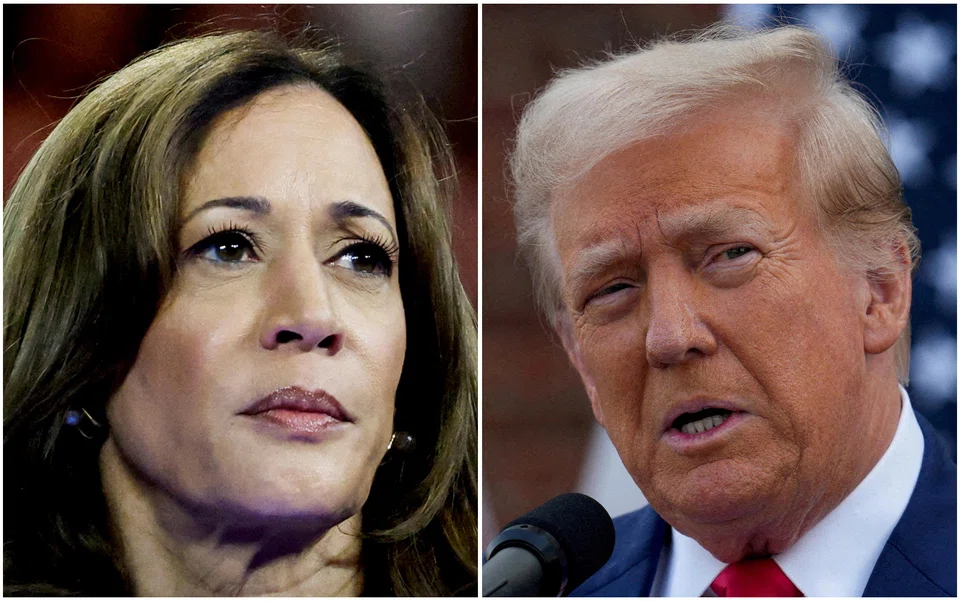
    • Most of the polls have suggested that the race between Kamala Harris (left) and Donald Trump remains deadlocked.
    • Most of the polls have suggested that the race between Kamala Harris (left) and Donald Trump remains deadlocked. PHOTO: REUTERS
    Published Mon, Oct 14, 2024 · 05:12 PM

    THIS is supposed to be the “most important election in American history”, as the cliche employed by numerous pundits puts it. That has created expectations for a spirited presidential race, dominated by animated debates about the future of America between the two candidates, with an energised public taking active part in the political spectacle as the momentum grows towards a grand finale.

    In fact, the election campaign did provide us with some initial excitement. There was the political coup that, following his disastrous performance in a presidential debate, forced President Joe Biden to withdraw from the Nov 5 race, with Vice-President Kamala Harris replacing him as the Democratic Party’s presidential candidate.

    And then there were the two failed attempts on the life of the Republican candidate Donald Trump, which had all the makings of a gripping television thriller, with Trump playing the role of a heroic protagonist facing villainous assassins.


    Harris’ entry into the race and the selection of Minnesota Governor Tim Walz as her running mate did produce some enthusiasm, in particular among the Democratic base, especially as the Harris-Walz team seemed to be interjecting vibes of “joy” into the campaign.

    Indeed, for a while it felt as though the Democratic ticket was catching the proverbial fire. Here was the relatively young Harris (turning 60 on Oct 20) facing the ageing Trump (78) representing the “future” and projecting a sense of optimism vis-a-vis her Republican rival, who seems to be stuck in the past and promoting a message of despair about the American condition.

    The Republican ticket was for a while playing defence, in particular, after the Republican vice-presidential candidate Ohio senator JD Vance’s past caught up with him in the form of disparaging comments he had made about childless women whom he labelled as “cat ladies”.

    Moreover, the media consensus was that Harris had won the Sep 10 televised presidential debate with Trump, with the Republican candidate criticised for spreading false rumours about illegal immigrants in an Ohio town who were supposedly accused of eating cats and dogs.

    But then when it came to the bottom line – of who is winning or losing the race – all the signs were that Harris’ initial momentum and a “bump” in the opinion polls failed to translate into any major advantage for her election campaign.

    And contrary to earlier expectations, nor did the two shocking assassination attempts against Trump help to boost his electoral fortunes.

    Most of the polls have suggested that the race remains deadlocked. Harris enjoys a small lead nationally; 49 per cent to 46 per cent, according to the recent New York Times/Siena College poll.

    But when it comes to the seven battleground (or “swing”) states that would determine the outcome of the race – Pennsylvania, Michigan, Wisconsin, Nevada, Arizona, North Carolina and Georgia – opinion polls have been static for weeks, with both candidates rotating around 49 per cent.

    And in all these states, the dynamics of the race are similar: Harris does well in the large urban centres, like Philadelphia and Pittsburgh in Pennsylvania as well as in college towns, among white voters with college degrees, Blacks and Hispanics, while Trump beats her in the rural areas and among blue-collar workers with no college degrees.

    Trump is also doing better than former Republican candidates among Blacks and Hispanics. Some polls show him winning a third of Hispanic voters, while Harris is getting a little bit more than half of them.

    In terms of the “gender gap”, while Trump is winning the majority of men, Harris, running on the issue of abortion rights, has the support of the majority of women, with the exception of white women.

    The Democratic candidate has recently launched a “media blitz” which she hopes will help her draw the support of undecided independent voters. But it is doubtful that her vague generalities about the “opportunity economy” and “I grew up a middle-class kid” are having any major impact on the race.

    In fact, the general consensus in Washington now is that the electoral momentum may be favouring the former president.

    On another level, it is difficult to argue that the two candidates have been successful in energising voters by promoting their agendas. The debate has not been so much about the future of America, but about somewhat boring policy issues.

    Harris has vowed to expand social economic programmes, to be paid by new taxes on corporations and the affluent, and warned voters that a second term for Trump would pose a threat to democracy.

    Trump has insisted that his plans to cut taxes and increase deregulation would help grow the economy, and he has tied Harris to the supposed failed policies of the Biden administration, in particular, the high cost of living and illegal immigration.

    And when it comes to the economy and immigration, most polls suggest that a majority of Americans trust Trump more than Harris on these issues.

    But what is remarkable about this campaign is the extent to which foreign policy issues have not become central, despite the ongoing wars in the Middle East and Ukraine that have major impact on US interests.

    Yet, the Middle East conflict could at some point be interjected into the campaign, especially if Israel, as expected, retaliates against Iran in response to its recent missile attacks.

    If Israel decides to attack Iran’s nuclear sites or its oil installations, that could lead to a war between the two countries and eventually, a regional military conflagration that could draw in the US and result in possible American casualties.

    A broadening of the war could choke back oil exports that pass through the Strait of Hormuz – the narrow waterway connecting the Persian Gulf to the wider world – which would push oil prices higher.

    If that happens, global energy prices are likely to rise in a way that could affect the US economy, and hurt the chances of the Democratic presidential ticket just a week or two before the election. Call it the October surprise.


