

With ‘30 by 30’ goal under review, do more to cultivate a culture of local produce
Making local produce easier to find and choose could be a simple yet powerful way to shift consumer habits

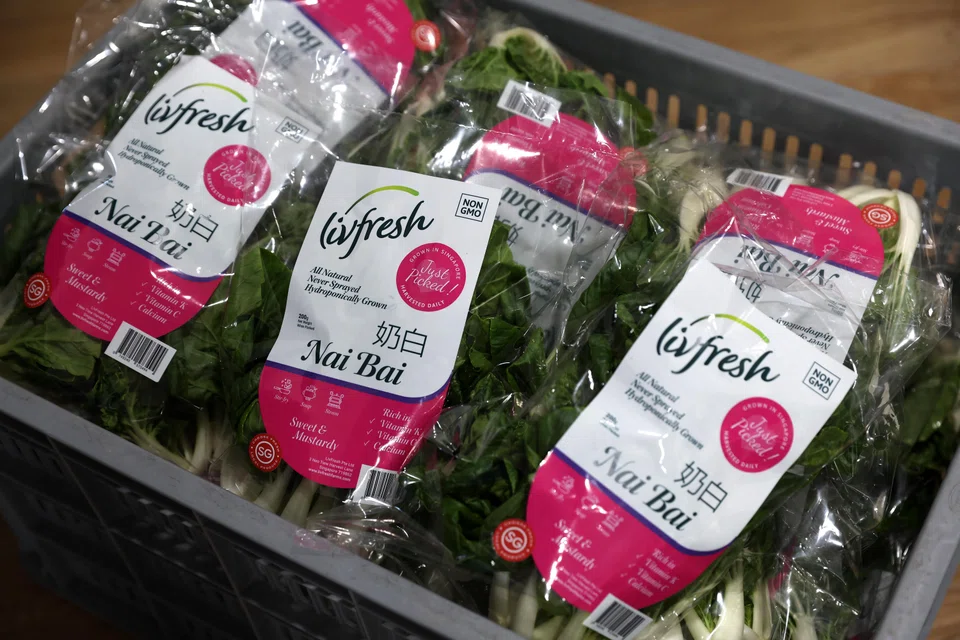
IN 2019, Singapore launched a drive to produce 30 per cent of nutritional needs locally by 2030, to hedge against supply disruptions and boost food resilience.
But with output stagnating and this target possibly being reviewed, the conversation should expand beyond what Singapore can produce, to whether consumers are willing to buy.
Encouraging demand for local produce may help farms achieve the scale needed to stay viable – and support whatever revised version of the national food strategy emerges.
The urgency of the “30 by 30” push became clear just months after its launch, when Covid-19 disrupted global supply chains and emptied supermarket shelves, exposing the risks of overdependence on external sources.
Since then, however, there seems to have been a shift away from framing it as a “goal”, in favour of the less binding term “vision”. With five years left till 2030, even this vision may have to be corrected.
In a parliamentary reply on Sep 26, Minister for Sustainability and the Environment Grace Fu seemed to foreshadow such a move.
Member of Parliament David Hoe had asked if Singapore was on track for the “30 by 30” goal and its intermediate targets for 2026 and 2028, and whether the ministry was considering “contingency plans and course corrections” or issuing updated targets.
Fu replied that less than 10 per cent of food consumed in Singapore is produced locally.
“The ‘30 by 30’ vision has always been an aspirational one, and it was developed pre-Covid when business conditions were more favourable,” she said. “Since then, the global outlook has become more uncertain.”
Noting efforts to boost local production capability and capacity, she said: “With the experience we have gained, we have been reviewing our local production as part of our overall food supply resilience strategy, to be more targeted in addressing challenges and in fostering the sector’s continued growth.”
More details will be shared when ready, she added.
Despite progress in areas such as egg production, Singapore’s vegetable and seafood output declined 3 per cent and 14 per cent, respectively, in 2024, continuing a downward trend.
The Singapore Food Agency (SFA) attributed this to rising costs, a subdued investment climate in high-tech farming, and weak consumer demand amid competition from cheaper imports.
While the first two reflect wider forces, the third is arguably the most immediate and addressable.
Nudging the needle
One bright spot in this subdued appetite is that Singaporeans are not necessarily resistant to buying local.
In a CNA-commissioned survey last year, only a small minority of respondents preferred imported produce. But more respondents were neutral about the origins of food, rather than preferring local: 54 per cent versus 41 per cent for vegetables, for instance.
Perhaps, with the right nudges, the preferences of such neutral consumers can be shifted.
Improving visibility and accessibility could be a low-hanging fruit.
Locally grown food may carry the SG Fresh Produce logo, but it is often easy to miss when shelved alongside cheaper imports. For the average shopper, price and convenience trump provenance – few will take the trouble to hunt for a local label amid more affordable alternatives.
It could be more effective to reduce this friction by grouping local produce under dedicated signage, to help consumers make informed choices.
Some supermarkets have already introduced dedicated local produce sections, but uneven implementation across Singapore and operators blunts the impact.
For price-conscious consumers, incentives might tip the balance.
Singapore already has a precedent: The Health Promotion Board’s programme that rewards shoppers with points – redeemable for FairPrice vouchers – when they buy items bearing the Healthier Choice symbol.
A similar system could be extended to locally farmed produce, either through more bonus points or a dedicated rewards track across more supermarkets.
Such measures would encourage consumers to give local produce a shot and signal that supporting local is a valued choice.
Offering tasters
Of course, there is also the matter of taste.
One of the joys of visiting farmers’ markets overseas is sampling the fruits of a farmer’s labour and discovering inventive ways their produce is used.
Singapore’s own SG Farmers’ Market, organised by SFA and the Singapore Agro-Food Enterprises Federation, offers a glimpse of that experience. At one such market, I discovered what I believe are Singapore’s best prawns from Nippon Koi Farm, and a locally distilled gin infused with “ice plants” grown here.
But unlike overseas counterparts that run monthly or even weekly, this farmers’ market is held only a few times a year in selected parts of the island.
To build stronger consumer habits around local produce, frequency and convenience matter. Why would someone cross the island to visit a market in Tampines if they live in Jurong?
Smaller-scale, grassroots-run markets in neighbourhoods could make local produce more accessible, while better marketing would help raise awareness.
Rooftop potential
Another way to widen accessibility might lie in the many underutilised rooftops of multi-storey car parks across the island.
Where structurally viable, could the process of converting these spaces into productive farms be made less onerous?
The process of setting up a commercial hydroponics farm can be complex. Navigating multi-agency approvals, securing leases, and meeting technical requirements are not always straightforward.
If these processes were made more accessible, more entrepreneurs might be willing to take the plunge.
In return, operators could be encouraged or supported to contribute to the community by donating surplus produce, hosting educational workshops, or supplying nearby schools and eateries. It could even hire nearby residents for part-time roles.
Beyond commercial ventures, there is potential for more community gardens where residents can grow their own vegetables, share knowledge, and perhaps even compete in friendly neighbourhood harvest contests.
Such initiatives could foster pride, deepen appreciation for local produce, and spark broader interest in the sector.
If these ideas succeed in strengthening demand for local produce, they would thus raise the industry’s viability.
As SFA chief executive Damian Chan noted in a The Straits Times report earlier this year, Singapore does not need more farms, but farms with “sufficient scale to be productive, competitive and financially sustainable”.
Supporting consumer uptake is one way to help farms reach that scale.
TRENDING NOW

Britain’s mansion tax shows the difficulty of targeting wealth

Once staunchly pro-China, Malaysian Chinese businesses are now distancing themselves from Beijing

The only common thing in S-E Asia is that we all eat rice: Cisco’s Asean president

Singapore data centre operator DayOne opts for US IPO at likely US$20 billion valuation

