

After the Maduro raid, the question is who checks Trump’s risk-taking
The Venezuela operation was a textbook show of US hard power. But these missions can go wrong – and the fallout will not stay in Washington
SUPPOSE we set aside, for a moment, all the questions about international law, adherence to the United Nations Charter, and whether Congressional assent was required for America’s intervention in Venezuela to capture the country’s president, Nicolas Maduro.
All these questions have been aired, in varying formulations, in recent days by most of America’s allies and partners. They have voiced concern, so as not to be seen as totally abandoning the global rules-based order, which continues to serve their nations’ interests even in its current limp form. But they have also stopped well short of full-throated condemnation of the operation.
There is cover in doing so because Maduro is, after all, a brutal, disastrous dictator who stole the country’s 2024 election and had previously been indicted in absentia in the US for narco-terrorism.
Even taking into account that these countries are taking this stance because they are in an invidious position, not wanting to upset United States President Donald Trump, it is reasonable to assume their respective foreign policy establishments are asking a blunt question among themselves: How many more of these operations should we expect in the remaining years of Trump’s time in the White House?
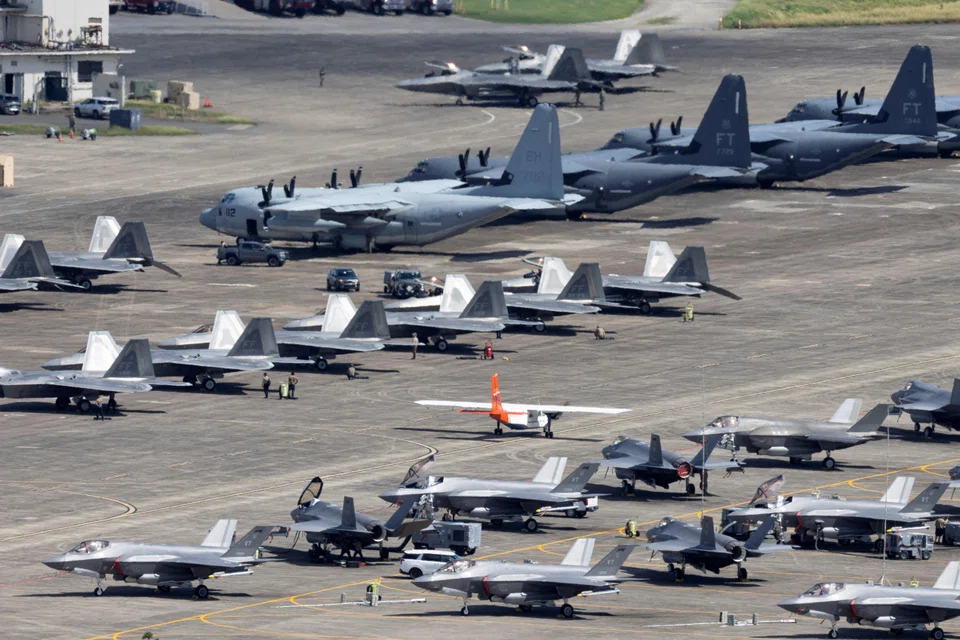
And as textbook a success as this one was – a show of America’s military supremacy, much like 2025’s attack on Iran’s nuclear facilities – a corollary question leaps out.
If we are to expect more of these American special-forces operations, how rigorous is the risk assessment beforehand? Is there enough scrutiny, enough people asking the what-ifs?
It is easy to applaud, and even thank, the Americans for having the gumption to take out bad guys when things go as seamlessly as they did on Jan 3.
The problem is that when these operations go wrong, the costs may not be confined to America, the target country, or Trump’s political future. Others may find themselves paying a price too, and mopping up the consequences.
From what is known publicly, one thing also seems fairly clear: Trump is not, by temperament, a man drawn to what-ifs. When pressed on them, he bristles.
Recall that infamous Oval Office exchange with Ukraine President Volodymyr Zelensky in February 2025, when a reporter asked what if Russia breaks a ceasefire. Trump snapped: “What if anything? What if a bomb drops on your head right now?”
This matters because Trump has given enough signals that the whole Western Hemisphere is in play. Since Jan 3, he has suggested as much in interviews – saying Colombian President Gustavo Petro should “watch his ass” for “making cocaine and sending it to the United States”, that Cuba is something “we’ll end up talking about”, and that “something will have to be done in Mexico”.
Asking the what-ifs
All the more reason, then, for those outside America to hope that ample time and opportunity are given for the right people to ask the what-ifs before these highly secretive operations are launched – and for those questions not to be left only to Trump, his inner circle, and military planners. US legislators, in particular, have a constitutional duty to provide oversight and to serve as a check on executive overreach.
In this instance, Trump did not inform the so-called Gang of Eight – the top Republican and Democratic leaders of the Senate and House, and the chairmen and ranking members of the intelligence committees – until after the operation. Even in the 2011 killing of Al-Qaeda leader Osama bin Laden, this group was briefed about plans beforehand, though not all at the same time.
Democratic Senate leader Chuck Schumer complained after the Venezuela operation that the administration had misled him in classified briefings, saying they never indicated military action was on the table. At the press conference after the Jan 3 operation, Trump suggested he had circumvented Congress because he did not trust its members to keep his plans confidential. “Congress has a tendency to leak,” he said.
Trump can afford to be this dismissive, of course, because of the success he has had with multiple special-forces operations. In the Trump 2.0 era, aside from the Venezuela raid, there was 2025’s Operation Midnight Hammer – a vast strike involving 125 aircraft that crippled Iran’s nuclear programme, marvelled at for its precision and coordination.
In his first stint from 2017 to 2021, among the publicly acknowledged operations was the October 2019 raid that led to the death of Abu Bakr al-Baghdadi, leader of the Islamic State of Iraq and Syria (ISIS), and the January 2020 drone strike that killed Qassem Soleimani, head of the foreign wing of Iran’s Islamic Revolutionary Guard Corps, in Baghdad.
But things can, and do, go wrong.
One example was the January 2017 special-forces raid in central Yemen – just days after Trump’s inauguration – that led to the death of a Navy SEAL, three other US service members being injured, and the deaths of a number of civilians, including children. The administration insisted the operation was an intelligence-gathering success, even as it drew criticism from high-profile figures such as the late Republican senator John McCain.
There is also the bungled covert mission in North Korea in 2019, according to a New York Times report in September 2025. Citing two dozen sources including officials, the newspaper said US Navy SEALs shot and killed a number of North Korean civilians in an attempt to plant a listening device in the nuclear-armed country during high-stakes diplomatic negotiations. When asked about the report, Trump at the time said he did not know anything about it. US officials have otherwise not acknowledged the episode.
In both of these examples, thankfully, there was no spiral of subsequent events. But a botched clandestine operation could just as easily end differently: triggering a counter-action from the targeted country, and requiring treaty allies and partners to contribute to the fallout, even if they had no say in the decision to strike in the first place.
In Trump’s mind, confident in what American military might can achieve, such adverse scenarios may feature only casually. But for the much of the world’s nations – the lesser mortals of the international order – the repercussions demand more serious consideration. These could include commodity price shocks or disrupted trade flows.
There is also the matter of precedent, much discussed in recent days. If America can snatch a sitting head of state on the basis of a law enforcement action, what is to stop other powers from trying the same on those weaker than them?
Success not guaranteed
The point is, as enamoured as this White House is with using special-operations forces in limited tactical strikes to achieve strategic goals – as opposed to infantry-heavy ground operations – success is never guaranteed and there is every chance the costs of failure will be shared.
In the days since Jan 3, one phrase from 2003, when the Bush administration invaded Iraq, has resurfaced in the American commentariat: “the pottery store rule”, coined by the New York Times columnist Thomas Friedman. What he meant was: You break it, you own it. Break Iraq, and America owns the primary responsibility for rebuilding a country of 23 million people.
The problem for the rest of us watching Trump’s recent fervour for military adventure is the knowledge that it is not quite “you break it, you own it”.
When these operations are flawless, we can move along – some of us half resigned that this is the new world order, others awestruck by American hard power and what they view as its benign use, which serves not just Washington’s interests but global peace. The decision to make Maduro face trial in New York is one few will mourn – and many will quietly applaud.
But we should not be under any illusion that when things go wrong, it will solely be an American problem. THE STRAITS TIMES
Decoding Asia newsletter: your guide to navigating Asia in a new global order. Sign up here to get Decoding Asia newsletter. Delivered to your inbox. Free.
Share with us your feedback on BT's products and services
TRENDING NOW
Singapore identifies 7 firms responsible for haze fires, notices issued urging action: Grace Fu
DBS remains analysts’ pick ahead of Q3 earnings after Singapore banks’ share slump

High Court rules against Julius Baer’s Singapore trust arm in US$50 million family trust dispute

Could stablecoins be the future of money?

