The AI bubble will eventually burst, but investors are enjoying the ride while it lasts
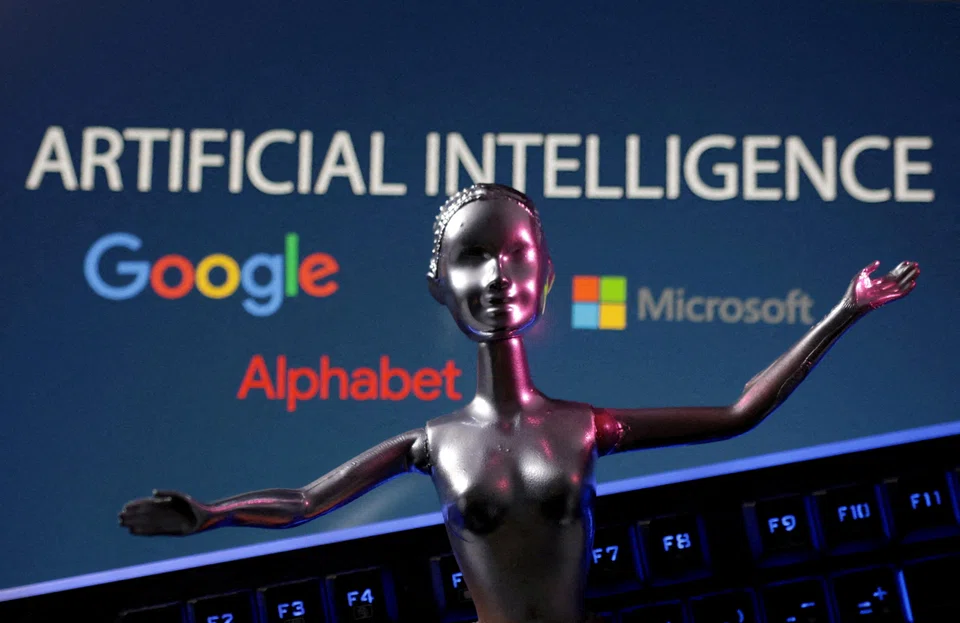
THE stock market is partying like it’s 1999 all over again as an artificial intelligence (AI) craze has caused a bubble in tech stocks. The only question now is how long this party can actually last.
Strategists at brokerage Bank of America Global Research are already sounding the bell for closing time. They view the current bull market as a mere blip, and anticipate a “baby bubble” in AI stocks to mature soon.
If one were to zoom out, the year-to-date gains in the S&P 500 are almost entirely attributable to seven or eight stocks, said Kent Engelke, chief economic strategist at brokerage Capitol Securities.
Things have reached a point where the Nasdaq stock market even had to step in and shift the weightings on its Nasdaq 100 index of its largest listed companies, because it had effectively become the “Nasdaq 7”.
Forget Yul Brynner and Steve McQueen. The new “Magnificent Seven” today are Microsoft, Apple, Google parent Alphabet, Amazon, Facebook owner Meta Platforms, electric car-maker Tesla and chipmaker Nvidia.
These are the world’s largest companies by market capitalisation, with most of them worth US$1 trillion or more. Yet, all seven have risen by 50 per cent or more in the space of a few months. Many are trading at 30 times earnings or more.
That may be a logical way to value a fast-growing company at the start of their growth curve, when multiplying their fortunes thirtyfold is entirely possible. The idea that Apple could grow its already massive business exponentially seems absurd to some.
Not even the gung-ho bulls, who include hedge-fund magnate Steven Cohen, deny that a speculative bubble in AI does not exist. Their case is that, just like the dotcom and bitcoin bubbles before it, the AI bubble could grow for several more years more before it pops.
There’s a lot of hype around AI, but AI is not all hype.
One estimate from brokerage Morgan Stanley puts Microsoft’s potential generative AI revenue in fiscal 2025 at a stunning US$69 billion. For context, that’s roughly the annual revenue of giant conglomerate General Electric – a business that took generations to build – essentially materialising overnight.
The breakthrough in AI, as demonstrated by Open AI’s ChatGPT launch earlier this year, was the ability of the computer to invent things for itself using “natural language” rather than programming, said the Morgan Stanley strategists.
Overall, AI hardware and software could be a US$6 trillion economy all on its own, said technology analysts at Morgan Stanley in a separate report.
In their view, AI’s ability to target consumers more effectively would drive tens of billions of dollars of advertising revenue for software makers. For instance, instead of travellers building their own trips on flight-booking websites, AI software makers could create a full-service concierge travel agency.
If such estimates are even close to the mark, the evolution of Big Tech stocks from “mega caps” to index-eating monster caps would make some sense.
AI has a “potentially large impact on productivity and growth, which … could translate into significant upside for US equities over the medium to longer term”, said strategists at brokerage Goldman Sachs. They also warned that “past productivity booms have resulted in equity bubbles that ultimately burst”.
The Internet eventually fulfilled similarly wild Wall Street predictions of profit bonanzas from changing the way mankind lived. It only did so, however, after a couple of false starts, and a historic stock-market bubble in 2000.
If AI is the new Internet, the “baby bubble” could expand into the mother of all stock-market bubbles. The gains will not last forever, even if AI’s tech takeover does.
In the medium term, there’s also a risk that regulators could slam the brakes on the AI business because of the social dangers that some computer savants have warned it represents. Any sign of a machine initiating criminal activity would surely force legislators to step in. After all, the people who know most about AI are those who seem most sceptical about an unregulated market.
The more worrying outcome in the short term would be signs that the boost to Microsoft’s earnings was a blip, and a group decision on the stock market that AI is more hype than not. That could throw cold water on the rally.
“Do I think AI is going to be the be-all and end-all? I don’t think so,” said Engelke of Capitol Securities. “The ‘human element’ is a powerful variant that no machine can ever replicate.”
For now, investors are more focused on the profits they can scoop up from AI than on the technology’s limitations or dangers. There’s an urge to enjoy this party while it lasts. It is, after all, a very human response to do so.