



The AI economy is accelerating the global baby bust
Artificial intelligence will likely depress fertility rates by exacerbating social and economic pressures

GLOBAL fertility rates are dropping sharply. World Bank data shows the global total fertility rate, or TFR, fell to 2.2 in 2023 from 2.7 in 2000. Two-thirds of countries now report TFRs below 2.1, the replacement level required for stable populations.
China’s TFR hit 1.0 in 2023 and is projected to slip below that threshold by 2025. Artificial intelligence threatens to accelerate this decline.
How AI depresses fertility
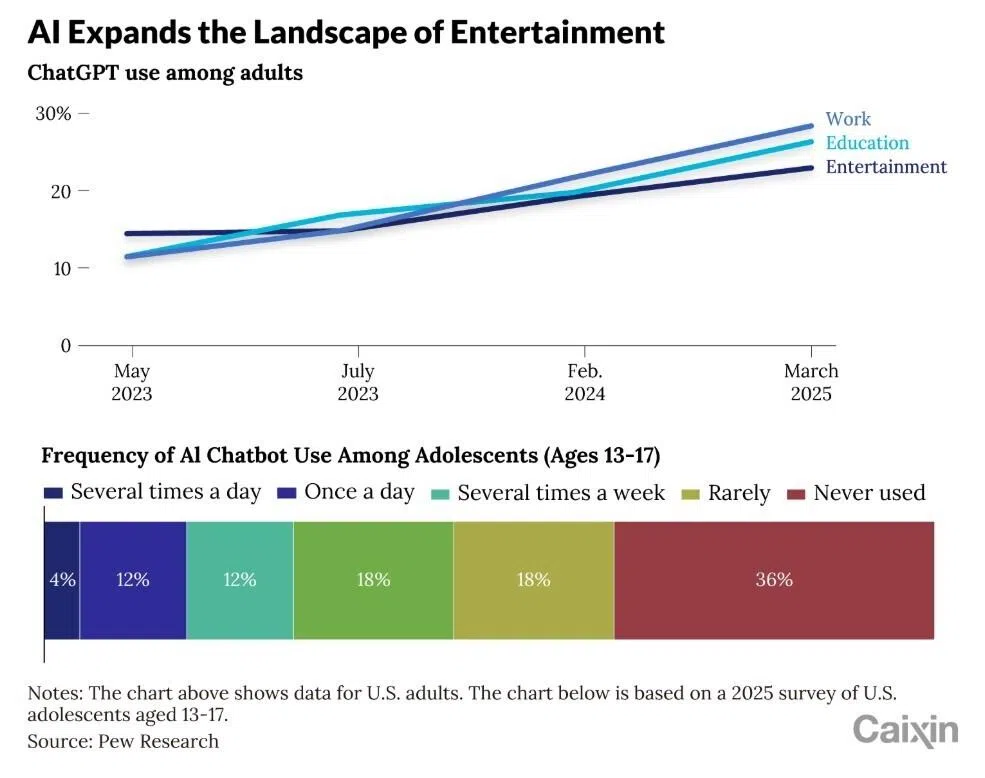
While AI offers valuable tools for reproductive medicine, it will likely depress fertility rates further by exacerbating social and economic pressures. Consider daily life in three domains: career, entertainment, and family. Each is governed by material costs, time constraints and emotional rewards.
In the workplace, AI automates routine tasks. This cuts jobs and wages for entry-level and low-skill workers while rewarding high-skill, creative roles. In the short term, the technology hurts young workers in affected fields by slowing down hiring.
Career advancement now requires heavy, continuous investment in skills, accelerating the pace of modern work – even if it makes the remaining tasks more fulfilling.
In entertainment, AI generates endless personalised, instant-gratification options – such as chatbots and virtual companions – that siphon time from other pursuits.
Meanwhile, AI drives up the cost of child-rearing. Parents face mounting pressure to pour money and time into their children’s education to prepare them for an AI-dominated labour market.
Ultimately, AI enriches careers and leisure but demands significantly more resources. With personal time and money constrained, parenting becomes comparatively more expensive, pushing fertility rates lower.
Policy prescriptions
This framework points to necessary policy countermeasures:

Improve work schedules: Offer flexible hours, remote work, and shorter work weeks where productivity allows. With AI raising efficiency, many jobs no longer require traditional schedules. Studies show flexibility maintains or boosts performance while improving work-life balance.
Lighten financial burdens: Substantially increase child allowances. In 2025, China’s child allowance sits at roughly 0.07 per cent of gross domestic product, while South Korea’s is 0.35 per cent – both well below the 1 per cent to 1.3 per cent typical in countries with higher birth rates.
Longer term, shifting educational systems away from high-stress, single-exam models towards varied assessments can cut tutoring expenses and ease parental anxiety.
Cut time and opportunity losses: Accelerate the roll-out of affordable, high-quality public childcare and early education to shoulder caregiving duties, freeing parents to pursue their careers and leisure.
Enhance the rewards of parenting: Promote family-friendly products and services, such as shared parent-child activities and customised travel, making the experience of raising children more rewarding and competitive with digital entertainment.
The case for central fiscal action
In the AI era, the primary issue isn’t a lack of resources, but rather their misallocation. AI boosts overall productivity and wealth, yet three structural mismatches hinder family formation.
First is timing; prime childbearing years clash with intense career-building. Second is the imbalance of costs and benefits; families shoulder most child-rearing expenses, while society reaps the economic rewards.
Third is location; local governments fund education, but talent frequently migrates to wealthier regions.
Markets alone cannot resolve these discrepancies. Robust national intervention is required, including substantial transfer payments, universal child allowances, and heavy investments in public childcare.
Rather than stoking inflation, these measures would stabilise populations, cultivate better skills, spur consumer spending, and sustain innovation.
Human innovation and population size
AI demonstrates that human intellect can be replicated, and machines may soon outsmart us. Yet biology endows humans with unique resilience and reproductive adaptability. AI devoid of biological life cycles could ultimately lead to long-term economic and cultural stagnation.
Humanity must retain control over innovation and knowledge transfer. Ceding these domains to machines risks eroding societal agency and humanity’s deeper purpose.
A philosophy of “Innovationism” promotes long-term prosperity through continuous discovery and intergenerational transmission, supported by a robust population. As populations shrink, the risk of human obsolescence rises.
AI pioneer Geoffrey Hinton has repeatedly warned of machines taking control. Humanity faces three potential futures: Humans remain in charge, humans accept a comfortable but meaningless existence under AI stewardship, or humans face total domination.
Achieving the optimal outcome demands bold innovation, which inherently requires reversing the collapse in fertility.
On a national level, a healthy population size is paramount. Leading AI powers such as the US and China benefit immensely from massive populations, which provide vast pools of data, diverse use-cases and deep talent reserves.
National innovation capacity is a product of population size, human capability, and economic exchange. Maintaining a stable population is essential to fuelling the virtuous cycle of innovation, growth, and cultural legacy.
The bottom line
AI eliminates routine work, prioritising skill-intensive careers and richer entertainment – both of which demand vast resources.
Consequently, the relative cost of child-rearing is rising. Effective responses must include family-friendly labour policies, reduced financial and time burdens on parents, and robust central fiscal support to correct structural economic misalignments.
In the age of AI, proactively stabilising fertility isn’t just a social goal; it is a vital imperative for economic strength, innovative edge, and the survival of human civilisation. CAIXIN GLOBAL
Liang Jianzhang is the executive chairman of Trip.com Group and a professor at Peking University’s Guanghua School of Management
Decoding Asia newsletter: your guide to navigating Asia in a new global order. Sign up here to get Decoding Asia newsletter. Delivered to your inbox. Free.
Share with us your feedback on BT's products and services
TRENDING NOW

Prima to move out of historic Keppel Road flour mill building in 2028

Grab CEO’s wife Chloe Tong on life with Anthony Tan and finding her purpose

OCBC sheds S$8 billion in value as shares close nearly 6% down; analysts cautious on banks

As Asia’s food delivery giants rejig the pie, who will win the market?

