AirAsia’s funding woes test how far Malaysia will go to protect its budget champion
The group’s airlines carried nearly 70 million passengers in 2025 and now connect over 150 destinations

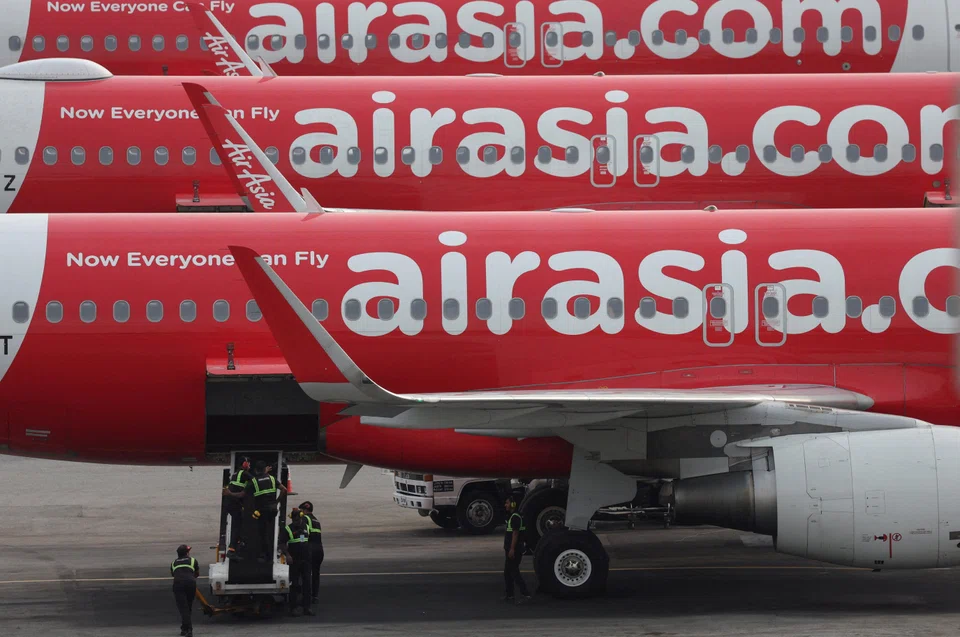
WHEN British billionaire and Virgin Group founder Richard Branson put his name and money behind AirAsia X in 2007, he was backing Tony Fernandes – a man Branson had known since the Malaysian entrepreneur began his career at Virgin’s music and media business in London nearly two decades earlier.
Branson’s investment in AirAsia X was a bet on Fernandes as much as on the fledgling long-haul budget carrier.
With his knack for spotting underserved markets, Fernandes was eager to capture the segment of travellers who wanted to fly farther but could not afford conventional fares.
It was not a difficult sell then. Fernandes’ RM1 takeover of a debt-laden, two-plane airline in 2001 has been retold so often that it has become Malaysian corporate folklore.
Within five years, Fernandes turned AirAsia into South-east Asia’s largest budget carrier, made flying affordable for millions and forced established airlines to rethink their fares and business models.
Today, AirAsia’s proposition is a harder sell.
The Middle East conflict and resulting surge in jet fuel prices have rattled the global airline industry, prompting the International Air Transport Association to nearly halve its 2026 profit forecast to US$23 billion.
For AirAsia Group, the blow has been especially brutal. With no fuel hedges and a heavily leveraged balance sheet, it posted a second-quarter net loss of RM831 million (US$205.5 million). As at end-June, lease liabilities stood at RM13.3 billion, against less than RM1 billion in cash.
As the carrier’s woes mount, the Malaysian government is reportedly weighing how to support the airline, although there has been no official announcement.
AirAsia said that it plans to raise up to US$1 billion from international debt markets, and secure RM700 million in local credit facilities.
The prospect of state support has ignited debate on whether a privately controlled company – which is so essential to tourism, thousands of jobs and regional connectivity – should be left entirely to market forces or whether taxpayers should help.
Together, AirAsia and AirAsia X carried nearly four in 10 passengers in Malaysia in the first quarter of 2026, said the Civil Aviation Authority of Malaysia. The group’s airlines carried 68.6 million passengers in 2025 and now connect more than 150 destinations.
While Fernandes and his co-founder Kamarudin Meranun have built an airline of enormous regional importance, its ability to withstand financial shocks has been less assuring.
AirAsia’s scale is good reason for the state to care about keeping services running, but it may not be enough to rescue the owners on their existing terms.
The last time Putrajaya offered to guarantee an AirAsia loan in 2021, the RM500 million facility was eventually abandoned in 2022, as Fernandes and Kamarudin refused to provide joint and several personal guarantees.
Reuters reported on Wednesday (Sep 16) that the government had asked Malaysia Airlines and Batik Air whether they could fill the gap if AirAsia falters.
The latest episode marks a sharp reversal from 2011, when Putrajaya turned to AirAsia founders to rescue loss-making Malaysia Airlines through a share swap, hoping to curb rivalry and inject commercial discipline.
That deal collapsed ignominiously eight months later, following union and political resistance to job and route cuts.
Fifteen years on, AirAsia has brought Putrajaya to a similar crossroads: Now who should bear the cost of keeping the carrier flying?