AirAsia is missing payments to some suppliers as fuel costs bite
Other low-cost carriers have also suffered because of the Iran oil shock
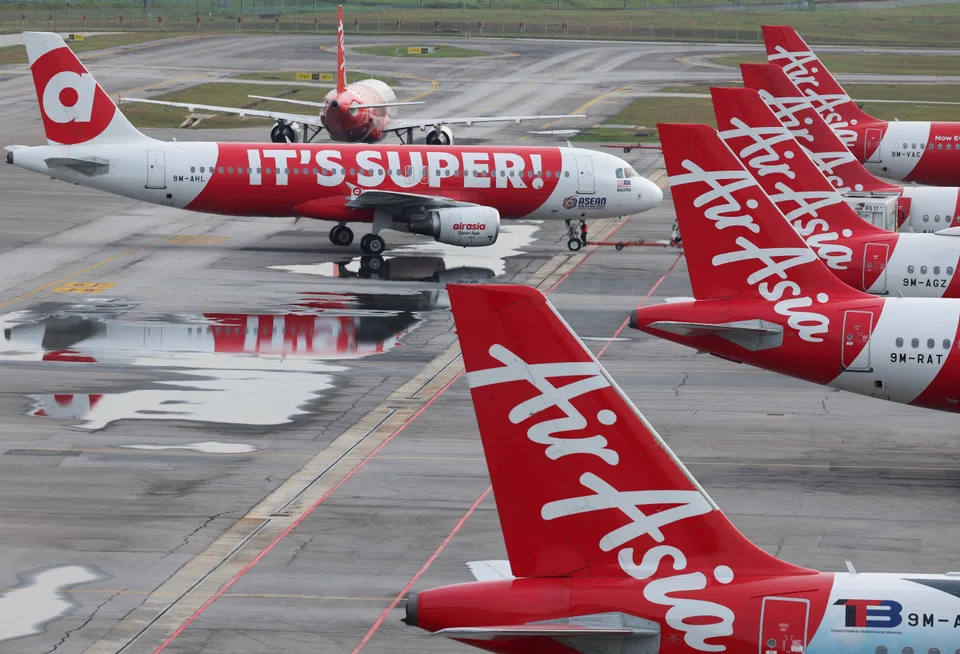
[KUALA LUMPUR] AirAsia X has fallen behind on payments to suppliers and asked for deferrals on at least a dozen planes, according to sources familiar with the matter, after higher fuel prices strained the low-cost carrier’s finances.
Rolls-Royce has informed the airline that the budget carrier missed payments on its TotalCare agreement to maintain jet engines, some of the sources said, asking not to be identified discussing a private matter. Rolls-Royce makes and maintains the engines for about one-tenth of AirAsia’s entire fleet of about 250 planes.
Separately, AirAsia has also asked some plane-leasing firms to push back rental payments on more than 16 aircraft, citing the surge in fuel costs in the wake of the Iran war, other sources familiar with the situation said.
AirAsia X Group CEO Bo Lingam said in a separate interview earlier this week that some leasing companies were understanding and have given the company extra time to make payments.
While it was not immediately clear how many planes were involved, the Iran conflict has been particularly painful for budget carriers as they have less room to raise fares for price-conscious passengers.
In the US, no-frills airline Spirit Aviation became the industry’s biggest casualty when it collapsed last month, and UK-based EasyJet’s woes have turned it into a takeover target for investment firm Castlelake.
Like other budget airlines, AirAsia leases the majority of its jets – 98 per cent, according to aviation consultancy Cirium – to avoid the high upfront costs of buying planes, since large aircraft orders can cost hundreds of millions of US dollars.
Asked to comment, AirAsia co-founder Tony Fernandes said in a video call last month: “We may be in dispute with Rolls-Royce over their treatment of our engines.” And on the lease payments, he said: “There’s nothing out of the ordinary.”
The company is not in financial trouble, because if it were, it would not have been able to borrow money from the likes of Deutsche Bank, he said. AirAsia earlier this year raised US$230 million through a private-credit deal from Deutsche Bank.
SEE ALSO

A Rolls-Royce representative declined to comment for this article or respond to Fernandes’ comments. Representatives at some of AirAsia’s lessors did not reply to requests for comment.
Higher fuel costs have been challenging for AirAsia, as the company last month reported its biggest quarterly loss in three years. Its debts are also high relative to its earnings and equity levels, according to a Bloomberg Intelligence index tracking Asian budget carriers.
But Fernandes is still in expansion mode, recently announcing a multibillion-dollar deal to buy 150 new Airbus SE A220 planes. He signalled that the carrier, which survived the Covid-19 pandemic by restructuring its debt, will also emerge from the Iran conflict.
“Why waste a crisis? There are opportunities in a crisis,” Fernandes said. “We cannot control what happens in the Middle East, but we have to take a view that it’s not going to last for two years.”
And AirAsia’s earnings, before several costs, are high enough to cover its interest expenses five times, which is higher than average in the Bloomberg Intelligence index.
Jet fuel prices have tumbled from their high in late March, but remain at historically elevated levels as the US and Iran close in on a peace deal.
Airlines face an extra US$100 billion in jet fuel costs this year, which will nearly halve industry profits in 2026, according to the International Air Transport Association.
AirAsia, which does not hedge fuel prices, has seen its shares fall more than 30 per cent since the onset of conflict in Iran, making it among the worst performers on the Bloomberg World Airlines Index during that time. But its shares have rebounded lately after US President Donald Trump signalled a US-Iran peace deal was close, driving down oil prices.
Other low-cost carriers have also suffered because of the Iran oil shock. Indian no-frills airline SpiceJet has scrubbed more than 40 per cent of flights in June compared with February, according to Cirium, and repeatedly missed payments on staff salaries.
The company said that “employee payments are being disbursed in a phased manner”. BLOOMBERG
Decoding Asia newsletter: your guide to navigating Asia in a new global order. Sign up here to get Decoding Asia newsletter. Delivered to your inbox. Free.
Share with us your feedback on BT's products and services