

Another win for economic nationalism, but a loss for America
Nippon Steel’s failed takeover of US Steel shows that the country is moving away from the free trade policies of earlier administrations
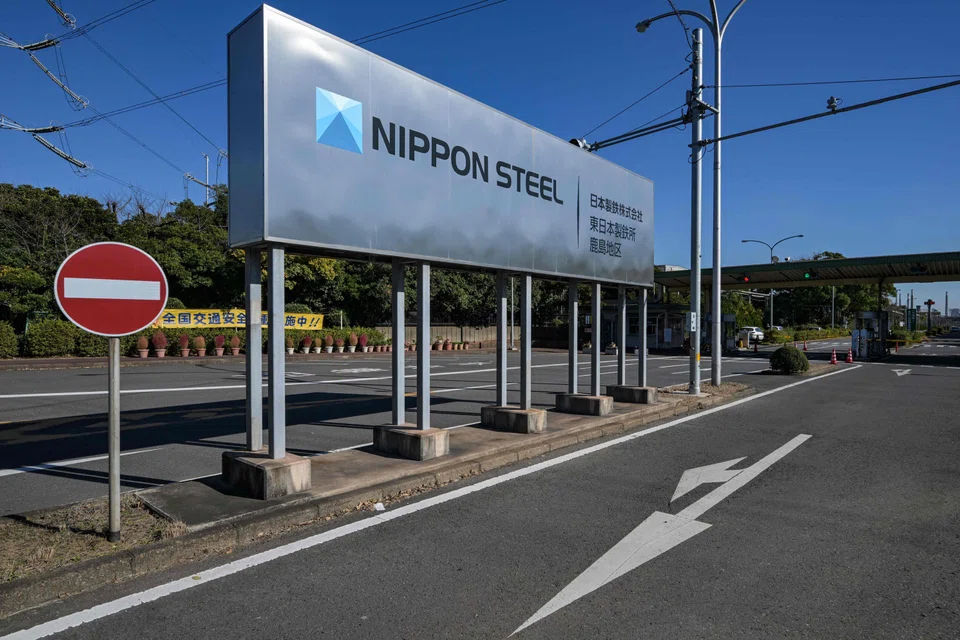
US PRESIDENT Joe Biden’s decision to block the friendly US$15 billion takeover by Japan’s Nippon Steel of the foundering US Steel – a move supported by president-elect Donald Trump – is another demonstration that Washington is moving away from the free trade policies of earlier Democratic and Republican administrations and embracing an economic nationalist agenda.
President Biden’s action came after a Dec 23 report by the Committee on Foreign Investment in the United States (CFIUS) that stated that it could not reach a consensus on the risks of the Nippon deal.
The deal made sense from the perspective of US Steel and its workers. Nippon Steel promised US$2.7 billion in capital to help modernise US Steel’s ageing plants, including Mon Valley Works, the company’s oldest mill, and to honour collective-bargaining agreements, in addition to offering workers US$5,000 in bonuses.
The Japanese company also proposed to fill key US Steel management roles and a majority of the board of directors with US citizens.
Now that the deal is blocked, the 124-year-old US Steel, one of America’s largest steelmakers, is expected to close some of its plants and shift to lower-cost facilities.
US Steel’s quarterly profits have been falling for several years and the company would find it difficult to raise the funds needed to overhaul its old furnaces. And with the closure of some of its plants, a few thousand workers would lose their jobs.
The deal also made sense on the basis of considerations of US geo-economic and geostrategic interests, especially from the standpoint of Biden, who has asserted his commitment to building US alliances across the Pacific.
Instead, the Biden administration seemed to be giving the finger to a leading US ally, Japan, that is critical to containing China’s economic and military ambitions in the Pacific and one of the biggest foreign investors in US businesses.
In a way, the trans-Pacific merger would have created a giant steelmaker that could hold its own in the global arena with the largest Chinese companies.
And the irony is that the US administration has marketed the decision to block the Nippon deal as part of a response to a national security threat.
“We need major US companies representing the major share of US steelmaking capacity to keep leading the fight on behalf of America’s national interest,” President Biden said last week when announcing his decision.
Foreign companies, it should be noted, have bought and operated steel plants in the United States for decades.
Yet, Biden didn’t explain how the pursuit of US Steel by Nippon Steel, one of the world’s leading steelmakers, as a way of entering the American market and taking advantage of the new infrastructure law, runs contrary to US national interests.
If blocking the Nippon deal doesn’t quite make sense based on economic and national security considerations, Biden’s intervention, with just two weeks of his term remaining, is based on politics.
More specifically, blocking the deal amounts to a victory for a political ally of President Biden, the United Steelworkers union, that has opposed the proposed transaction. The union has argued that Nippon Steel’s ownership would hurt the steelworkers and harm the American steel industry, despite the evidence to the contrary.
In reality, the union and its leaders favour a deal with an American company, Cleveland-Cliffs, which was outbid by Nippon Steel in 2023. The company is valued at US$4.7 billion, with US$3.8 billion in debt.
And Cleveland-Cliffs’ leaders hope that buying US Steel would allow them to create a US steelmaking monopoly that would be protected from foreign competition.
In any case, the deal became intertwined with presidential election-year politics, drawing opposition from both the Democratic and Republican presidential candidates.
President-elect Trump has vowed to scrap the deal, signalling the Republican Party’s transformation from a pro-free trade movement to an economic nationalist political force.
During his first term in office, Trump imposed tariffs on steel imports and has pledged to do the same in the next administration.
TRENDING NOW

Once staunchly pro-China, Malaysian Chinese businesses are now distancing themselves from Beijing

Britain’s mansion tax shows the difficulty of targeting wealth

Three hats, one goal: How Ng Kian Swan runs sustainability at NUHS

COE review: The gap between luxury and mass-market cars isn’t the only one worth bridging

