

Are Sino-American ties being reassessed?
On the eve of the US Secretary of State’s trip to Beijing, there are signs of a shift in the debate over China in Washington
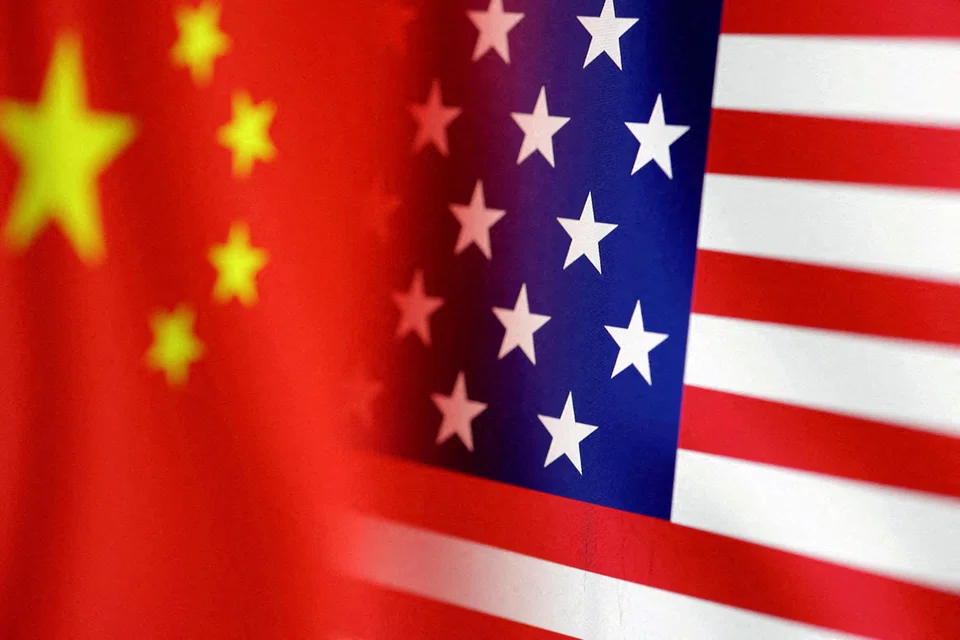
FOR months, the conventional wisdom in Western capitals has been that a coherent foreign policy consensus, that regards China as America’s leading geo-strategic and geo-economic adversary, has been solidified in Washington. It is a view that has brought together the White House and Congress, Democrats and Republicans, labour union leaders and business executives, and one backed by an increasingly anti-China public opinion.
This “welcome-to-Cold-War-2.0” notion of an inevitable confrontation between Washington and Beijing – which required avoiding excessive dependency on Chinese supplies of critical commodities and products and restricting Chinese access to high-value Western technology – has produced the talk about the need for “de-coupling” the American (and by definition, Western) and Chinese economies.
At the same time, the perception that China was siding with Russia in its war of aggression against Ukraine has led to growing concern in Washington about the evolution of a Beijing-Moscow axis of authoritarian governments challenging the democratic West.
And in that context, not a day goes by in Washington without one think tank or another drawing the outlines of what many fear would be a military confrontation between America and China over Taiwan.
But then is it possible that this sense of determinism (when it comes to forecasting the future of Sino-American relations) is now going through re-assessment, and not only in Washington, producing a more balanced and less confrontational approach to managing the ties between the two superpowers?
Not that anyone has been fantasising about returning to the age of Sino-American “engagement” between Washington and Beijing. But replacing “de-coupling” with “de-risking” in describing the preferred Western strategy in dealing with China’s geo-economic challenge reflects the recognition that, unlike in the case of the former Soviet Union, which the US and its Western allies could isolate and contain during the Cold War, America continues to be economically entwined with China.
Hence, despite rising geopolitical tensions, the US remains China’s single largest trading partner, and China is one of the two largest foreign creditors to the US (Japan being the other).
And in one of the many ironies in the Sino-American relationship, the Chinese seemed to be more concerned than Republican lawmakers over the possibility of a US financial default, that would threaten the vast amounts of US dollars owned by China that it needs to support its economy and jobs.
The other side of the coin is that Chinese (and Japanese) investment in the US financial markets helps the Americans maintain their large deficits and provides them with a global economic leverage.
There has been some talk recently about China trying to create a global financial system that is less dependent on the US dollar; it has reached deals with Russia, Saudi Arabia, Brazil, and France to increase the use of yuan in international trade and investment. But most observers believe that China would face some serious obstacles in trying to achieve that, such as the controls it applies to how much money can flow in and out of its economy. Hence, another irony: the Americans want China to do just that, to liberalise its government-controlled economy.
Which explains, in part, why notwithstanding the perception that President Joe Biden has embraced – very much like his predecessor, a more aggressive and unyielding approach towards Beijing – there has been a serious debate among his administration’s officials about the direction of that policy.
On one hand, there is the National Security Adviser Jake Sullivan, who has been critical of the liberalisation of the Sino-American trade relationship in the 1990s. He blames that for the loss of America’s jobs and the erosion of its industrial strength. He has drawn the outline of a new American industrial policy and a set of protectionist measures that targets China.
At the same time, Sullivan insisted that the US would need to build a high fence of export and import controls to prevent China from penetrating its high-tech industry and using American technology to advance its military capability, and to allow the US to maintain its lead on AI, quantum computing and biotechnology.
But then, in reality, much of the US trade with China doesn’t invoke strategic implications and in fact benefits both the American and Chinese economies. And the notion that the Americans have the obligation and the interest to prevent China from competing in the industries of the future – for example, challenging their efforts to dominate the electric vehicle (EV) industry – plays directly into the hands of Chinese nationalists who argue that the West is intent on retarding China’s surge as a great power.
Do Treasury Secretary Janet Yellen and Commerce Secretary Gina Raimondo, who have sounded less aggressive and more accommodative on the issue, represent the “doves” when it comes to US-China ties?
That may be taking it too far, but there is no doubt that both have introduced a more nuanced approach. Yellen suggested that the Sino-American economic relationship could be managed “through the same international order that helped make China’s economic transformation possible” in the, well, those 1990s with their “engagement” tenor that Sullivan has decried.
During a recent address in Washington, Yellen declared that “China’s economic growth need not be incompatible with US economic leadership”. She also stressed that “we do not seek to ‘decouple’ our economy from China’s” and that “we believe that the world is big enough for both of us”. She denied that the US was trying to damage China’s economy, and said that US actions such as ringfencing its advanced semiconductors were aimed purely at protecting US national security.
Similarly, while explaining that “interdependence with China introduces new risks to national security”, Raimondo has rejected the idea that the US should seek to isolate its economy completely. “We need to continue to do business with China,” she said. “Trade with China supports American jobs.”
In a way, the two secretaries seem to suggest that it is possible to de-link national security considerations and economic interests in managing the Sino-American relationship. This view is closer to that of Biden and Secretary of State Anthony Blinken, who believe that it’s possible to pursue a middle ground between the “hawks” and the “doves” over this policy issue.
Indeed, the president predicted a “thaw” in US-China relations during the G7 summit in Japan in May; and Blinken’s upcoming visit to China on Sunday (Jun 18) may represent an attempt to try to reduce the tensions between the two governments.
Biden’s comments and Blinken’s trip come after indications that US allies across the Pacific, especially in South-east Asia, expressed concerns over the deterioration of the relations between Washington and Beijing and recommended a diplomatic detente between the two. This view is also shared by America’s leading European partners.
The Chinese spy balloon episode early this year led to the cancellation of Blinken’s scheduled February visit to Beijing.
But that was followed by diplomatic steps to change the atmosphere. Recently, two mid-level US officials, Daniel Kritenbrink, the assistant secretary of state for East Asian and Pacific Affairs, and Sarah Beran, the National Security Council’s senior director for China, travelled to Beijing to meet Ma Zhaoxu, the country’s deputy foreign minister, and Yang Tao, director-general of its North American and Oceanian Affairs department.
In May, William Burns, director of the CIA, was reported to have travelled to Beijing for a series of secret meetings with intelligence officials, while National Security Adviser Sullivan met China’s top diplomat, Wang Yi, in Vienna.
Interestingly enough, trying to avert another crisis in the relationship with China that could lead to the cancellation of Blinken’s trip next week, Biden administration officials have played down a report in the Wall Street Journal that China established an eavesdropping facility in Cuba in exchange for economic assistance to the communist government on the island.
While Blinken’s visit is not expected to result in any dramatic change in the two powers’ bilateral ties, it could possibly provide an opportunity for announcing an agreement on cooperation over issues of common interest, such as climate change. And it could perhaps prepare the ground for a meeting between Biden and his Chinese counterpart Xi Jinping during the Asia-Pacific Economic Cooperation summit in San Francisco in November. Then, the world will discover whether the “thaw” in the relationship between the two countries is more than just empty talk.
TRENDING NOW

First Resources blames El Nino, outside fires for Kalimantan hotspots amid haze scrutiny

High Court rules against Julius Baer’s Singapore trust arm in US$50 million family trust dispute
Singapore key exports jump by higher-than-expected 68.4% in September, led by non-electronics

MSCI proposes downgrading Indonesia to standalone market status

