THE BOTTOM LINE

Armaments makers are the only winners in Ukraine and other conflicts
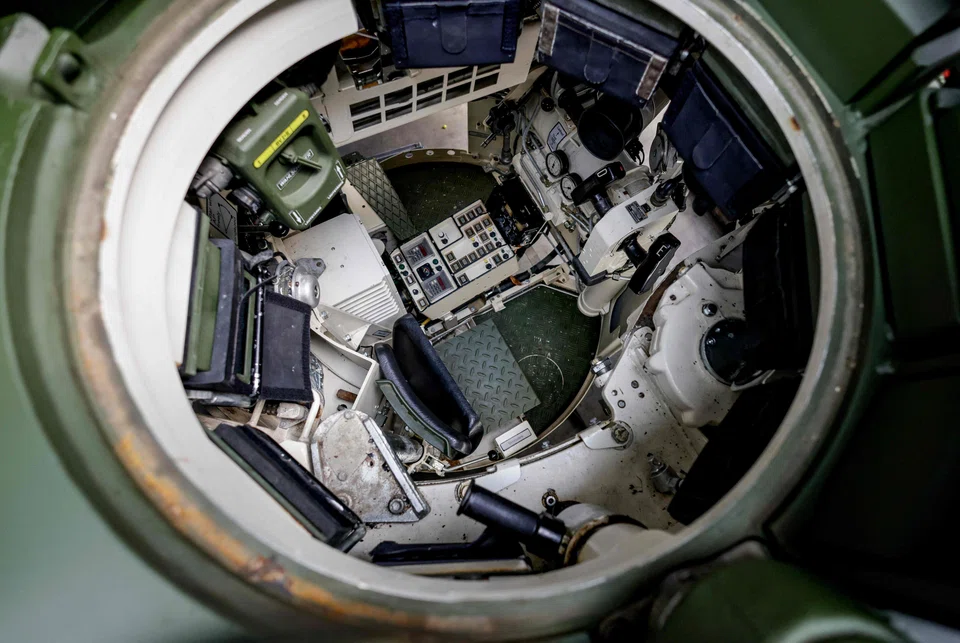
    • German armaments company and automotive supplier Rheinmetall has received a boost from the Ukraine war, posting record results in 2022 and joining Frankfurt's blue-chip DAX index this March.
    • German armaments company and automotive supplier Rheinmetall has received a boost from the Ukraine war, posting record results in 2022 and joining Frankfurt's blue-chip DAX index this March. PHOTO: AFP
    Published Mon, Jun 19, 2023 · 11:05 PM

    NO PRIZES for guessing the winners of the Ukraine war and indeed other conflicts.

    Armaments manufacturers of traditional military hardware, such as guns and tanks, and those who make expensive sophisticated guided missiles and drones are on a growth trajectory.

    The Stockholm International Peace Research Institute (SIPRI) estimates that the 100 largest armaments manufacturers already had sales totalling US$592 billion in 2021, prior to Russia’s invasion of Ukraine. Out of that total, the top 10 arms producers – Lockheed Martin, Boeing, Northrop Grumman, Raytheon and General Dynamics in the US; BAE Systems in the UK; and AVIC, Norinco, CETC and CASC in China – accounted for a whopping US$294 billion.

    Unsurprisingly, SIPRI, which conducts independent research on armaments, disarmament and international security, predicts that sales of this opaque industry will surge by many billions more in 2022 and 2023.

    World military expenditure, which grew by 19 per cent over the decade to a record high of US$2.24 trillion in 2022, is pointing the way, according to SIPRI. The US accounted for 39 per cent, or US$877 billion of world military spending last year; China, 13 per cent, and Russia, 3.9 per cent.

    The downside of the massive military spending and the armaments boom is, of course, the humanitarian and death toll. Ukraine and 55 other nations in the midst of war are engulfed in destruction, death, disabilities, displacement and despair, SIPRI notes. Like Ukraine, the invading Russian forces have also suffered massive bloody losses. Meanwhile, President Vladimir Putin has tightened his dictatorial grip and isolated Russia.

    The armaments industry and its suppliers have political clout because they provide jobs and boost exports. But there are significant economic downsides. The higher a country’s military budget, the lower the amounts available for health, education, infrastructure and environment. The conflicts have and continue to create massive humanitarian, social and economic dislocations. These have to be funded by aid, international agencies and global charities. Displacement and migration of war refugees also encourage bigotry and civil violence.

    Nations need to be secure, but what about the risks of foreign adventures? The causes of the Ukraine war are extremely complex, and propaganda from both sides muddy the waters. The Western view is that the US and allies should support Ukraine’s efforts to defend itself against Putin’s unprovoked assault. The Russian stance is that its own borders had become insecure because the US wanted Ukraine to be a Nato member.

    A minority of geopolitical experts, such as Henry Kissinger and Professor John Mearsheimer of Chicago University, believe that there was a failure in constructive diplomacy before the war. Now that it is dragging on, how to end it? Responding to Ukraine President Volodymyr Zelensky’s appeals for help, the US and allies have become proxies to the war.

    But there are concerns. In a recent visit to Ukraine, Canadian Prime Minister Justin Trudeau cited to Zelensky a clampdown on press freedom. Amnesty International and several commentators are concerned about several of his autocratic measures. The bottom line – war is a disaster for the suffering ordinary people. Besides deaths, injuries and displacement, homes, businesses and infrastructure have been destroyed. Crop yields on formerly rich fertile land have declined.

    The war in Ukraine has also exacerbated global hunger and starvation, as Russia and Ukraine are major producers and exporters of staple foods. Energy shortages and price surges in Europe and the UK are other consequences.

    “War has played a significant role in corroding relations between the great powers,” says SIPRI. “It diminishes the capacity for managing and helping to resolve local and regional conflicts and disputes. North-east Asia is the frontline in an increasingly tense and risk-heavy relationship between China and the United States and its allies.”

    Putin, of course, is responsible for the Ukraine invasion. But historians in the future may well wonder whether a proxy Ukraine war was an intelligent policy, particularly for the US and UK. Consider the consequences of the invasions of Iraq and Afghanistan.

    Brown University’s Watson Institute International & Public Affairs estimates that between 2003 and 2022, the US government spent and committed US$8 trillion on the wars in Iraq, Afghanistan, Pakistan and elsewhere. The research team’s estimate includes direct expenditure on war, counter-terror costs, care for veterans, homeland security spending; and interest payments on war borrowing.

    Watson researchers estimate the death toll of these wars at 900,000, including soldiers on both sides, civilians, journalists and aid workers. Current wars are mostly financed by borrowing and by 2050 interest payments could rise to US$6.5 trillion, the team notes.

    The Beatles’ lyrics sum up the urgency: “All we are saying, give peace a chance.”

    The writer is the author of an anti-war children’s novel, Butterfly Battle – The Story of the Great Insect War (Readmore Books)