Asean will benefit from breakthrough trade deal between UK and Gulf states
Britain and the Middle East states have a shared interest in the Asian region
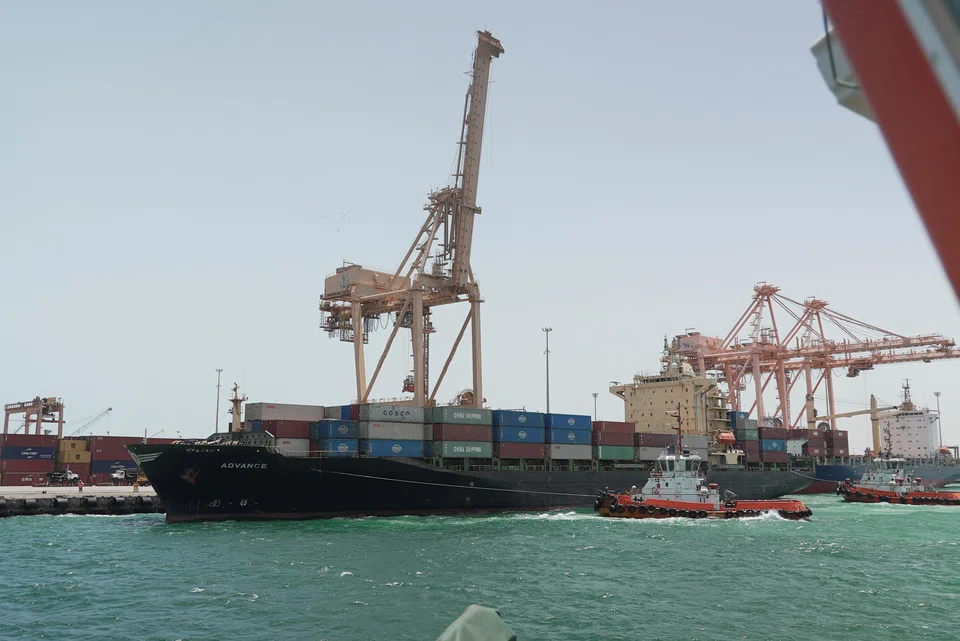
AMID the world’s focus on US-Iran negotiations to end their war, a very different breakthrough in the Middle East – which could have major implications for Asean and Asia – has flown under the radar.
The UK announced last Thursday (May 21) a trade deal with the Gulf Cooperation Council (GCC), which comprises Saudi Arabia, the United Arab Emirates, Bahrain, Kuwait, Oman and Qatar.
This group of Middle East economies had a total gross domestic product of around US$2 trillion in 2022. That is forecast to grow to a combined US$6 trillion by 2050, said the World Bank.
This is the first trade agreement between any Group of Seven nation and the GCC.
It is no coincidence that the UK is the inaugural country in the G7 to to make a deal with the GCC. Both share long historical ties, stemming in part from the legacy of the British Empire.
Today, the UK still commands influence across the region, and Oman is a member of the 56-member-strong Commonwealth.
In addition, the GCC and the UK share similar views about the future of the global order, such as the Asia-Pacific’s growing economic prominence.
So it is no surprise that these Middle Eastern and European powers are aligning their interests with the recently signed trade deal.
Terms of the deal
The deal is a genuine breakthrough. The GCC has signed few such trade agreements – a pact with South Korea was finalised in 2023, more than a decade and a half after talks began.
Total annual UK-GCC bilateral trade is already around US$70 billion. This makes the GCC, as a whole, the UK’s fourth-largest non-EU export market – behind the US, China and Switzerland.
The UK government said the deal will increase that number by potentially as much as 20 per cent annually. Once fully implemented, the deal will remove an estimated US$780 million a year in tariffs on British exports to the region.
Key UK sectors that could benefit include the agri-food industry, such as cheese, butter and chocolate producers. The GCC currently imports around 85 per cent of its food supply, indicated the World Economic Forum.
However, activist groups have criticised the deal’s lack of detail on human rights and labour protections, given the GCC’s record of using the death penalty, and its significant greenhouse gas emissions generated by its members’ extensive energy sectors.
The UK and GCC pivot to Asia
Both the UK and GCC have, by and large, traditionally been US allies. But their deal reflects how they now see the centre of gravity of the world economy shifting sharply to the Asia-Pacific region.
For the UK, this stance has grown more prominent since its decision to leave the EU.
In the post-Brexit era, London was the first member outside the Asia-Pacific or the Americas to join the Comprehensive and Progressive Trans-Pacific Partnership, which counts Singapore, Brunei, Malaysia and Vietnam as signatories.
The GCC and wider Middle Eastern nations have also been doubling down on trade with Asean and the broader Asian continent.
Two-way trade between the GCC and Asia reached US$512 billion in 2022, a record high at that time, while Asean-GCC trade hit a then-high of US$134 billion.
Prior to the Iran war, around half of Asia’s oil imports originated from the GCC and wider Middle East. If the Strait of Hormuz reopens fully, such bilateral hydrocarbon trade may pick up significantly as energy consumption in China, India and Asean expands.
In recent years, GCC-Asean relations have been boosted by bilateral summits, the first of which began in October 2023 in Saudi Arabia.
The event was co-hosted by Indonesia’s then-president Joko Widodo and Saudi Crown Prince Mohammed bin Salman, which provided momentum for a bilateral trade agreement between the two countries.
Other recent GCC-Asean economic deals include Abu Dhabi in 2024 awarding Malaysia’s Petronas an oil and gas exploration concession in the Al Dhafra region, and Dubai International Financial Centre signing a memorandum of understanding with Jakarta’s Nusantara Capital City Authority to develop Indonesia’s Nusantara Financial Centre.
The breakthrough deal between the UK and GCC will have positive effects on Europe and the Middle East, both of which are caught up in the economic drag from the Iran war.
However, Asean and Asia could also be significant beneficiaries, given the UK and GCC’s shared interests in the region. Such moves will deepen relations between all three parties – and these ties are likely to persist amid political instability in the region and US-China tensions.
The author is an associate at LSE IDEAS at the London School of Economics