

Australia’s economy is suddenly in too good a place
Under present conditions, there’s a tension between maintaining price stability and fostering employment
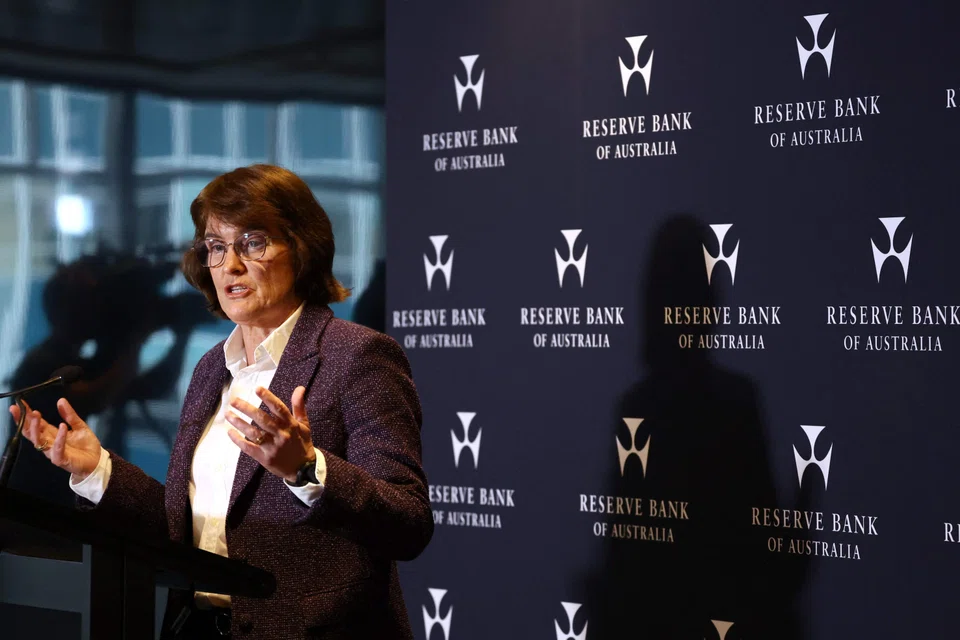
AFTER a difficult few years, the Australian economy has clawed its way back to what the central bank chief calls “a pretty good spot”. Not the toast of the world it enjoyed before Covid-19 ended decades of uninterrupted growth, but enough to keep an underlying anxiety about the future at bay.
Inflation isn’t defeated, but has retreated from post-pandemic heights and, until several days ago, was expected to settle nicely in the bank’s target range. Interest rates have fallen. House prices, a vital yardstick of consumer confidence in a country where homeownership is deeply ingrained, have taken off again. What’s not to like?
It’s possible that things are a little too sweet. If there was any complacency, it was dealt a blow by figures last week that showed inflation unexpectedly jumped to 3 per cent, the upper limit of the Reserve Bank of Australia’s (RBA) preferred range.
Prior to the report, there was a comfortable assumption of continually lower borrowing costs. Suddenly, economists contemplated not just a deferral, but mulled whether the easing cycle itself was finished.
And that’s what they got. Unemployment is relatively low at 4.5 per cent, but that masks some weakening. In addition to price stability, like the US Federal Reserve, the RBA is required to foster employment. Under present conditions, there’s a tension between these goals. There was little choice other than to keep its benchmark rate unchanged at its meeting on Tuesday (Nov 4).
“Some inflationary pressure may remain in the economy,” the board said. “With private demand recovering and labour market conditions still appearing a little tight, the board decided that it was appropriate to maintain the cash rate.” The door hasn’t been closed on further easing, but governor Michele Bullock’s team will clearly need some convincing.
Despite Bullock’s declaration to lawmakers last month that the economy was nicely positioned, the governor has always been careful not to encourage excessive bets on low rates. She has emphasised that officials are dependent on incoming data. But all central banks are and, sometimes, the refrain can just sound like a fudge.
There is a difference between being guided by the latest information and being imprisoned by it. In this instance, the data screamed “wait”. There truly was dependence.
“To secure a bold future, the nation needs its mojo back. Hard stuff, especially when things are going okay.”
Bullock has been similarly disdainful of forward guidance, the art of foreshadowing what a central bank will do beforehand. Often, she has shut down reporters’ questions about the path for rates. In truth, it was a tool developed by monetary authorities in the early 2000s and elevated to an art form after the Global Financial Crisis of 2007-2009.
When prices were quiescent and growth slower than desired, there was little downside in trumpeting the likelihood of ultra-low rates. It’s much harder in the current environment to sound like Odysseus and strap yourself to the mast, as former Fed chair Ben Bernanke described it in a book.
Listening in the past couple of years to Bullock fend away such questions, I wondered whether this reluctance to engage was a way to avoid boxing herself in rather than a genuine disagreement with the Bernanke-era approach.
Regardless, it worked for her this time. Speaking to reporters on Tuesday, the governor said policy is pretty close to neutral, a point that neither juices the economy nor constrains it.
Any discussion of fine times in Australia brings up the question of a return to golden days or whether near enough is good enough. There’s a cottage industry of think-tank studies and conference papers that paint a subdued picture going forward relative to the perceived halcyon years of the 1980s and 1990s, when dramatic reforms set the stage for a record run. To secure a bold future, the nation needs its mojo back. Hard stuff, especially when things are going okay.
Is merely being comfortable, and not exceptional, the new goal? It’s all data dependent.
TRENDING NOW

Once staunchly pro-China, Malaysian Chinese businesses are now distancing themselves from Beijing

Looking beyond looming CEO succession, should UOB potentially pursue a transformative merger?

Could stablecoins be the future of money?

Grab CEO’s wife Chloe Tong on life with Anthony Tan and finding her purpose

