To avert a financial crisis, the Fed seems poised to keep interest rates unchanged
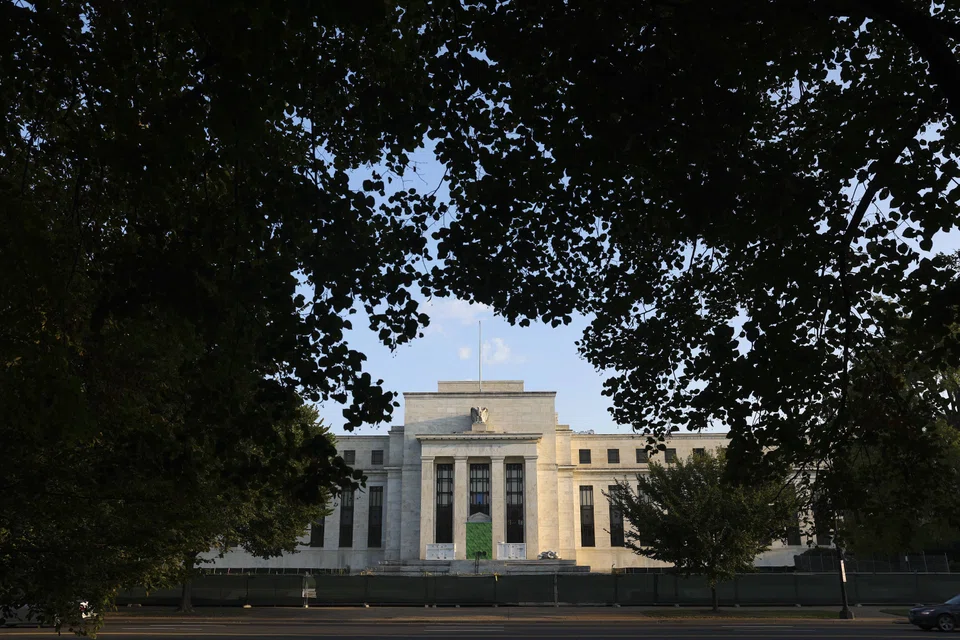
THE US Federal Reserve could try to shock the banking system back to life and avert a burgeoning financial crisis by holding interest rates steady at the end of its two-day meeting on Wednesday (Mar 22).
Up till Mar 11, when the central bank’s media “blackout” ahead of this week’s meeting began, Fed chair Jerome Powell and other senior officials had repeatedly guaranteed a continuation of their inflation-fighting campaign.
But the world has changed a lot since then, in a way that brings back painful memories of the global financial crisis back in 2008.
The Fed funds futures market, where odds are set for policy changes, is still pricing in a quarter-percentage-point rate increase at the conclusion of the meeting on Wednesday. But analysts at brokerage Goldman Sachs said that the central bank may decide that the fight against inflation could “wait six weeks” and concentrate on restoring people’s faith in banks.
The Fed has monitored the light-speed banking panic over the last two weeks and even intervened over the weekend, coordinating with five other major central banks to increase the flow of US dollars through the global banking system.
What started as a relatively minor capital shortfall at Silicon Valley Bank (SVB) led to a panic where wealthy investors and private corporations worldwide whisked their money out of some of the world’s biggest banks.
It was a digital version of the Great Depression bank runs, with nervous mouse clicks taking the part of the lines of trilby-hatted depositors. First SVB, then Signature Bank, and then the systemically important Credit Suisse all but collapsed as deposits and accounts vanished.
In an uncanny echo of the US-supported JPMorgan rescue of Bear Stearns, the Swiss government backstopped UBS’ takeover of its 167-year-old crosstown Zurich rival.
The end of the Credit Suisse panic was not the end of the bank panic, however, and shares of First Republic Bank crashed amid fears it was on the brink, despite a US$30 billion infusion of deposits from JPMorgan and others.
The Fed may be the only institution powerful enough to restore confidence.
This banking crisis was a direct result of the Fed’s sudden and drastic increase of interest rates – one reason the central bank may think twice about raising them again in the midst of the crisis.
Acclimatised to a world with rates near zero, the sudden rise had a similar effect on the banks as a rapid ascent to the surface would have on a scuba diver.
The trouble began for SVB because it was forced to write down the value of Treasurys that it had purchased at much lower interest rates, reducing its capital reserves. Other major regional banks, including First Republic and Zions Bank, are also suffering the bends.
The Fed has improvised monetary policy to fight the contagion of a financial crisis before. After the failure of Lehman Brothers in 2008, Ben Bernanke – who was Fed chair at the time – cut interest rates on multiple occasions, often doing so on an ad-hoc, emergency basis rather than waiting for the scheduled meetings or sticking to previous plans.
Now that the panic is in full swing, it may be impossible to avoid the kind of sharp reduction in lending that starved businesses of access to capital during the last crisis, said Lorenzo Di Mattia, the manager of hedge fund Sibilla Global Fund.
He is buying gold and bracing for another slide in US stocks. The “vicious bear has started now”, said Di Mattia, one of the few equity fund managers to position themselves for a crash ahead of Lehman’s failure in 2008.
No matter what the Fed does on Wednesday, there could still be a “credit freeze” on the horizon, said Di Mattia, who is watching yields in corporate bond markets for signs that loans are getting harder to come by.
Observers say that the Fed will have to walk a “tightrope” in the coming months, balanced precariously between the possibility of a credit crunch and a major recession on the one side, and out-of-control inflation on the other.
“Recent stresses in the global financial systems, albeit generally confined to its weakest links, carry an increased probability of a credit pullback later this year,” said Sonia Meskin, head of US macro at BNY Mellon, in a note to clients. “This would result in lower real (economic) activity as well.”
Without a credit and economic pullback, inflation is unlikely to come down to the Fed’s 2 per cent target, she added.
Some bankers are not expecting the Fed to come to the rescue this time around.
JPMorgan chief executive Jamie Dimon is wrapping himself in the mantle of the founder of his bank, the man who rallied the survivors of the 1907 panic on Wall Street to join him in taking over the failing banks, and save the US economy from disaster. Dimon is still trying to rally other bankers in a bid to rescue First Republic.
The Fed is stuck between a rock and a hard place, but the central bank looks certain to hit the pause button on interest rate hikes if the systemic risk is too great.